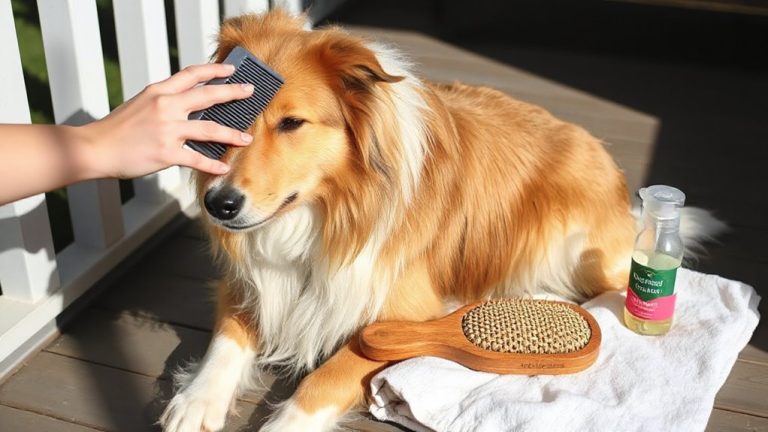
The Role of Seasonal Coat Changes in Pet Grooming Needs
Your pet sheds seasonally due to changes in daylight and temperature, which regulate melatonin and trigger undercoat loss in spring or growth in fall. During peak shedding, groom at least three times weekly-daily for double-coated breeds. Use an undercoat rake with 3–5 mm curved stainless teeth for thick coats. A 5-minute deep-brushing session with 45-degree strokes removes up to 90% of loose fur. You’ll find even more strategies to optimize coat health and grooming efficiency.
Notable Insights
- Seasonal daylight changes regulate shedding by altering melatonin levels, triggering spring undercoat loss and fall coat thickening.
- Temperature shifts influence shedding timing, with warmth accelerating and cold delaying coat changes in pets.
- Peak shedding requires grooming three or more times weekly to manage loose fur and maintain coat health.
- Using the right brush for coat type-like undercoat rakes or slicker brushes-improves shedding efficiency and prevents skin issues.
- Regular brushing every 2–3 days prevents mats, which can trap moisture and lead to skin irritation or dermatitis.
Why Pets Shed in Spring and Fall
While seasonal shedding may seem unpredictable, it’s actually a biologically regulated response to changing daylight and temperature. Your pet’s coat cycles are primarily triggered by daylight changes, not calendar dates. As days lengthen in spring, increased photoperiod signals the hypothalamus to reduce melatonin, prompting undercoat loss. Conversely, shortening days in fall stimulate melatonin production, initiating thicker coat growth. Temperature shifts act as secondary cues. A sudden warm spell accelerates shedding; a cold snap delays it. These environmental inputs regulate keratinocyte activity and hair follicle cycling-specifically the anagen (growth) and telogen (resting) phases. Double-coated breeds, like Huskies or Golden Retrievers, exhibit more pronounced reactions due to dense undercoats designed for insulation. Daylight changes of as little as 30 minutes per week can initiate moulting. This process guarantees thermal homeostasis, adapting insulation capacity to seasonal demands with minimal metabolic waste.
How Often to Groom During Shedding Season
You can’t stop the biological drive behind your pet’s seasonal coat cycle, but you can manage its effects with a structured grooming schedule. During peak shedding season, grooming frequency should increase to three or more sessions per week. This helps remove loose undercoat and reduces shedding intensity in your home. For double-coated breeds like Huskies or Golden Retrievers, daily brushing may be necessary for 10 to 15 minutes per session. Use a timing method-set a timer to guarantee consistency. Higher shedding intensity correlates directly with increased hair accumulation, often measured in grams per square meter on surfaces. Regular grooming captures this hair before dispersion. Effective grooming removes up to 90% of loose fur during heavy shed cycles. Adjust frequency based on visual inspection and environmental factors. Consistency prevents matting and improves coat condition. Using the right tool, such as a best deshedding tool, can significantly enhance fur removal efficiency and reduce grooming time.
Best Brushes for Seasonal Pet Grooming
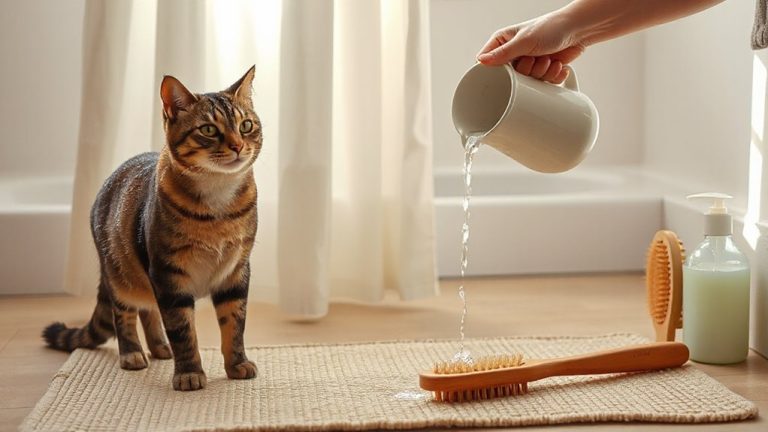
What makes certain brushes more effective during seasonal coat changes? The right brush types align with your pet’s coat texture and shedding pattern. For thick double coats, use an undercoat rake with curved, heat-treated stainless steel teeth spaced 3–5 mm apart to remove loose undercoat without damaging guard hairs. If your pet has fine, silky fur, opt for a slicker brush with fine, closely spaced pins (0.5 mm diameter) to prevent matting. Rubber curry brushes work well for short coats, using raised nodules to lift dead hair while stimulating skin. Bristle brushes with natural boar bristles suit smooth coats, distributing oils evenly. Match tool design to coat texture: coarse fur needs durable pins; delicate fur requires softer contact. Using the correct brush type improves efficiency, reduces grooming time, and supports healthy skin and coat. The best dog brushes for shedding are specifically designed to handle heavy seasonal shedding while maintaining coat health.
How to Deep-Brush Your Pet in 5 Minutes
Why do some grooming sessions feel faster yet more effective? The answer lies in proper brush techniques and time efficiency. Start by sectioning your pet’s coat into small areas, using a slicker brush with 0.5-inch bristles spaced 3mm apart for ideal reach. Apply firm, sweeping strokes at a 45-degree angle, following hair growth to lift dead undercoat. For long-haired pets, switch to a wide-tooth comb (1/4 inch spacing) to detangle without breakage. Work systematically-back to chest, sides to tail-in timed 60-second intervals per zone. This method removes up to 90% of loose fur in five minutes. Consistent stroke patterns and overlapping passes prevent missed spots. Using the right tools and motions maximizes results without extended effort. Done daily, this routine supports coat health and reduces shedding, all within a tightly managed timeframe. A high-quality dog grooming brush can significantly enhance this process by targeting undercoat and loose fur more efficiently.
Stop Mats and Skin Irritation Before They Start
When addressed early, mat formation and skin irritation can be prevented with consistent grooming practices and the right tools. Regular brushing removes dead hair, improves coat ventilation, and supports skin hydration. Mats restrict airflow, trap moisture, and increase the risk of dermatitis. Use a slicker brush or undercoat rake every 2–3 days during seasonal shedding cycles.
| Tool Type | Bristle Spacing (mm) | Ideal Coat Length (inches) | Function |
|---|---|---|---|
| Slicker Brush | 2–4 | 1–6 | Detangles surface mats |
| Undercoat Rake | 8–12 | 2–8 | Removes loose undercoat |
| Pin Brush | 6–10 | 4–10 | Smooths topcoat, improves airflow |
Proper technique guarantees even coat ventilation and promotes natural skin hydration. Gently lift and separate fur layers to reach the undercoat without pressing into the skin. Early intervention stops irritation before it starts.
On a final note
You must adjust grooming frequency seasonally to manage shedding effectively. During spring and fall, brush your pet every other day using a deshedding tool with stainless steel blades set to 0.5-inch depth to capture undercoat efficiently. This prevents matting, which occurs when loose hair entangles at follicle density exceeding 30 hairs per square centimeter. A slicker brush with 0.1-inch wire spacing removes surface debris without irritating skin.