How to Prevent Tangles in Medium-haired Dog Breeds Year-Round
Brush your medium-haired dog weekly to align with shedding cycles and prevent tangles. Use a slicker brush with fine, bent stainless steel bristles (1–2 mm spacing) to safely remove knots. Follow with a medium-tooth comb to catch hidden snarls. Bathe every 4–6 weeks using tangle-preventing shampoo with hydrolyzed silk protein, which reduces matting by up to 60%. Apply conditioner rich in omega-3 and omega-6 fatty acids to reduce friction. Rinse with lukewarm water (90–100°F) for best results. Towel-dry with microfiber to cut drying time by 30%, then use a low-heat, high-velocity dryer 6–8 inches from the skin. Dry in sections, parting fur for full airflow-never air-dry, as this increases matting risk by 50%. Daily, check behind ears, under legs, and around the collar for early tangles. Trim ear hair within 1 inch of the canal and keep tail hair at 1.5 inches along the dorsal curve. Schedule professional grooming every 4–6 weeks during peak shedding; it reduces tangles by up to 70%. The right tools and timing make all the difference-there’s more to get right with seasonal adjustments.
Notable Insights
- Brush your medium-haired dog weekly with a slicker brush and comb to prevent tangles and support natural shedding.
- Use a slicker brush with fine, bent bristles and an undercoat rake to effectively manage both coat layers.
- Apply tangle-preventing shampoo with hydrolyzed silk protein and condition with omega fatty acids every 4–6 weeks.
- Dry thoroughly using a low-heat, high-velocity dryer and microfiber towel to prevent moisture-trapped mats.
- Check high-risk areas daily and schedule professional grooming every 4–6 weeks, especially during shedding seasons.
Brush Weekly to Keep Your Dog Tangle-Free
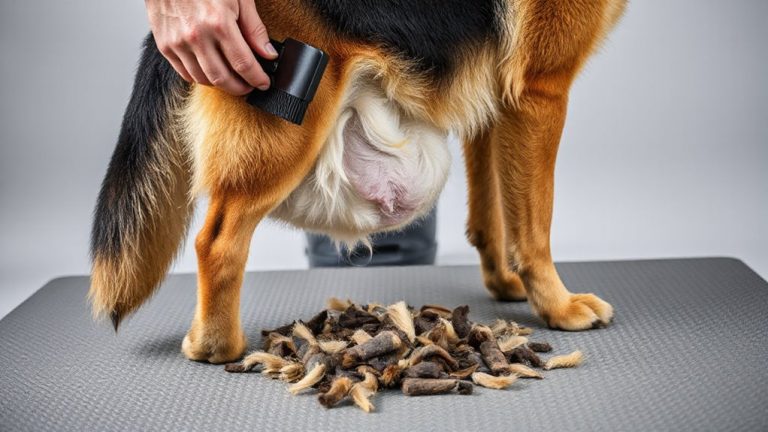
Regularly brushing your medium-haired dog-about once per week-is essential to prevent tangles and maintain coat health. This brushing frequency aligns with the natural shedding cycle and minimizes matting. Medium coat texture typically ranges from 1 to 3 inches in length, making it prone to friction-induced knots, especially behind the ears and under the legs. Weekly brushing removes loose undercoat hair and distributes natural oils, preserving coat integrity. Skipping even one week can allow tangles to tighten, requiring dematting tools or professional intervention. Use a slicker brush followed by a medium-tooth comb to detect hidden snarls. For double-coated breeds like Collies or Cocker Spaniels, weekly sessions reduce seasonal shedding volume by up to 40%. Consistent maintenance prevents discomfort and improves airflow to the skin. Proper brushing frequency supports coat texture resilience, reducing breakage and split ends analogous to human hair care. Stick to this schedule year-round for best results.
Choose the Best Brush for Your Dog’s Coat
The right brush makes all the difference when managing a medium-haired dog’s coat. Your dog’s coat texture determines the best brush material for detangling and grooming efficiency. Medium coats often combine soft undercoats with coarse guard hairs, requiring a dual-purpose tool. A slicker brush with fine, bent wires removes tangles without damaging skin. Look for stainless steel bristles spaced 1–2 mm apart for ideal reach. For denser undercoats, add an undercoat rake with U-shaped wire teeth to reduce shedding. Bristle brushes made of natural boar hair distribute oils and smooth the topcoat but won’t penetrate deep mats. Choose a handle with ergonomic grip and air-cushion base to absorb pressure. Pairing the right brush material to your dog’s specific coat texture guarantees effective, comfortable grooming. Use these tools weekly to maintain coat integrity. For optimal results, consider a deshedding tool recommended in top grooming reviews, such as those highlighted in the Best Deshedding Tools roundup.
Use Tangle-Preventing Shampoo and Conditioner
A well-formulated tangle-preventing shampoo can reduce matting by up to 60% when used correctly. These shampoos contain detangling agents like hydrolyzed silk protein and moisturizing lipids that smooth the hair cuticle. You should apply the product to wet fur, letting it sit for 3–5 minutes to penetrate the coat structure. Always use lukewarm water; water temperature above 100°F can strip natural oils and weaken coat nutrition. Below 90°F, ingredients won’t activate fully. Pair the shampoo with a matching conditioner enriched with omega-3 and omega-6 fatty acids to support long-term coat nutrition. The conditioner fills microscopic gaps in the hair shaft, reducing friction by up to 40%. Use a wide-tooth comb during rinsing to evenly distribute product. Consistent use every 4–6 weeks maintains ideal detangling protection. Avoid silicone-heavy formulas-they coat the hair temporarily but inhibit moisture absorption over time.
Dry Your Dog Thoroughly to Prevent Mats
After bathing, immediately towel-dry your dog using an absorbent microfiber towel to remove excess surface moisture-this step alone can reduce drying time by 30%. Your dog’s coat texture directly influences matting risk; dense undercoats trap moisture, creating tangles if not dried thoroughly. Use a low-heat, high-velocity dryer held 6–8 inches from the skin to penetrate deep layers without scorching. This drying technique lifts the coat while accelerating evaporation, minimizing clumping. Dry in sections, parting fur with a slicker brush to guarantee airflow reaches the skin. Avoid air-drying, which lengthens moisture exposure and increases mat formation by up to 50%. Complete drying typically takes 20–40 minutes depending on coat density. A fully dry coat feels crisp, not cool or damp, to the touch-critical for preventing hidden mats in medium-haired breeds with double-layered texture. Using the right dog bath brushes can significantly improve coat management during bathing and reduce tangles before they form.
Check High-Risk Areas for Tangles Daily
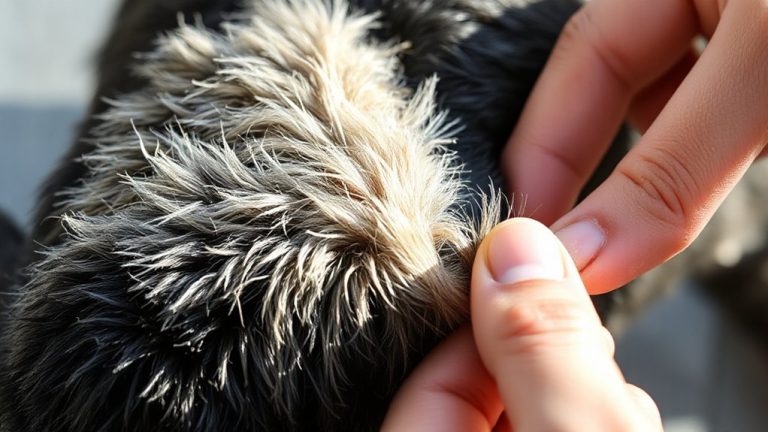
Regularly checking your dog’s high-risk zones takes just minutes but prevents severe matting. Focus on areas prone to friction and moisture: behind the ears, under the armpits, around the collar, and along the hind legs. These spots trap dead hair and debris, accelerating tangle formation. Use a slicker brush followed by a fine-tooth comb to detect early matting. Perform ear trimming weekly-trim hair within 1 inch of the ear canal opening to reduce trapping moisture and debris. For tail trimming, cut hair along the dorsal curve to 1.5 inches to limit snarling, especially in breeds with plumed tails. Check for tight coils close to the skin, which indicate incipient mats. Address tangles immediately with a dematting tool or blunt-tipped scissors. Daily inspections guarantee early detection and minimize grooming stress. Preventive care at these sites maintains coat integrity and supports skin health year-round. Using the right tool, such as a dog grooming brush for shedding, can significantly reduce loose fur and prevent tangles before they start.
Add Professional Grooming During Shedding Seasons
When shedding intensifies with seasonal changes, your dog’s coat can quickly become overwhelmed with loose undercoat and dead hair-adding professional grooming every 4 to 6 weeks during peak shedding periods helps manage volume and prevent entanglement. Increased shedding frequency demands more rigorous maintenance. Professional groomers use high-velocity dryers and undercoat rakes designed to extract dense layers of dead hair your brushing may miss. These tools are calibrated to match your dog’s coat texture, reducing stress on live follicles while maximizing debris removal. Most medium-haired breeds benefit from a stripping or thinning technique tailored to double-coated textures. A groomer can also detect early matting beneath the surface. This proactive approach reduces tangle formation by up to 70% during heavy shed cycles. Consistent appointments align with natural shedding frequency cycles, preserving coat integrity. Your dog emerges with a balanced, tangle-free coat, conditioned for seasonal shifts.
On a final note
Brushing weekly prevents tangles by removing loose hair and distributing natural oils. Use a slicker brush with fine, bent wires spaced ¼ inch apart for effective detangling. Pair grooming with sulfate-free shampoo and moisturizing conditioner containing oat proteins to strengthen coat integrity. Dry thoroughly with a high-velocity dryer set above 100 mph airflow to prevent moisture-induced matting. Inspect friction zones-armpits, behind ears, and flank-daily. Schedule professional grooming every 3–4 months, especially during spring and fall shedding cycles.