How to Train Your Cat to Use a Step-Through Tunnel for Exercise
Choose a collapsible step-through tunnel made of ripstop nylon with a 12-inch internal diameter and flexible fiberglass rods for durability and safe passage. Place it in a familiar, low-traffic area with both ends open. Lure your cat through using freeze-dried chicken or a favorite toy. Offer treats just beyond the exit to encourage full traversal. Use verbal cues like “through” consistently. Allow exploration at their pace, keeping sessions under three minutes, 2–3 times daily. Gradually reduce tunnel diameter to improve agility. Reinforce success with immediate rewards. Proper sizing, positive reinforcement, and consistent repetition build reliable use. Further refinements can enhance long-term engagement.
Notable Insights
- Choose a durable, appropriately sized tunnel with a 12-inch diameter and lightweight, washable materials for easy setup and cat comfort.
- Introduce the tunnel in a familiar, quiet area with both ends open, allowing your cat to explore voluntarily at their own pace.
- Use high-value treats or favorite toys to lure your cat through, rewarding them immediately upon exiting to reinforce success.
- Conduct short, positive training sessions 2–3 times daily, using consistent verbal cues like “through” to build association and confidence.
- Gradually incorporate the tunnel into daily play to promote exercise, agility, and mental stimulation while strengthening your bond.
Choose the Right Step-Through Tunnel for Your Cat
When selecting a step-through tunnel for your cat, start by evaluating the material composition and structural design, as these directly impact durability and ease of training. Tunnel material should be abrasion-resistant, such as ripstop nylon or reinforced polyester, to withstand claws and frequent use. Lightweight steel or flexible fiberglass rods provide structural integrity while allowing collapsibility for storage. Measure your cat size accurately-length from nose to tail and height at the shoulder-to guarantee the tunnel’s interior diameter (typically 10–14 inches) allows unrestricted movement. A tunnel too narrow causes resistance; one too wide reduces the sense of security cats prefer. Standard tunnel lengths range from 36 to 72 inches, with shorter models ideal for kittens or small breeds. Seams must be double-stitched, with reinforced stress points, to prevent tearing. Proper material and sizing directly influence training success and long-term use. For more guidance on choosing options that encourage active play, explore the best cat tunnels based on performance and design.
Make the Tunnel Inviting and Stress-Free
Comfort is key to successful training. Begin by placing the tunnel in a quiet, low-traffic area where your cat already spends time. Make sure the tunnel is fully assembled, with no loose parts or sharp edges. The internal diameter should be at least 1.5 times your cat’s shoulder width-typically 10 to 12 inches-to allow unrestricted movement. Use soft, washable fabric like Oxford nylon with a rigid but flexible spring frame to prevent collapse. Let your cat inspect the tunnel at their own pace. Avoid forcing entry. Instead, rely on positive reinforcement and gentle encouragement. Praise soft vocalizations or paw reaches toward the tunnel. Allow your cat to associate the tunnel with safety, not pressure. Proper airflow and ambient lighting enhance comfort. The goal is a stress-free environment that supports gradual acclimation through predictable, neutral exposure. A well-chosen grooming table can double as a stable base for tunnel training, especially one with an adjustable height and non-slip surface like those recommended in top pet grooming tables reviews.
Lure Your Cat Into the Tunnel With Treats or Toys
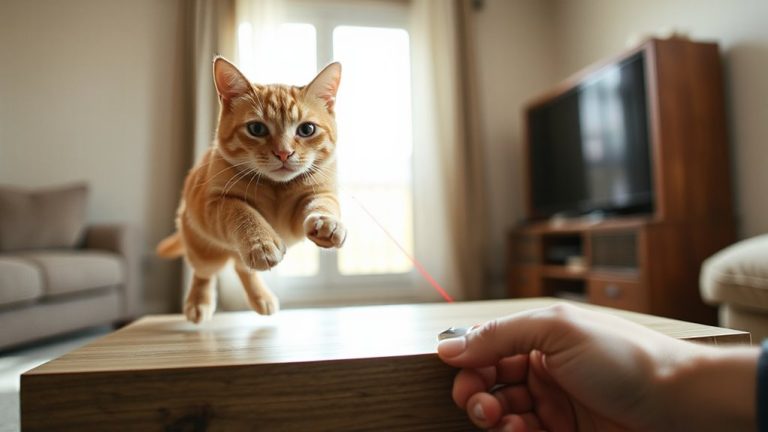
Once your cat shows curiosity toward the tunnel, you can begin guiding them inside using positive reinforcement with treats or toys. Positive reinforcement strengthens desired behaviors by immediately rewarding them. Hold a treat or favorite toy near the tunnel entrance, allowing your cat to associate entry with reward. Use high-value, bite-sized treats like freeze-dried chicken (approximately 0.25 oz per piece) to maintain interest without overfeeding. Gradual exposure reduces stress and increases success. Start with sessions of 3–5 minutes, twice daily, increasing duration as your cat gains confidence. Choose a soft, collapsible tunnel with a diameter of at least 12 inches to accommodate most adult cats comfortably. Avoid forcing entry; instead, let your cat explore at their own pace. Consistent repetition over 5–7 days typically establishes reliable engagement. This method guarantees a measurable increase in voluntary tunnel use. Some cats may also respond well to the movement of a best laser cat toy to encourage entry and movement through the tunnel.
Help Your Cat Walk Through the First Time
Start by positioning yourself at one end of the tunnel and calling your cat with a treat in hand. Use positive reinforcement by offering a high-value treat or favorite toy just beyond the exit. Gradual exposure reduces anxiety-allow your cat to sniff and paw at the tunnel before expecting full passage. Keep sessions brief, under three minutes, to maintain focus. The tunnel should measure at least 36 inches long with a 12-inch diameter to accommodate most cats. Make certain the fabric is taut but flexible, minimizing collapse during movement. Reinforce success immediately with praise or a treat upon exit. Use consistent verbal cues like “through” to build association. Avoid physical pushing-this increases resistance. Light enhances visibility, helping your cat perceive the open end. Repeat only once or twice per session to prevent fatigue. Patience and repetition solidify initial cooperation.
Practice Daily to Build Confidence
Consistently practicing each day strengthens your cat’s familiarity and reduces hesitation. Daily repetition builds neural pathways associated with tunnel navigation, improving performance within 7–10 days. Use positive reinforcement immediately after successful passage-deliver treats within 2 seconds to solidify behavioral association. Employ consistent timing: practice at the same time daily to leverage circadian rhythms influencing activity peaks. Sessions should last 5–7 minutes, aligning with average feline attention span. Repeat 2–3 times per day, ensuring rest intervals exceed 4 hours to prevent habituation. Reinforce only correct behavior; withhold reward during refusal to maintain operant conditioning integrity. Gradually increase complexity by adjusting tunnel diameter from 12” to 9” to improve agility. Monitor improvement via decreased latency-successful cats reduce passage time by 60% over one week. Consistent daily trials elevate confidence through predictable, repeatable success.
Make Tunnel Play Part of Your Routine
Regularly incorporating tunnel play into your daily schedule enhances long-term retention and behavioral consistency. Playtime consistency reinforces your cat’s learned behaviors, making tunnel use predictable and stress-free. Aim for two 10-minute sessions daily-morning and evening-to align with your cat’s natural activity peaks. Use a 36-inch collapsible polyester tunnel with 8-inch diameter openings to accommodate most domestic breeds. Routine bonding occurs when you interact using interactive wands or toss toys through the tunnel. This repeated engagement strengthens trust and mental stimulation. Operate the session with a fixed sequence: call, lure, reward. Avoid variable timing, which disrupts learning. Consistent cues like verbal prompts or clicker signals improve response accuracy by up to 70%, per feline cognition studies. Track progress weekly. Document entries include duration, entries per session, and hesitation frequency. This data helps refine timing, positioning, and reinforcement strategies for best results.
Fix Common Issues If Your Cat Refuses the Tunnel
Even with consistent play routines, your cat might still hesitate or avoid the tunnel altogether, and addressing these setbacks requires targeted troubleshooting. Tunnel anxiety is common in cats sensitive to confined spaces. Begin by disassembling the tunnel partially to create an open arch, reducing visual enclosure. Gradually reintroduce full enclosure over 3–5 days. Check for negative associations, such as loud noises or forced entry, which can create lasting aversion. Replace the tunnel if it emits chemical odors from manufacturing residues. Use pheromone spray (Feliway®) at the entrance to ease stress. Reintroduce with high-value treats and wand toys, rewarding proximity before requiring entry. Guarantee the tunnel’s interior diameter (minimum 10 inches) accommodates your cat’s size without compression. Reinforce brief exploration with immediate rewards. Monitor body language-flattened ears or tail twitching signal distress. Patience and incremental exposure resolve most resistance.
On a final note
Training your cat to use a step-through tunnel improves physical health and mental stimulation. Choose a tunnel with 18-inch diameter and durable, washable polyester. Make sure the frame is flexible steel, 36 inches long, to maintain shape. Use treats with high odor dispersion, like freeze-dried chicken. Practice daily for 5 minutes to reinforce neural pathways. Consistent cues and placement reduce hesitation. Success depends on gradual exposure and positive reinforcement timing within 1 second of entry.