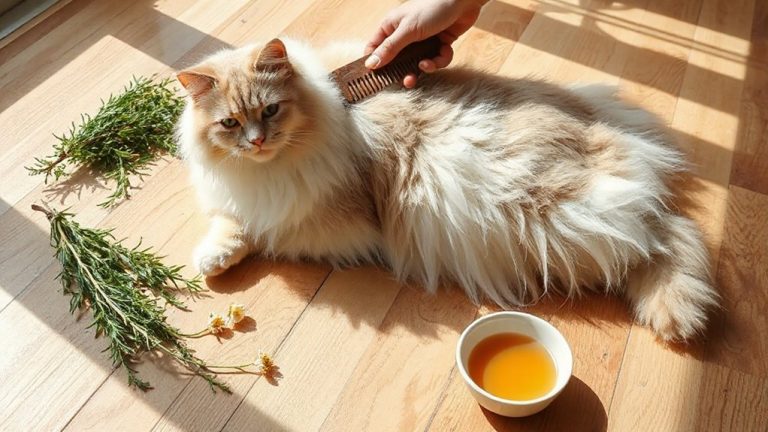
How Often Should You Bathe Your Cat? Factors Influencing Bathing Frequency
You should bathe your cat every 4–6 weeks to maintain skin and coat health. Long-haired cats may need it every four weeks to prevent matting and reduce shedding by up to 90%. Outdoor cats benefit from baths every 2–4 weeks to remove allergens and pests. Use a pH-balanced, hypoallergenic shampoo (pH 6.2–7.4) and water between 98–104°F. Medicated shampoos are needed for conditions like seborrhea or mites. Frequency adjustments depend on age, coat type, and health status-factors shaping your cat’s unique care plan.
Notable Insights
- Most cats need a bath every 4 to 6 weeks, but frequency depends on coat type, lifestyle, and health.
- Long-haired cats benefit from bathing every four to six weeks to prevent matting and reduce shedding.
- Outdoor cats may require bathing every 2–4 weeks due to exposure to dirt, allergens, and parasites.
- Senior or medically compromised cats may need gentle, infrequent bathing with mild, pH-balanced shampoos.
- Over-bathing (more than every three weeks) can strip natural oils, especially in cats with sensitive skin.
How Often Should You Bathe Your Cat?
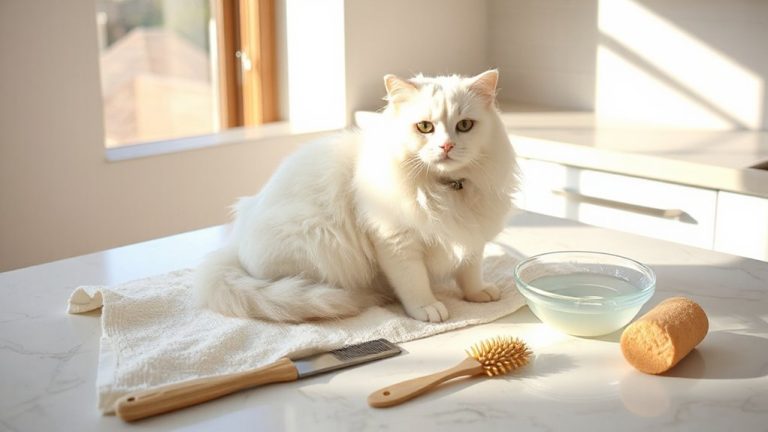
How often do you really need to bathe your cat? Most cats require bathing every 4 to 6 weeks, but frequency depends on individual factors. Cat anxiety and skin sensitivity considerably influence bathing schedules. Frequent bathing-more than once every three weeks-can strip natural oils, leading to dryness and irritation. For cats with skin sensitivity, hypoallergenic, pH-balanced shampoos (pH 6.2–7.4) are essential. These formulations preserve the stratum corneum and reduce inflammatory responses. Water temperature should be 100–102°F (37.8–38.9°C), mimicking body temperature, to minimize stress. High-noise dryers increase cat anxiety, so use low-decibel models (<65 dB). If your cat grooms normally and has no medical conditions, bathing every 2–3 months may suffice. Always consult a veterinary dermatologist for cats with seborrhea or allergies. Preventive care reduces dermatological flare-ups and supports long-term coat health.
How to Tell When Your Cat Needs a Bath
Why does your cat suddenly smell musty or feel greasy to the touch? These are clear signs your cat needs a bath. A greasy coat indicates natural oils have accumulated, often due to reduced grooming. Visible dirt, especially around the paws, tail, or face, confirms exposure to contaminants. Monitor for matted fur, fecal residue, or oily residue on your hands after petting-these are clinical indicators for intervention.
| Symptom | Action Required |
|---|---|
| Greasy coat | Wash with cat-specific shampoo |
| Visible dirt | Bathe immediately |
| Musty odor | Cleanse and dry thoroughly |
| Fecal contamination | Spot-clean or full bath |
Address these promptly. Use lukewarm water and a gentle shampoo formulated for felines. Dry completely to prevent chills. Regular checks prevent buildup and maintain hygiene.
Do Long-Haired Cats Need Baths More Often?
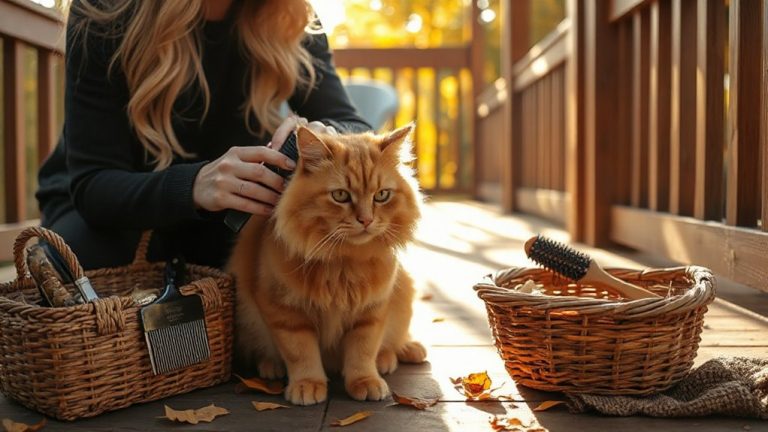
Most long-haired cats need bathing every four to six weeks to prevent matting and skin issues. Regular bathing supports effective mat prevention by removing loose undercoat and debris trapped beneath the top layer. Without routine care, dense fur mats can form close to the skin, restricting airflow and leading to irritation. You’ll also improve shedding control, as baths remove up to 90% of loose hairs compared to brushing alone. Use a gentle, pH-balanced cat shampoo-human products disrupt feline skin acidity. Warm water (100–103°F) guarantees comfort while effectively cleansing the coat. Focus on areas prone to tangles: behind ears, underarms, and hind legs. Thorough rinsing is essential; residue causes dryness. Dry completely with a low-heat blow dryer set below 120°F to avoid burns and reduce drying time. Consistent bathing extends time between professional grooming visits and maintains coat health.
Do Outdoor Cats Require More Baths?
When your cat spends time outdoors, doesn’t it pick up more than just stories from its adventures? Outdoor cats face increased mud exposure, rolling in damp soil or tracking debris into their fur. This accumulation traps allergens and promotes bacterial growth. You should consider bathing them every 2–4 weeks, depending on activity level and environment. Frequent bathing aids in parasite prevention, removing ticks, flea eggs, and mite larvae before infestations establish. Use a veterinary-approved shampoo with pyrethrins or fipronil for enhanced ectoparasite control. These formulations remain effective for up to 14 days post-application. Avoid over-bathing with harsh detergents-limit frequency to preserve natural sebum levels. A diluted chlorhexidine solution (2%) can be used biweekly if skin infections are a concern. Always rinse thoroughly; residue increases dermatitis risk. Towel-dry immediately and monitor behavior post-bath to reduce stress responses.
Bathing Older Cats: Adjusting for Age
Bathing senior cats demands modifications to routine practices due to age-related physiological changes. Your older cat likely experiences joint stiffness, limiting mobility and making grooming uncomfortable. Reduced flexibility can prevent thorough self-cleaning, especially along the back and hindquarters. However, frequent bathing isn’t the solution. Senior cats develop increased skin sensitivity, reducing sebum production and weakening the skin barrier. Use mild, hypoallergenic shampoos formulated for sensitive feline skin-pH between 6.2 and 7.5. Limit baths to every 4–6 weeks only if necessary. Water temperature should be 98–102°F to prevent thermal stress. Support your cat’s body during bathing to reduce strain on arthritic joints. Towel-dry immediately with absorbent, non-irritating fabric. Monitor for signs of dryness or irritation post-bath. Adjust frequency based on individual tolerance, not age alone.
Medical Reasons Your Cat Might Need a Bath
A bath may be medically necessary for your cat if skin conditions, parasites, or environmental contaminants compromise their health. Skin conditions like seborrhea, fungal infections, or allergies often require medicated shampoos with active ingredients such as chlorhexidine (2–4%) or ketoconazole (1–2%). These formulations reduce microbial load and soothe inflamed tissue. Parasites including fleas, mites, or lice may necessitate pyrethrin-based or lime-sulfur dips, applied every 5–7 days until eradicated. Contaminants like motor oil or pesticides demand immediate decontamination using mild dish soap and lukewarm water to prevent dermal absorption. Odor management is secondary but critical in chronic cases, especially with impacted anal glands or metabolic disorders like renal disease. Use pH-balanced (5.5–7.0) cleansers to preserve the skin’s acid mantle. Bathwater temperature should remain between 100–104°F. Frequency depends on diagnosis-typically weekly to biweekly during treatment-then tapers as symptoms resolve.
On a final note
You should bathe your cat only when necessary, typically every 4 to 6 weeks. Frequent bathing removes natural oils, disrupting skin pH and increasing dryness. Long-haired cats may need weekly brushing but only monthly baths. Outdoor cats require more frequent cleaning due to environmental contaminants. Older or arthritic cats benefit from spot-cleaning. Medicated baths follow veterinary guidelines, often every 7–14 days for dermatological conditions. Use pH-balanced, cat-specific shampoos at 100–105°F water temperature.