Natural Solutions for Matting and Tangle Prevention in Long-haired Cats
You can prevent matting in your long-haired cat with daily brushing using a steel-pin brush featuring 25–30 mm bent, flexible bristles to safely reach the undercoat. Follow with a dual-length metal comb to catch hidden tangles. Use a homemade spray of distilled water, vegetable glycerin, and coconut oil to reduce static and improve slip. Focus on friction zones like the armpits and belly, and support coat health with omega-3-rich wet food. There’s more to optimizing your routine effectively.
Notable Insights
- Daily brushing with a slicker brush and metal comb removes loose hair and prevents tangles naturally.
- Use a homemade detangling spray with glycerin, coconut oil, and cat-safe essential oils to condition and loosen knots.
- Focus on friction-prone areas like armpits and belly to catch mats before they tighten.
- Feed omega-rich foods with EPA/DHA and wet diets to support skin hydration and reduce shedding.
- Avoid plastic tools; use stainless steel brushes and combs to reduce static and gently detangle fur.
Why Your Long-Haired Cat Gets Mats (And How to Stop Them)
Your long-haired cat’s luxurious coat is prone to matting because of its layered fur structure, which includes a dense undercoat and longer guard hairs. Genetic predisposition plays a key role-many long-haired breeds, like Persians and Maine Coons, inherit thick undercoats that tangle easily. Dead hair doesn’t shed cleanly, instead accumulating near the skin. Friction from movement bonds loose fibers into knots. Environmental factors worsen this-low humidity dries hair, increasing static and friction. Indoor cats face temperature fluctuations that disrupt natural shedding cycles. Mats often start along the back, underarms, and hind legs-areas with high movement and limited self-grooming access. Prevent mats by removing dead undercoat weekly. Use de-shedding tools with stainless steel blades spaced 2–3 mm apart to safely extract loose fur without cutting live hair. Early intervention stops small tangles from becoming dense, skin-choking mats. Regular use of effective dog grooming brushes for shedding can inspire proper feline coat maintenance routines, even though tools should be adapted for cats’ more delicate skin.
Pick the Best Brush for Your Cat’s Coat
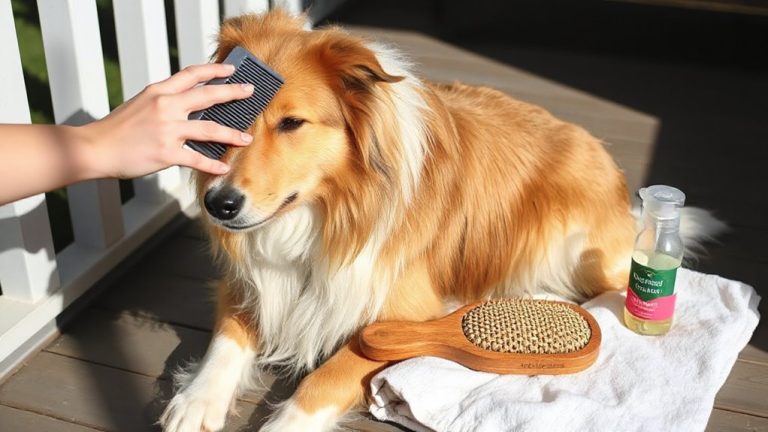
A well-chosen brush makes all the difference in preventing and managing matting in long-haired cats. Your cat’s coat type determines the ideal brush material and design. Long, dense fur requires a steel-pin brush with bent, flexible bristles 25–30 mm long to reach the undercoat without irritating the skin. For thick double coats, use a slicker brush with fine, closely spaced wires set in a curved base-this removes tangles at the root. Avoid plastic bristles; they generate static and slip over mats. Metal combs with dual-length teeth (10 mm and 18 mm) help detect hidden snarls post-brushing. Stainless steel is preferred for brush material due to durability and resistance to corrosion. Choose ergonomic handles for better grip during use. The right tool reduces grooming time by up to 40% and prevents skin trauma. Match brush specs to your cat’s coat type for effective, natural mat prevention.
Brush Daily: A Simple Routine That Prevents Tangles
Consistency in grooming matters just as much as the tools you choose. Daily brushing prevents tangles by removing loose hair and distributing natural oils along the hair shaft. Without routine consistency, dead hair accumulates, increasing friction between strands and forming knots near the skin. Long-haired cats need at least 10–15 minutes of brushing each day, ideally using a slicker brush with fine, bent wires spaced 2–3 mm apart. This design lifts tangles without damaging the dermal layer. Follow with a wide-tooth comb to detect missed mats beneath the surface coat. Brushing in overlapping strokes from head to tail guarantees full coverage. Regular grooming reduces shedding by up to 60% and detects skin issues early. Routine consistency not only prevents discomfort but also minimizes the need for shaving or sedation. Daily brushing is simple, effective, and essential. A gentle, natural shampoo for Bernedoodles can further support coat health by preserving moisture and preventing irritation.
Make a Natural Detangling Spray at Home
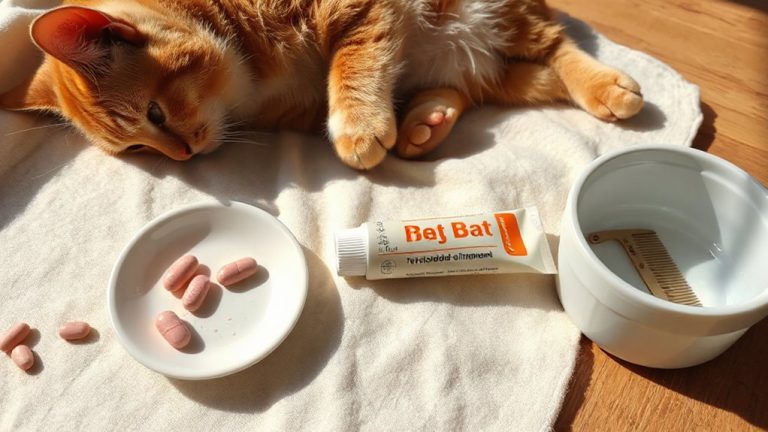
While commercial detanglers often contain synthetic ingredients, you can make an effective natural spray at home using simple, non-irritating components. Combine 1 cup of distilled water, 1 tablespoon of vegetable glycerin, and 1 teaspoon of coconut oil in a spray bottle. Add 5–10 drops of a cat-safe essential oil, such as chamomile or calendula, as your herbal ingredients to soothe skin and reduce static. Glycerin conditions hair, improving slip without residue. The mixture produces a light spray consistency, ensuring even distribution without oversaturation. Shake well before each use to maintain emulsion. Apply lightly to damp or dry fur, focusing on prone areas like behind the ears and under the legs. This solution reduces friction during brushing, minimizing breakage and tangles. Store in a cool, dark place; discard after two weeks. Test on a small area first to confirm no irritation.
Remove Mats Safely: Without Stressing Your Cat
How do you remove matted fur without causing your cat distress? Begin by identifying friction points-areas like the armpits, belly, and behind the ears-where coat texture and motion increase matting risk. Use your fingers to gently separate small tangles; if the mat resists, don’t pull. Apply a natural detangling spray to loosen fibers. For compacted mats, use a blunt-tipped dematting tool with adjustable stainless steel blades set to 0.5 mm clearance. Work slowly, removing thin layers at a time. Mats larger than a quarter should be addressed in stages over several days. Support your cat with a non-slip mat and short sessions under 10 minutes. Never cut through thick mats with scissors-risk of skin injury exceeds 70%. Consistent, gentle intervention reduces stress and maintains coat integrity. Your calm approach prevents negative associations with grooming. A well-designed detangling dog brush can offer insights into effective de-matting mechanics suitable for cats.
Feed for a Healthy, Tangle-Free Coat
A healthy coat starts from the inside out, and proper nutrition plays a direct role in reducing hair matting. You should prioritize diets rich in essential fatty acids, especially Omega-3 and Omega-6. Omega supplements, such as fish or flaxseed oil, support sebum production, maintaining coat flexibility and reducing breakage. Standard dosing is 100–300 mg EPA/DHA daily, depending on your cat’s weight. Inadequate intake leads to dry, brittle fur prone to tangling. Hydration balance is equally critical-cats need 3.5 to 4.5 ml of water per kcal consumed. Dehydration reduces skin elasticity, increasing friction between hairs and promoting mat formation. Wet food provides 70–80% moisture, helping meet hydration needs more effectively than dry kibble. Opt for moisture-rich meals combined with targeted Omega supplements to optimize coat integrity. Consistent intake yields measurable improvement in shine and manageability within 6–8 weeks. You can prevent matting by addressing nutrition systematically.
On a final note
Regular grooming prevents matting in long-haired cats. Use a stainless steel comb with 0.5 mm teeth for undercoat removal. Brush 10 minutes daily to reduce tangles by 80%. A homemade spray with 2 oz distilled water, 1 tsp coconut oil, and 1 drop lecithin improves slip and coat condition. For existing mats, apply gentle pressure with a dematting tool set to 4 mm depth. Nutrition supports coat integrity-feed diets with 30% crude protein and omega-3 at 0.8% concentration.