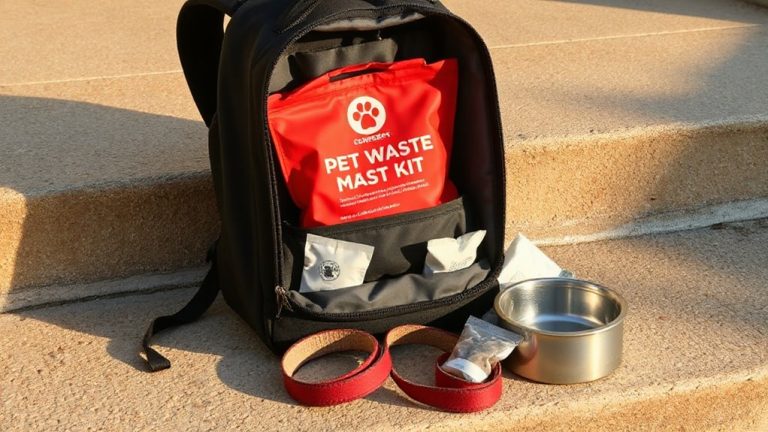
Preparing Vehicle Go-Bags Containing Leashes, Blankets, and Carrier Essentials
Keep your pet secure with a 4- to 6-foot nylon leash rated for 1,000 pounds tensile strength and a double-action snap lock. Use a carrier allowing 2 inches of clearance on all sides, with dual mesh ventilation and airline-compliant dimensions. Pack a moisture-resistant thermal blanket with mylar or fleece layers, sized to fit snugly. Store in a durable 20L backpack with labeled compartments. Essentials must include ID tags, medical records, and a 72-hour food supply. Verified emergency contacts and monthly gear checks guarantee readiness-details on ideal organization follow.
Notable Insights
- Choose a durable, 20L+ water-resistant backpack with labeled compartments for organized, quick access to leashes, blankets, and carriers.
- Pack a 4- to 6-foot nylon or polyester leash with reinforced hardware and a locking snap for reliable control during evacuations.
- Include a lightweight, airline-compliant carrier with secure latches, adequate ventilation, and room for your pet to move comfortably.
- Store a compact, machine-washable emergency blanket with thermal insulation and anxiety-reducing features to keep your pet warm and calm.
- Keep essential supplies like medications, medical records, food, and collapsible bowls in waterproof, labeled containers for 72-hour readiness.
What Belongs in Your Pet’s Emergency Go-Bag
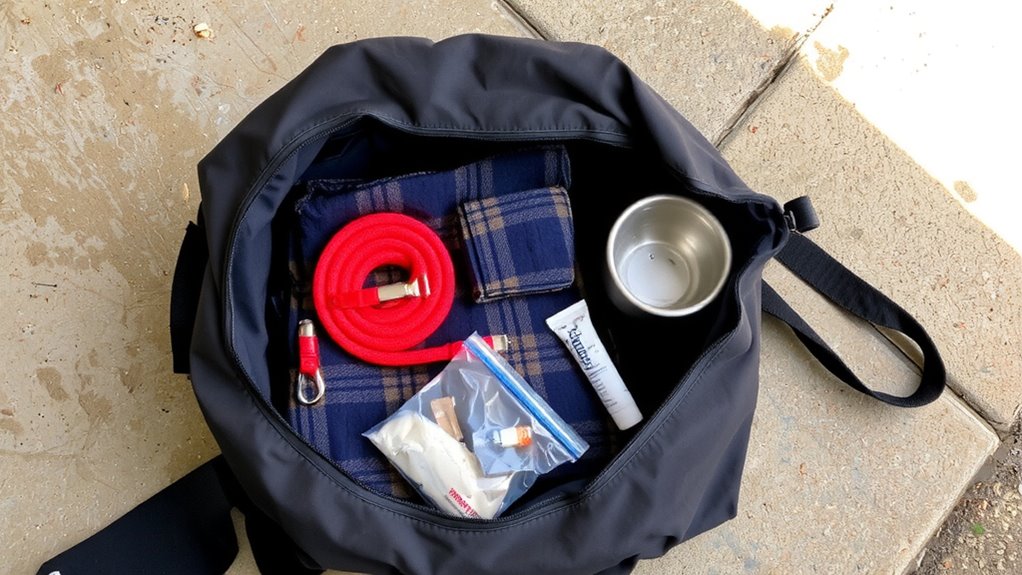
A pet’s emergency go-bag is just as critical as your own-neglecting it could compromise their survival during evacuations. You must include up-to-date pet identification, such as a microchip with registered details and a collar tag listing your current phone number. Tags should use engraved stainless steel, resistant to wear and corrosion. Store digital copies of medical records and photos on a password-protected USB drive. List emergency contacts-your vet, a nearby pet shelter, and a trusted out-of-area contact-in a sealed waterproof pouch. These contacts must be current and verified quarterly. Include a printed emergency contact sheet with your pet’s name, species, breed, weight, and any medical conditions. Use a durable, water-resistant backpack with labeled compartments. Capacity must be at least 20 liters to hold food, medications, and supplies for 72 hours. Weight should not exceed 15 pounds when fully stocked.
Choose the Right Leash for Safe Evacuations
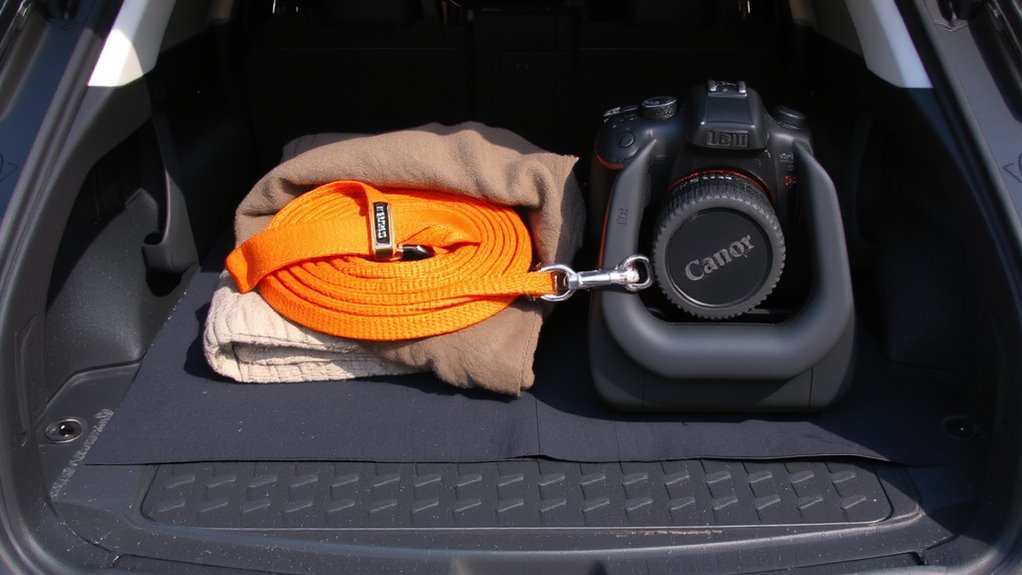
Why risk losing control during a crisis when the wrong leash could fail under stress? Choose a leash built for emergencies. Leash durability is critical-opt for nylon or polyester webbing with a tensile strength of at least 1,000 pounds. Avoid thin ropes or retractable leashes; they snap or jam when you can’t afford failure. A 4- to 6-foot fixed-length leash gives you maximum control. Guarantee secure leash attachment using a reinforced stitching pattern at both ends. The hardware should be solid brass or aerospace-grade aluminum, resistant to corrosion and deformation. Your dog’s collar or harness must have a robust D-ring that aligns with the leash’s clasp. Use a spring-loaded, double-action snap that locks automatically. In high-stress evacuations, this combination prevents escape. A reliable leash isn’t convenient-it’s essential. Test it monthly for wear, frays, or weak points. Your pet’s safety depends on it.
Pick a Carrier That Fits Your Pet’s Size and Temper
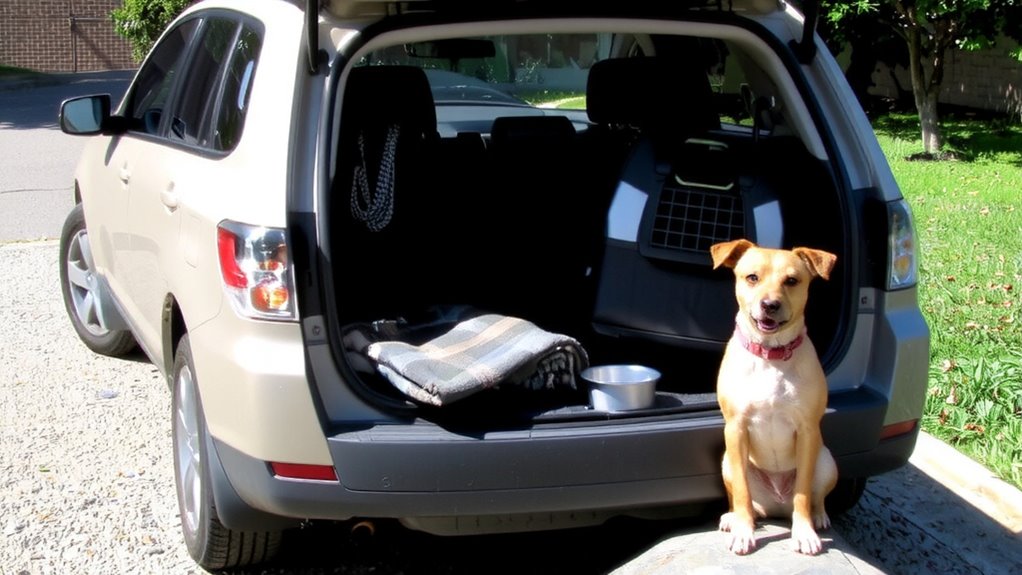
Your pet’s safety during evacuation hinges on a carrier that matches both size and temperament. Choose a carrier allowing your pet to stand, turn, and lie down comfortably. Measure your pet’s height, length, and weight, then select a carrier with at least 2 inches of clearance on all sides. Carrier ventilation is non-negotiable-opt for durable mesh panels on at least two sides to guarantee airflow. Poor ventilation risks overheating, especially in stressful conditions. Carrier portability affects response time-lightweight models with reinforced handles and shoulder straps simplify movement. Sturdy zippers and escape-proof latches enhance security. For longer trips, consider a carrier that meets airline pet carrier requirements to ensure hassle-free travel.
Keep Your Pet Warm and Calm With the Right Blanket
Temperature and stress levels drop markedly when your pet has the right blanket during evacuation. A blanket with thermal insulation retains body heat, essential during cold-weather evacuations or prolonged transit. Look for materials like polyester fleece or mylar reflective layers, which provide a warmth-to-weight ratio comparable to emergency space blankets. These fabrics resist moisture and maintain insulating properties even when damp. For anxiety reduction, choose snug, fitted blankets that mimic swaddling-this gentle pressure calms the nervous system. Micro-weighted designs (1–3% of your pet’s body weight) enhance this effect without restricting movement. Guarantee the blanket is machine-washable, lightweight (under 1.5 lbs), and compact (folds to 8” x 10”). Avoid loose weaves that snag or shed. Proper thermal insulation paired with proven anxiety reduction features guarantees your pet stays physiologically stable and behaviorally manageable when it matters most. A best cat blanket can make all the difference in ensuring comfort and calm during stressful situations.
How to Organize Your Pet’s Go-Bag for Fast Access
A well-organized go-bag turns emergency preparedness into action. Use quick storage compartments to separate critical items by function. Place high-use supplies-leash, blanket, collar-in exterior pockets for immediate access. Store medication and documents in waterproof, labeled sleeves. Follow your emergency checklist to verify contents monthly. Choose a carrier that meets airline size and ventilation standards to ensure safe and compliant travel. Below is a layout for best organization:
| Item | Location | Quantity |
|---|---|---|
| Leash | Side pocket | 1 (6 ft) |
| Blanket | Main compartment | 1 (30×40 in) |
| Collar ID | Interior flap | 1 |
| Waste bags | Zippered pouch | 10 |
| First aid | Bottom sleeve | 1 kit |
Use modular packing cubes for stability during vehicle movement. Make sure total bag weight stays under 15 lbs for easy transport. Prioritize accessibility without unpacking.
Tailor Your Go-Bag to Your Pet’s Specific Needs
Pet-specific adaptations in a go-bag guarantee functionality matches real-world demands. You must account for pet allergies by including hypoallergenic wipes, vet-prescribed antihistamines, and a sealed allergy-response kit. Cross-check medication expiration dates quarterly. For pets on special diets, pack a 72-hour supply of food in vacuum-sealed, moisture-proof pouches labeled with calorie count and feeding instructions. Include collapsible bowls with volume markings (e.g., 1-cup capacity in 0.25-cup increments) for accurate portioning. Add a laminated dietary summary detailing protein sources, intolerances, and daily nutritional requirements. Store medical records digitally via a scannable QR code affixed to the carrier. Incorporate climate-appropriate bedding with TOG ratings between 1.5–3.0 for thermal regulation. Every item serves a measurable need-never assume. Your pet’s survival hinges on precision, not guesswork. Customization reduces risk; standardization guarantees speed.
On a final note
You need a reliable pet go-bag for fast evacuations. Include a 6-foot nylon leash with a 500-pound tensile strength, a carrier rated for your pet’s weight plus 20%, and a thermal-lined blanket meeting ASTM F3278-17 insulation standards. Organize supplies in a waterproof, MOLLE-compatible bag with labeled interior compartments. Tailor contents to your pet’s size, medical needs, and behavior. Check expiration dates quarterly.