How to Adjust Diet for Dogs With Hypothyroidism and Weight Gain
You should reduce your dog’s daily calories by 25% to 40% to match their slowed metabolism. A 20 kg dog with hypothyroidism needs just 860–1,000 kcal/day, not 1,300 kcal. Use the RER formula: 70 × (body weight in kg)^0.75. Feed 25–30% crude protein from animal sources like chicken or fish. Include 200–300 mg EPA/DHA per 10 lbs from fish oil. Avoid corn, wheat, and soy. Measure food by weight with a gram scale. One extra cup daily can cause over 10 lbs of gain yearly. Split meals twice daily and monitor weight every two weeks. Adjust portions based on body condition. There’s more you need to take into account for long-term success.
Notable Insights
- Reduce daily calories by 25–40% using the RER formula to match your dog’s slower metabolism.
- Prioritize high-quality animal-based proteins like chicken or fish to preserve lean muscle mass.
- Include marine-sourced omega-3s (200–300 mg EPA/DHA per 10 lbs) to support thyroid function and reduce inflammation.
- Avoid corn, wheat, and soy; choose low-glycemic carbs like sweet potatoes and lentils instead.
- Measure food precisely with a gram scale and feed two measured meals daily to control weight gain.
Adjust Calories for a Slower Metabolism
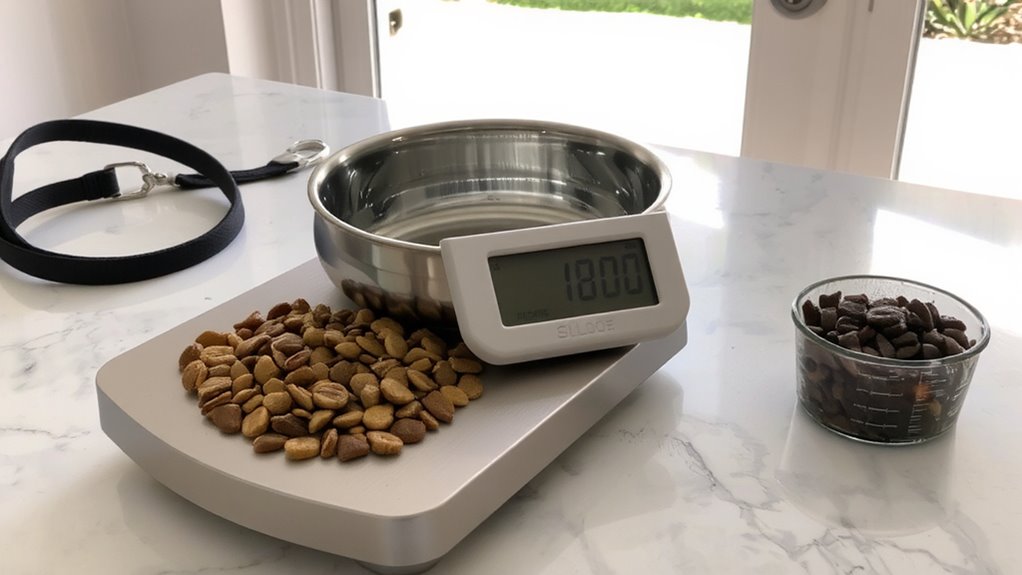
Since your dog’s metabolism slows down with hypothyroidism, you’ll need to reduce their daily calorie intake to prevent weight gain. A decreased metabolic rate means fewer calories burned at rest. Even moderate activity won’t offset the drop in energy expenditure. Calorie reduction is essential-typically 25% to 40% less than maintenance levels for healthy dogs. Use resting energy requirement (RER) formulas: RER = 70 × (body weight in kg)^0.75. Then adjust based on activity and thyroid status. For example, a 20 kg hypothyroid dog needs roughly 860–1,000 kcal/day, not the standard 1,300. Measure food precisely using a gram scale. Overfeeding by just 10% can lead to 5% body weight gain in six weeks. Use calorie-controlled commercial diets labeled for metabolic support. These often include L-carnitine to enhance fat metabolism. Consistent calorie reduction sustains ideal body condition despite slowed metabolic rate. Monitor weight every two weeks.
Prioritize Lean Protein to Maintain Muscle
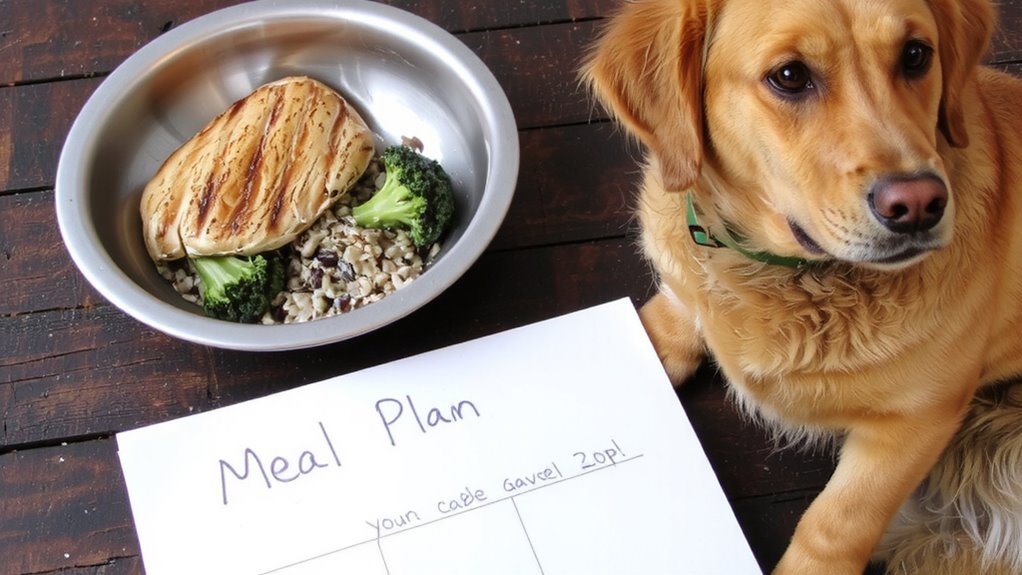
Although your dog’s metabolism slows with hypothyroidism, you still need to preserve lean muscle mass to support mobility and metabolic health. Prioritize a high protein diet to achieve effective muscle preservation. Aim for 25–30% crude protein on a dry matter basis in commercial foods. Choose animal-based sources like chicken, turkey, or fish, which provide complete amino acid profiles essential for tissue repair. High protein intake helps offset muscle atrophy linked to reduced activity and lower energy expenditure. Feed approximately 3–4 grams of protein per pound of ideal body weight daily. This supports nitrogen balance and sustains lean mass during weight management. Unlike fats and carbs, dietary protein increases thermogenesis, aiding calorie control. Consistent high protein nutrition acts like structural reinforcement in a weakening system-subtle but critical. Avoid plant-heavy proteins with low biological value. Always verify guaranteed analysis on labels.
Include Omega-3s to Support Thyroid Function
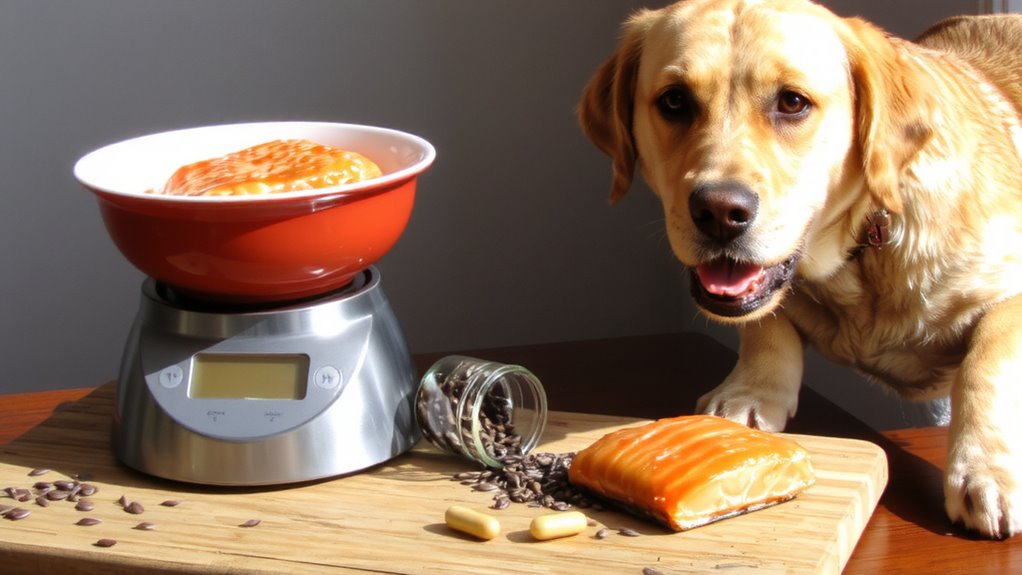
While managing your dog’s hypothyroidism, incorporating omega-3 fatty acids isn’t just beneficial-they’re essential for optimizing thyroid function and reducing systemic inflammation. Omega-3s modulate cellular signaling, supporting healthy hormone production and metabolic rate. The most effective sources are fish oils, rich in eicosapentaenoic acid (EPA) and docosahexaenoic acid (DHA), which directly influence cell membrane fluidity and endocrine activity. Use cold-pressed fish oil supplements delivering 200–300 mg combined EPA/DHA per 10 lbs of body weight daily. Flax seeds contain alpha-linolenic acid (ALA), but dogs convert ALA to EPA and DHA inefficiently-less than 5% bioavailability. Thus, flax seeds alone are inadequate. Prioritize marine-sourced omega-3s for measurable impact. Regular supplementation improves skin/coat health, lowers triglycerides, and supports immune regulation. Consistent use enhances overall metabolic efficiency in hypothyroid dogs, making fish oils a non-negotiable component of dietary management. For optimal results, choose high-quality omega supplements for pets that are third-party tested for purity and potency.
Avoid Empty Carbs and Fillers
Cutting out empty carbs and fillers is critical when feeding a dog with hypothyroidism. These ingredients offer little nutritional value and can worsen weight gain. Avoid corn, wheat, and soy-common fillers in commercial kibble. Instead, choose grain alternatives like sweet potatoes, chickpeas, or lentils, which provide sustained energy and essential nutrients. These complex carbohydrates have a low glycemic index, helping stabilize blood sugar. Pair them with high-quality fiber sources such as pumpkin, green beans, or psyllium husk to support digestion. Soluble and insoluble fibers regulate bowel function and improve nutrient absorption. A diet rich in functional carbohydrates, not empty calories, supports metabolic efficiency. Fillers dilute nutrient density and increase caloric load without benefit. Replace them with biologically appropriate ingredients that match your dog’s reduced metabolic rate. This shift enhances overall diet quality and helps manage hypothyroid symptoms effectively.
Measure Portions to Control Weight Gain
One cup of food too much per day can lead to a weight gain of over 10 pounds in a year for a medium-sized dog. That’s why portion control is critical for dogs with hypothyroidism. These dogs have slowed metabolisms, making them prone to weight gain even on normal diets. Use an 8-ounce measuring cup or kitchen scale to feed exact amounts recommended by your vet. Divide the daily ration into two meals to stabilize blood sugar and support consistent energy use. Adjust meal frequency based on activity level and metabolic response, typically feeding twice daily. Overfeeding by just 10% can disrupt thyroid hormone replacement therapy. Accurate portions guarantee medication efficacy and prevent fat accumulation. Monitor weight every two weeks and adjust food volume accordingly. Consistent portion control and proper meal frequency are practical, measurable tools to manage your dog’s long-term health.
On a final note
You must adjust your dog’s diet to match their reduced metabolic rate. Feed 20–30% fewer calories than a healthy dog of the same size. Choose foods with at least 25% high-quality protein to preserve lean mass. Supplement with 10–20 mg/kg EPA/DHA daily for anti-inflammatory support. Eliminate corn, wheat, and by-product meals. Use a calibrated measuring cup to guarantee portion accuracy and prevent excess intake. Consistency controls weight.