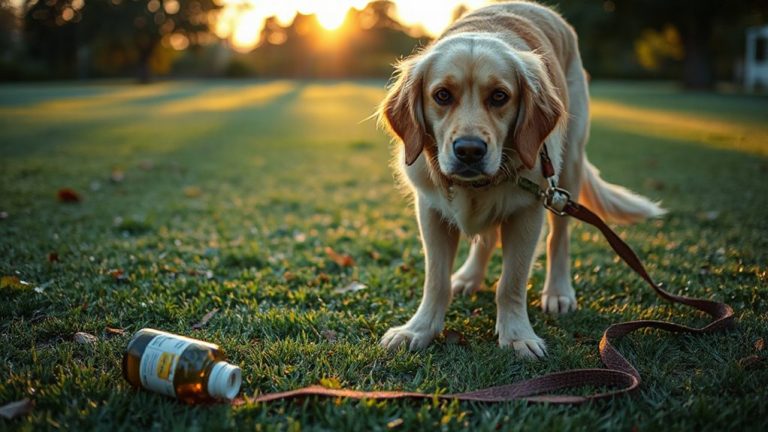
Calming Strategies for Dogs That Growl When Touched in Sensitive Areas
If your dog growls when touched, start by ruling out pain with a vet exam-1 in 3 cases stem from undiagnosed discomfort. Check sensitive areas like the spine or hips using light fingertip pressure (50–100 grams) for 60–90 seconds, noting flinching or lip licking. Use high-value treats within 1–2 seconds of calm behavior during 3–5 minute desensitization sessions. Gradually increase touch duration by 5–10 seconds daily. You’ll learn how to adjust the method based on your dog’s progress.
Notable Insights
- Recognize early body language signs like stiff posture or pinned ears to address discomfort before growling occurs.
- Rule out pain by veterinary examination, as one in three growling cases stems from undiagnosed physical issues.
- Perform gentle palpation with light pressure on sensitive areas when the dog is calm, noting flinching or lip licking.
- Use systematic desensitization, starting with non-sensitive zones and gradually progressing to tender areas over time.
- Reinforce calm behavior with immediate high-value treats and consult a certified behaviorist if progress stalls.
Why Your Dog Growls When Touched
Why does your dog suddenly growl when you reach to pet them? Growling often signals underlying trust issues, especially in rescued or poorly socialized dogs. Body language precedes vocal warnings-watch for stiff posture, averted gaze, or pinned ears. These are measurable indicators of discomfort, not aggression. Dogs rely heavily on nonverbal cues; misreading them disrupts communication. Trust must be built gradually through predictable, low-pressure interactions. Immediate intervention without consent erodes confidence. Instead, use controlled approaches: crouch sideways, avoid direct eye contact, and offer treats. Each encounter should reinforce safety. Over time, conditioned responses replace defensive behaviors. Monitoring frequency, duration, and intensity of growling helps assess progress. Document changes weekly. Trust isn’t assumed-it’s earned through consistent, respectful handling. Address body language early to prevent escalation. For added support, consider integrating vet-recommended Top Picks for Pet Anti-Anxiety Solutions into your calming routine.
Is It Pain or Fear Causing the Growling?
One in three dogs that growl when touched do so because of undiagnosed pain, not fear. Physical discomfort is often the root cause, especially in older dogs or those with prior injuries. You should rule out medical issues first-symptoms like stiffness, limping, or sensitivity along the spine suggest underlying conditions. A vet can perform orthopedic and neurological exams to identify sources of pain. Emotional triggers, such as past trauma or anxiety, may also prompt growling but typically occur without physical signs. Fear-based reactions often escalate in inconsistent patterns, while pain responses are reproducible upon touch. Monitor your dog’s reaction timeline: immediate vocalization or flinching indicates physical discomfort. Growling due to emotional triggers usually involves body language like cowering or avoidance. Accurate diagnosis is essential-mislabeling pain as fear delays treatment. Use observational notes and veterinary assessment to distinguish the two.
Test Sensitive Spots Safely and Calmly
While your dog may not show obvious signs of injury, carefully testing for sensitive areas can reveal hidden sources of pain. Begin with your dog standing or lying in a relaxed position. Using light fingertip pressure, palpate along the spine, shoulders, hips, and legs-common sites for discomfort. Watch closely for subtle body language cues: a flinch, lip lick, ear flick, or turn of the head indicates sensitivity. Avoid any area that causes a reaction. Perform these checks during quiet moments, not after exercise or feeding. Pair each touch with soft praise or a treat to support trust building exercises. Limit sessions to 60–90 seconds to prevent stress. Maintain consistent pressure-approximately 50–100 grams-to guarantee repeatable assessments. Repeat daily to monitor changes. Document responses to identify patterns. This methodical approach guarantees safety and enhances diagnostic accuracy.
Gradual Desensitization to Touch
A systematic approach to touch tolerance begins with controlled exposure. You start by touching areas your dog accepts, like the back or base of the tail, for one to two seconds. Gradually move closer to sensitive zones-groin, ears, paws-over days or weeks. Sessions should last 3–5 minutes, occurring 2–3 times daily. Use low-stimulation environments; ambient noise under 50 dB minimizes stress. Each contact is followed by a pause, allowing the dog to process without reaction. Distance, duration, and pressure increase incrementally-begin with feather-light strokes, progressing to gentle compression. This structured method enhances touch tolerance while supporting trust building. You’re not rushing; you’re reprogramming discomfort through predictability. The dog learns touch isn’t a threat. Consistency in timing and technique improves neural adaptation. Response tracking-recording flinches, growls, or relaxation-measures progress objectively.
Positive Reinforcement for Gentle Handling
You’ve built a foundation through gradual desensitization, teaching your dog that touch follows a predictable pattern and isn’t linked to pain or fear. Now, positive reinforcement strengthens this learning. Each gentle handling session must include precise reward timing-deliver treats within one to two seconds of calm behavior. This narrow window solidifies the connection between touch and reward. Use small, high-value treats (approximately ¼ inch in size) to minimize disruption. Deliver the treat calmly, avoiding sudden movements. Trust building occurs when your dog consistently predicts positive outcomes from contact. Reinforce even brief moments of tolerance, gradually increasing touch duration by five to ten seconds per session. Sessions should last no more than five minutes to prevent overload. Repeat two to three times daily. Consistent pairing of light touch with immediate rewards reshapes your dog’s behavioral response through operant conditioning.
When to See a Vet or Behaviorist
If your dog growls when touched despite consistent training, it’s time to rule out underlying medical issues. Schedule a veterinary exam to review your dog’s medical history, including prior injuries, arthritis, or neurological conditions. Pain or discomfort can cause touch aversion, especially in sensitive areas like the hips, back, or abdomen. Your vet may perform palpation, radiographs, or blood work to diagnose issues. If no medical cause is found, consult a certified canine behaviorist. They’ll assess behavioral triggers such as fear, past trauma, or lack of early socialization. A behaviorist uses systematic desensitization and counter-conditioning protocols with precise thresholds-approaching at 1.5 meters, then gradually decreasing distance based on your dog’s tolerance. Untreated, these responses can escalate. Early intervention improves prognosis. Combining medical insight with behavioral analysis guarantees a targeted, effective approach. Proper nutrition, including diets formulated for senior cat health, can also support overall well-being in aging pets.
On a final note
You must address growling during handling promptly and methodically. Growling often signals pain or fear, not aggression. Rule out medical causes first with a veterinary exam. Use gradual desensitization: start with non-sensitive areas, rewarding calm behavior. Progress in small steps using positive reinforcement. Touch duration and pressure should increase slowly over weeks. Consistency and timing-rewards within 1–2 seconds-ensure effective learning. Consult a certified behaviorist if progress stalls.