How to Flush a Dog’s Eyes: Saline, Syringe Size & Steps
Flush your dog’s eyes at the first sign of irritation, like redness or squinting. Use sterile saline with a pH of 7.4 and osmolality of 300 mOsm/kg. Restrain gently, head level and steady. Use a 3–5 mL syringe or dropper for controlled, low-pressure delivery. Avoid contact with the eye. Flush until debris is cleared. Persistent symptoms signal the need for professional evaluation. You’ll learn the full protocol and warnings next.
Notable Insights
- Flush your dog’s eyes immediately if you notice redness, discharge, or pawing to prevent further irritation or injury.
- Use only sterile saline solution with a pH of 7.4 and no preservatives to safely clean the eye.
- Employ a clean eye dropper or syringe to deliver a gentle stream without touching the eye surface.
- Position your dog seated with head stabilized and eyes level to the floor for effective flushing.
- Seek veterinary care if symptoms like swelling, yellow discharge, or squinting persist beyond 12 hours.
When to Flush Your Dog’s Eyes at Home
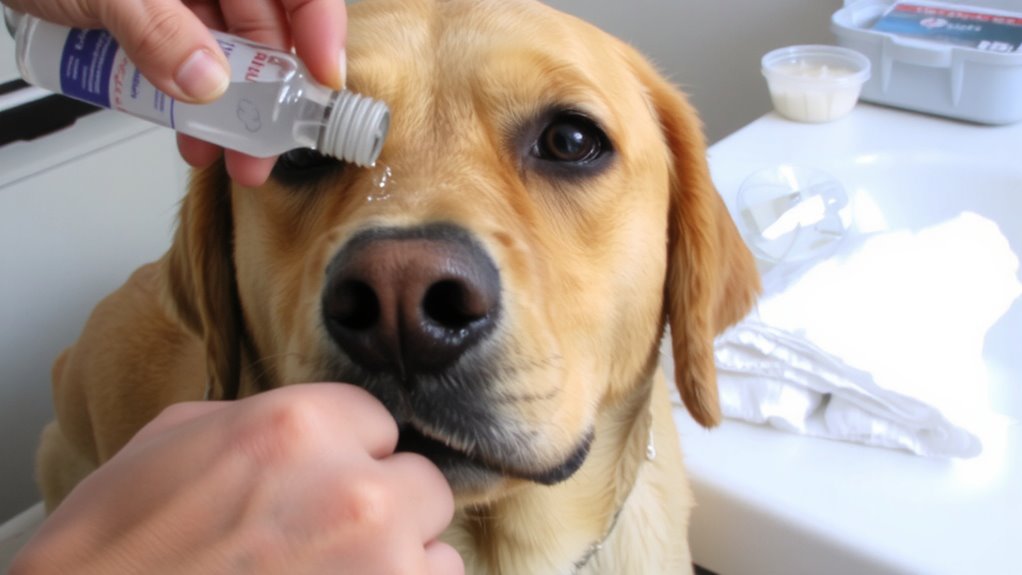
When should you consider flushing your dog’s eyes at home? You should act when you notice signs of eye irritation, such as redness, excessive blinking, or pawing at the eye. These symptoms often indicate the presence of foreign debris like dust, sand, or plant material. Immediate flushing can prevent corneal abrasions and reduce inflammation. Do not delay if your dog shows discharge or squinting, as untreated irritation may lead to infection. Flush at the first sign of discomfort to minimize risk. The goal is to remove particulates before they cause lasting damage. Use sterile saline with a pH of 7.4, matching natural tear composition. A volume of 10–15 mL per eye guarantees adequate irrigation. Act promptly but calmly to avoid stressing your dog. Early intervention improves outcomes markedly.
Safe Solutions and Tools for Flushing Dog Eyes
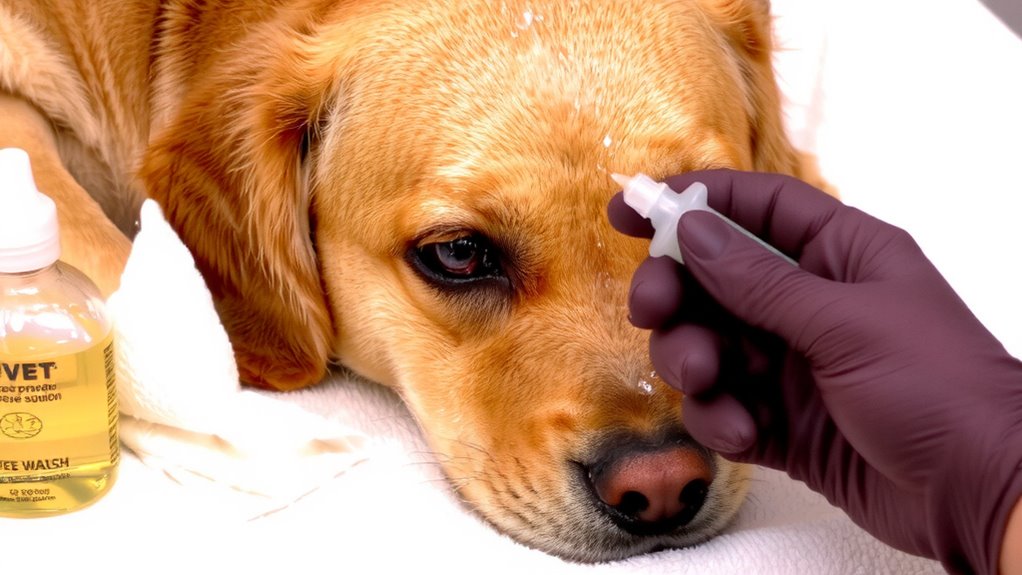
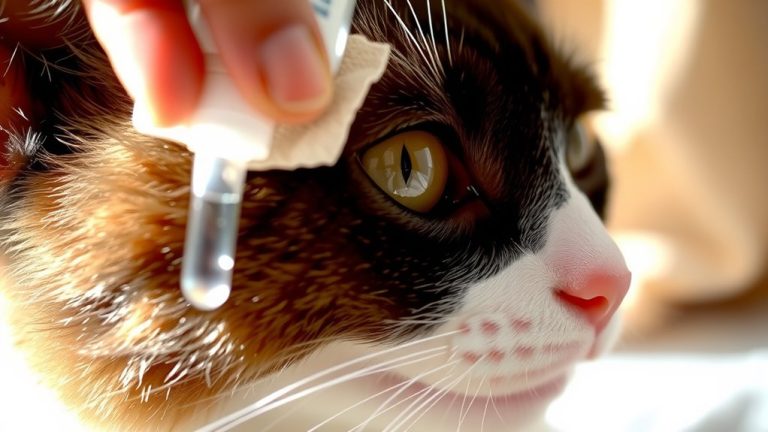
Although you might be tempted to use tap water or homemade remedies, these can disrupt the delicate ocular surface and worsen irritation. Use only sterile saline solution specifically designed for eyes. The ideal saline solution has a pH of 7.4 and an osmolality of 300 mOsm/kg-matching your dog’s natural tears. Avoid solutions with preservatives like benzalkonium chloride, which can cause irritation. Sterile, single-use vials minimize contamination risk. Pair the saline solution with a clean eye dropper or a 3–5 mL syringe without a needle for controlled delivery. Gently squeeze the dropper to release the solution at the inner corner of the eye. The stream should be slow enough to avoid corneal trauma but steady enough to flush debris effectively. Always discard unused solution after use. These tools guarantee safe, effective irrigation without introducing additional irritants.
Calm and Restrain Your Dog Before Flushing
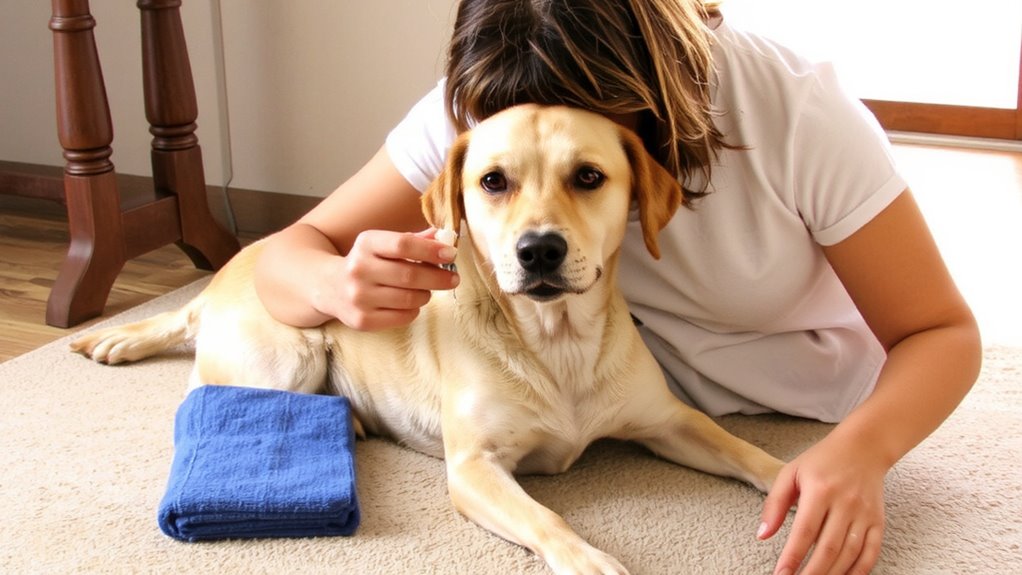
Handling your dog properly begins before the saline touches their eye. Proper positioning guarantees effective flushing and reduces injury risk. Use gentle handling to minimize stress and movement. Calm your dog with a soft voice and slow petting before beginning.
| Factor | Importance |
|---|---|
| Seated position | Stabilizes dog’s head at eye level |
| Assistant hold | One person secures dog, another flushes |
| Front support | Hands under chest prevent forward motion |
| Head alignment | Eyes parallel to floor prevent solution escape |
| Non-slip surface | Prevents sliding during restraint |
Maintain neutral neck posture during restraint. Apply steady pressure with folded arms around the torso-never squeeze. Keep facial contact to reinforce calmness. Proper positioning improves accuracy, while gentle handling prevents trauma. These techniques guarantee cooperation without causing fear or resistance.
How to Flush Your Dog’s Eyes Safely at Home
You can safely flush your dog’s eyes at home with the right tools and technique. Use a sterile saline solution labeled for ophthalmic use in animals-0.9% sodium chloride, pH balanced to 7.4. Avoid tap water, which can worsen eye irritation. Tilt your dog’s head slightly downward to prevent fluid from entering the nasal passage. Gently pull down the lower eyelid to form a small pouch. Administer 3–5 ml per flush using a clean dropper or syringe without a needle. Direct the stream from the inner to outer corner of the eye to remove foreign debris. Repeat if necessary, but no more than three times per eye in one session. Use a fresh cotton pad for each wipe. Do not reuse saline solution after opening for more than 24 hours. Flush immediately after suspected contamination for best results.
Signs Your Dog Needs a Vet Immediately
If your dog shows sudden changes in eye appearance or behavior, it’s time to stop home care and call the vet. Persistent redness indicates underlying inflammation or infection. Swelling around the eye or eyelid can compress delicate ocular structures, impairing vision. Thick, yellow, or green discharge suggests bacterial infection, not just minor irritation. Excessive tearing with cloudy fluid may point to corneal ulcers or blocked tear ducts. Your dog may squint, paw at the eye, or avoid light-clear signs of discomfort requiring professional assessment. Home flushing solutions, like sterile saline (0.9% sodium chloride), are only for mild cases. If symptoms last beyond 12 hours post-flushing, seek immediate veterinary care. Conditions like glaucoma or proptosis can escalate in under 24 hours. Early clinical intervention prevents irreversible damage. Do not delay-your dog’s vision may depend on prompt diagnosis and treatment.
On a final note
You now know when and how to flush your dog’s eyes safely at home. Use sterile saline solution or pH-balanced eye wash with 0.9% sodium chloride. Restrain gently to avoid injury. Flush for 3–5 minutes per eye, aiming the stream from inner to outer canthus. Immediate veterinary care is required if redness, discharge, or squinting persists beyond 12 hours. Improper technique risks corneal damage.