Training Your Cat to Accept a Gentle Bath When Necessary
You can train your cat to accept a gentle bath using gradual acclimation and species-specific techniques. Start by introducing the dry tub and supplies over 7–8 days, pairing exposure with treats. Maintain room temperature at 75–80°F and water at 100–102°F. Use a non-slip mat, pH-balanced shampoo, and microfiber towels. Limit bath time to under five minutes, avoiding the face. Immediate calm interaction reinforces positive associations-and further refinements can enhance success.
Notable Insights
- Gradually acclimate your cat to the bathing area by letting them explore it and rewarding calm behavior with treats.
- Condition positive associations by pairing exposure to bath supplies with praise or favorite snacks over several days.
- Briefly dampen paws during early training to build tolerance while immediately offering rewards.
- Maintain a warm, quiet environment at 75–80°F and use dim lighting to minimize stress during bath time.
- Limit baths to under five minutes, using lukewarm water, gentle shampoo, and microfiber towels for quick drying.
Why Cats Hate Baths: And When Bathing Is Necessary
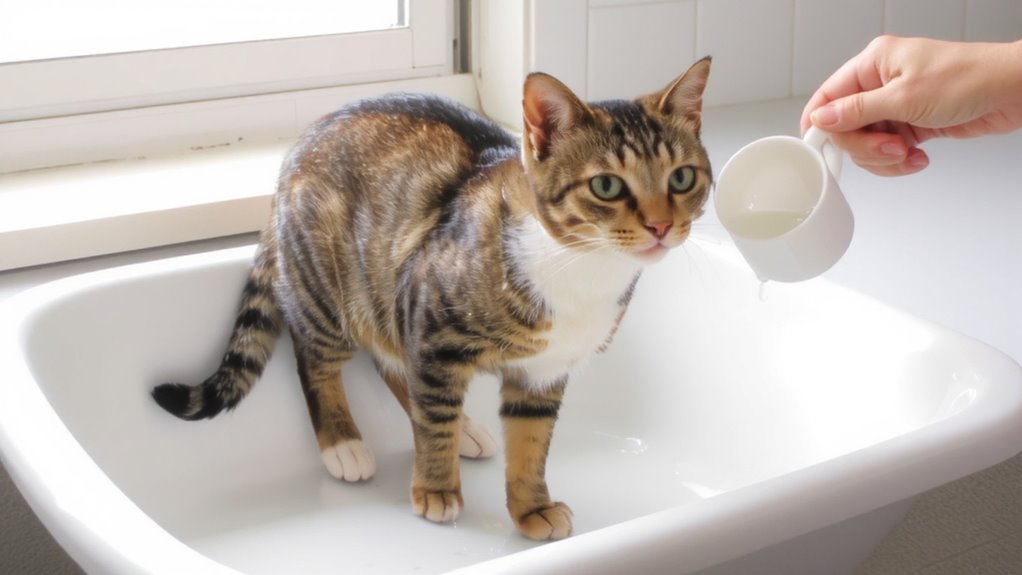
Although cats are fastidious groomers by nature, there are times when bathing becomes necessary despite their instinctive aversion to water. You may need to bathe your cat if it gets into oil, paint, or other toxic substances that self-grooming can’t remove. Cats possess acute water sensitivity due to dense nerve endings in their skin, which amplify discomfort during wetting. This often triggers grooming anxiety, especially in breeds with dense undercoats like Persians. Short-haired cats may tolerate water better, but even they exhibit stress responses when submerged. Studies show feline heart rates can increase by 25–40 BPM during forced bathing. Water temperature should be maintained at 98–102°F (37–39°C), closely matching feline body temperature. Sudden changes in humidity or sound frequency from running water further elevate stress. Recognizing these physiological reactions helps you intervene appropriately and humanely when bathing is unavoidable.
Set Up a Calm Bathing Area
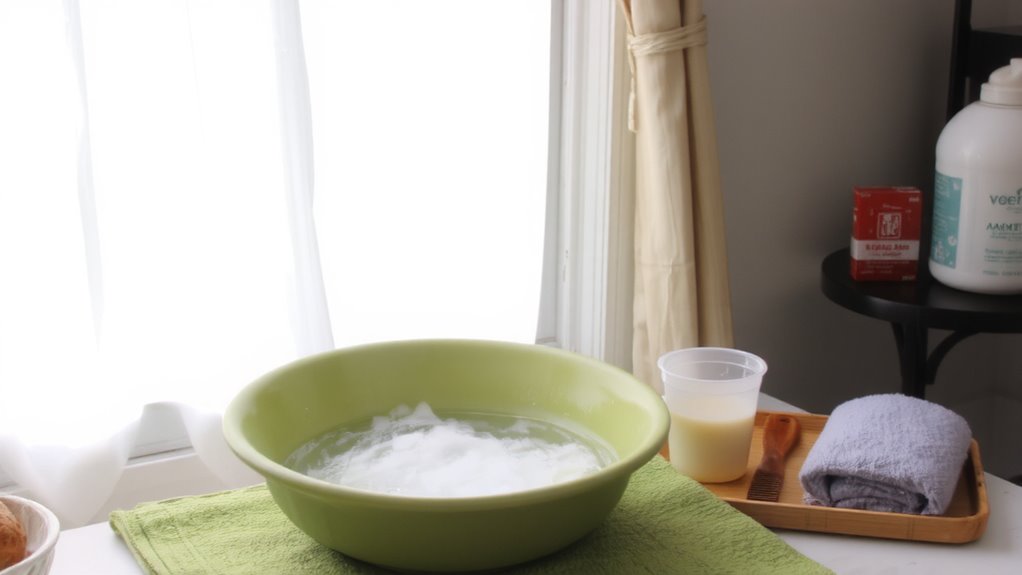
You can reduce your cat’s stress substantially by preparing the bathing area in advance. Choose a quiet, draft-free space like a bathroom or laundry room. Maintain a room temperature of 75–80°F (24–27°C) to prevent chills. The ideal water temperature is 100–102°F (38–39°C)-similar to a cat’s body temperature. Test with a thermometer for accuracy. Bath timing is critical; schedule during naturally calm periods, preferably in the evening when cats are less active. Fill the tub or sink with 2–3 inches (5–7.6 cm) of water-enough to clean without submerging. Use a non-slip mat to prevent slipping. Dim the lights to reduce sensory overload. Avoid loud noises and sudden movements. Prepare the area at least 30 minutes prior to prevent last-minute disruptions that elevate anxiety. A controlled environment improves cooperation and reduces trauma. Consider using an auto feeder to establish a consistent routine, which can help your cat feel more secure before and after bath time.
Get Ready With the Right Cat Bath Supplies
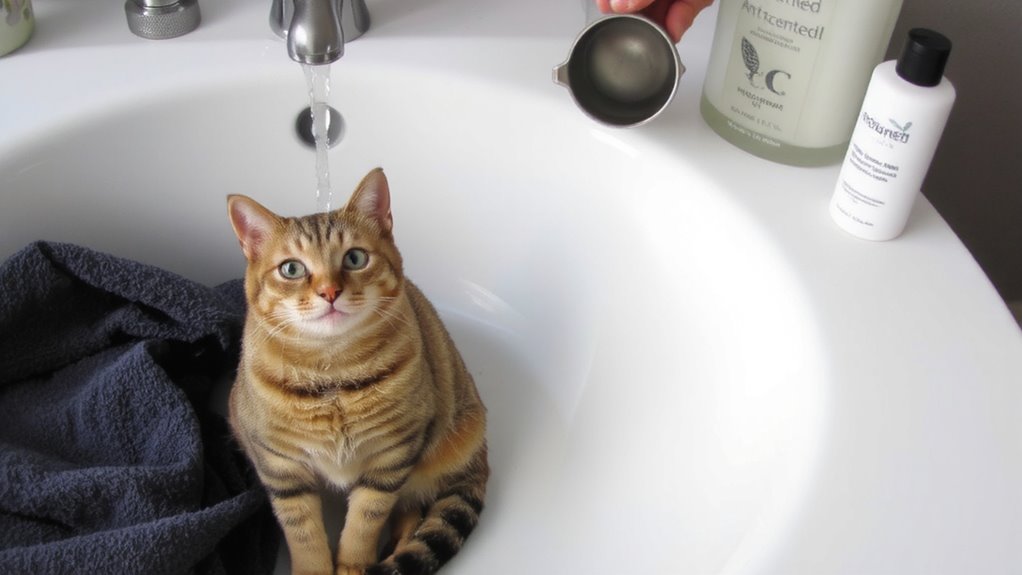
Before you begin, gather all necessary supplies to guarantee a smooth, efficient bathing process. Use a non-slip bath mat to prevent falls; silicone models with suction cups provide 8.8 lbf adhesion on smooth surfaces. Fill a shallow basin with lukewarm water (100–102°F) instead of a deep tub. Choose a veterinary-approved, pH-balanced cat shampoo-human shampoos disrupt the skin’s acid mantle. Use a soft-bristle brush (0.5–1 mm bristle diameter) for gentle scrubbing. Keep towels made of microfiber (300–400 GSM) ready; they absorb 7x their weight in water. A handheld sprayer with adjustable pressure (15–30 psi) allows precise rinsing. Avoid high-decibel devices; sounds above 85 dB stress cats. Store cat toys nearby as optional distractions, but don’t use them during bathing to prevent slips. All materials should be clean and dedicated solely to cat hygiene. Proper tools reduce handling time, minimizing stress for both cat and handler.
Introduce Your Cat to Bathing Gradually
Start by acclimating your cat to the bathing area and supplies over several days. Use gradual exposure to reduce stress and build familiarity. Allow your cat to explore the dry tub and sniff the shampoo bottle, faucet, and washcloth. Pair each session with positive reinforcement-offer treats or praise when your cat approaches or investigates. Never force interaction. Repeat daily for 5–10 minutes until your cat shows calm behavior.
| Day Range | Activity | Reinforcement Method |
|---|---|---|
| 1–2 | Introduce bathing area | Treats for approaching |
| 3–4 | Touch supplies lightly | Praise + treat on contact |
| 5–6 | Simulate water flow (off) | Reward calm observation |
| 7–8 | Dampen paw briefly | Immediate treat after |
| 9–10 | Repeat, extend exposure | Consistent positive reinforcement |
How to Bathe Your Cat Gently and Safely
Patience is essential when moving from acclimation to the actual bath, as a cat’s stress response can escalate quickly without proper handling. Fill the sink with 2–3 inches of water, maintaining a consistent water temperature of 100–102°F (38–39°C)-similar to human baby baths. Test with a thermometer for accuracy. Use lukewarm water only; extremes increase distress and risk shock. Wet your cat’s fur thoroughly, avoiding the face, ears, and eyes. Apply a feline-formulated shampoo with proper soap dilution: mix one part shampoo with four parts water to prevent skin irritation. Gently massage from neck to tail, using a soft sponge for even distribution. Keep bath time under five minutes to minimize stress. Use a handheld sprayer at low pressure to rinse completely, ensuring no soap residue remains. Drain water before lifting your cat out to prevent slips.
Calm and Reassure Your Cat Post-Bath
You can make a critical difference in your cat’s recovery from bath-induced stress by acting immediately after removal from water. Towel-dry thoroughly with an absorbent microfiber cloth, applying light pressure to avoid skin irritation. Speak in low tones and offer calm praise-this auditory feedback regulates your cat’s heart rate. Delayed handling increases anxiety; initiate post bath cuddles within two minutes to elevate oxytocin levels. Use a warmed blanket (102–105°F) to stabilize body temperature safely. Limit interaction duration to 5–7 minutes initially to prevent overstimulation.
| Behavior | Action | Duration |
|---|---|---|
| Drying | Microfiber towel | 3–4 min |
| Vocal reassurance | Calm praise | Continuous |
| Handling | Post bath cuddles | 5–7 min |
| Thermal support | Heated blanket | 10 min |
| Observation | Quiet monitoring | 15 min |
When Your Cat Resists: Stay Safe and Reduce Stress
If your cat resists bathing, remaining calm is essential to prevent escalation of stress and potential injury. Handling resistance requires controlled, deliberate movements to maintain safety for both you and your pet. Use a non-slip mat (at least 18 x 12 inches) to stabilize your cat and reduce panic-induced thrashing. Place a towel over the eyes to limit visual stimuli, which can heighten anxiety. Trim claws 24 hours prior to reduce scratch risk. Wear lightweight, long-sleeved clothing (minimum 0.5mm fabric thickness) for protection. Never restrain by the scruff during bathing-this increases distress. Instead, support the torso with one hand while gently guiding water with the other. Preventing injury includes using lukewarm water (100–102°F) and a low-flow handheld showerhead (under 1.5 GPM). If resistance persists, pause and resume later. Safety and stress reduction go hand in hand.
On a final note
You now have the tools to bathe your cat safely and effectively. Use lukewarm water between 95°F and 100°F to prevent chilling. Apply a pH-balanced, cat-specific shampoo-never human formula. Keep baths under 5 minutes to minimize stress. Dry with an absorbent towel, then use a quiet dryer on low heat from 12 inches away. Regular handling builds long-term tolerance. Bathing is rarely needed but critical when soiled or medicated.