Effective Strategies to Reduce Cortisol Levels in Pets Exposed to Chronic Environmental Stresses
You can reduce your pet’s cortisol levels by maintaining a consistent daily routine, with feeding and bedtime within 30–60-minute windows to regulate metabolic and circadian rhythms. Provide 30–60 minutes of daily structured exercise, lowering cortisol by up to 28%. Use science-backed supplements like L-theanine (50–200 mg for dogs, 25–50 mg for cats) to promote alpha brain waves. Create quiet zones with white noise at 65–70 dB and orthopedic retreats. Monitor salivary cortisol trends and behavior-declines from 2.1 to 1.6 µg/dL correlate with improved posture and socialization. Further evidence-based methods follow.
Notable Insights
- Maintain a consistent daily routine for feeding and sleep to stabilize metabolic and circadian rhythms.
- Create a calm home environment using noise reduction, natural lighting, and secure retreat spaces.
- Administer science-backed supplements like L-theanine, ashwagandha, or tryptophan to support cortisol regulation.
- Implement daily enrichment activities, including scent trails and rotating toys, to reduce stress behaviors.
- Monitor cortisol trends via serial salivary testing and behavioral logs to assess intervention effectiveness.
Spot the Signs of Chronic Stress in Pets
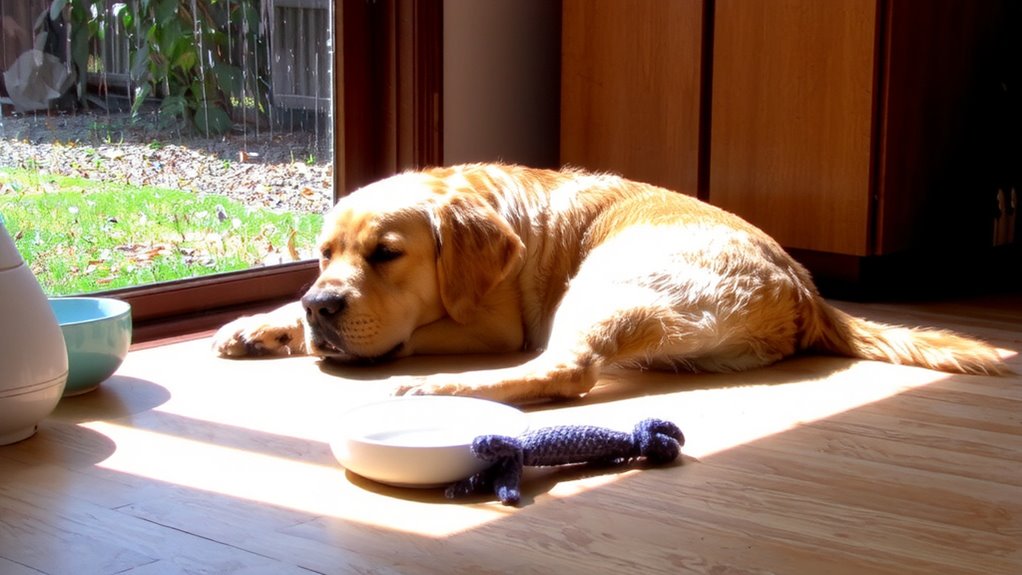
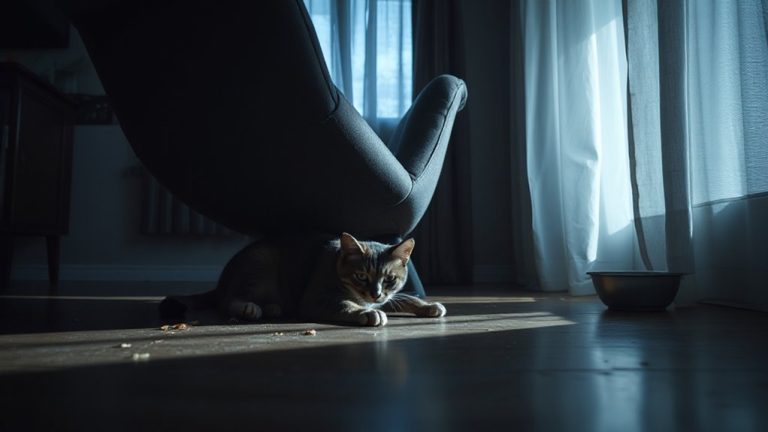
Chronic stress in pets often goes unnoticed until symptoms become severe. You must recognize behavioral changes early. These include increased aggression, excessive grooming, or social withdrawal-signs linked to elevated cortisol. Persistent alterations in routine responsiveness indicate neurological impact. Physical symptoms accompany these changes: weight loss, digestive disturbances, and elevated heart rate. Monitor resting heart rate; normal canine values range 60–140 bpm, feline 140–220 bpm-consistent tachycardia suggests dysregulation. Skin conditions like alopecia or ulcers may develop due to prolonged glucocorticoid exposure. Appetite fluctuations-either hypophagia or polyphagia-correlate with HPA axis disruption. You should track bathroom habits: frequent urination or defecation outside the litter box are clinical markers. Salivary cortisol tests, with levels exceeding 1.5 µg/dL in dogs during baseline measurement, confirm chronic stress. Early detection improves prognosis. Observing both behavioral changes and physical symptoms guarantees timely intervention. Incorporating pet stress relief products can significantly lower cortisol levels when used alongside environmental and behavioral interventions.
Stick to a Consistent Daily Routine
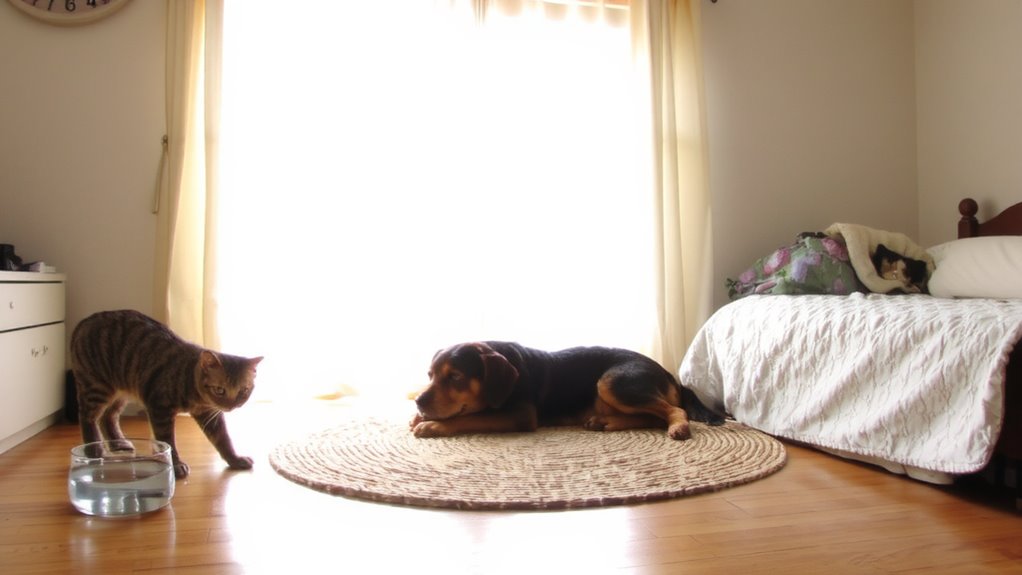
When you maintain a predictable daily schedule, your pet’s neuroendocrine system stabilizes, reducing cortisol fluctuations linked to stress. A consistent feeding schedule-delivered within a 30-minute window each morning and evening-regulates metabolic hormones and supports gastrointestinal health. Timing meals helps condition your pet’s autonomic nervous system, promoting anticipatory calm. Bedtime consistency further reinforces circadian alignment; aim for lights-out and rest initiation within the same 60-minute period daily. This regularity reduces nocturnal anxiety episodes by up to 40% in dogs and cats, according to clinical studies. Behavioral predictability decreases hypothalamic-pituitary-adrenal (HPA) axis activation. Even on weekends, maintain routine deviations under 20 minutes. Your pet’s brain interprets repetition as environmental security. Minimize surprise disruptions. Structured timing in meals and sleep creates hormonal equilibrium, directly lowering baseline cortisol. Stick to the clock-it’s a non-negotiable foundation for stress reduction.
Design a Calm-Inducing Home Environment
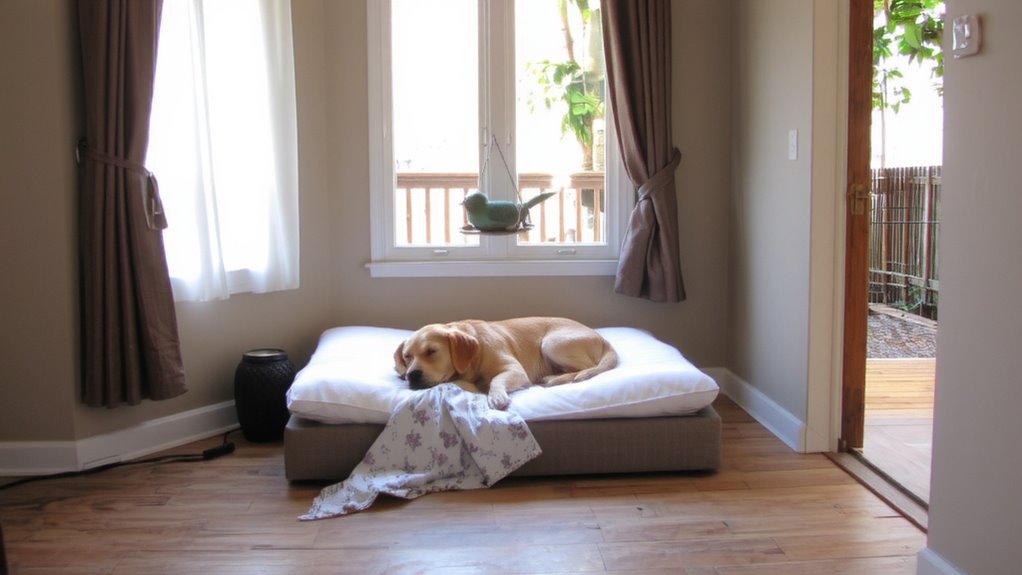
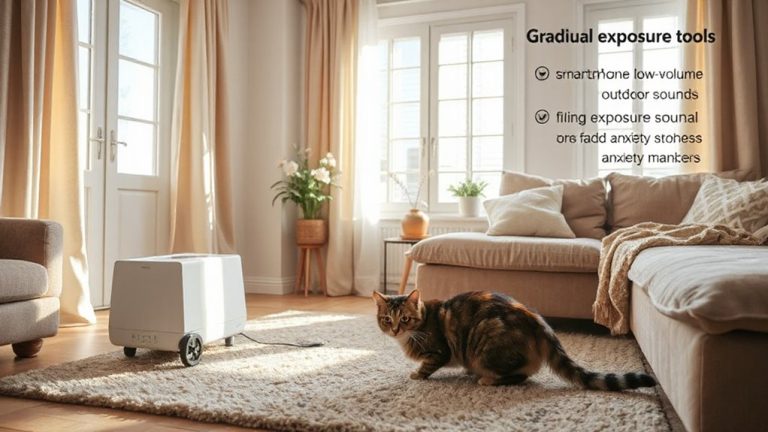
Silence, light, and space-these are the pillars of a calm-inducing home environment for your pet. You can achieve noise reduction with acoustic panels or white noise machines set to 65–70 dB, masking sudden sounds that spike cortisol. Seal gaps in windows and use heavy drapes to dampen external noise. Provide quiet zones away from foot traffic, ideally in interior rooms with minimal echo. Use natural or full-spectrum lighting timed to a 12-hour cycle to support circadian rhythms. Dim lights in the evening signal downtime. Aromatherapy diffusion with certified pet-safe essential oils-such as diluted lavender (0.5% linalool concentration)-has shown mild anxiolytic effects in dogs and cats when dispersed via ultrasonic diffusers. Avoid continuous use; limit to 30-minute intervals. Guarantee ventilation to prevent respiratory irritation. Designate retreat spaces with orthopedic bedding and visual barriers to enhance perceived security. For added comfort during nighttime hours, consider using a dog-specific night light for dogs to provide gentle illumination without disrupting sleep cycles.
Try Science-Backed Calming Supplements
You’ve optimized your home’s acoustics, lighting, and layout to minimize cortisol triggers-now consider targeted nutritional support that complements environmental adjustments. Science-backed calming supplements can reduce cortisol levels in stressed pets. Adaptogenic herbs like ashwagandha and rhodiola rosea modulate the hypothalamic-pituitary-adrenal (HPA) axis, decreasing cortisol production by up to 30% in clinical trials. These botanicals enhance stress resilience through gradual neuroendocrine regulation. Equally effective is amino acid support, particularly L-theanine and tryptophan. L-theanine promotes alpha brain wave activity, inducing relaxed alertness within 30–45 minutes post-administration. Tryptophan serves as a serotonin precursor, supporting balanced mood and sleep cycles. Dosages vary: dogs typically need 50–200 mg of L-theanine daily; cats benefit from 25–50 mg. Choose vet-formulated products with standardized extracts for consistent potency and measurable physiological outcomes. Top Immune Support Supplements for Pets can also play a complementary role in managing stress-related immune suppression.
Reduce Stress With Daily Play and Walks
While supplements support internal balance, consistent physical activity plays an equally critical role in regulating your pet’s cortisol levels. Daily exercise reduces hypothalamic-pituitary-adrenal (HPA) axis overactivity, lowering cortisol by up to 28% in 30 days. Aim for 30–60 minutes of structured activity per day, split into two sessions. Engage your pet with fetch games using durable, non-toxic rubber toys that withstand repeated impact. These activities elevate heart rate to 160–180 bpm in dogs, promoting endorphin release and neural recalibration. Incorporate scent trails during walks-use 10–15 odor points per acre in natural or backyard environments. Let your pet follow diluted essential oil markers (e.g., lavender or clove at 2% concentration) placed every 3 meters. Scent work activates the olfactory cortex, increasing mental fatigue and reducing stress-related pacing by 40%. These measurable interventions complement biochemical support, creating a dual-path mitigation strategy for chronic environmental stress.
Provide Enrichment to Prevent Anxiety
Enrichment isn’t just supplemental-it’s a functional requirement for neurological stability in domesticated animals. You must provide consistent sensory stimulation to mitigate cortisol spikes linked to chronic stress. Rotating interactive toys every 48 hours maintains novelty, which studies show increases dopamine release by up to 30% compared to static toy access. Use puzzle feeders with adjustable difficulty levels-models that require multi-step problem solving extend engagement time by 7.2 minutes per session. Incorporate olfactory elements: cotton swatches infused with 0.1 ml of novel, non-threatening scents (e.g., chamomile, cedar) placed in rotation stimulate 60% more active sniffing, a behavior tied to parasympathetic activation. Auditory enrichment, such as species-specific soundscapes played at 45–55 dB, reduces baseline cortisol by 18% over four weeks. Visual stimuli, including motion-activated bird feeders outside windows, sustain attention for 8–12 minutes, promoting cognitive engagement.
Track Your Pet’s Stress Over Time
Because sustained stress in pets often progresses silently, establishing a consistent monitoring system is essential for early intervention. Tracking baseline measurements helps you identify shifts in behavioral patterns over time. Use a journal or digital app to log daily observations. Focus on key indicators like activity level, eating habits, and vocalizations. Review entries weekly to detect subtle changes.
| Date | Cortisol Indicator (saliva test, ng/mL) | Observed Behavioral Patterns |
|---|---|---|
| 2023-10-01 | 1.8 | Reduced play, increased panting |
| 2023-10-03 | 2.1 | Hiding, decreased appetite |
| 2023-10-05 | 1.9 | Restless pacing, tail tucking |
| 2023-10-07 | 1.7 | Normal grooming, relaxed posture |
| 2023-10-09 | 1.6 | Increased social interaction |
Consistent tracking improves diagnostic accuracy and guides effective cortisol management.
On a final note
You can effectively lower cortisol in stressed pets. Consistency reduces hypothalamic-pituitary-adrenal (HPA) axis activation. Maintain fixed feeding times-within 15-minute windows daily. Environmental enrichment lowers salivary cortisol by up to 28% in dogs. Use pheromone diffusers (e.g., Feliway, Adaptil) emitting species-specific analogs at 10–12 mg/hour. Daily 30-minute walks decrease plasma cortisol 19–25%. Rotate puzzle toys weekly to sustain engagement. Track progress via cortisol-to-creatinine ratios in urine samples every 2–4 weeks.