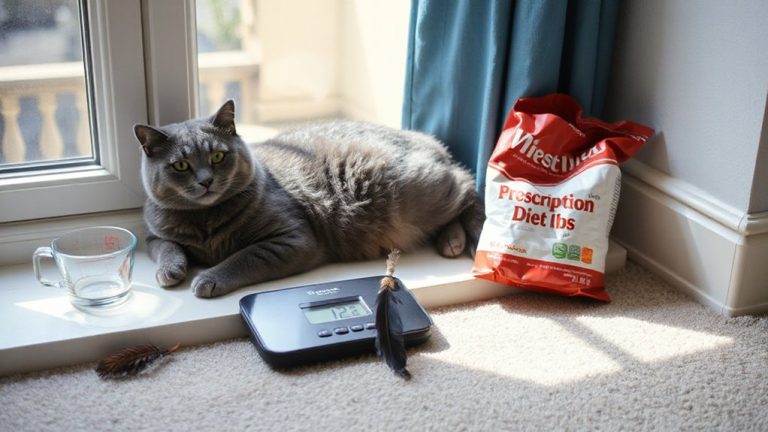
How to Use Body Condition Scoring to Monitor Your Dog’s Weight Loss Progress Accurately
You can track your dog’s weight loss accurately using the 9-point Body Condition Score (BCS) system. A score of 4–5 is ideal, with ribs easily felt under a thin fat layer, a visible waist, and an abdominal tuck. Assess every 2–4 weeks, viewing from above and the side, then palpating ribs and spine. Record scores to monitor trends. Adjust food by 10–15% and increase daily exercise to 30–60 minutes based on BCS. Consistent technique guarantees reliable progress tracking over time. Further refinements in assessment and adjustment methods follow.
Notable Insights
- Use a 9-point scale to assess your dog’s body condition, with 4–5 being ideal for healthy weight.
- Visually check for a defined waist and abdominal tuck from above and the side every 2–4 weeks.
- Palpate ribs regularly to ensure they’re easily felt under a thin layer of fat without excessive pressure.
- Record BCS scores monthly to track trends and adjust food intake or exercise based on progress.
- Reduce diet by 10–15% and increase daily exercise to 30–60 minutes, guided by BCS and vet recommendations.
What Is Body Condition Scoring and Why It Matters
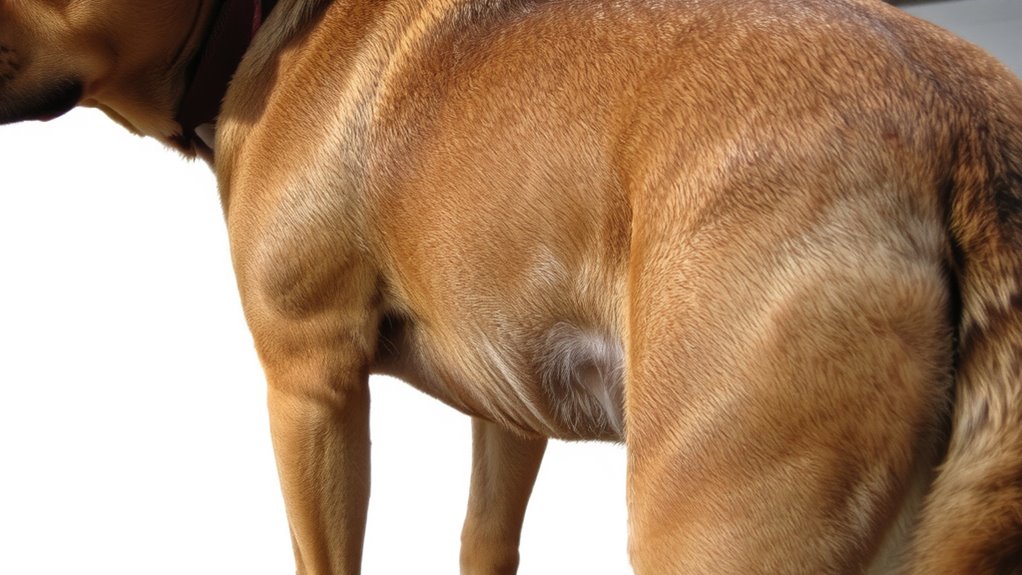
Body condition scoring is a practical tool used to assess your dog’s overall health by evaluating fat coverage and muscle mass. It relies on a 9-point scale where 1 is emaciated and 9 is severely obese, with 4–5 considered ideal. You rely on visual and tactile assessments to determine score, focusing on waist definition and rib visibility. A dog’s genetic predisposition influences fat distribution and ideal weight range, making breed-specific benchmarks critical. Small breeds often have higher metabolic rates, requiring more calories per pound than larger breeds. This affects how quickly they gain or lose weight. Metabolic rate variations mean weight management isn’t one-size-fits-all. Body condition scoring adjusts for these physiological differences objectively. It provides consistent, measurable data across time, enabling accurate progress tracking. Unlike weight alone, it reflects changes in body composition. This makes it essential for monitoring health, especially during weight loss.
How to Check Your Dog’s Body Condition at Home
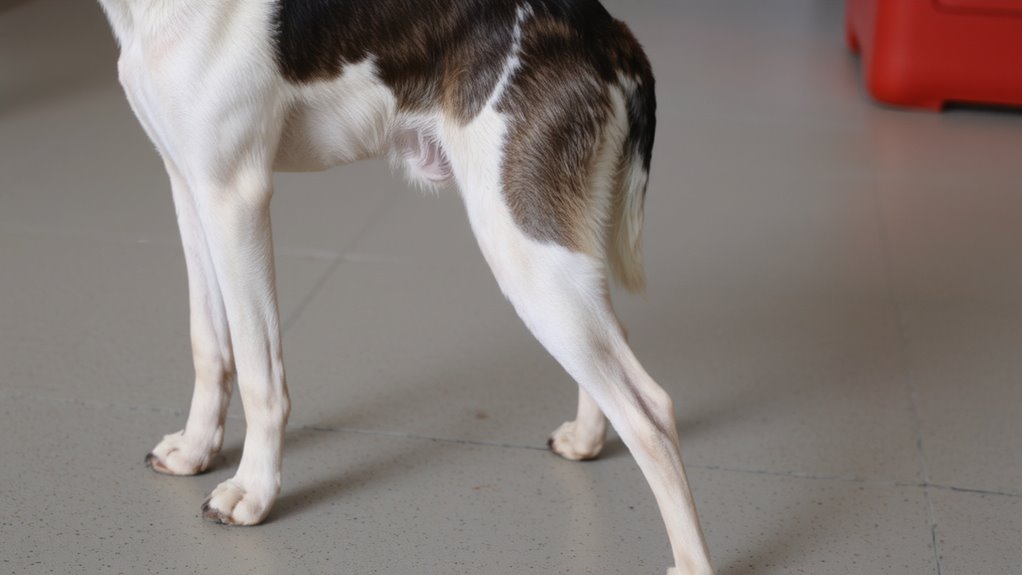
Start by standing over your dog and looking down to assess their waistline. A visible taper between the ribcage and hips indicates proper conditioning. Observing waistline from above provides critical visual cues about your dog’s body composition. Move to the side to check for an abdominal tuck-if the belly slopes upward behind the ribs, the weight appears balanced. Then, get your hands on your dog. Palpating ribs is essential; you should feel each rib clearly under a thin layer of fat, like pressing the back of your hand. Excessive padding means excess weight. Use consistent pressure across the chest and spine. Perform this monthly to track changes. No tools are needed-just touch and sight. Accurate, repeatable assessments require lighting, positioning, and routine. You’re measuring anatomy, not guessing. This method detects shifts before they become health risks.
What a Healthy Dog Looks and Feels Like

You can spot a healthy dog by sight and touch when you know the signs. A dog in ideal condition has a visible waist when viewed from above and a tucked abdomen from the side. You should easily feel, but not prominently see, the ribs-similar to pressing the back of your hand. Coat texture is smooth, shiny, and free of flakes or mats, indicating proper nutrition and skin health. Well-hydrated skin and consistent shedding suggest balanced sebum production. Energy levels are steady and appropriate for the breed and age-alert during activity, calm at rest. A healthy dog engages readily in exercise without rapid fatigue. Muscle tone is firm, especially along the back and hindquarters, with no sagging or bony protrusions. These physical and behavioral markers reflect metabolic efficiency, proper caloric balance, and overall physiological wellness essential for long-term liveliness.
Understanding the 9-Point BCS Scale
Think of the 9-point Body Condition Score (BCS) scale as a standardized tool vets and owners use to assess your dog’s weight and overall fitness. A score of 4 to 5 out of 9 indicates your dog is at ideal weight. At this range, you can easily feel ribs without excess fat covering, and there’s a noticeable waist when viewed from above. Scores below 4 suggest underweight, with prominent bones and poor muscle tone. Scores above 5 indicate overweight, where ribs are hard to feel and waist definition is absent. Muscle tone is evaluated along the back and shoulders-lean, firm tissue suggests good health. The 9-point system uses visual and tactile assessments, focusing on rib coverage, abdominal tuck, and silhouette. It’s reproducible across sessions, making it reliable for tracking change. You don’t need tools-just your hands and observation. Consistency matters when checking your dog monthly.
Common Mistakes to Avoid With BCS
While evaluating your dog’s Body Condition Score, pet owners often misinterpret visual cues or apply inconsistent technique, leading to inaccurate evaluations. You must use both visual assessment and hands-on palpation, feeling for ribs, spine, and hip bones without excessive fat covering. Relying only on weight ignores body composition changes critical to progress tracking. Overfeeding treats skews caloric intake, undermining weight loss even if meals are controlled. Treats should not exceed 10% of daily calories. Skipping vet visits risks missing underlying health issues like hypothyroidism or arthritis, which affect weight management. A veterinarian confirms your BCS accuracy and adjusts plans based on clinical data. Consistency in scoring method, timing, and observer improves reliability. Use the 9-point scale uniformly, where ideal is 4–5, with a visible waist and palpable ribs without visual prominence. Avoid assumptions-reassess technique regularly.
How Often to Assess Your Dog’s BCS
Regular evaluation of your dog’s Body Condition Score (BCS) guarantees accurate tracking of health and weight management progress. BCS frequency should be consistent to detect subtle changes. Assess your dog every two to four weeks during a weight loss program. This assessment timing allows for objective monitoring without overreacting to minor fluctuations. For stable-weight dogs, a monthly check suffices. Use standardized nine-point scales, where 4–5 is ideal. Palpate rib coverage, note waist visibility from above, and check abdominal tuck from the side. Changes less than one full point between assessments are typical. Frequent scoring too close together may yield misleading trends due to normal day-to-day variation. Consistent lighting, posture, and evaluator improve reliability. Record scores numerically for trend analysis. Proper BCS frequency supports timely decisions. Accurate assessment timing enhances long-term health outcomes.
How to Adjust Food and Exercise Based on BCS
If your dog’s Body Condition Score (BCS) is above 5 on the 9-point scale, it’s time to reduce calorie intake and increase physical activity. Portion control is essential-measure food accurately using a standard 8-oz measuring cup. Decrease daily intake by 10–15% to support gradual fat loss without nutrient deficiency. Pair this with consistent activity tracking using a dog-specific fitness monitor that logs steps and active minutes.
| BCS | Dietary Action | Exercise Goal |
|---|---|---|
| 6–7 | Reduce food by 10% | 30 min/day walk |
| 8 | Reduce food by 15% | 45 min/day moderate |
| 9 | Vet-supervised diet | 60 min/day split sessions |
Adjust every 2–4 weeks based on progress. Use weekly BCS assessments and tracking logs to refine portion control and exercise intensity for ideal weight management.
On a final note
You track progress using Body Condition Scoring (BCS), not just weight. BCS assesses fat coverage over ribs, waist, and abdominal tuck on a 9-point scale. A score of 4–5 is ideal. Ribs should be palpable with minimal fat, a visible waist, and an uplifted abdomen. Assess every 2–4 weeks. Adjust calories and activity if the score shifts beyond target. This method provides precise, visual, tactile data for effective, science-based weight management.