The Link Between Grain-Free Diets and Canine Dilated Cardiomyopathy: What Pet Owners Must Know
Your grain-free dog food may increase the risk of dilated cardiomyopathy (DCM). Diets high in peas, lentils, or potatoes-often exceeding 25% combined-can disrupt taurine metabolism. Taurine deficiency impairs heart muscle function, dropping ejection fraction below 40%. The FDA links over 500 DCM cases to grain-free brands like Acana and Taste of the Wild. Genetic factors compound risks in breeds like Dobermans. Switch to AAFCO-compliant food now-you’ll uncover critical next steps for protecting your dog’s heart health.
Notable Insights
- Grain-free diets high in legumes like peas and lentils are linked to non-hereditary dilated cardiomyopathy (DCM) in dogs.
- Dogs eating grain-free foods may develop taurine deficiency, impairing heart muscle function and leading to DCM.
- The FDA has reported over 500 DCM cases in dogs linked to grain-free diets since 2014.
- Breeds like Doberman Pinschers and Great Danes are genetically prone to DCM, but diet can worsen or trigger it.
- Switching to an AAFCO-compliant diet and seeing a vet early can improve heart function in affected dogs.
What Is DCM in Dogs?
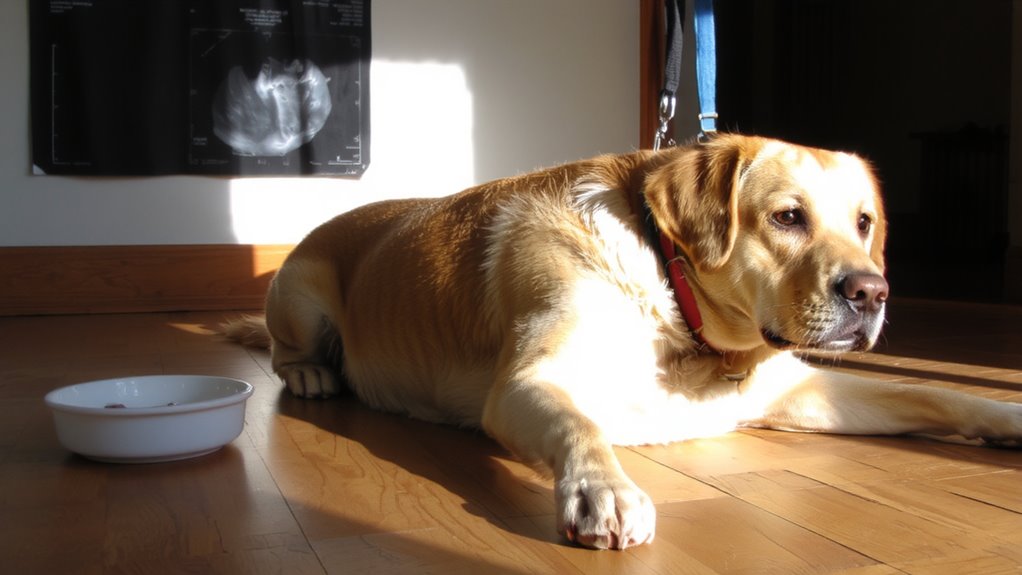
Dilated cardiomyopathy, or DCM, is a serious heart condition in dogs where the heart muscle becomes weakened and the chambers enlarge, reducing the heart’s ability to pump blood effectively. You should know that affected dogs often show decreased systolic function, with left ventricular ejection fraction dropping below 40%. Genetic predisposition plays a critical role, particularly in breeds like Doberman Pinschers and Great Danes. These breeds demonstrate clear breed susceptibility, with up to 60% developing DCM by age six in some bloodlines. The condition typically progresses silently, with clinical signs-lethargy, coughing, fainting-appearing only after significant cardiac deterioration. Diagnostic tools include echocardiography, which measures chamber dilation, and ECGs, detecting arrhythmias. Once diagnosed, survival time averages 3–6 months without treatment. Early detection through screening is essential for at-risk breeds. Managing DCM involves drugs like pimobendan and ACE inhibitors to improve cardiac output and slow progression.
How Grain-Free Dog Food May Cause Heart Disease
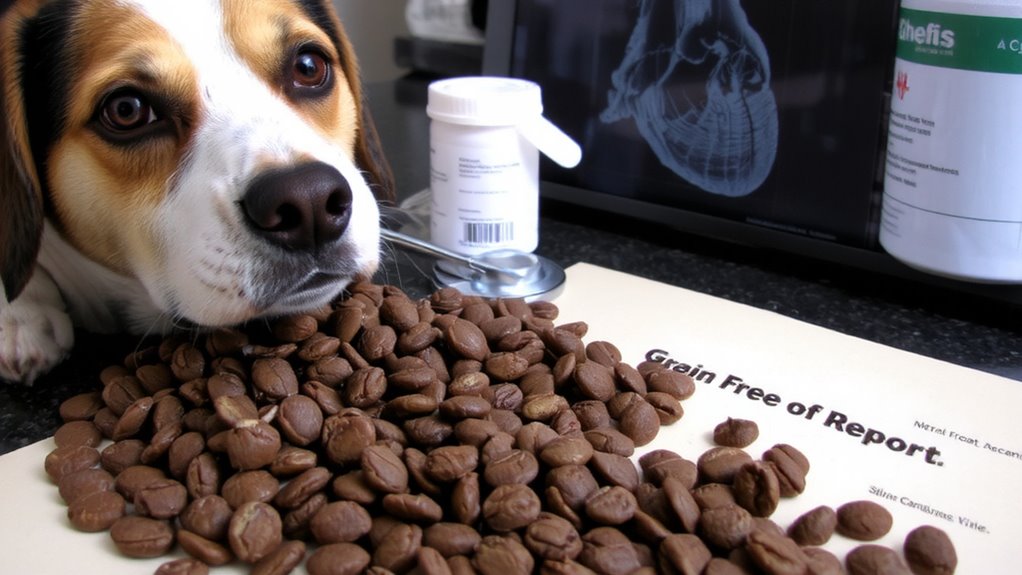
You’ve likely heard about grain-free diets being linked to heart problems in dogs, and that connection centers on a form of dilated cardiomyopathy (DCM) not typically tied to genetics. This condition impairs heart muscle contraction, reducing cardiac output by up to 50% in severe cases. Grain-free formulas often replace grains with legumes and potatoes, which can alter taurine metabolism. Taurine, an amino acid essential for heart function, may become deficient when dietary ingredients interfere with its synthesis. Certain dogs don’t produce enough taurine under these dietary conditions, leading to myocardial dysfunction. The surge in grain-free diets stems from human food trends and pet owner-driven taste preference, not veterinary evidence. These formulations became popular despite lacking long-term health studies. Current research suggests a direct association between these diets and non-hereditary DCM. Regulatory reviews now evaluate over 500 reported cases linked to specific grain-free products.
Why Peas and Lentils Could Be Harming Your Dog’s Heart
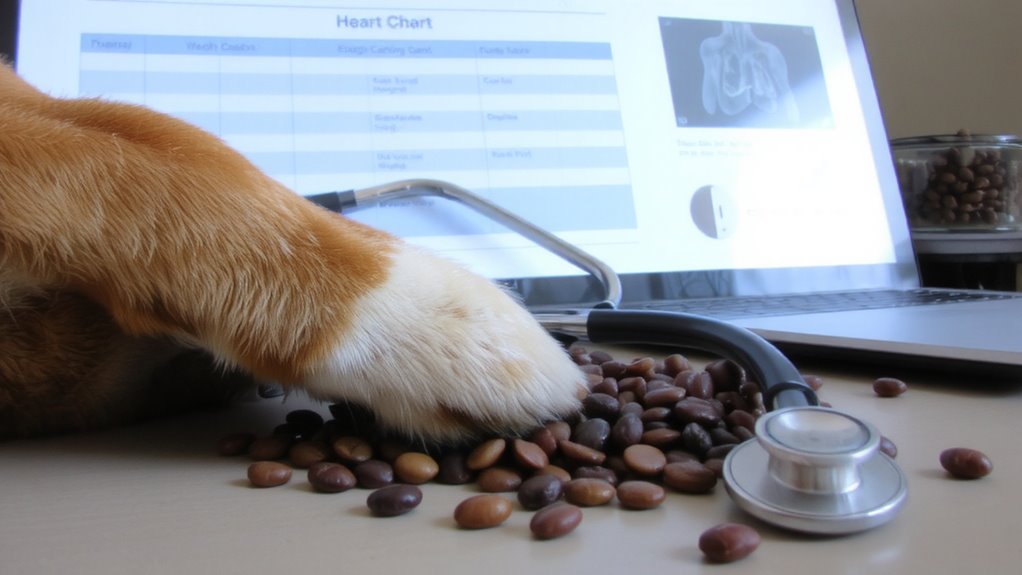
Why are peas and lentils-ingredients once praised for being gluten-free and high in plant-based protein-now under scrutiny for their role in canine heart disease? You should know that emerging research questions their pulse ingredient safety. High concentrations may interfere with taurine metabolism, a key factor in cardiac function. While legumes offer protein and fiber, their legume nutritional impact isn’t fully understood in canine physiology. The FDA has noted a statistical association between diets high in legumes and cases of dilated cardiomyopathy (DCM). Consider this:
| Ingredient | Legume Content (Average % in Grain-Free Kibble) |
|---|---|
| Peas | 25–30% |
| Lentils | 15–20% |
| Other Pulses | 10–15% |
These levels displace animal proteins critical for heart health. Always assess formula composition and consult your veterinarian when choosing diets high in pulse ingredients.
FDA-Linked Grain-Free Brands to Avoid Now
While grain-free diets gained popularity for their perceived health benefits, several brands have come under FDA investigation due to their association with canine dilated cardiomyopathy (DCM). You should avoid brands like Acana, Zignature, and Taste of the Wild, which frequently use legumes and exotic proteins. These formulations raise concerns about ingredient safety, particularly when peas, lentils, or potatoes exceed 25% of the formula. The FDA has reported over 500 DCM cases linked to these diets since 2014. Poor brand transparency further complicates your ability to assess risk. Many companies don’t fully disclose sourcing or testing protocols. Look for brands that publish amino acid profiles and taurine stability data. Diets with low taurine bioavailability may contribute to heart dysfunction. You need clear labeling and verifiable testing to guarantee your dog’s long-term health. Choose products with documented nutritional adequacy statements from AAFCO.
7 Early Signs of Heart Disease in Dogs
Changes in your dog’s breathing patterns or exercise tolerance often signal the onset of heart disease, even before visible structural changes appear on diagnostic imaging. You might notice rapid or labored breathing at rest, with respiratory rates exceeding 30 breaths per minute. Coughing episodes, especially at night or after lying down, can indicate fluid buildup due to impaired cardiac function. Dogs don’t express chest pain like humans, but they may exhibit restlessness, shallow breathing, or reluctance to move. Reduced stamina during walks or play reflects diminished cardiac output. Early systolic murmurs, detected via stethoscope, often correlate with mitral valve insufficiency. Pulse deficits or irregular heart rhythms may accompany structural pathology. These clinical signs precede overt heart failure. Monitoring respiratory rate, activity level, and behavioral shifts provides critical early warning. Timely veterinary evaluation, including auscultation and potential echocardiography, allows intervention before irreversible myocardial damage occurs.
What to Do If Your Dog Eats Risky Grain-Free Food
What should you do if your dog has been eating a grain-free diet linked to dilated cardiomyopathy (DCM)? Stop feeding the risky food immediately. Switching diets to a veterinary-recommended, nutritionally balanced formula is critical. Choose foods with recognized AAFCO nutritional adequacy statements. Gradually shift over 7–10 days to prevent gastrointestinal upset. Monitoring symptoms closely during this period is essential. Look for lethargy, coughing, difficulty breathing, or fainting-signs of cardiac compromise. Schedule a vet evaluation promptly. The vet may perform an echocardiogram, measure plasma taurine levels, and assess cardiac function through Doppler imaging. Early intervention can halt disease progression. Some dogs show improvement within weeks of dietary correction. Do not rely on over-the-counter supplements unless directed. Dietary history and consistent follow-up care directly influence long-term outcomes. Your proactive response greatly impacts your dog’s prognosis.
On a final note
You should prioritize heart-healthy dog food choices. Grain-free diets linked to canine dilated cardiomyopathy (DCM) often contain high levels of legumes-like peas and lentils-which may disrupt taurine metabolism. The FDA has identified over 16 brands with elevated DCM reports, including certain Acana and Zignature products. Switch to diets with animal-based proteins and balanced amino acid profiles. Monitor your dog’s echocardiogram readings and taurine levels annually. Prevention is measurable, actionable, and essential.