Why Some Weight-Loss Diets Cause Increased Urination in Cats
Your cat pees more on some weight-loss diets because high protein increases urea production. Excess amino acids are deaminated in the liver, forming urea that raises osmotic load in the kidneys. This reduces water reabsorption, increasing urine volume and litter box clump size. Glomerular filtration rate rises 20–30%, and urine specific gravity can drop to 1.040. Wet diets help balance hydration while supporting safe weight loss. You’ll discover safer dietary choices just ahead.
Notable Insights
- High-protein weight-loss diets increase urea production, which raises urine output by reducing water reabsorption in the kidneys.
- Elevated protein metabolism from low-carb diets boosts urine volume due to increased osmotic load from urea.
- Cats on dry food weight-loss diets are at higher risk of dehydration, concentrating urine despite increased output.
- High-protein intake raises glomerular filtration rate by 20–30%, leading to more frequent and larger urine clumps.
- Inadequate water intake combined with high-protein diets can impair hydration, even as total urine volume increases.
How High-Protein Weight-Loss Diets Increase Cat Urine Output
Protein metabolism drives urine production. When your cat consumes a high-protein weight-loss diet, excess amino acids are deaminated in the liver, producing ammonia that converts to urea. This urea filters through the kidneys, increasing osmotic load in the renal tubules. As a result, water reabsorption decreases, elevating urine volume. The rise in nitrogenous waste heightens kidney workload, requiring glomerular filtration rates (GFR) to increase by up to 20–30% compared to lower-protein diets. Despite efficient feline renal function, sustained high urea levels demand consistent hydration. You’ll notice more frequent and larger urine clumps in the litter box. Urine concentration often declines slightly-urine specific gravity may drop from 1.060 to 1.040-due to obligatory water loss with urea excretion. This physiological process is normal but underscores the importance of clean, fresh water availability. Increased voiding doesn’t indicate dysfunction; it reflects expected metabolic activity.
Do Low-Carb Cat Diets Cause Dehydration?
Low-carb cat diets don’t directly cause dehydration, but they can influence hydration status in ways worth understanding. When carbs are reduced, cats metabolize more fat and protein for energy. This shift increases urea production, promoting higher urine output. Increased urination can inadvertently elevate the risk of fluid loss if water intake doesn’t compensate. Diets low in carbohydrates often have high nutrient density, packing essential vitamins and minerals into fewer calories-ideal for weight loss. However, rapid changes in metabolism may disrupt electrolyte balance. Sodium, potassium, and chloride levels can shift, potentially leading to electroly imbalance. This imbalance may impair cellular hydration even if total body water seems stable. You should guarantee your cat has constant access to fresh water. Wet food helps maintain hydration and supports electrolyte regulation. Monitoring fluid intake and diet composition is essential for maintaining peak hydration. A well-fitted dog harness for pit bulls can serve as an analogy for proper pet care-just as the right harness ensures comfort and safety during walks, the right diet supports a cat’s internal balance and overall health.
Signs Your Cat Is Dehydrated on a Weight-Loss Diet
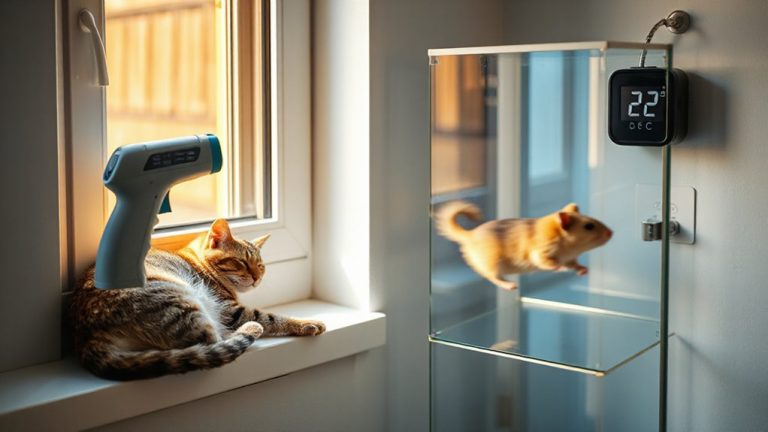
How can you tell if your cat is dehydrated while on a weight-loss diet? Dehydration signs include dry gums, lethargy, and reduced skin elasticity. Limited mobility may worsen as muscle weakness develops. Prolonged sun exposure increases fluid loss, raising dehydration risk. Weight-loss diets, especially dry formulations, may reduce water intake if not balanced with moisture-rich foods.
| Symptom | Normal Cat | Dehydrated Cat |
|---|---|---|
| Skin recoil time | < 2 seconds | > 2 seconds |
| Gum moisture | Moist, slick | Dry, sticky |
| Activity level | Regular movement | Limited mobility, sluggish |
| Urine concentration | Pale yellow | Dark, strong-smelling |
Monitor hydration daily. Use wet food or add water to meals. Prevent excessive sun exposure, especially in warmer climates.
When to Worry About Frequent Urination in Cats
Why might your cat suddenly start making more frequent trips to the litter box? Increased urination can signal underlying health issues, not just dietary changes. A urinary tract infection (UTI) often causes frequent, painful urination and may include blood in the urine. Bacterial colonization in the urethra or bladder triggers inflammation and discomfort. Bladder inflammation, or cystitis, can occur without infection and leads to similar symptoms. Cats with either condition may strain to urinate or groom excessively around the genital area. Unlike typical diet-related increases in urine volume, these issues often produce small, concentrated amounts. If your cat makes repeated attempts to urinate with little output, or seems distressed, seek vet care promptly. Persistent symptoms can indicate obstruction, especially in males-a life-threatening emergency. Early diagnosis through urinalysis and culture improves outcomes.
How to Choose a Safer Weight-Loss Diet for Cats
You can manage your cat’s weight without increasing the risk of urinary issues by selecting a diet that supports both metabolic and urinary health. Choose a formula with high food moisture, such as canned or rehydrated diets, which promote urine dilution and reduce crystal formation. Dry kibble typically contains only 5–10% moisture, while wet food provides 70–80%, greatly improving hydration. Maintain diet balance with appropriate levels of protein, fat, and fiber-look for 26–30% protein and 9–15% fat on a dry matter basis. Controlled calorie density-around 250–300 kcal per 5.5-oz can-support safe weight loss. Avoid extreme protein or mineral imbalances that stress the urinary system. Balanced magnesium levels (0.02–0.1% dry matter) help prevent uroliths. Always shift gradually over 7–10 days to maintain digestive stability. Consult feeding guidelines based on your cat’s ideal, not current, body weight.
Can Too Much Protein Harm Your Cat’s Kidneys?
While concerns about high-protein diets and kidney health are common, current research shows that excess protein does not damage healthy feline kidneys. Your cat’s physiology is adapted for high *protein metabolism*, efficiently processing nitrogen waste without added *kidney stress*. Below is a comparison of dietary impacts:
| Diet Type | Protein Content (%) | Waste Byproducts |
|---|---|---|
| High-Protein | 45–55 | Minimal urea load |
| Moderate-Protein | 30–40 | Moderate ammonia |
| Low-Protein | 20–25 | Reduced nitrogen |
High-protein diets don’t increase *kidney stress* in healthy cats. The liver converts amino acids into energy, while kidneys excrete byproducts. Contrary to myths, elevated protein intake supports lean mass during weight loss. However, cats with *preexisting* kidney disease may need moderated protein. For healthy cats, a high-protein diet aligns with natural carnivorous needs and supports metabolic efficiency without harming renal function. Choosing appropriate nutrition, such as best kidney care cat food, can help manage long-term renal health in at-risk cats.
On a final note
You should monitor your cat’s urine output on high-protein diets. These diets increase nitrogen waste, requiring more water for excretion. Urine volume can rise by 20–40% due to elevated urea production. While increased urination is normal, persistent dehydration is not. Guarantee your cat has constant access to fresh water. Choose weight-loss formulas with balanced protein and moisture content, ideally 6–8 g protein per kg body weight and at least 70% moisture in wet food.