How to Use a Kitchen Scale to Accurately Measure Raw Dog Food Servings
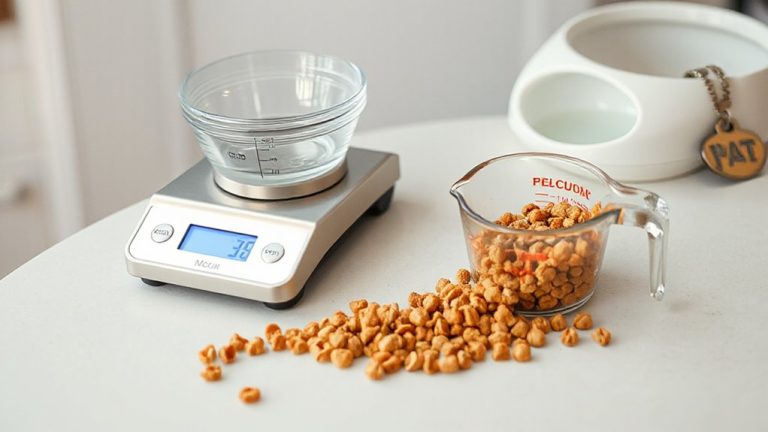
Use a digital kitchen scale accurate to 0.1 ounce or 1 gram for precise raw dog food portions. Always thaw food first-ice adds 10–15% extra weight-and stir well to evenly distribute moisture. Place your bowl on the scale, press tare, then add food until the display shows the exact target weight. Avoid cups or guessing; ingredient density varies, causing up to 20% serving errors. A scale with tare function and 1-gram precision guarantees correct protein, bone, and organ ratios. Consistent daily use supports ideal nutrition and health outcomes-you’ll soon see how small adjustments make a measurable difference.
Notable Insights
- Use a digital kitchen scale with 0.1-ounce or 1-gram accuracy and a tare function for precise raw dog food measurements.
- Thaw frozen raw food completely in the refrigerator for 12–24 hours to eliminate ice-caused weight inaccuracies.
- Place the serving bowl on the scale, press tare to zero, then add thawed food until the desired weight is reached.
- Adjust portion size based on your dog’s ideal body weight, typically 2–3% daily, using the scale for consistency.
- Avoid volume measures like cups; always weigh raw ingredients to maintain correct protein, bone, and organ ratios.
Choose the Right Scale for Raw Dog Food Portions
You’ll want a digital kitchen scale built for precision when measuring raw dog food portions. Digital accuracy guarantees consistent readings, often to the nearest 0.1 ounce or 1 gram, critical for proper nutrient balance. Look for a scale with a tare function to subtract container weight instantly. A clear LCD screen enhances readability, reducing user error. For raw diets, contamination risk demands a durable design-choose one with a sealed stainless steel platform that resists moisture and corrosion. Opt for models with IP65 or higher water resistance rating for easy cleaning. Most reliable scales measure up to 11 lbs (5 kg), sufficient for average canine portions. Battery life should exceed 500 hours on two AAA cells. Avoid plastic housings; they degrade faster under frequent sanitation. A responsive load cell guarantees stability, giving fast, repeatable results. Trust only calibrated electronics tested under load variance. This isn’t just convenience-it’s nutritional accountability.
Thaw Raw Food Before Weighing (It Affects Portions)
A digital kitchen scale delivers accurate measurements only when the substance being weighed is in a consistent, stable state, and raw dog food is no exception. You must thaw raw food before weighing to guarantee portion precision. Frozen weight includes ice crystals that add mass unrelated to nutritional content. As the food thaws, water content escapes, reducing the actual serving size. This discrepancy undermines thawing accuracy and can lead to overfeeding or nutrient imbalances. Weighing frozen portions may result in up to 10–15% more measured mass due to retained ice. For reliable results, fully thaw food in the refrigerator for 12–24 hours. Then, stir thoroughly to redistribute moisture before placing it on the scale. Consistent temperature and uniform texture improve measurement reliability. Always use the same thawing method to maintain feeding consistency. Thawing accuracy directly affects your dog’s daily intake and long-term health.
Weigh Raw Dog Food in 3 Simple Steps
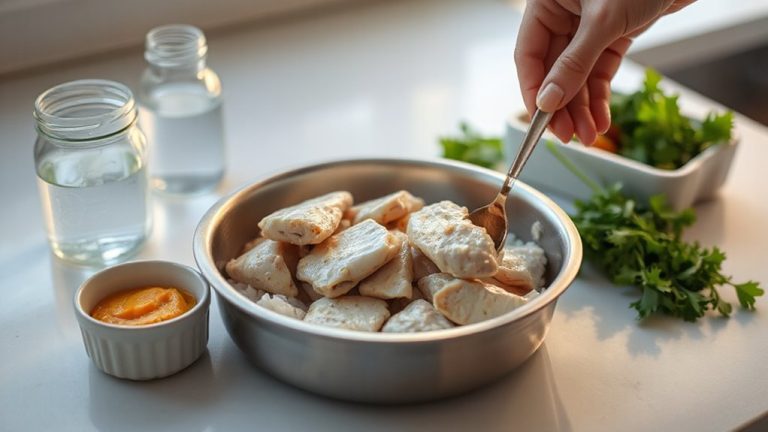
When preparing raw dog food, weighing portions accurately guarantees nutritional consistency and prevents overfeeding. First, place a clean bowl on your digital kitchen scale and press tare to zero it out-this guarantees only the food weight registers. Next, scoop the thawed raw food into the bowl slowly, monitoring the display. Most adult dogs require 2–3% of their ideal body weight daily, so precision matters. The scale should read to at least 0.1-ounce (1-gram) increments for accuracy. Consider food texture: chunky blends may settle unevenly, requiring gentle spreading for uniform distribution. Finally, record the serving timing-consistent feeding times aid digestion and nutrient absorption. Weigh each meal fresh; never estimate from a prior measurement. This method delivers reliable portion control, aligning with dietary needs and minimizing waste through exact tracking.
Customize Portions for Your Dog’s Needs
Consistency in portion size lays the foundation, but adjusting those portions to match your dog’s unique profile guarantees ideal health outcomes. Portion control isn’t one-size-fits-all-it depends on your dog’s weight, age, activity level, and metabolism. Most dogs require 2–3% of their body weight in raw food daily, but highly active dogs may need up to 4%, while seniors might thrive on 1.5%. Use your kitchen scale to adjust grams or ounces precisely. For example, a 50-pound (22.7 kg) active dog may need 454–680 grams daily, divided into meals. Split the protein, bones, and organs according to your recipe to maintain dietary balance. Overfeeding disrupts this balance, leading to nutrient excesses; underfeeding risks deficiencies. Monitoring body condition and adjusting portions every two weeks secures sustained health. Your scale is the most accurate tool for achieving this precision-no guesswork, just consistent, measurable results.
Skip These Raw Feeding Measurement Mistakes
Over 70% of raw feeders make at least one critical measurement error that compromises their dog’s nutrition. You must avoid portion variability to maintain consistent nutrient intake. Using cups or eyeballing servings leads to inaccuracies-some portions may be 20% larger than intended, disrupting balance. A digital kitchen scale accurate to 1 gram eliminates this risk. Ingredient density varies considerably: 1 cup of ground turkey weighs more than 1 cup of leafy greens, though volume is identical. Without weighing, you misrepresent nutrient density per serving. Bone, meat, and organ ratios depend on weight, not volume. Scales with tare functions let you account for container mass, ensuring only food weight counts. Calibrate your scale monthly for consistent output. Skipping these steps skews calcium-to-phosphorus ratios and caloric density, undermining diet integrity. Precision prevents nutritional drift over time.
Use Your Scale Daily: A Quick Routine
Ideally, you’ll use your kitchen scale daily to guarantee precise raw food portions. Consistent timing ensures your dog receives the same amount of nutrients each day, supporting digestive health and metabolic stability. Set feeding times-morning and evening-and weigh food then. This routine minimizes variability in intake, vital for maintaining ideal body condition. After each use, turn off the scale and remove the bowl to prevent residue buildup. Store your scale in clean storage, away from moisture and heat sources like the sink or stove. A drawer with a liner or a cabinet shelf works well. Use a digital scale with 0.1-ounce (1-gram) precision and a tare function to zero containers. Calibrate monthly using a certified weight. Daily use with disciplined habits secures long-term accuracy, extends device lifespan, and supports reliable portion control essential in raw feeding protocols.
Why Precise Raw Food Portions Matter for Dogs
Portion accuracy isn’t just about weight-it’s about nutritional integrity. Feeding your dog the correct amount of raw food guarantees consistent nutrient balance, which is essential for long-term health. Overfeeding can lead to obesity and joint stress, while underfeeding may result in muscle loss and energy deficits. Precise portions support maximum digestive health by preventing sudden dietary shifts that disrupt gut flora. Raw diets are biologically appropriate but require exact ratios-typically 2–3% of your dog’s ideal body weight daily, split into meals. Without accurate measurement, protein, fat, and organ meat ratios fluctuate, risking deficiencies or toxicities. A kitchen scale eliminates guesswork, delivering reproducible results. Gram-level precision guarantees each meal meets dietary specifications, especially critical for puppies, seniors, or dogs with medical conditions. You’re not just measuring food-you’re managing metabolic input with surgical accuracy. Consistency here directly correlates to systemic stability and peak physiological function.
On a final note
You must use a digital kitchen scale accurate to at least 1 gram for proper raw dog food measurement. Scales with a tare function let you subtract container weight for precise net weight readings. Weigh food after thawing, as frozen mass includes ice that skews portions. Feed 2–3% of your dog’s ideal body weight daily, adjusted for age, activity, and metabolism. Consistent weighing prevents underfeeding or obesity.