The Role of Genetics in Determining Coat Type, Growth Cycle, and Shedding Patterns
Your dog’s coat type, growth cycle, and shedding pattern are controlled by specific genes. Variants in FGF5 reduce shedding by extending the hair growth phase. KRT71 mutations create curly coats that trap loose hairs. FGFR2 determines long coats through recessive inheritance. These genes act independently, allowing diverse coat combinations. Shedding timing is driven by photoperiod, not temperature. DNA tests analyze these genes with over 95% accuracy, predicting grooming needs across 200+ breeds. You’ll discover how breed-specific patterns shape coat care requirements.
Notable Insights
- Genetic mutations in FGF5 prolong the hair growth phase, reducing shedding frequency in dogs.
- FGFR2 and KRT71 gene variants independently control coat length and curl, inherited autosomally.
- High follicle density and synchronized growth cycles cause intense seasonal shedding in some breeds.
- DNA tests analyze FGF5, KRT71, and RSPO2 genes to predict coat type and grooming needs.
- Photoperiod-driven shedding is genetically regulated, with day length triggering hormonal coat cycle changes.
Why Some Dogs Shed Almost Nothing : It’s in Their DNA
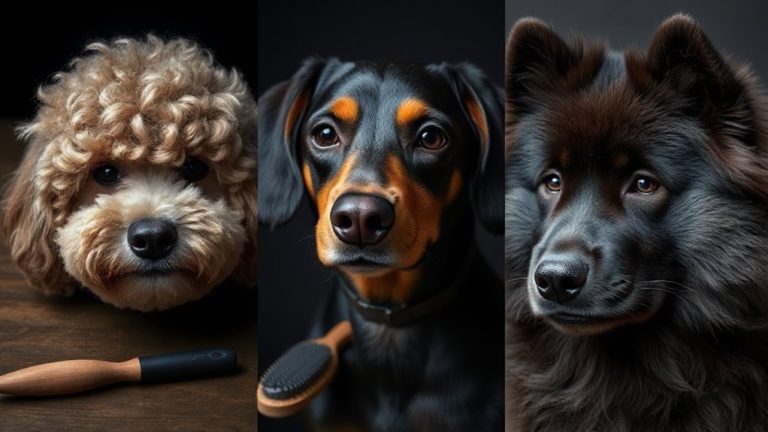
While most dogs shed regularly due to their natural hair growth cycles, some breeds lose little to no fur because of specific genetic traits. You’ll find these low-shedding dogs carry unique gene mutations affecting hair follicle activity and cycle duration. These mutations shift the growth phase (anagen) to last longer, reducing shedding frequency. Instead of shedding fur across the home, dead hairs often get caught in the dog’s coat, requiring regular grooming. Coat density plays a critical role-breeds like Poodles or Bichon Frises have tightly packed, wool-like coats with high density, which traps loose hairs. This dense structure, combined with slowed follicular turnover, limits hair fall. Gene mutations in loci such as the FGF5 gene also help regulate this process. These traits are inherited, making shedding patterns predictable in purebreds.
What Genes Decide Coat Length and Curl?
Because your dog’s coat looks the way it does, specific genes directly control whether its fur is short or long, straight or curly. The primary gene responsible for coat length is FGFR2. Certain gene variants in this locus lead to long coats when inherited recessively. If your dog has a long coat, it likely carries two copies of the mutant allele. Another key gene, KRT71, governs curl. Variants in KRT71 disrupt the keratin structure, producing wavy or tightly curled hair. These mutations alter the physical shape of hair follicles. Coat texture depends on this interaction between structural proteins and genetic coding. Dogs with curly coats often have at least one copy of the mutant KRT71 allele. Gene variants in both FGFR2 and KRT71 are inherited independently, allowing for combinations like long-curly or short-straight coats. These traits are autosomal, not sex-linked. You can predict possible coat outcomes using genetic testing for these specific markers.
When and Why Dogs Seasonally Shed : and What Triggers It
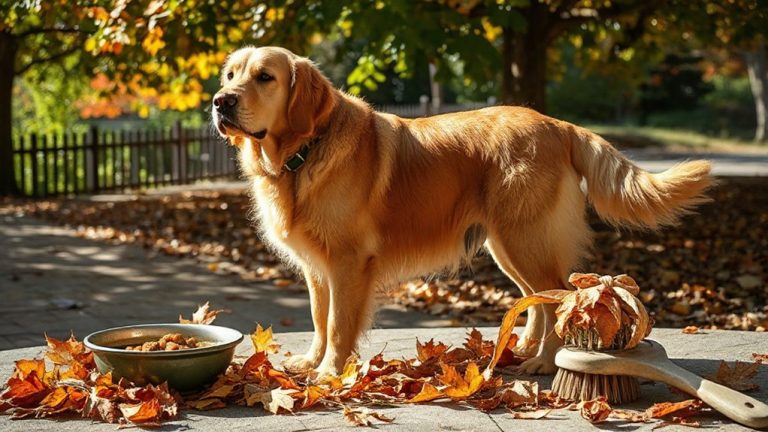
What makes your dog shed more in spring and fall? Daylight changes and temperature shifts are the primary triggers. As days lengthen in spring, increased light exposure signals your dog’s pineal gland to release hormones that initiate shedding. This photoperiod response regulates the coat growth cycle, prompting the loss of dense winter fur to prepare for warmer months. Conversely, in fall, shorter days cause the gland to shift balance again, stimulating a new insulating coat while old hairs shed. Temperature shifts amplify this effect-cooler autumn air and warmer spring conditions fine-tune the timing. These environmental cues work in tandem, ensuring coat adaptation aligns with seasonal demands. While breed genetics set baseline patterns, it’s daylight-not temperature alone-that drives the cycle’s timing. Your dog’s body treats light like a calendar, adjusting its coat precisely.
How Breed Genetics Control Hair Growth Cycles
Since hair growth in dogs follows a genetically programmed pattern, your pet’s breed determines not only coat type but also how often and how much they shed. Follicle density varies considerably between breeds, influencing coat thickness and shedding intensity. Breeds with high follicle density, like Huskies, produce thicker coats and shed more during seasonal shifts. Growth synchronization refers to the proportion of hair follicles entering the shedding phase simultaneously. In breeds with high synchronization, such as German Shepherds, shedding occurs in intense bursts, typically twice a year. In contrast, low synchronization, seen in breeds like Labradors, leads to more consistent, year-round shedding. These genetic traits are inherited and fixed within breed lines. You can predict shedding patterns based on breed-specific follicle behavior. Understanding these mechanisms helps you manage coat care more effectively. Genetic control of growth cycles is precise and biologically rooted, not influenced by diet or environment.
Why Poodles Keep Growing Hair Like Humans
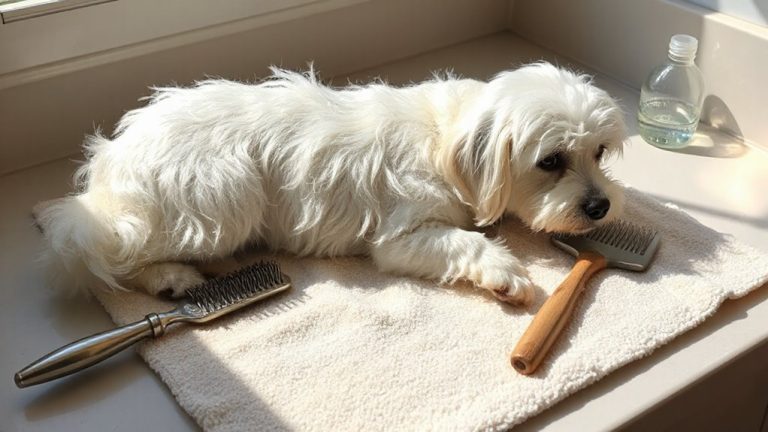
Most poodles have a unique growth cycle that keeps their hair growing continuously, much like human hair. This prolonged anagen (growth) phase results in minimal shedding and constant length gain. Unlike breeds with short cycles, poodles’ follicles stay active for years. The trait stems from specific genetic mutations affecting hair follicle regulation. These mutations delay the shift to the resting phase, prolonging growth. Their curly coat has a dense, wool-like hair texture due to tightly coiled strands with high tensile strength. Individual hairs have a consistent diameter from root to tip, enhancing uniform curl formation. You’ll notice less undercoat, reducing shedding and increasing hypoallergenic properties. This continuous growth requires regular grooming to prevent matting. The combination of extended growth cycle and distinctive hair texture makes poodle coats functionally and structurally different from most dog breeds. Genetic research confirms these traits are heritable and breed-specific.
How DNA Tests Predict Your Dog’s Grooming Needs
How can you know what your dog’s coat will do before it even finishes growing? DNA tests analyze specific genes like *RSPO2*, *FGF5*, and *KRT71* to predict coat texture and growth patterns. You’ll get precise data on whether your dog has straight, wavy, or curly hair. These results directly influence grooming frequency. Curly-coated dogs, linked to *KRT71* variants, usually shed less but mat easily, requiring brushing every 1–2 days. Smooth-coated dogs with ancestral *FGF5* markers often need care only weekly. Labs with double coats show different shedding cycles than single-coated Border Collies. Each genetic profile includes a grooming schedule based on coat texture and growth rate. Tests from accredited labs offer over 95% accuracy across 200+ breeds. When you know the DNA, you’re not guessing-you’re planning care with scientific support. This reduces skin issues by 40% in high-maintenance breeds.
On a final note
Your dog’s coat traits are dictated by specific genes like FGF5, KRT71, and MC5R. These control hair length, curl, and shedding intensity. DNA influences growth cycle duration, with some breeds exhibiting continuous anagen phases similar to human hair. Seasonal shedding correlates to photoperiod-triggered hormone shifts. Genetic tests analyze these markers to predict grooming needs accurately. Understanding your dog’s genotype enables precise care planning.