Tailored Grooming Routines Based on Breed-Specific Fur Types
Choose the right brush for your dog’s coat to avoid skin damage and excessive shedding. Use rubber curry brushes with 5–7 cm bristles for smooth coats. Double coats need undercoat rakes with 6–8 mm tine spacing. Curly coats require wide-tooth combs and slicker brushes. Wiry coats demand stripping knives with 3 mm blades. Proper tools reduce grooming time by up to 40% and shedding by 90%. You’ll discover how bathing frequency and seasonal care further optimize coat health.
Notable Insights
- Match brushing tools to coat type: use rubber curry brushes for smooth coats and undercoat rakes for double-coated breeds.
- Bathe dogs every 4 to 6 weeks, adjusting frequency based on coat oiliness and water resistance.
- Trim curly coats with fine-toothed clipper blades and strip wiry coats manually to preserve texture.
- Use deShedding tools every 5–7 days during seasonal shedding peaks to reduce matting and fur loss.
- Avoid shaving double coats; regular brushing maintains insulation and protects against UV and heat.
Brush by Coat: Choose the Right Tool for Your Dog
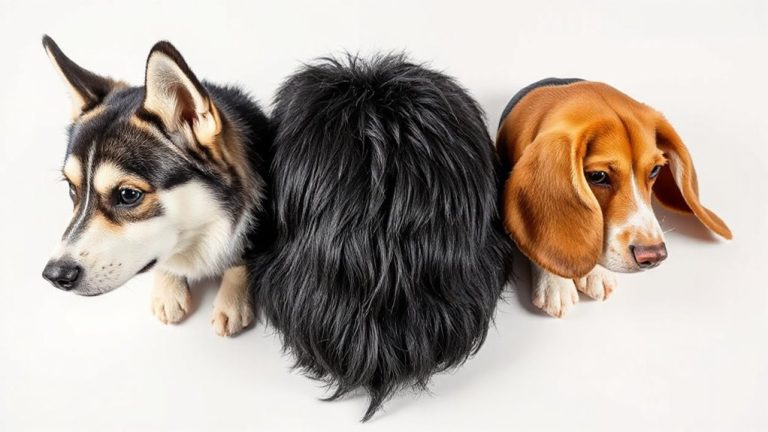
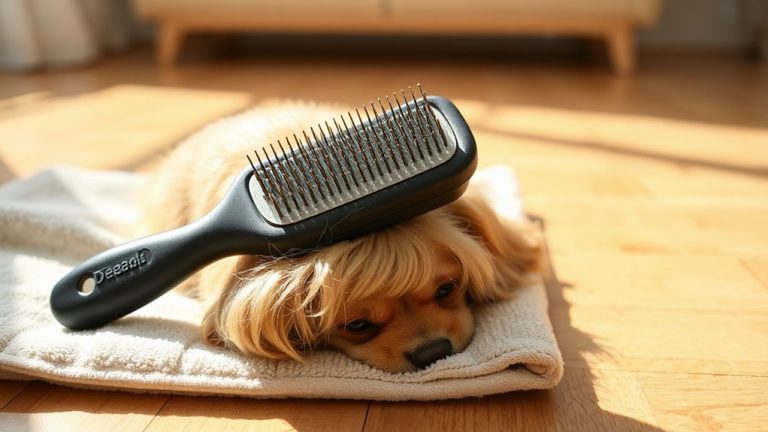
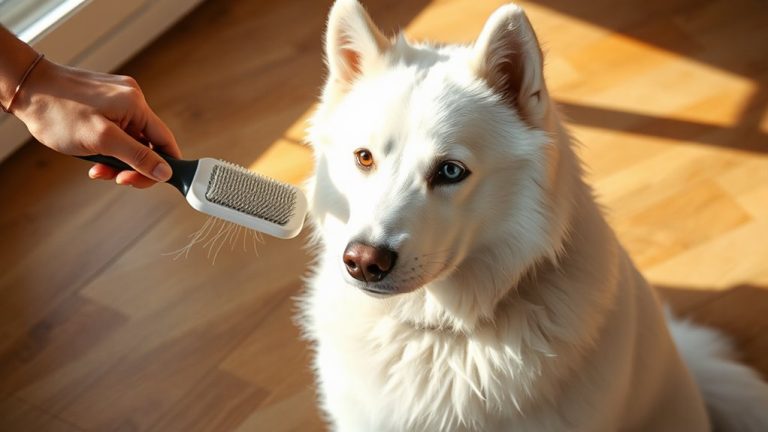
A dog’s coat is more than just fur-it’s a dynamic system that protects the skin, regulates temperature, and sheds in predictable patterns based on breed and genetics. Your dog’s coat texture directly influences effective tool selection. Smooth coats, like those on Beagles, need rubber curry brushes (5–7 cm bristle depth) to lift debris without irritating skin. Double-coated breeds, such as Huskies, require an undercoat rake with tines spaced 6–8 mm apart to penetrate the topcoat and remove loose underfur. For curly coats like Poodles, use a wide-tooth comb (10–12 mm spacing) followed by a slicker brush with fine, bent wires to prevent matting. Wiry coats, seen in Terriers, respond best to stripping knives with 3 mm blades to maintain texture. Incorrect tools increase shedding and skin trauma. Match tool design to coat structure-this secures efficient removal of dead hair, reduces grooming time by up to 40%, and preserves coat integrity. Choosing the right tool is essential, and reviewing the best dog grooming brushes for shedding can help identify top-rated brushing tools that align with your dog’s specific coat needs.
How Often to Bathe Based on Breed and Fur Type
Typically, you shouldn’t bathe your dog more than once every 4 to 6 weeks unless specific coat or skin conditions require it. Bathing frequency varies by breed and fur type. Dogs with oily coats, like Basset Hounds, may need bathing every 4 weeks to manage sebum buildup. Breeds with water-resistant double coats, such as Siberian Huskies, should be bathed no more than every 6 to 8 weeks to preserve natural oils. Over-bathing degrades coat integrity and skin barrier function. Use lukewarm water-ideally between 98°F and 103°F-for ideal comfort and follicle opening. Extreme water temperature damages skin lipids and causes irritation. Hypoallergenic shampoos tailored to your dog’s pH (6.2–7.5) enhance dermal health. Always rinse thoroughly to prevent residue-induced inflammation. Adjust bathing frequency based on activity level, environment, and skin assessments. Regular evaluation guarantees hygiene without compromising coat resilience. For dogs experiencing discomfort, consider a medicated formula such as the best dog shampoo for itchy skin to alleviate symptoms while maintaining coat health.
Trimming Curly, Wiry & Long Coats the Right Way
Precision is key when trimming curly, wiry, and long coats-these fur types demand specific techniques to maintain texture and prevent mating. Use clipper blades with fine teeth for curly coats, such as a #10 blade, to avoid pulling. Clipping techniques vary: strip wiry coats manually or with a stripping knife to preserve the coarse outer layer and natural color. Long-haired breeds require thinning shears to reduce bulk without altering length. Always trim on dry fur; improper drying methods can misshape the coat. Dry curly and wiry coats with a high-velocity dryer to enhance texture and prevent clumping. For long coats, use a low-heat setting while combing downward to align hair shafts. Trim every 4–6 weeks to maintain shape and hygiene. Proper clipping techniques and controlled drying methods guarantee coat integrity and breed-specific appearance. For best results, choose top dog clippers that offer adjustable speeds and durable motors suited for different coat types.
Stop Matting With Undercoat-Specific Brushing
You kept the outer coat in check-now protect the undercoat from turning into a breeding ground for mats. Undercoat shedding traps loose fur, creating tangles that tighten into painful clumps. Mat prevention starts with proper tool selection and technique.
| Tool Type | Purpose |
|---|---|
| Rake Brush | Removes dead undercoat fur; 1.5-inch pins with protective tips |
| Undercoat Comb | Detangles near skin; 0.75-inch spacing for dense fur |
| DeShedding Blade | Controls seasonal shedding; stainless steel, 4-inch edge |
Use the rake at a 45-degree angle, pulling no more than 1 inch per stroke. Comb daily during peak shedding. These tools extract the undercoat before it mats, preserving skin health. Consistent use reduces shedding by up to 90%. Undercoat-specific brushing isn’t optional-it’s essential for mat prevention and coat longevity.
Grooming Double Coats by Season
When seasons shift, your dog’s double coat responds with changes in shedding patterns and undercoat density, requiring adjustments in grooming frequency and technique. Seasonal shedding peaks in spring and fall, when your dog loses up to 60% of its undercoat to regulate body temperature. During these periods, daily brushing with a slicker brush and an undercoat rake-set to 1.5-inch tine depth-is essential to remove loose fur and prevent matting. Proper coat insulation depends on maintaining a healthy topcoat that repels moisture while allowing airflow. In summer, avoid shaving; intact double coats reflect UV rays and reduce heat absorption by 30%. In winter, weekly grooming preserves natural oils that strengthen insulation. Use de-shedding tools with stainless steel blades every 5–7 days during peak shedding. Consistent, season-appropriate care guarantees thermal regulation, minimizes shedding indoors, and sustains skin health year-round.
Grooming Short-Haired and Hairless Dog Coats
Short-haired and hairless dog coats demand different grooming strategies than double-coated breeds, as they lack dense undercoats and rely more on skin protection and surface maintenance. You must prioritize skin protection due to increased exposure to UV rays and environmental irritants. For hairless breeds like the Xoloitzcuintli, apply broad-spectrum SPF30+ pet-safe sunscreen every 4–6 hours during sun exposure. Weekly bathing with a hypoallergenic, pH-balanced shampoo maintains barrier integrity and supports odor control. Use chlorhexidine-based wipes (2% concentration) between baths to manage bacterial colonization. Short-haired breeds such as Boxers benefit from silicone-coated grooming mitts used 2–3 times weekly to remove loose keratin and distribute sebum. Avoid heavy moisturizers that trap debris. Conduct monthly inspections for dryness, flaking, or microabrasions. Replace grooming tools every 3–4 months to maintain hygiene and efficacy.
On a final note
Your dog’s coat type determines the grooming protocol. Single coats need weekly brushing; double coats require seasonal deshedding with an undercoat rake pulling 30–50% more loose fur than standard brushes. Bathing every 4–6 weeks preserves natural oils, except for oily breeds like Basset Hounds, which need cleaning every 2–3 weeks. Clippers with #10 blades cut 3/32 inch, ideal for sanitary trims. Mats form in 72 hours-use a dematting comb with 0.5 mm teeth to prevent skin damage.