Why Portion Control Fails: Common Mistakes in Pet Weight Management and How to Fix Them
You’re underestimating how much your pet really eats. A kitchen cup can over-measure kibble by 30%, and treats like peanut butter add 90 empty calories fast. Feeding charts ignore activity, age, and metabolism, while free-feeding disrupts natural cycles. Use a digital scale for 1-gram precision and measure treats under 10 kcal. Adjust portions by 10% every two weeks using body condition scores. Calorie accuracy begins with tools and consistency-what you’re doing now may already be off by hundreds of calories. Your next step reveals how to fix it.
Notable Insights
- Using kitchen cups instead of calibrated tools can cause 20–30% portion variability, leading to overfeeding.
- Emotional feeding contributes to over 40% of unintended weight gain in dogs.
- Hidden calories from treats and table scraps can make up over half a pet’s daily intake.
- Free-feeding disrupts hunger cues and increases the risk of chronic overeating.
- Metabolic needs change with age, activity, and health, requiring regular portion adjustments based on body condition.
Why Portion Control Fails for Pets
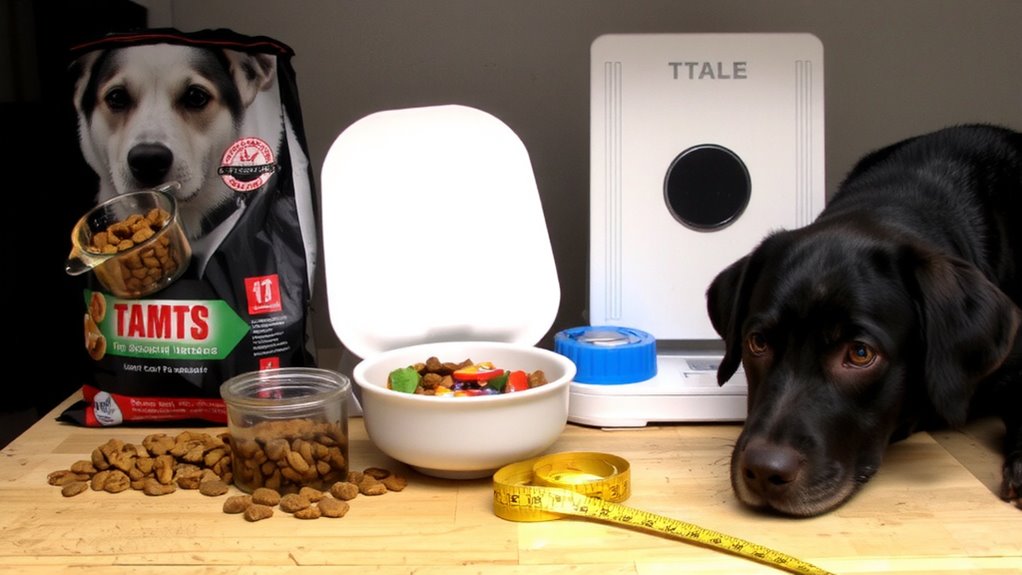
Why does portion control often fall short in managing pet weight, despite being widely recommended? You rely on portion control, but emotional feeding undermines your efforts. You give extra snacks during bonding moments, not realizing caloric intake rises sharply. Studies show emotional feeding contributes to over 40% of unintended weight gain in dogs. You also make inaccurate assumptions about serving sizes. A “cup” of kibble varies by brand and density-some contain up to 15% more calories than label estimates. You may use kitchen cups instead of calibrated measuring tools, introducing 20–30% variability per meal. Feeding charts are based on metabolic energy requirements (MER), measured in kcal/kg^0.75, yet you often ignore activity level, age, and neuter status. Without adjusting for these, portion control fails. Accuracy demands digital scales and strict adherence to vet-calculated rations. You must track every calorie-consistency is non-negotiable.
Stop Underestimating Treat and Table Calories
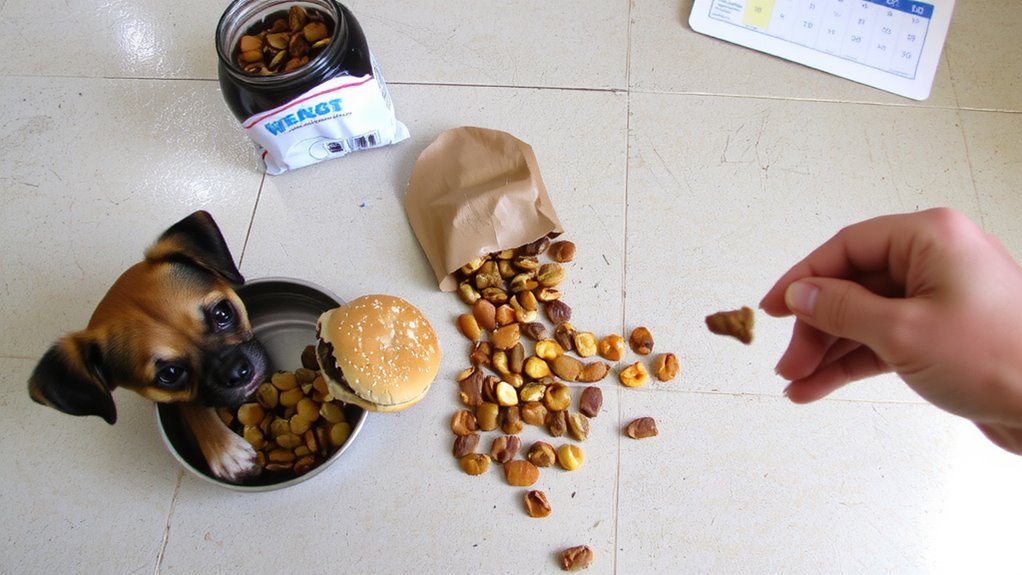
You’re likely feeding treats and table scraps without realizing how quickly those calories add up. Hidden calories from snacks can contribute 30–50% of your pet’s daily intake, undermining portion control. A single tablespoon of peanut butter contains 90 calories-excessive for small dogs with daily needs of just 250–300 calories. Treat overload skews energy balance, promoting weight gain even if main meals are measured. For example, a 20-pound dog requires roughly 600 kcal/day; feeding five dog biscuits (60 kcal each) exceeds 50% of their allotment. Human foods like cheese, bread, and chicken scraps add unpredicted fats and carbs. Replace high-calorie treats with measured, low-calorie alternatives-such as carrot slices (4 calories per piece) or commercial treats labeled under 10 kcal each. Log every snack to track total intake accurately. Consistent accounting prevents hidden calories from sabotaging weight management. Incorporating vet-approved pet weight management supplements can further support metabolic health and satiety during weight loss.
Read Pet Food Labels Correctly
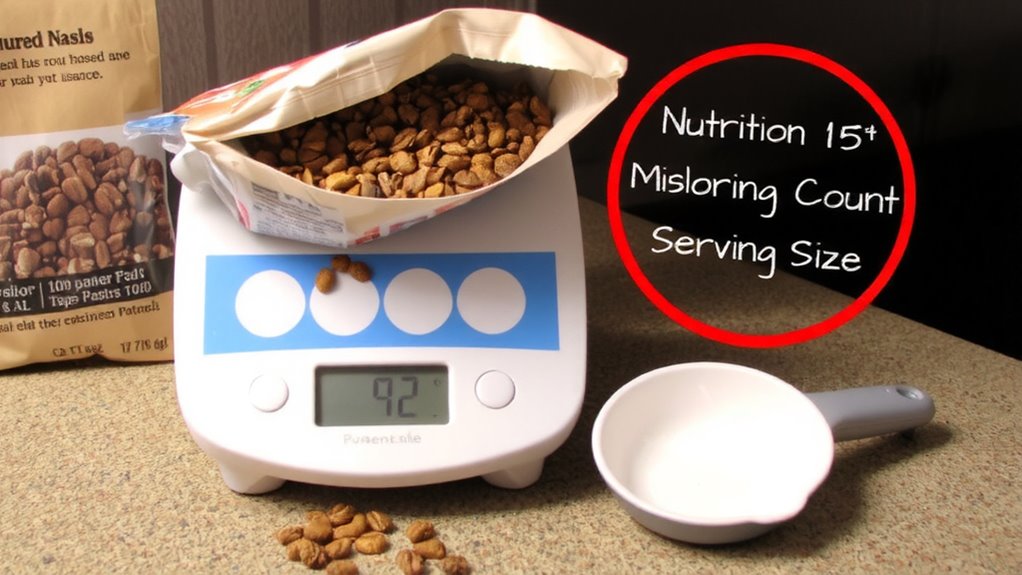
A close look at your pet’s food label is the first step toward effective portion control. You must understand nutrient density and ingredient quality to make informed feeding decisions. Labels list calories per cup or can, which directly affects daily intake calculations. High nutrient density means more energy per bite, requiring smaller portions.
| Factor | Low-Quality Food | High-Quality Food |
|---|---|---|
| Nutrient Density | Low; bulk fillers like corn | High; lean proteins, minimal fillers |
| Ingredient Quality | By-products, artificial additives | Whole meats, natural preservatives |
| Caloric Concentration | High volume needed | Smaller portions suffice |
Misreading these details leads to overfeeding. Always use an 8-ounce measuring cup and verify caloric data on the guaranteed analysis panel. Ingredient quality impacts digestibility and long-term health, just as nutrient density determines portion size accuracy. Choosing a grain-free dry dog food can support better nutrient absorption and reduce empty calories from fillers.
End Free-Feeding to Regain Control
While free-feeding may seem convenient, it undermines precise portion control and often leads to overconsumption. You should establish scheduled meals to regulate your pet’s intake effectively. Free access to food promotes constant grazing habits, which mimic continuous snacking in humans and disrupt natural hunger cues. This pattern frequently results in caloric excess, even with appropriate daily portions. Pets develop food anxiety when meals are unpredictable, increasing the urge to eat whenever food is available. Scheduled feeding twice daily reduces this stress and supports metabolic rhythm. Studies show pets on timed feeding regimens have 27% better weight control outcomes than those free-fed. You can monitor appetite changes more accurately and detect health issues earlier. Eliminating free-feeding restores structure, prevents unmeasured consumption, and enables consistent portion management. It’s a foundational step in effective weight control. Shift gradually to minimize stress, offering meals at the same times daily.
Use Proper Measuring Tools
Consistency begins with accuracy-measuring your pet’s food with the right tool guarantees they receive the exact portion needed for healthy weight management. Most measuring cups vary by up to 40% in volume, leading to significant overfeeding. Use standardized, graduated measuring cups calibrated in ounces and milliliters for dry or canned food to reduce inconsistency. For maximum precision, switch to digital food scales that measure in 1-gram increments. A typical 1-cup portion of kibble can range from 80 to 150 grams depending on density; weighing secures exact caloric control. Scales eliminate discrepancies caused by settling or packing. Choose models with tare functionality to subtract container weight accurately. Unlike volumetric tools, food scales provide objective, repeatable measurements aligned with veterinary feeding guidelines. This level of accuracy is critical when managing weight loss or preventing gain. Using proper measuring tools removes guesswork, supporting disciplined portion control.
Adjust Portions for Age and Activity
Since your pet’s metabolic demands shift with age and daily activity, adjusting portion sizes isn’t optional-it’s essential for maintaining ideal body condition. As pets progress through age stages, their caloric needs decline; mature adults require 20–30% fewer calories than adolescents. Senior pets may need up to 40% less, depending on muscle mass and organ function. Activity shifts also impact energy expenditure. A dog averaging 60 minutes of moderate exercise daily burns roughly 1.6 times more calories than a sedentary one. Cats with indoor-only lifestyles need portion adjustments when playtime decreases. Use metabolic weight (body weight^0.75) to calculate resting energy requirement (RER), then apply activity factor: 1.2 for seniors, 1.6 for active adults. Monitor body condition score monthly. Adjust portions by 10% increments every two weeks if weight drifts.
Build a Realistic Feeding Plan
You’ve adjusted portions based on age and activity, but those calculations are only effective when embedded in a structured feeding plan. Feeding schedules guarantee consistency, which stabilizes blood glucose and supports metabolic rate. Divide your pet’s daily ration into two or three measured meals, aligning with natural digestive cycles. Consistent meal timing prevents overeating and reduces begging behaviors. For adult dogs, feed meals 8–12 hours apart; cats benefit from smaller, more frequent meals due to faster gastric emptying. Use a calibrated measuring cup or digital scale for accuracy-eyeballing leads to 15–30% overfeeding. Automated feeders can enforce feeding schedules precisely, especially for owners with irregular routines. Include all food sources-treats, toppers, supplements-in the total daily caloric count. A realistic plan accounts for your lifestyle while maintaining portion integrity, guaranteeing long-term adherence and effective weight management. The right cat auto feeder can further support precise portion delivery and timing consistency for optimal feline weight management.
On a final note
You control your pet’s weight most effectively when portion discipline is precise and consistent. Use an 8-oz measuring cup or digital kitchen scale accurate to ±1 gram for exact food amounts. Free-feeding leads to 15–30% overconsumption daily. Follow label guidelines adjusted for your pet’s age, weight, and activity-recalculate every 60 days. Treats must stay under 10% of total daily calories.