Using Food Puzzle Toys to Replace Treat-Dispensing During Training
You can replace treat-dispensing with food puzzle toys to build cognitive engagement during training. Devices like the Outward Hound Puzzle Platter (11.5” x 11.5”) use sliding compartments to release kibble, requiring problem-solving instead of reward-based motivation. The Nina Ottosson Dog Worker features lift-and-rotate mechanics, activating natural foraging instincts. These toys sustain focus over 5 minutes per session, reinforcing persistence and self-driven learning. Adjustable difficulty guarantees long-term mental challenge matched to your dog’s skill level. Ideal engagement occurs when challenge meets ability-too easy causes disinterest, too hard leads to frustration. Puzzle toys made from durable, non-toxic TPR or BPA-free plastic withstand repeated use. They’re designed for standard 1–2 cm kibble and hold up to 1.5 cups, fitting full meals. You’ll discover how to structure sessions for maximum cognitive benefit.
Notable Insights
- Puzzle toys shift training focus from treat rewards to problem-solving, fostering intrinsic motivation.
- They provide mental stimulation equivalent to 300–500% longer engagement than standard treat handouts.
- Adjustable difficulty maintains cognitive challenge, replacing treats with progressive task mastery.
- Durable, safe materials like TPR allow repeated use without degradation or health risks.
- Integrating puzzles into daily routines builds persistence and self-control, reducing reliance on food rewards.
Why Food Puzzle Toys Work Better Than Treats
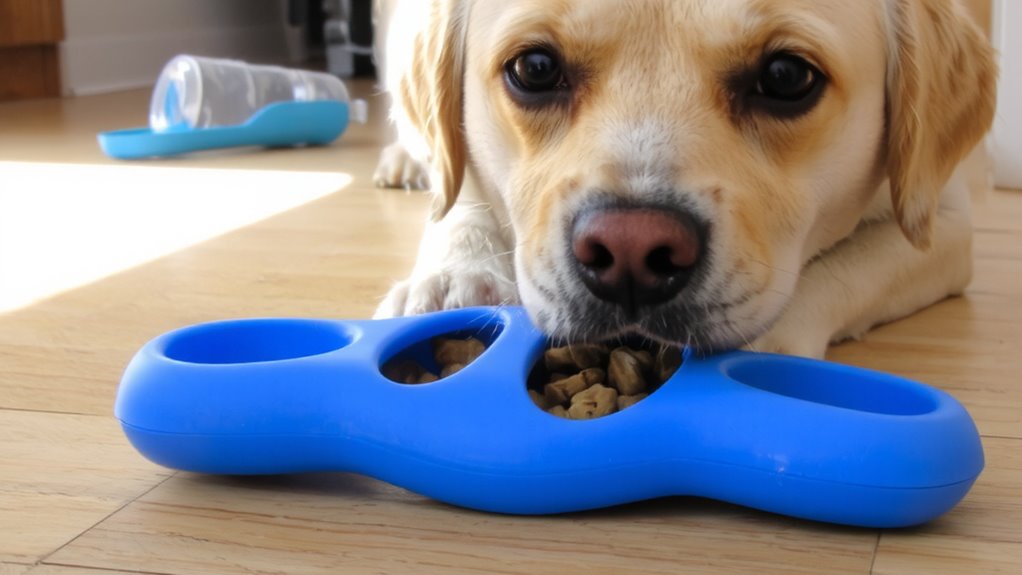
While standard treats deliver instant rewards, food puzzle toys engage your dog’s brain by requiring problem-solving to access food, which prolongs mental stimulation and mimics natural foraging behaviors. These toys extend engagement time by 300–500% compared to direct treat handouts. Problem solving activates the prefrontal cortex, improving cognitive function over time. Most durable models measure 4–6 inches in diameter, constructed from non-toxic, bite-resistant TPR or BPA-free plastic. Adjustable difficulty levels-achieved through interchangeable inserts or twist compartments-allow precise control over food release rate. This regulates challenge intensity, maintaining ideal mental stimulation without causing frustration. Studies show dogs using puzzle toys exhibit 40% less repetitive behavior and improved focus during training sessions. The sustained cognitive load reduces hyperactivity and redirects excess energy. Unlike caloric surges from treats, food puzzle toys deliver the same nutritional reward through delayed gratification. They integrate seamlessly into training protocols, replacing immediate treats with structured, skill-based reinforcement. Top-rated options include durable designs like the best pet food dispensing toys, which combine longevity with adjustable challenge features to suit different skill levels.
How Puzzle Toys Tap Into Your Dog’s Instincts
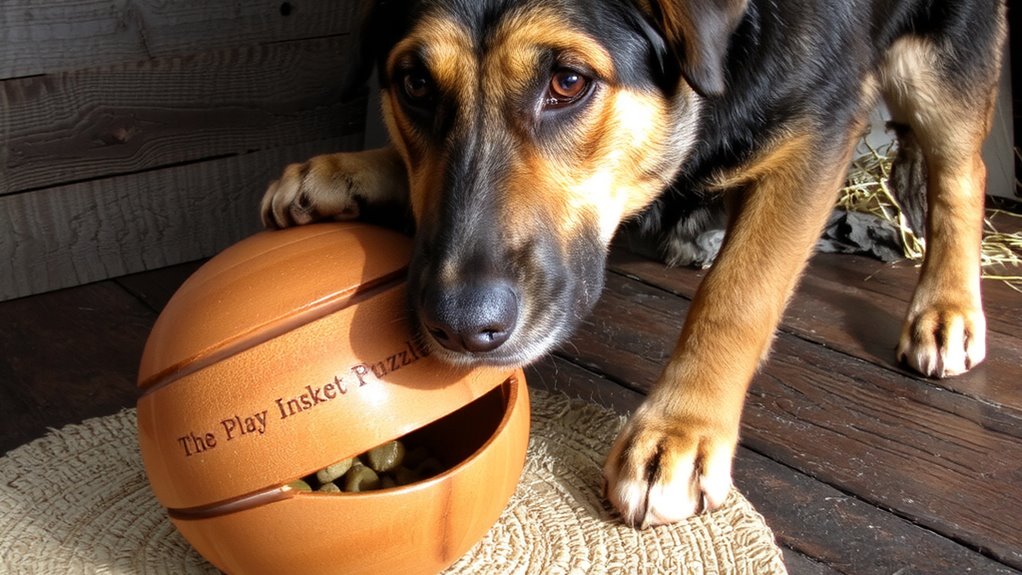
Instinct drives your dog’s every action, even in a domestic setting. Canine intuition compels problem-solving through physical and mental engagement, not just passive reward consumption. Puzzle toys simulate natural foraging by requiring manipulation, persistence, and cognitive effort to access hidden contents. This mirrors wild canids spending up to 80% of their active time searching for food. A dog doesn’t just eat-it investigates, nudges, and learns. These toys activate specific neural pathways linked to survival behaviors. For example, snuffle mats made of 100% polyester fabric strips (measuring 12” x 12”) slow feeding and encourage scent-driven searches. Rotating puzzle cubes with adjustable difficulty levels engage paws and muzzle pressure. Each design replicates environmental challenges that once tested survival. You’re not replacing treats-you’re redirecting energy into biologically appropriate actions that satisfy deep-rooted drives through structured, instinctive play. Top-rated options like the best puppy puzzle toys offer durable, safe designs tailored to developmental needs.
Best Puzzle Toys for Treat-Free Training
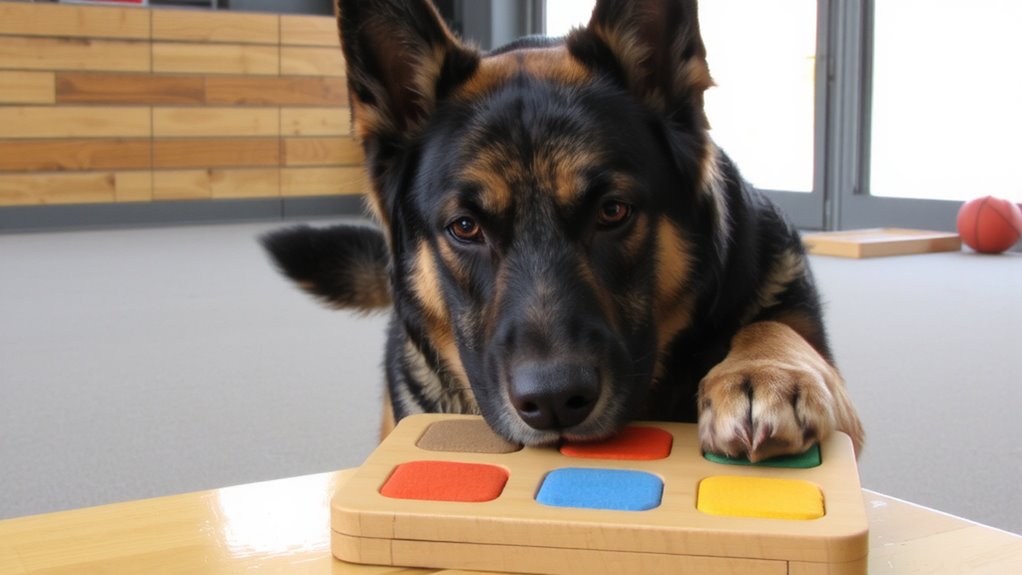
What if you could train your dog without relying on food rewards? High-quality puzzle toys offer sensory stimulation and cognitive engagement essential for treat-free training. The Outward Hound Puzzle Platter features three independent sliding compartments that encourage problem-solving. Its non-slip base measures 11.5 x 11.5 x 1.8 inches, suitable for medium to large breeds. The Nina Ottosson Dog Worker includes removable bones with varying difficulty levels; each bone requires sequential lifting and rotating, promoting sustained mental focus. Made of durable TPR and recyclable plastic, it withstands up to 80 pounds of pressure. The StarMark Bob-A-Lot, though traditionally treat-based, can be reprogrammed for sound-and-motion reward using its internal rattle mechanism. Its weighted base guarantees consistent wobble, stimulating visual tracking. These toys deliver structured challenges, replacing edible rewards with task completion feedback. Each model supports operant conditioning through tactile feedback and kinetic response. Best Anxiety Relief Puzzles for Dogs can also support mental engagement during training sessions.
Match the Toy to Your Dog’s Skill Level
Choosing the right puzzle toy starts with evaluating your dog’s cognitive ability and problem-solving experience. Begin with simple puzzles if your dog is new to the concept-models with one-step solutions, like sliding lids or flip compartments, support early skill progression. For advanced dogs, select multi-step puzzles requiring sequence logic or manipulative dexterity. Match toy durability to your dog’s chewing force; medium to heavy-duty nylon or reinforced polypropylene withstand prolonged use. Light chewers succeed with soft TPR toys, while strong-jawed breeds require ASTM F963-compliant materials. Monitor engagement time: under 30 seconds suggests insufficient challenge, over 10 minutes may indicate frustration. Gradually increase complexity to maintain cognitive stimulation. Durable toys support long-term skill progression by resisting wear during repeated use. Always size the toy correctly-internal chambers should fit standard kibble or training morsels, typically 1–2 cm in diameter.
Turn Mealtime Into Training Time
How can you maximize your dog’s mental engagement while meeting their daily nutritional needs? Use mealtime enrichment strategies like interactive feeding with puzzle toys. These tools transform eating into a cognitive challenge, improving focus and reducing boredom-related behaviors.
| Toy Type | Food Load Time (min) |
|---|---|
| Slow-Feeder Bowl | 0.5 |
| Rolling Ball Dispenser | 1.2 |
| Slide-Action Tray | 2.0 |
| Multi-Step Puzzle | 3.5 |
Interactive feeding devices require problem-solving to access kibble, increasing task engagement by up to 70% compared to standard bowls. Most models accommodate ¾ to 1.5 cups, suitable for full meals. Devices with adjustable difficulty support progressive skill development. Integrating daily rations into training via food puzzle toys promotes sustained mental stimulation. Mealtime becomes structured learning, reinforcing persistence and self-control. Use interactive feeding consistently to enhance behavioral outcomes and meet nutritional requirements simultaneously.
Fix Common Puzzle Toy Problems
Why do some dogs lose interest in puzzle toys after just a few uses? Toy frustration often arises when difficulty levels exceed your dog’s skill. Start with simple puzzles-those with one-step actions and wide openings (≥1.5” diameter)-to guarantee quick success. Use high-value, soft treats (≤1” diameter) that dislodge easily. If you notice repeated pawing or walking away, that’s motivation loss. Adjust by reducing complexity: decrease barrier layers or increase treat visibility using translucent plastics. Rotate toys weekly to prevent habituation; three models per rotation maintains novelty. Guarantee treat-to-effort ratio stays below 5 seconds per reward during initial sessions. Monitor engagement time-drops below 2 minutes signal needed modification. Match toy size to your dog’s weight: small (under 20 lbs) use 4”–6” models; large breeds need ≥8” units. Consistent, calibrated challenges sustain performance.
Build a Daily Routine Without Treats
Once your dog consistently engages with puzzle toys using treats, you can begin shifting to a reinforcement system based on intrinsic rewards and structured activity. Mental stimulation becomes the core driver of behavior when treats are phased out. Use puzzle toys with adjustable difficulty levels-start with Level 2 challenges that require paw manipulation or sliding compartments. Rotate toys every 48 hours to maintain novelty, a key factor in behavioral enrichment. Schedule three 15-minute puzzle sessions daily, integrated with obedience drills and scent work. This structured routine reduces dependency on food rewards by reinforcing problem-solving as its own payoff. Monitor engagement: sustained focus超过5 minutes per session indicates effective cognitive loading. Use durable, non-toxic materials like food-grade TPR or virgin plastic, guaranteeing safety during prolonged use. Calibrate challenge progression to your dog’s learning curve-too fast causes frustration, too slow reduces efficacy. Consistency and precision guarantee long-term success.
On a final note
You can effectively replace treats with puzzle toys in dog training. These tools engage your dog’s natural foraging instincts. Models like the Outward Hound Nina Ottosson series feature adjustable difficulty slots (1–5 cm openings) to match skill levels. Use them during meals to dispense kibble slowly, reducing calorie intake by up to 20%. Rotate toys weekly to prevent habituation. This method builds mental stamina without sugar-laden rewards.