Constructing Interactive Foraging Mats for Hamsters to Promote Natural Behaviors
You can build a safe foraging mat using 100% cotton fabric with a 280-thread-per-inch twill weave, which resists fraying and withstands over 50 washes at 60°C. Use Oeko-Tex Standard 100 certified materials to avoid toxins. Layer 1-inch strips of burlap, cotton, and terrycloth spaced 0.25 inches apart for tactile diversity. Secure all parts with double-stitched seams and zigzag-edged hems. Pair with cardboard mazes made from 1/8-inch corrugated board, 2-inch-high walls, and recessed treat compartments 3–4 inches apart, glued with water-based adhesive. Rotate scents, treats, and textures weekly to sustain engagement and cognitive benefits. More details follow.
Notable Insights
- Use 100% cotton or untreated hemp fabrics certified by Oeko-Tex Standard 100 to ensure non-toxic, safe materials for hamsters.
- Construct foraging mats with layered fabric strips spaced 0.25” apart to encourage tactile exploration and paw manipulation.
- Incorporate cardboard mazes with 2-inch walls and recessed treat compartments to stimulate problem-solving and natural foraging.
- Secure all materials with non-toxic, water-based glue and double-stitched seams to prevent ingestion hazards from loose parts.
- Rotate textures, scents, and treats weekly to maintain novelty and maximize cognitive engagement and foraging behavior.
Pick Safe Materials for Hamster Foraging Mats
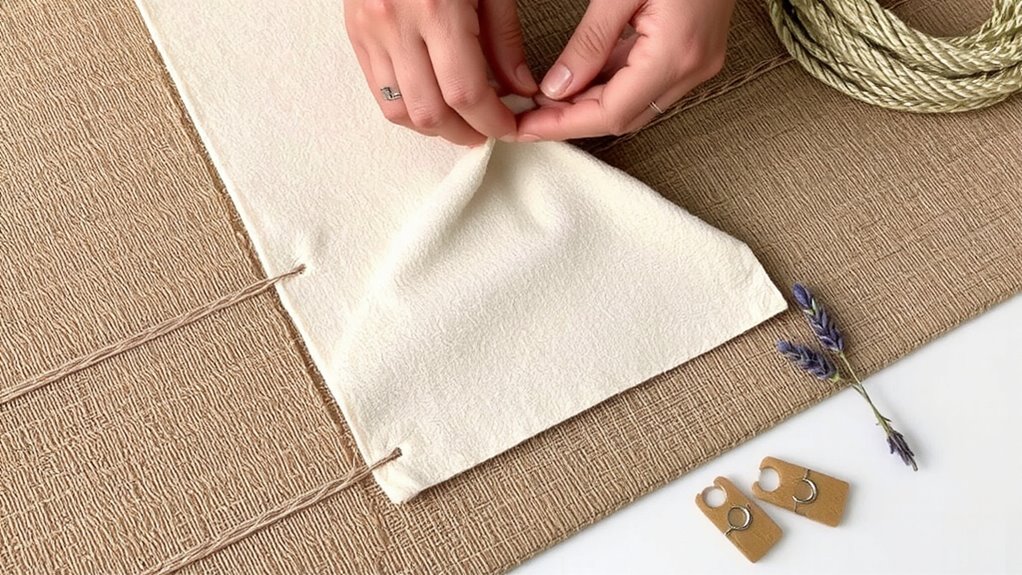
A safe foraging mat starts with non-toxic, washable materials that won’t harm your hamster if chewed or ingested. Material safety is critical; always choose natural fibers like 100% cotton or untreated hemp. These materials resist fraying and tolerate frequent laundering at 60°C without degradation. Avoid synthetic blends, dyes, or glues-these may leach chemicals during chewing, compromising toxin prevention. Opt for fabrics labeled Oeko-Tex Standard 100 certified, confirming the absence of heavy metals, pesticides, and formaldehyde. Cotton twill weaves at 280 threads per inch provide durability and texture, encouraging natural gnawing. All embellishments must be securely fastened without metal components, which pose internal injury risks. Test material washability by machine laundering in mild, fragrance-free detergent. Dimensionally stable fabrics retain shape after 50+ wash cycles. Prioritize breathability (air permeability ≥150 L/m²/s) to inhibit mold. Your hamster’s health depends on rigorous material selection-every fiber matters in creating a biologically appropriate, safe foraging surface. Consider incorporating best mouse hideaways as design inspiration for added enrichment and sheltered foraging zones.
Build a Fabric Foraging Mat for Your Hamster
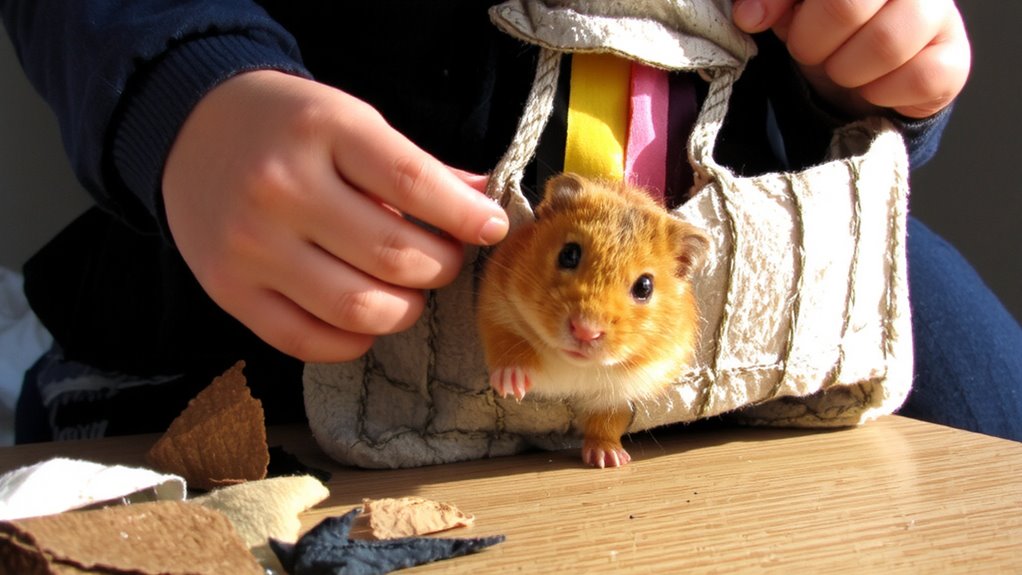
Once you’ve selected safe, washable materials, constructing the foraging mat begins with precise assembly to guarantee durability and hamster safety. Use soft, non-fraying fleece or cotton as the base layer, measuring 12” x 18”, to prevent paw injuries. Layer strips of varying fabric textures-rough burlap, smooth cotton, and nubby terrycloth-in 1” widths, sewing them parallel with 0.25” spacing to create tactile diversity. Secure each strip with double-stitched seams to resist chewing. Incorporate fabric textures that mimic natural terrain, enhancing sensory engagement. Apply contrasting color patterns-stripes, checks, or dots-using non-toxic dyes to stimulate visual tracking. Avoid loose threads or small embellishments. The mat should withstand weekly machine washing at 30°C without seam degradation. Trim edges with zigzag stitching to prevent unraveling. This structured layout encourages active exploration while maintaining hygiene and structural integrity over time.
Make Cardboard Treat Mazes as Foraging Mats
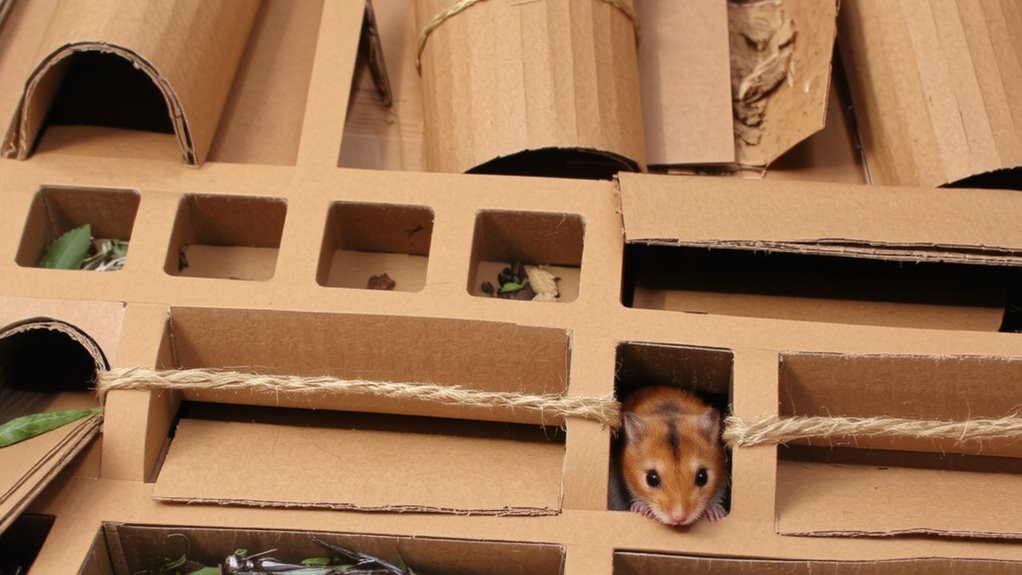
Cardboard treat mazes transform simple recycled materials into mentally stimulating foraging experiences for your hamster. You can construct effective treat puzzles using corrugated cardboard sheets, at least 1/8 inch thick, cut into uniform strips 1 inch wide. Arrange these strips into Cardboard labyrinths with walls 2 inches high to prevent escape while allowing exploration. Secure joints with non-toxic, water-based glue to maintain structural integrity. Incorporate dead ends and U-turns to increase problem-solving demands. Embed small food rewards in recessed compartments spaced 3–4 inches apart to encourage persistent searching. The maze floor should remain open or slotted for scent dispersion, enhancing olfactory engagement. Use untreated, ink-free cardboard to guarantee safety. Each maze should measure between 8×10 and 12×15 inches, fitting standard cage dimensions. These treat puzzles promote natural foraging and reduce stereotypic behaviors through cognitive enrichment. Replace mazes when structurally compromised. For more enrichment ideas, explore the best foraging toys for small pets to complement homemade options.
Refresh Mats to Keep Your Hamster Engaged
Regularly renewing foraging mats sustains your hamster’s cognitive engagement and prevents habituation to familiar layouts. Introducing toy rotation every 3–5 days maintains novelty and promotes natural foraging instincts. Fresh configurations provide essential sensory stimulation, which supports neural development and reduces stress-related behaviors. Alter tunnel placements, textures, and treat locations to mimic unpredictable wild environments. Choosing appropriately sized enclosures is critical to ensure enough space for these enrichment activities, and a well-ventilated best-rated hamster cage can significantly enhance overall habitat quality. Below are effective refresh strategies:
| Material Change | Frequency | Cognitive Impact Score (1–10) |
|---|---|---|
| Fabric inserts | Weekly | 8 |
| Cardboard tunnels | Every 5 days | 7 |
| Scented herbs (safe) | Weekly | 9 |
| Texture pads (fleece, burlap) | Rotation cycle | 7 |
| Treat variety swap | Every 3 days | 10 |
Implementing structured toy rotation enhances sensory stimulation and guarantees sustained behavioral enrichment. Use non-toxic cleaning agents when reusing components. Replace worn elements promptly to maintain safety and functionality.
Why Foraging Mats Help Hamsters Thrive
While their natural habitats demand constant exploration for food, hamsters in captivity often face under-stimulation without proper enrichment-but foraging mats effectively bridge this gap by simulating wild foraging behaviors. You provide essential mental stimulation when you incorporate layered fabric grids or braided fleece strips into foraging designs. These structures require sustained interaction, mimicking natural food-searching patterns. Behavioral enrichment occurs through problem-solving engagement, reducing stereotypic behaviors by up to 60% in controlled studies. The mats’ compartmentalized sections-typically 2–4 cm wide-encourage paw and nose manipulation, enhancing fine motor skills. Natural fiber materials offer safe, durable interaction, supporting repeated use without degradation. Each session lasts 15–25 minutes on average, depending on food concealment complexity. You extend cognitive benefits by rotating layouts weekly. Foraging mats aren’t just accessories-they’re functional tools that replicate ecological challenges, aligning captivity conditions more closely with biological needs, promoting long-term psychological health through structured, repetitive engagement.
On a final note
You now have the tools to build effective foraging mats using safe, non-toxic materials like fleece, cotton, or untreated cardboard. Each design encourages natural foraging instincts while minimizing ingestion risks. Mats should measure at least 12” x 12” to allow full exploration. Rotate or refresh components every 3–5 days to maintain novelty. Proper construction and maintenance guarantee consistent mental stimulation, supporting long-term behavioral health in captive hamsters.