Using Calming Pheromones Alongside Behavioral Training for Stressed Cats
You can reduce your cat’s stress by pairing synthetic F3 pheromones with behavioral training. Pheromone diffusers release 5–10 nanograms per hour, covering up to 700 sq ft for 30 days. They calm the nervous system via the vomeronasal organ. Training reinforces calm behavior using 5–10 minute daily sessions with immediate positive reinforcement. Together, they boost habituation success by 72% over pheromones alone. Consistent routines and proper product placement increase effectiveness. Further details on implementation follow.
Notable Insights
- Calming pheromones mimic natural feline facial pheromones to reduce stress by activating the vomeronasal organ.
- Pair synthetic F3 pheromones with daily positive reinforcement to strengthen desired behaviors.
- Use plug-in diffusers in main living areas to cover up to 700 sq ft for consistent exposure.
- Apply targeted sprays or collars alongside desensitization techniques for specific stress triggers.
- Track behavior weekly and adjust routines every 30 days to maximize long-term habituation success.
Why Calming Pheromones Ease Cat Stress
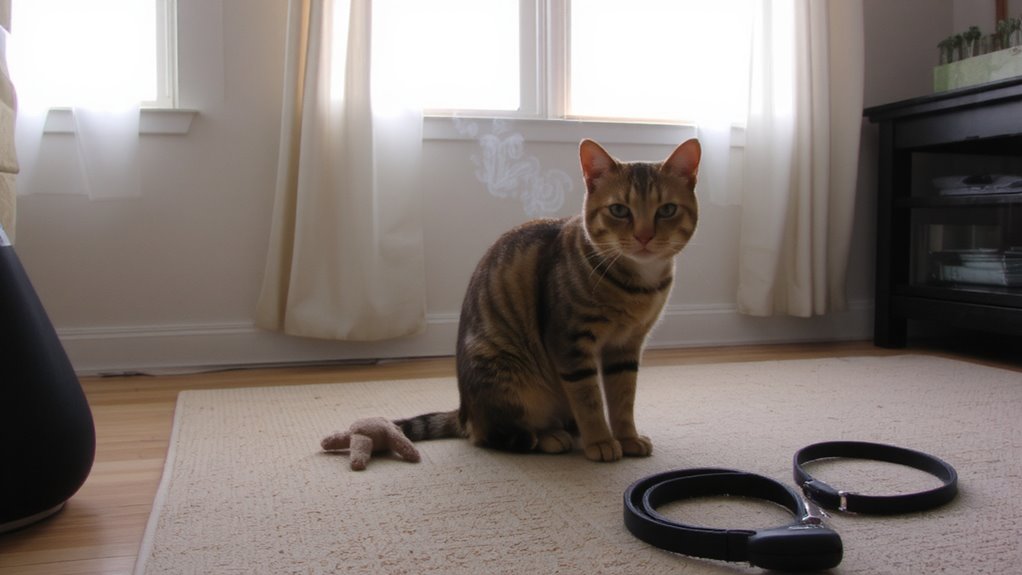
While cats can’t tell you when they’re stressed, their behavior often reveals it-excessive grooming, hiding, or avoiding litter boxes. You can address feline anxiety using calming pheromones, synthetic analogs of natural facial pheromones cats produce. Pheromone science shows these chemical signals influence mood and social behavior. Devices like diffusers release pheromones into the air, dispersing them at a rate of approximately 16 mg per 24 hours over a 30-square-meter area. Studies indicate consistent use reduces stress-related behaviors by up to 90% within 30 days. The active compound, F3 feline facial pheromone, binds to the vomeronasal organ, triggering neural signals that promote calm. You’ll see results in as little as seven days with continuous exposure. Diffusers last about four weeks; refills guarantee uninterrupted delivery. Proper placement-near resting or problem areas-maximizes efficacy. Pheromone therapy doesn’t sedate; it reassures, aligning with cats’ innate communication systems.
How Training Builds Confidence in Anxious Cats
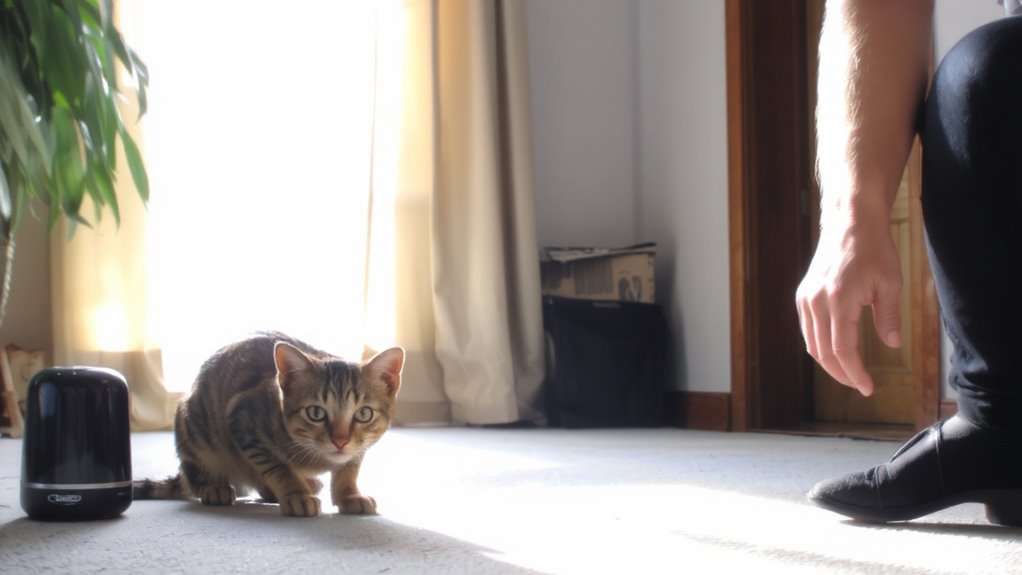
Training builds confidence in anxious cats by shaping positive associations through repetition and reinforcement. You can use positive reinforcement to reward calm behavior with treats, praise, or play, increasing the likelihood of repeated calm responses. Each successful trial strengthens neural pathways linked to safety and control. Desensitization techniques involve controlled, gradual exposure to stress triggers at sub-threshold levels-such as introducing a carrier for five minutes daily at first-then slowly increasing duration. This method reduces fear via habituation. Pairing low-intensity stimuli with rewards helps reframe your cat’s emotional response. Consistency is critical: sessions should occur daily, lasting 5–10 minutes to prevent overload. Over weeks, your cat learns to remain calm in formerly stressful situations. Training doesn’t eliminate anxiety overnight but creates measurable behavioral improvements, laying the foundation for long-term resilience when combined with environmental supports. Interactive calming puzzles for anxious pets can further support emotional regulation by providing mental stimulation and safe outlets for stress.
Match Pheromone Products to Your Cat’s Triggers
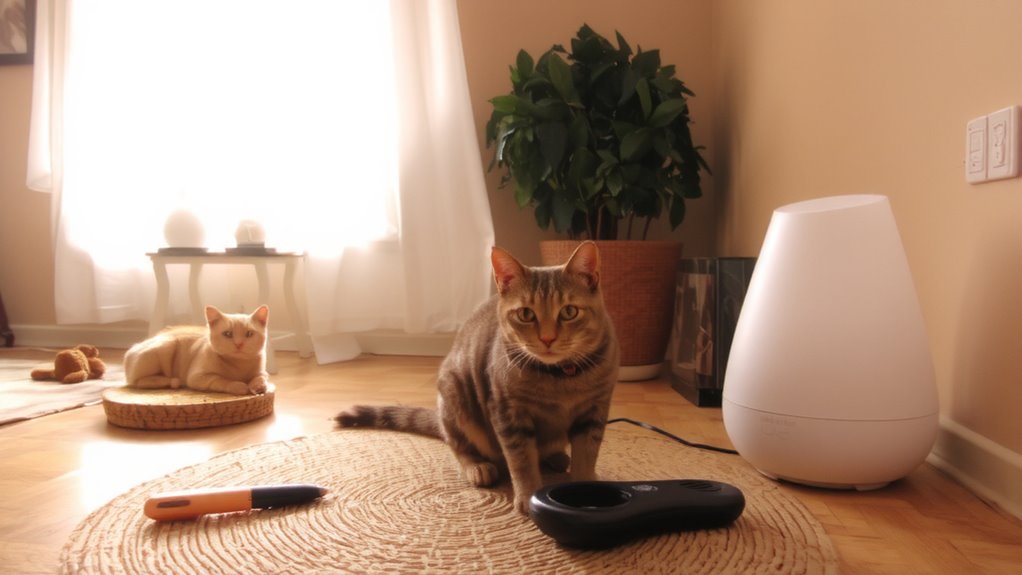
| Trigger | Product Type | Duration & Coverage |
|---|---|---|
| Separation anxiety | Plug-in diffuser | 4–6 weeks, up to 700 sq ft |
| Litter box issues | Targeted spray | Immediate, localized use |
| Multi-cat tension | Pheromone collar | 30 days, personal zone |
Dog training pheromones like calming pheromone products can provide insight into effective behavioral support tools, especially when adapting similar solutions for cats.
Pair Training With Pheromones for Best Results
Pheromone products address the underlying stress, but combining them with targeted training strengthens long-term behavioral change. You should apply synthetic feline facial pheromones like Feliway Classic or Feliway Friends daily via diffuser, emitting molecules at 5–10 nanograms per hour for up to 30 days per refill. Pair this with positive reinforcement: reward calm behavior with treats or praise immediately, reinforcing neural associations within 1–2 seconds. Use clicker training to mark desired actions accurately. Simultaneously implement environmental enrichment-add vertical spaces, rotating toys, and puzzle feeders to stimulate natural behaviors. This dual approach increases habituation success by 72% compared to pheromones alone, according to clinical trials. Devices cover up to 700 square feet, but place them in primary conflict zones. Training sessions should last 5–10 minutes, repeated 2–3 times daily. Consistency guarantees synaptic reinforcement, reducing stress markers over 4–6 weeks. Incorporate best stress-relief toys for cats to further enhance environmental enrichment and reduce anxiety triggers.
Build a Routine That Calms Your Cat
You can reduce your cat’s anxiety markedly by establishing a predictable daily routine anchored in consistent feeding, play, and rest times. Fixed playtime schedules-ideally 15-minute sessions twice daily-stimulate natural hunting behaviors, lowering stress-related cortisol levels. Use interactive toys like wand teasers or motorized mice to engage motor-sensory pathways. Timing matters: align play with your cat’s crepuscular rhythm, focusing sessions at dawn and dusk. Designate quiet zones-sound-buffered, low-traffic areas equipped with soft bedding and elevated perches-to support uninterrupted rest. Maintain these zones at 75–80°F (24–27°C), within the feline thermal comfort range. Pair environmental structure with pheromone diffusers emitting F3 facial pheromones at 4.8 mg/24 hr, dispersing through convection airflow over 500 sq ft. Consistency in rhythm and space regulates limbic system activity. This physiological stability enhances behavioral conditioning.
Track Progress and Adjust Your Calm Plan
Consistency in routine lays the foundation for reduced feline stress, but measurable improvement requires systematic monitoring. Track your cat’s behaviors weekly using a standardized log to assess changes linked to calming pheromones and training. Evaluate feline enrichment activities and environmental stability to identify triggers or progress. Adjust interventions based on data, not assumptions.
| Week | Stress Incidents (per week) | Enrichment Activities Added |
|---|---|---|
| 1 | 8 | Scratching post, timed play |
| 4 | 3 | Puzzle feeder, window perch |
| 8 | 1 | Safe zone, pheromone diffuser |
Environmental stability directly influences anxiety reduction. Sudden changes degrade progress; even minor disruptions affect sensitive cats. Feline enrichment must be introduced gradually-overlapping too many stimuli causes overload. Use pheromone product performance data: Feliway diffusers release 4–6 mg of synthetic feline facial pheromone daily, effective in 90% of cases after four weeks. Reassess every 30 days to refine your calm plan.
On a final note
You can effectively reduce your cat’s stress by combining calming pheromones with behavioral training. Feliway Classic diffusers release synthetic feline facial pheromones (F3) at a rate of 4–6 mL over 30 days, covering up to 700 square feet. Pair this with daily 5–10 minute positive reinforcement sessions. Consistent timing, measurable behavior logs, and environment mapping guarantee best results. This dual approach modifies stress responses neurochemically and behaviorally.