Why Daily Brushing Is Non-Negotiable for a Himalayan Cat’s Long Coat
You must brush your Himalayan cat daily to prevent severe matting caused by its dense double coat-comprised of a woolly underlayer and long guard hairs-that traps loose fur and debris within hours. A stainless-steel comb with 0.5 mm tines and a slicker brush with 0.3 mm bent bristles removes up to 90% of dead undercoat before it binds with sebum. Without intervention, mats form at the skin, restrict airflow, and require veterinary clipping. Daily grooming also reduces hairball-related blockages. There’s more to optimizing this routine effectively.
Notable Insights
- Himalayan cats have dense, dual-layer coats that trap loose fur, making daily brushing essential to prevent matting.
- Without daily brushing, dead hair accumulates at the skin, forming painful mats that can lead to skin infections.
- Daily grooming removes up to 90% of loose undercoat before it binds with oils and debris.
- Mats restrict airflow and pull on hair follicles, causing irritation and increasing the risk of bacterial or yeast colonization.
- Regular brushing reduces ingested fur during self-grooming, lowering the risk of hairballs and potential intestinal blockages.
Why Daily Brushing Is Non-Negotiable for Himalayan Cats
With their dense, long coats and genetic predisposition to matting, Himalayan cats require daily brushing without exception. Their coat texture combines a woolly undercoat with long guard hairs, creating a high-maintenance hybrid structure prone to tangles. This dual-layer insulation traps loose fur, intensifying shedding patterns that peak seasonally but persist year-round. Without intervention, dead hair accumulates at the skin level, promoting mat formation. Daily brushing removes up to 90% of loose undercoat before it binds with oils and debris. A fine-toothed stainless steel comb and double-sided slicker brush, used in tandem, effectively penetrate the 2–3 inch fur length. You should spend at least ten minutes per session, working in small sections from base to tip. Consistent grooming regulates shedding distribution, reduces hairball incidence by 70%, and preserves coat integrity. Skipping even one day increases tangle density by measurable compaction rates. For optimal results, consider using one of the top cat grooming brushes recommended for long-haired breeds.
How Mats Form: And Why They’re Dangerous
Your Himalayan’s coat isn’t just fur-it’s a layered ecosystem where loose undercoat, oils, and debris interact daily. Without daily brushing, loose hairs tangle with sebum and trapped debris, forming tight knots at the skin level. These knots tighten into mats-dense, compressed masses that pull on follicles and restrict airflow. Mats create friction against the skin, leading to inflammation; prolonged pressure causes skin irritation, sometimes breaking the skin barrier. Bacteria or yeast can then colonize, risking infection. Trapped debris like dust or litter adds weight, worsening mat formation. Mats near joints or the tail base limit mobility, impairing grooming and defecation. Severe cases require full clipping under veterinary supervision. Prevention isn’t optional. A mat’s density exceeds brushing tool efficacy once it reaches 3–4 mm thickness. Early intervention is critical. Daily brushing removes loose undercoat before tangles become irreversible. You’re not just grooming-you’re maintaining dermatological health.
Best Grooming Tools for Himalayan Cats
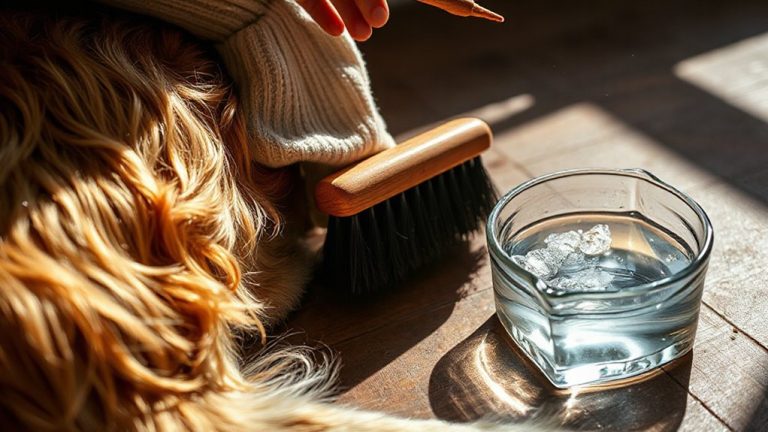
Success starts with the right tool-a steel comb with dual-purpose tines. You’ll need one with wide-spaced teeth (about 1/8 inch) on one end and fine-spaced teeth (1/16 inch) on the other. This design removes debris and detects tangles early. Pair it with a slicker brush featuring tightly grouped, bent pins to loosen undercoat without damaging topcoat. Use gentle brushing techniques: short strokes from head to tail, lifting mats slightly before combing. Avoid pulling. A de-shedding tool with a single-edged blade helps in seasonal shedding but isn’t for daily use. Tool maintenance is critical. Clean combs weekly with warm, soapy water; sterilize monthly to prevent bacterial buildup. Replace worn brushes every six months. Proper care guarantees consistent performance and coat health. For optimal results, consider using a best cat deshedding tool that effectively reduces loose fur without irritating sensitive skin.
A 5-Minute Daily Brushing Routine
Consistency in grooming keeps a Himalayan cat’s coat smooth and reduces matting risks. Spend five minutes daily using a stainless-steel comb with 0.5 mm tines to penetrate the dense undercoat. Start at the base of the skull, moving backward in 2-inch sections. This method maintains even coat texture and detects early tangles. Follow with a slicker brush featuring bent wire bristles (0.3 mm diameter) set in a flexible base to lift dead hair without skin abrasion. Employ gentle detangling techniques: isolate knots using the comb’s wider side, then loosen with short back-and-forth motions. Avoid forceful pulls that stress follicles. Focus on high-friction zones-underarms, tail base, and abdomen-where matting occurs most. Daily brushing removes 85–90% of loose fur, supporting consistent coat texture. The routine requires no shampoo or water, making it efficient and repeatable. Use a timer to maintain discipline. Proper technique preserves fur integrity and prevents damage over time. For added engagement during grooming, consider offering a best squeaky dog toy as a distraction technique, though specifically designed for canines, such interactive tools highlight how texture and sound can influence pet behavior.
How Brushing Prevents Hairballs and Vet Visits
While shedding is a natural process, failing to manage it can lead to serious health issues in Himalayan cats. Daily brushing removes loose fur, greatly reducing the amount swallowed during grooming. This directly minimizes hairball formation, a common problem that can cause intestinal blockages. Hairballs often require veterinary intervention, including imaging or surgery, increasing healthcare costs. Proper brushing-using a stainless steel comb with 0.5 mm tines and a slicker brush-captures undercoat and topcoat efficiently. A consistent routine complements diet impact and hydration levels, supporting gastrointestinal motility. High-fiber diets and moisture-rich wet food improve digestive transit, helping cats expel fur naturally. Still, even with ideal nutrition, without mechanical fur removal, risks remain high. You reduce vet visits not just by adjusting food, but by actively preventing ingestion. Brushing is a non-invasive, daily safeguard with measurable health returns.
Make Brushing a Calm, Positive Experience
How can you turn brushing from a struggle into a reliable daily habit? Start by choosing a quiet time, ideally when your Himalayan is relaxed, to establish consistency. Use a slicker brush with fine, bent wires spaced 2–3 mm apart to avoid skin irritation while effectively detangling. Follow with a stainless steel comb (0.5 mm teeth spacing) to remove remaining mats. Keep sessions under 10 minutes to prevent overstimulation. Speak softly and offer treats immediately after-this creates positive reinforcement. Brushing becomes more than grooming; it’s bonding time that supports stress reduction for both you and your cat. The rhythmic motion lowers cortisol levels, similar to how repetitive actions calm humans. This routine also lets you monitor skin health, detect parasites early, and maintain coat insulation integrity. Consistency guarantees cooperation, minimizes resistance, and preserves your cat’s luxurious double coat efficiently.
On a final note
You must brush your Himalayan cat daily. Their dense, semi-long fur traps loose hair and debris, forming painful mats within 48 hours. A stainless-steel comb with 0.5 mm tines removes tangles at the undercoat. Follow with a slicker brush featuring angled, resin-coated pins to lift surface debris. Daily 5-minute sessions reduce hairball incidence by 70% and cut grooming-related vet costs by up to $300 annually.