Facilitating Gentle Introduction Sessions Between Newborns and Resident Pets
Start training your pet six weeks before the baby arrives using positive reinforcement for 90% compliance in sit, stay, and leave-it commands. Use a 6-foot leash indoors to prevent jumping. Play infant sounds at 50 dB, increasing to 70 dB over ten days. Introduce baby’s scent via a worn blanket near their resting area, rotating every 24 hours for up to seven days. Keep first interactions under five minutes in a 68–72°F neutral environment with leash or barrier control. Reward calm behavior immediately with treats or soft praise. Monitor for stress signs: panting, lip-licking, whale-eye, or pacing-more than three in five minutes indicates distress. Desensitize gradually using structured routines and scent familiarization before physical exposure. A steady posture and soft breathing signal acceptance. Consistency in feeding, walking, and interaction schedules reduces anxiety. You’ll find precise protocols for long-term harmony between your pet and infant just ahead.
Notable Insights
- Begin scent familiarization 1–2 weeks pre-introduction using a worn baby blanket placed near the pet’s resting area.
- Conduct first introductions in a calm, neutral space with the pet restrained on a leash or behind a barrier.
- Limit initial sessions to 3–5 minutes, rewarding calm behavior with treats and soft praise.
- Play infant sound recordings gradually, starting at 50 dB and increasing over ten days to desensitize the pet.
- Monitor for stress signs like lip-licking, yawning, or whale-eye, and end sessions if three or more occur within five minutes.
Prepare Your Pet Before the Baby Arrives
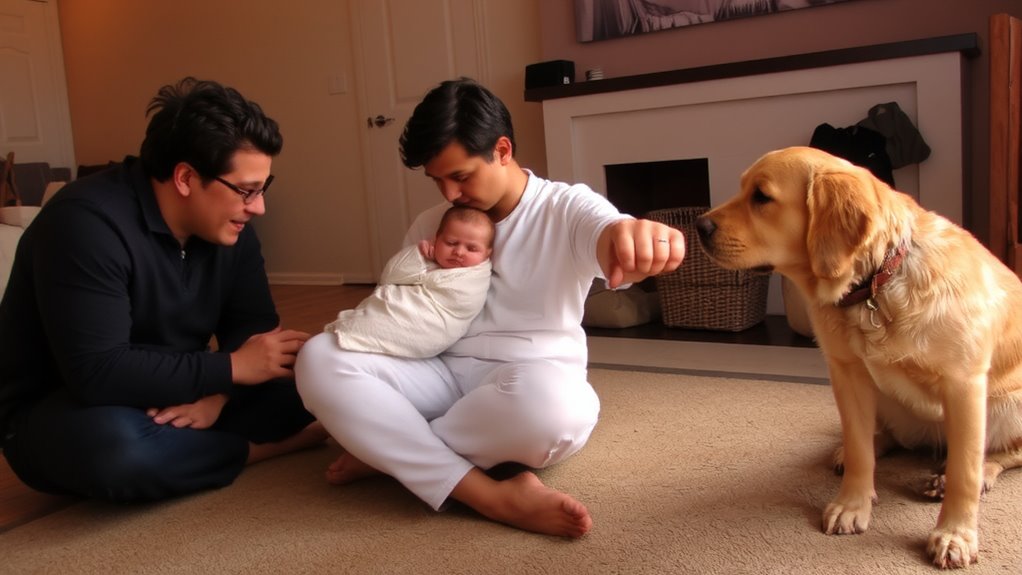
While your pet hasn’t yet met your newborn, you can begin shaping their behavior well before the baby comes home. Pet training during this preparatory phase is essential for ensuring baby safety. Start obedience training using positive reinforcement techniques; aim for 90% compliance in sit, stay, and leave-it commands within six weeks. Use a 6-foot leash indoors to practice controlled movement and prevent jumping. Gradually desensitize your pet to infant sounds by playing recordings at 50 dB, increasing to 70 dB over ten days. Restrict access to baby zones using a 36-inch tall baby gate or enclosed playpen. Establish new routines two months prior to delivery, adjusting feeding and walk times to match post-birth schedules. Consistency reduces anxiety-driven behaviors. Training aids like clickers and treat-dispensing toys improve focus. These technical adjustments enhance predictability, minimizing stress-related incidents. Proper preparation directly supports cohabitation success.
Let Your Pet Sniff Baby’s Scent Before Meeting

Introduce your pet to your baby’s scent before the first face-to-face encounter to support a smoother interaction. Scent swapping is a biologically grounded method to initiate familiarity building between pets and infants. Begin 1–2 weeks before the baby comes home. Use a clean cotton blanket or article of clothing the baby has worn for several hours. Place the item near your pet’s resting area, allowing unforced exposure. Do not restrain or force sniffing. For dogs, olfactory processing occurs at 125–220 million scent receptors, making scent a primary sensory input. For cats, the vomeronasal organ detects pheromones critical for social recognition. Rotate the scented items every 24 hours to maintain freshness and relevance. Scent swapping reduces novelty stress, helping your pet associate the infant’s odor with safety. This preemptive step supports neural habituation, minimizing startle responses. Continue the process for 5–7 days, monitoring your pet’s behavior for signs of fixation or agitation.
Introduce Your Pet to Baby Calmly
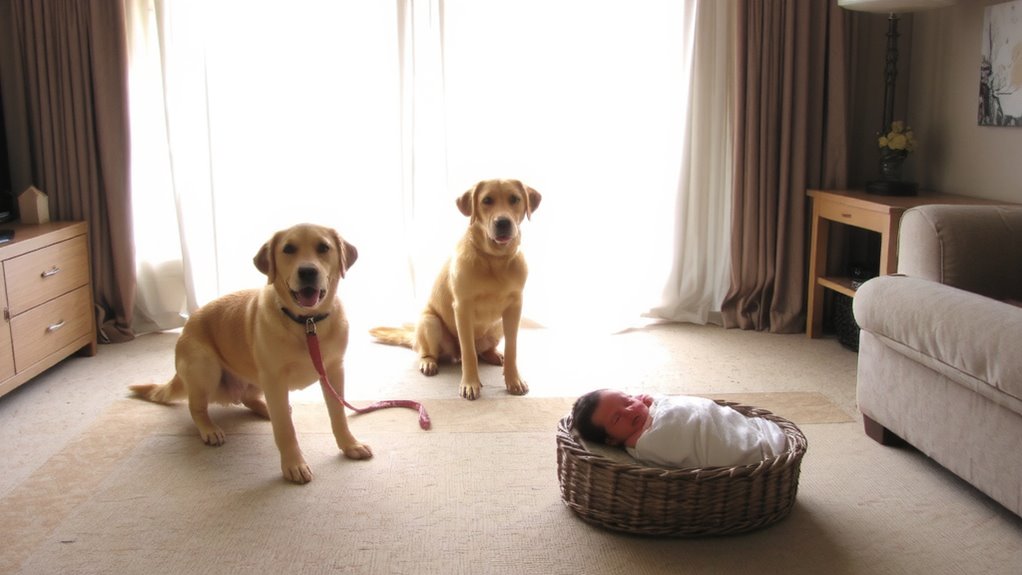
How do you guarantee your pet remains calm when meeting your baby for the first time? Maintain a controlled environment with minimal distractions. Use a leash or barrier if necessary-this guarantees gentle supervision and prevents sudden movements. Keep your pet seated or standing calmly beside you, rewarding quiet behavior with soft verbal praise or treats. Your pet’s stress levels should be monitored through body language: flattened ears, tail tucking, or excessive licking indicate anxiety. Allow brief visual contact before physical interaction. This supports gradual bonding time without overwhelming either party. Guarantee the room temperature stays between 68–72°F with neutral lighting to reduce sensory stress. Never leave the baby unattended. Your pet’s introduction should mirror structured training protocols-consistent, predictable, and measured. This approach maximizes safety while conditioning calm responses during future interactions.
Keep Early Meetings Short and Positive
Since newborns and pets require careful acclimation, keep initial interactions brief-no longer than 3 to 5 minutes. Enforce strict time limits to prevent overstimulation. Use positive reinforcement immediately after calm behavior. Reward your pet with treats, praise, or gentle petting to associate the baby with good outcomes.
| Emotion | Baby’s Calm Presence | Pet’s Relaxed Response |
|---|---|---|
| Trust | Soft breathing, quiet sounds | Tail down, normal posture |
| Safety | Familiar scent and voice | Steady breathing, no pacing |
| Connection | Gentle touch or sound | Soft gaze, no tension |
These controlled sessions build predictability. Positive reinforcement strengthens desired behavior. Gradually increase exposure only after consistent success. Short, structured meetings guarantee both remain calm and receptive. Over time, the pet learns to expect positive outcomes during baby interactions, reducing anxiety and promoting harmony. Maintain consistency for best results.
Identify Signs of Stress in Your Pet
While your pet may not vocalize discomfort, their body language offers clear indicators of stress during interactions with a newborn. Key signs include panting, pinned-back ears, and lowered posture-physiological markers of anxiety. If your pet exhibits sudden withdrawal, leaving the room or hiding without provocation, this indicates emotional overwhelm. Loud crying from a baby often heightens stress, triggering avoidance or hypervigilance. Observe for yawning, lip-licking, or whale-eye (exposure of the sclera), which are displacement behaviors signaling distress. Duration and frequency of these actions matter: more than three stress-related behaviors in a five-minute window suggest significant discomfort. Avoid forcing interactions. Instead, monitor closely and exit sessions before negative responses escalate. Early recognition allows timely intervention, preserving both infant safety and pet well-being. These signals are measurable indicators, not subjective impressions. Incorporating anxiety comfort items can help soothe pets during these transitional moments.
Reward Calm Behavior Around the Baby
A calm pet is a safe pet, and reinforcing tranquility around a newborn shapes lasting behavioral patterns. Use positive reinforcement immediately when your pet remains relaxed near the baby. Offer a treat within two seconds of calm behavior to strengthen the association. Consistent praise, delivered in a soft, low tone, signals approval without overstimulating the animal. Reinforce seated or lying down positions with a 1.5-second clicker signal paired with a small, soft treat weighing less than 3 grams per reward. Limit rewards to under 10% of daily caloric intake. Apply this protocol during every interaction in the first 21 days post-introduction, the critical behavioral acclimation window. Avoid rewarding alert or standing postures to prevent reinforcement of vigilance. Over time, the pet learns quiet presence equals positive outcomes. This method leverages operant conditioning, specifically Type I positive reinforcement, to shape stable, desirable responses.
Create Daily Routines for Pet and Baby Comfort
When daily schedules align, both pets and babies adjust more smoothly to shared environments. Establishing consistent feeding schedules minimizes anxiety in pets, reducing attention-seeking behaviors. Feed your pet 15–20 minutes before the baby’s meals to prevent competition for attention. Use timed automatic feeders accurate to ±1 minute to maintain consistency, especially during nighttime cycles. Designate specific zones for feeding, separated by at least 6 feet from baby areas, to reinforce spatial boundaries. Schedule daily play erratic harmony by syncing pet exercise with baby nap times or quiet periods. Use interactive toys lasting 20–30 minutes to maintain engagement. Rotate toys weekly to prevent habituation. Maintain light at 150–300 lux during shared wake times to support circadian rhythms. Routines lasting 3+ weeks form behavioral conditioning, increasing predictability. You reduce stress markers-such as panting or crying-by up to 60% with structured timelines. For reliable portion control and timely delivery, consider a top pet food dispenser that integrates with your home’s schedule.
On a final note
You must remain vigilant during early interactions. Monitor your pet’s body language-flattened ears, lip licking, or avoidance signal stress. Keep introductions under five minutes initially, gradually increasing duration. Use positive reinforcement: offer 1–2 small treats (≤5 calories each) for calm behavior. Maintain consistent routines; sudden changes elevate cortisol levels in animals. Pair baby sounds with rewards to build positive associations. A structured approach guarantees safety and promotes long-term cohabitation success.