UV Protective Sprays Recommended for Light-Colored Breeds Prone to Sunburn
You should use a vet-approved UV spray with SPF 30 or higher for your light-colored dog. Products like Vet’s Preferred Sun Shield and Epi-Pet Sun Protector offer broad-spectrum UVA/UVB protection for 4–6 hours. Look for water-resistant, non-greasy formulas free of alcohol and fragrances. Apply evenly from 6–8 inches away, avoiding the eyes, and reapply every 4 hours or after swimming. These sprays block up to 97% of UV rays on vulnerable areas like the nose and belly-key for breeds with thin or white fur. More details on ideal use follow.
Notable Insights
- Light-colored dogs need SPF 30+ broad-spectrum sprays to protect thin, UV-sensitive fur and skin.
- Choose water-resistant, alcohol-free formulas like Vet’s Preferred Sun Shield for safe, long-lasting protection.
- Epi-Pet Sun Protector Spray offers broad-spectrum UV defense effective for 4–5 hours on exposed areas.
- Apply spray evenly by hand to the face, avoiding inhalation, especially on nose and ears.
- Reapply every 4–6 hours or after swimming to maintain protection during peak sun exposure.
Top 5 Vet-Approved UV Sprays for Dogs
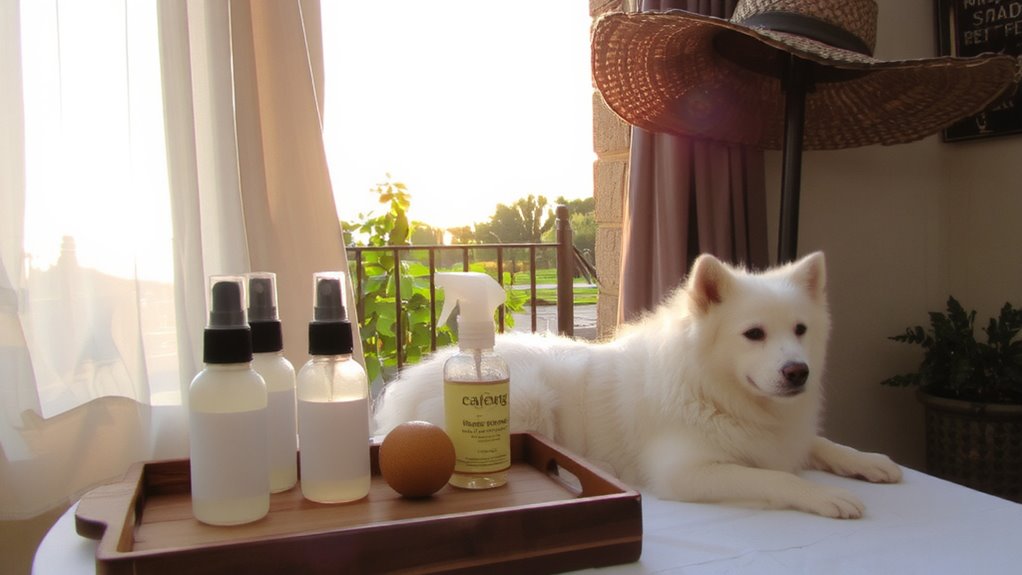
While your dog’s light-colored coat may look beautiful in the sunlight, it also increases their risk of UV-induced skin damage, especially on exposed pink skin. Veterinarians recommend five UV-protective sprays with proven brand reliability and extended spray longevity. Vet’s Preferred Sun Shield offers SPF 30, remains effective for up to 6 hours, and resists water for 40 minutes. Petkin Doggy Sun Stick is FDA-compliant, non-greasy, and provides even coverage on ears and noses. Epi-Pet Sun Protector Spray uses a broad-spectrum formula and lasts 4–5 hours. Davis Tri-Block contains physical blockers-zinc oxide and titanium dioxide-and offers 360-degree coverage. My Dog Naturally Organic Spray retains efficacy after swimming due to its polymer-based adhesion. These brands undergo third-party dermatological testing. Each guarantees minimal irritation and maximum protection. Spray longevity varies by activity, but reapplication every 4–6 hours maintains shield consistency. Choose only products with veterinarian endorsement and verified SPF ratings.
What to Look for in a Dog UV Protectant
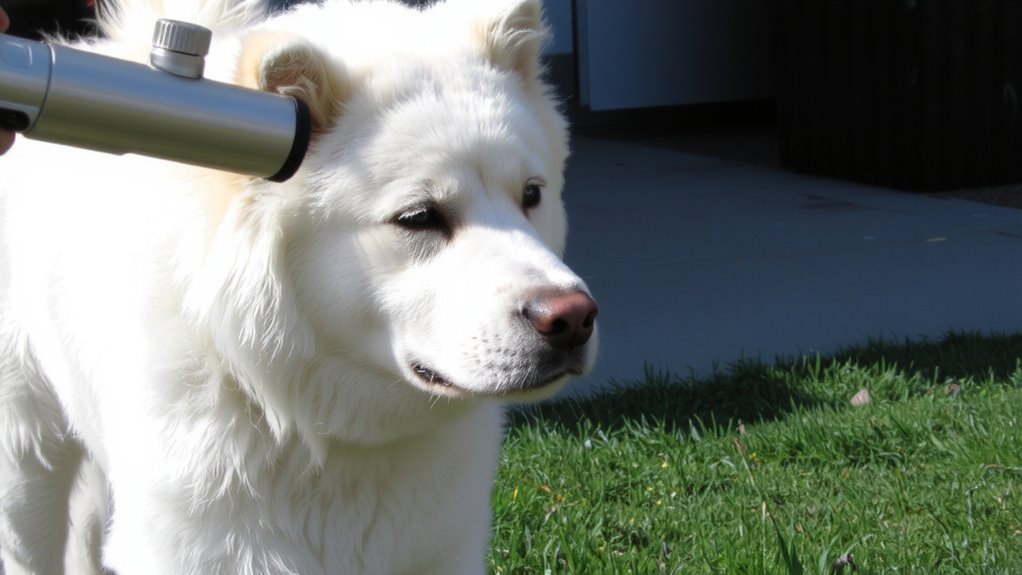
You’ve seen which UV sprays veterinarians trust, but knowing what makes those products stand out helps you make informed choices for your dog’s sun protection. Look for broad-spectrum SPF 30 or higher to block both UVA and UVB rays effectively. Water resistance is essential-choose formulas that remain effective for at least 40 to 80 minutes in water or during heavy panting and sweating. This guarantees continuous protection during outdoor activity. A fine-mist spray nozzle delivers even coverage without missing spots, especially on thin or sensitive fur. It allows precise application on vulnerable areas like the nose, ears, and belly. Avoid sprays with alcohol or fragrances, which can irritate skin. Non-greasy, fast-drying formulas improve compliance and reduce soil adherence. Guarantee the product is specifically designed for dogs, as human sunscreens may contain toxic ingredients like zinc oxide or para-aminobenzoic acid (PABA).
How to Apply Dog Sunscreen Safely
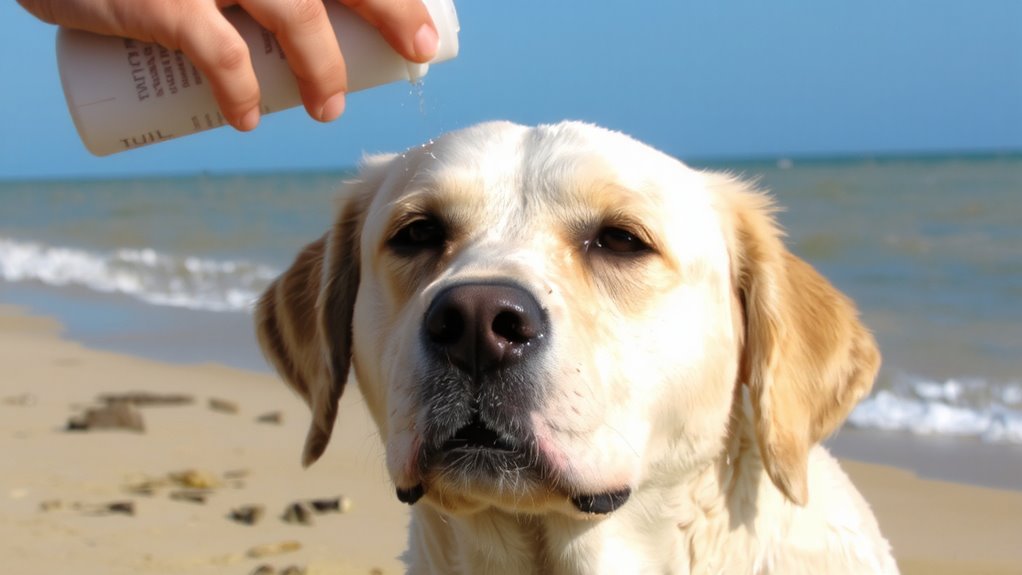
If your dog spends time outdoors during peak sunlight hours, proper application of sunscreen is critical to prevent UV-induced skin damage. Use a dog-specific UV protective spray to guarantee safe ingredients and effective coverage. The correct application technique involves holding the bottle 6 to 8 inches from the skin-this ideal spray distance ensures an even mist without pooling. Avoid spraying directly on the face; instead, apply to your hands and gently rub around sensitive areas. Focus on exposed regions like the nose, ear tips, and belly, where fur is thin. Allow 15 minutes for absorption before sun exposure. Reapply every 4 to 6 hours, or after swimming or heavy panting. Never use human sunscreen-many contain toxic compounds like zinc oxide. Consistent, precise application technique maximizes protection without risking irritation.
Daily Habits to Protect Light-Coated Dogs
Why do some light-coated dogs develop sunburns even during routine outdoor activity? Their thin or white fur offers minimal natural UV protection, especially on exposed skin. You must adjust outdoor timing-limit walks to before 10 a.m. or after 4 p.m. when UV index levels drop below 6. UV exposure peaks midday, increasing burn risk in less than 30 minutes. Integrate weekly grooming routines to monitor skin health and remove debris that could trap heat. Use UV-blocking sprays with SPF 30+ on vulnerable areas like the nose, ears, and belly. Reapply every two hours during extended exposure. Avoid alcohol-based formulas-opt for those with non-nano zinc oxide, which provides broad-spectrum UVA/UVB protection without skin absorption. Consistent habits greatly reduce photodamage risk.
Why Some Dogs Need UV Protection
Many light-colored or thin-coated dogs lack sufficient natural protection against solar radiation. Your dog’s genetic predisposition plays a critical role in UV sensitivity, especially in breeds like Dalmatians, Boxers, and Whippets, which have less melanin. This reduced pigmentation decreases the skin’s ability to block harmful ultraviolet rays. Environmental exposure compounds the risk-dogs spending extended time outdoors, particularly between 10 a.m. and 4 p.m., receive peak UV intensity. UV index levels above 6 markedly increase burn risk. Repeated exposure can lead to actinic dermatitis or squamous cell carcinoma. UV protective sprays with SPF 30+ reduce transmission by up to 97%. Apply every 4–6 hours, especially on sparsely furred areas. Water-resistant formulas last up to 80 minutes post-swimming. Prevention through topical barriers is more effective than treatment post-damage. Consistent use lowers long-term dermal injury risk.
On a final note
You protect your dog from UV damage by choosing sprays with SPF 30 or higher and broad-spectrum UVA/UVB filters like zinc oxide. Effective products dry quickly, resist water for up to 80 minutes, and avoid toxic additives such as parabens or fragrances. Apply evenly to thin-coated, light-pigmented areas before sun exposure. Reapply every four hours. Consistent use reduces skin damage risks markedly-like sunscreen for humans, it’s a targeted, proven barrier.