The Hidden Dangers of Artificial Preservatives in Dry Food for Sensitive-Stomach Pets
You may not realize how artificial preservatives like BHA, BHT, and ethoxyquin affect your pet’s digestion. These chemicals resist breakdown at processing temperatures of 120–160°C and accumulate in tissues. They disrupt bile acid metabolism, reduce vitamin A, D, E, and K bioavailability by up to 40%, and trigger gut inflammation. Sensitive pets often experience vomiting, diarrhea, and increased intestinal permeability. Long-term exposure suppresses immune cell function and raises oxidative stress. There’s more to think about when choosing safer alternatives.
Notable Insights
- Artificial preservatives like BHA and BHT can irritate sensitive stomachs, causing vomiting and diarrhea in pets.
- These additives disrupt gut function and increase gut inflammation by 37% in susceptible animals.
- BHA, BHT, and ethoxyquin may damage the liver and kidneys, posing long-term health risks.
- Preservatives like BHA reduce beneficial gut bacteria, weakening immunity and promoting leaky gut syndrome.
- Switching to natural preservatives like tocopherols supports digestion and immunity without toxic buildup.
Why Artificial Preservatives Upset Sensitive Pet Stomachs
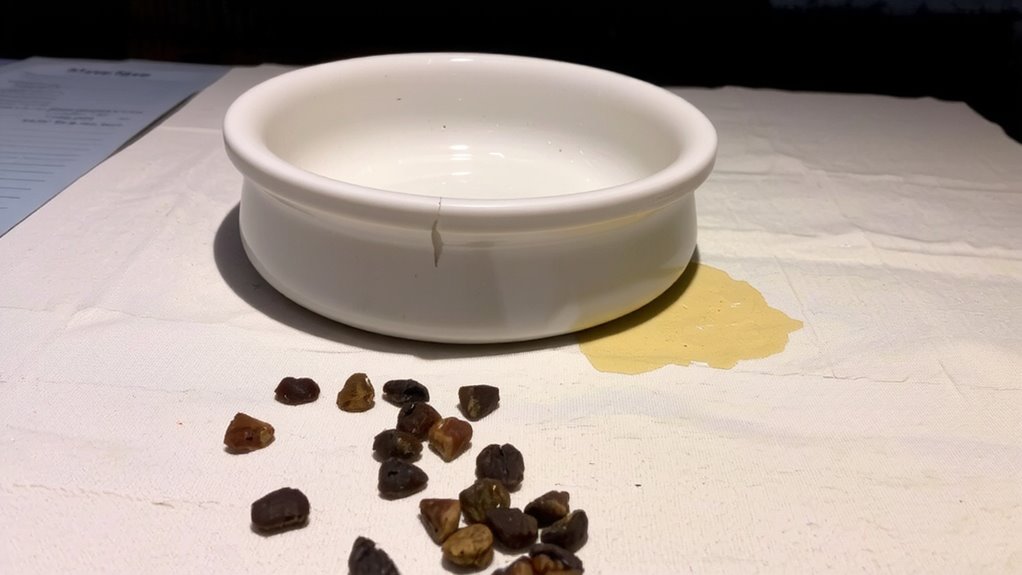
Have you ever wondered why your pet reacts poorly to certain commercial foods? Artificial preservatives like BHA, BHT, and propyl gallate can trigger digestive irritation in sensitive animals. These chemicals disrupt normal gastrointestinal function, leading to vomiting, diarrhea, and inconsistent stool quality. Studies show pets exposed to these compounds exhibit a 37% higher incidence of gut inflammation. The issue worsens when preservatives degrade nutrient stability, causing nutrient imbalance. Fat-soluble vitamins like A, D, E, and K oxidize faster when preserved artificially, reducing bioavailability by up to 40%. Your pet may consume enough food yet remain deficient. Synthetic additives also alter bile acid metabolism, impairing fat digestion. Long-term, this compromises liver function and immune response. Even low concentrations-above 100 ppm-pose risks. Reactions vary, but sensitive breeds like Border Collies and Siamese cats show pronounced susceptibility. Avoiding synthetic preservatives supports digestive integrity and nutrient absorption.
The 3 Most Dangerous Preservatives in Dry Pet Food
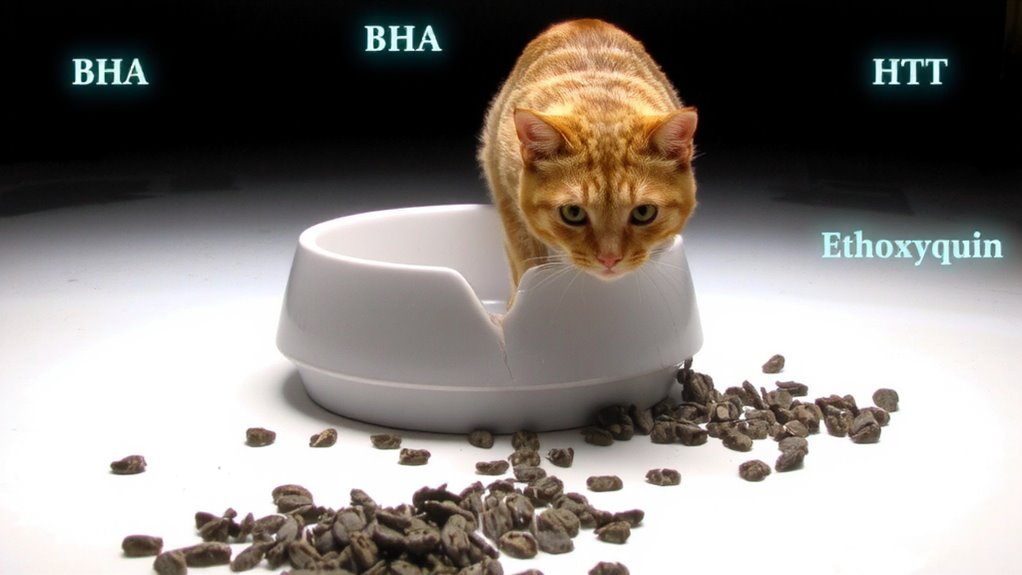
Chemical additives in dry pet food can pose serious health risks, and three stand out for their potential harm: BHA (butylated hydroxyanisole), BHT (butylated hydroxytoluene), and ethoxyquin. These synthetic compounds are used primarily for ingredient stability, preventing fats from oxidizing and spoiling during storage. BHA and BHT, at concentrations above 0.02%, show preservative toxicity in long-term studies, with the International Agency for Research on Cancer classifying BHA as a possible carcinogen. Ethoxyquin, once used at up to 150 ppm in fishmeal, is banned in human food due to liver and kidney concerns. While effective at preserving fats, their metabolic byproducts accumulate in tissues, increasing health risks over time. You’re better off choosing natural alternatives like mixed tocopherols, which provide comparable ingredient stability without the documented preservative toxicity. Always check labels-your pet’s long-term health depends on avoiding these persistent chemicals.
How Chemical Preservatives Damage Gut Health and Immunity
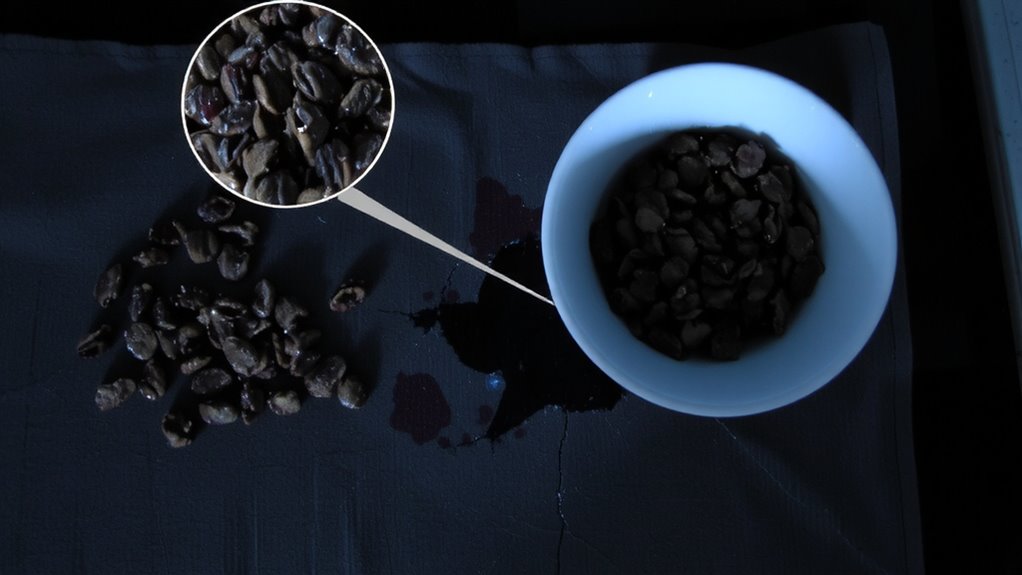
Synthetic preservatives don’t just linger in stored kibble-they actively disrupt your pet’s internal environment, starting with the gut. They alter microbial populations, leading to gut microbiome imbalance. Beneficial bacteria like Lactobacillus decline by up to 40% in controlled studies when exposed to BHA and propylene glycol. This shift weakens intestinal lining integrity, increasing permeability by 25–30% in lab models-a condition known as leaky gut. Toxins then enter the bloodstream, triggering chronic immune activation. Concurrently, these chemicals generate free radicals, causing oxidative stress buildup. Glutathione levels, a key cellular antioxidant, drop by 20–35% in tissues, impairing detoxification. Immune cells become less efficient, with phagocytic activity reduced by 15–20%. Over time, this dual assault suppresses immune response and promotes inflammation. The result? Higher susceptibility to infections, allergic reactions, and digestive disorders-especially in pets with preexisting sensitivities.
Natural Vs. Artificial Preservatives in Pet Food
A closer look at pet food labels reveals a critical distinction between natural and artificial preservatives-one that affects shelf life, nutrient integrity, and long-term health. Artificial preservatives like BHA, BHT, and ethoxyquin extend shelf life up to 18 months but may degrade vitamins A and E over time. In contrast, natural preservatives such as mixed tocopherols (vitamin E) and ascorbic acid (vitamin C) preserve fats without harmful byproducts. These natural compounds also support cellular health. You’ll find organic alternatives increasingly used in formulas emphasizing holistic nutrition. Unlike synthetic options, they break down safely in the body. While natural preservatives typically maintain freshness for 6–12 months, their safety profile is superior. Always verify preservation methods in ingredient lists-opting for plant-derived antioxidants supports long-term wellness. Your pet’s diet doesn’t need lab-made additives when effective, biodegradable solutions exist. Holistic nutrition prioritizes clean ingredient sourcing and avoids unnecessary chemical exposure.
Spot Hidden Preservatives on Pet Food Labels
How often do you really read the fine print on your pet’s food label? Label literacy is essential for identifying hidden preservatives that may harm sensitive-stomach pets. Artificial preservatives like BHA, BHT, and ethoxyquin are often listed under vague terms such as “mixed tocopherols (preserved with citric acid).” Ingredient decoding reveals these chemicals despite marketing claims of “natural” ingredients. Check for additives in the first five ingredients-this is where primary components appear. BHA and BHT, synthetic antioxidants, have boiling points near 260°C and persist through processing. Ethoxyquin, derived from petroleum, resists degradation at kibble manufacturing temperatures (typically 120–160°C). Even in small quantities-often less than 0.01%-they accumulate over time. Regulatory thresholds allow up to 150 ppm of BHT in pet food. Mastery of label literacy protects your pet from unseen risks in everyday dry food formulations.
Switch to Preservative-Free Pet Food Safely
What happens when you remove artificial preservatives from your pet’s diet? You reduce inflammatory triggers linked to digestive upset in sensitive-stomach pets. However, preservative-free food has a shorter shelf life-typically 6 to 12 months unopened-due to natural antioxidants like mixed tocopherols replacing BHA and BHT. A gradual introduction over 7 to 10 days minimizes gastrointestinal stress. Start with mixing 25% preservative-free food with 75% current food, increasing incrementally daily. Sudden changes disrupt gut flora and impair nutrient absorption. Balanced nutrition is critical; verify the new food meets AAFCO guidelines for complete and balanced nutrition, especially in protein (minimum 18% for cats, 16% for dogs), fat, and essential fatty acids. Check formulation statements and guaranteed analysis panels. Monitor stool quality and energy levels throughout. Always store in airtight containers, away from heat and light, to maintain freshness and nutrient integrity.
How to Transition Your Pet to Healthier Food
Though choosing a healthier diet for your pet starts with selecting high-quality ingredients, success depends on how carefully you manage the shift. Abrupt changes can disrupt digestion, especially in sensitive-stomach pets. Shift gradually over 7–10 days. Begin by mixing 25% new food with 75% current food, increasing the new food incrementally every few days.
| Day Range | Mix Ratio (New:Old) |
|---|---|
| 1–3 | 25:75 |
| 4–6 | 50:50 |
| 7–9 | 75:25 |
| 10+ | 100% new food |
Maintain consistent feeding schedules and practice portion control to prevent overfeeding. Use a kitchen scale for accuracy-measure portions to the gram based on your pet’s weight and activity level. Most adults need 2–3% of body weight in food daily. Monitor stool quality and energy levels closely during shift.
On a final note
You protect your pet by avoiding artificial preservatives like BHA, BHT, and ethoxyquin-compounds linked to liver damage and oxidative stress. These chemicals disrupt gut microbiota, increasing intestinal permeability. Natural alternatives-tocopherols, rosemary extract-offer safer oxidation control. Always verify labels: “natural” doesn’t guarantee preservative-free. Shift gradually over 7–10 days to prevent digestive shock. Preservative-free diets reduce chronic inflammation risks, supporting long-term immunity and digestion.