Addressing Litter Box Avoidance After a Household Move
Your cat may avoid the litter box after a move due to stress from disrupted routines and unfamiliar scents. Place the box in a quiet, low-traffic area with 360-degree visibility, at least 6 feet from food and water. Use the same litter brand, texture, and box model to maintain familiarity. Transfer soiled litter (without waste) to the new box and consider a pheromone diffuser emitting 4.8 mg/24 hours of F3 fraction. Rule out urinary infections with urinalysis, especially if straining or blood is noted. Solutions become clearer with further exploration of environmental and medical factors.
Notable Insights
- Minimize stress by placing the litter box in a quiet, low-traffic area with 360-degree visibility.
- Maintain litter consistency by using the same brand, texture, and scent as in the previous home.
- Reuse the same litter box model to preserve familiar size, shape, and entry height.
- Transfer familiar items like bedding and use soiled litter (without waste) to reinforce scent recognition.
- Rule out medical issues with a vet visit if avoidance persists, especially if urination signs are abnormal.
Understand Why Your Cat Avoids the Litter Box After a Move
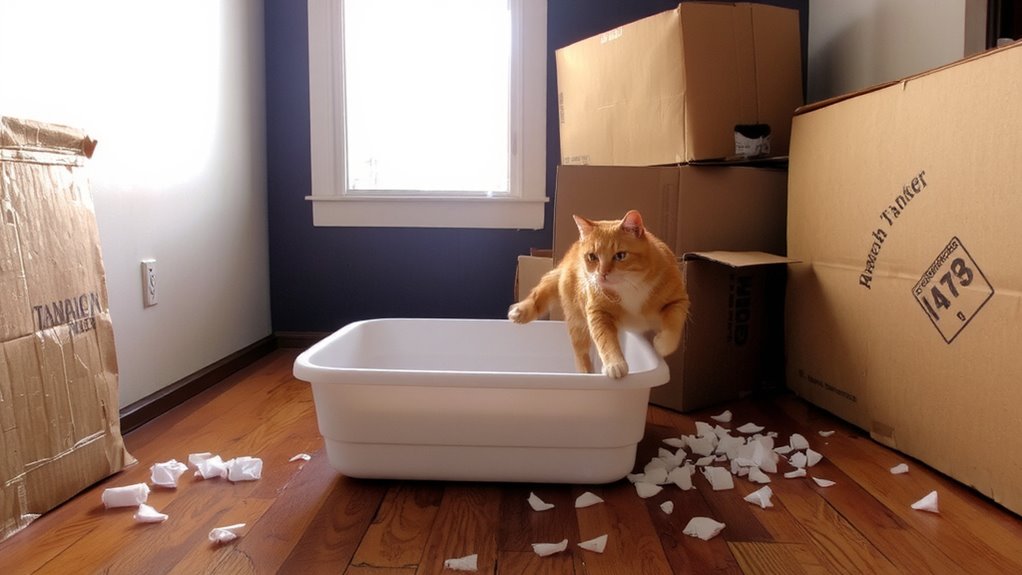
Why has your cat suddenly started avoiding the litter box after the move? Your cat’s avoidance is likely a stress response to environmental changes. Cats are highly sensitive to shifts in their surroundings, and relocation disrupts established routines. This stress can manifest in behavioral shifts, including inappropriate elimination. Territorial marking often increases post-move, as cats attempt to reestablish control through scent. Unlike typical litter box use, territorial marking involves small amounts of urine on vertical surfaces. The presence of unfamiliar scents or altered room layouts exacerbates anxiety. Studies show that 72% of cats exhibit elimination issues within one week of relocation. The stress response activates the hypothalamic-pituitary-adrenal axis, increasing cortisol. This physiological change reduces litter box reliability. Recognizing these patterns allows targeted intervention. Addressing stress promptly improves reacclimation success and reduces long-term behavioral complications. Using a pheromone diffuser can help reduce stress by mimicking natural feline facial pheromones, promoting a sense of security in the new environment.
Put the Litter Box in a Quiet, Known Area
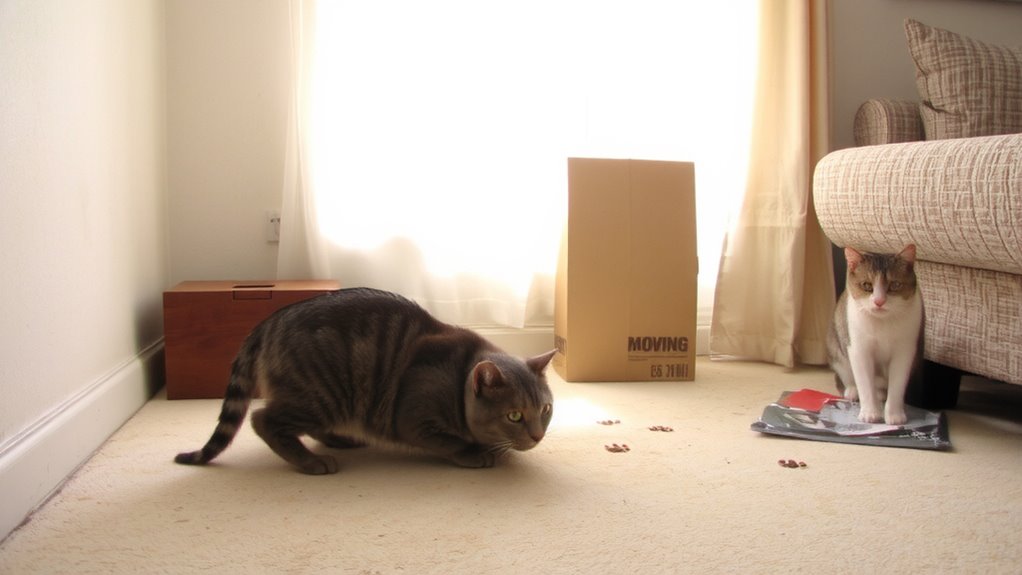
While your cat adjusts to a new home, placing the litter box in a quiet, known area can greatly reduce stress-related avoidance. Litter placement directly impacts usage, as cats exhibit high noise sensitivity and prefer low-traffic zones. Position the box in a familiar corner, away from appliances, foot traffic, and loud electronics. Ideal locations include interior bathrooms or quiet hallways with consistent lighting. The space should allow full 360-degree visibility for threat detection, minimizing ambush anxiety. Maintain a minimum 6-foot distance from food and water stations to align with feline sanitation instincts. Use non-slip mats beneath the box to prevent movement during use. Avoid basements with erratic noise or drafty entries. A stable, predictable environment supports reliable elimination behavior. Proper litter placement reduces avoidance by addressing core sensory stressors-especially auditory disruption-common during relocation.
Keep the Same Litter and Box Type
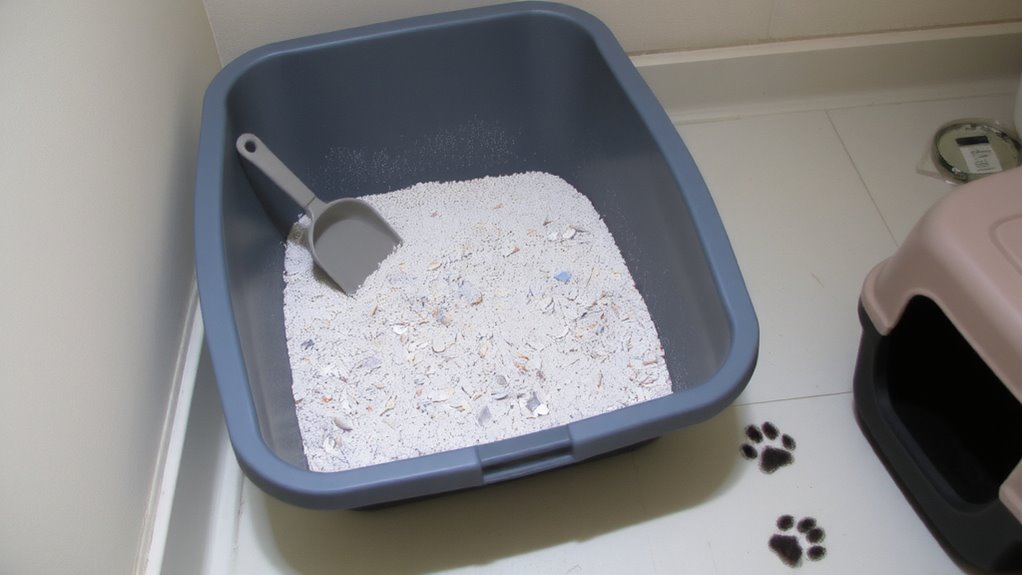
Maintaining the same litter and box type after a move supports consistent elimination habits by preserving familiar sensory cues. Litter consistency helps your cat recognize the substrate immediately, reducing hesitation or avoidance behaviors. Use the identical brand, texture, and scent-clay, silica, or clumping-down to the granule size and absorbency rate. Abrupt changes in texture or odor can trigger stress-related elimination issues. Box familiarity is equally critical. Reuse the same model: same dimensions, entry height, and hooded or open design. A 18” x 14” hooded box with a front-entry lip of 5” provides predictable access. Your cat relies on muscle memory and scent markers within the litter. Matching these specs exactly avoids confusion. Retaining both litter consistency and box familiarity guarantees your cat maintains confidence in the litter box’s function and location. For cats weighing around 15 pounds, choosing a litter with appropriate clumping ability ensures effective odor control and easier maintenance.
Make the New Place Smell Like Home
Your cat’s nose guides its sense of security-familiar scents in the new home reduce stress and support immediate litter box use. Scent familiarity is critical during relocation, as cats rely heavily on olfactory cues to assess safety. Transfer familiar objects like bedding, scratching posts, and toys from the old home to establish continuity. These items carry your cat’s scent profile, reducing anxiety-driven avoidance behaviors. Place soiled litter (without waste) near the new litter box to reinforce recognition. Avoid air fresheners or strong cleaning agents that disrupt natural odor markers. Instead, use pheromone diffusers such as Feliway, which emit synthetic facial pheromones (F3 fraction) at 4.8 mg/24 hours, mimicking natural calming signals. Position diffusers near rest and elimination zones. Maintain consistent airflow at 0.5–1.0 air exchanges per hour to distribute scents evenly without overwhelming. This controlled olfactory environment promotes faster acclimation. Some natural supplements, such as best natural supplements for pet allergies, can also support overall calmness and immune balance during stressful transitions.
Rule Out Medical Issues First
A sudden change in litter box habits often signals an underlying medical problem rather than a behavioral issue. You should rule out health concerns before addressing environmental or psychological factors. Urinary tract infections are common, especially in older cats, and can cause discomfort during urination. Infection signs include frequent attempts to urinate, vocalizing in the box, or blood in the urine. Cats may avoid the litter box altogether if they associate it with pain. A veterinarian will perform a urinalysis to detect bacteria, white blood cells, or crystals. Additional diagnostics may include blood work or ultrasound. Early detection prevents complications like urethral blockages, which are life-threatening. Treatment typically involves antibiotics tailored to culture results. Never assume the behavior is stress-related without medical clearance. Accurate diagnosis guarantees effective, humane intervention.
Reward Your Cat for Using the Litter Box
You can strengthen good litter box habits by rewarding your cat immediately after they use it correctly. Positive reinforcement increases the likelihood of repeated appropriate behavior. Offer a small treat, gentle praise, or a brief play session within seconds of litter box use. Consistent rewards establish a reliable association between the action and the reward. Use low-calorie treats, such as freeze-dried chicken pieces (approximately 1–2 calories per cube), to prevent weight gain. Deliver the reward promptly-delayed responses reduce effectiveness. Maintain a predictable schedule for reinforcement, especially during the first two weeks post-move. This period is critical for habit formation. Avoid inconsistent responses; occasional rewards weaken behavioral conditioning. Pair verbal cues like “good job” with physical rewards to enhance learning. This technique mimics operant conditioning principles used in animal training. Over time, your cat will reliably choose the litter box.
On a final note
You must address litter box avoidance systematically after a move. Stress disrupts your cat’s elimination habits due to altered environmental cues. Place the box in a quiet, low-traffic zone, ideally on each floor if multi-level. Use the same litter type-clay, clumping, silica-down to granule size and scent. Maintain identical box style: open, hooded, or top-entry. Confirm no medical issues via veterinary urinalysis. Reward correct use with immediate, consistent positive reinforcement.