Using Growth Trackers and Portion Calculators From Veterinary Nutritionists Online
You can prevent pet obesity by using vet-developed portion calculators and growth trackers that personalize feeding plans. These tools use your pet’s weight, breed, age, and activity level to calculate precise daily caloric needs-often based on metabolic energy requirements like 30 kcal/kg^0.75. Growth trackers monitor weight trends and body condition scores over time, improving accuracy. Adjustments align with life stages, ensuring puppies, adults, and seniors get appropriate nutrition. Continue for proven strategies to avoid common dosing errors.
Notable Insights
- Use vet-developed portion calculators that base recommendations on metabolic data and AAFCO standards for accuracy.
- Input your pet’s weight, age, breed, and activity level to get personalized daily feeding guidelines.
- Adjust portions every 4–6 weeks using growth tracker data like weight and body condition score trends.
- Choose calculators transparent about formulas, such as kcal/kg^0.75, and backed by veterinary nutritionists (DACVN).
- Limit treats to 10% of daily calories and divide meals appropriately based on species-specific feeding patterns.
Why Portion Control Prevents Pet Obesity and Health Issues
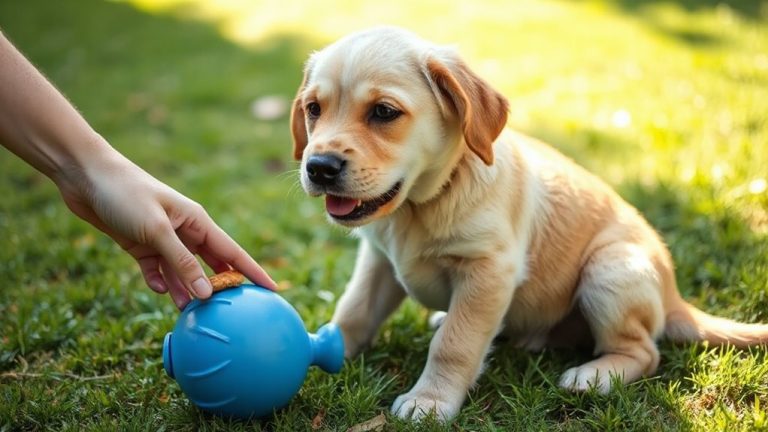
Nearly half of all household pets in the U.S. are overweight, and portion control is one of the most effective ways to prevent obesity-related health problems. You must regulate meal frequency to maintain metabolic balance-most adult dogs thrive on two meals daily, while cats benefit from smaller, more frequent feedings. Overfeeding disrupts energy balance, leading to fat accumulation. Treat impact is often underestimated; snacks should not exceed 10% of daily caloric intake. A 50-pound dog on a 1,000 kcal/day diet should get no more than 100 kcal from treats. Portion calculators integrate weight, activity level, and life stage to prescribe precise servings. Accurate measuring-using graded scoops or digital scales-ensures consistency. Without portion control, even healthy foods contribute to weight gain. Controlling intake directly reduces risks of diabetes, osteoarthritis, and cardiovascular stress. You can optimize health by aligning calories with energy expenditure.
How Growth Data Improves Portion Calculator Accuracy
While generic feeding guidelines offer a starting point, they often fail to account for individual variation in growth patterns, leading to inaccurate portion recommendations. You need precise data to match your pet’s unique development. Growth trackers collect real-time measurements-like weight, body condition score, and height-over time, revealing personalized growth patterns. These patterns inform portion calculators by adjusting for breed-specific maturation rates and expected adult size. Metabolic rates vary considerably between animals, even within the same breed, affecting caloric needs. Advanced calculators integrate this metabolic data, often derived from indirect calorimetry studies, to refine daily intake totals. Instead of guessing, you get scientifically adjusted portions based on actual energy expenditure. This data-driven approach reduces the risk of over- or underfeeding. Accuracy improves because the system adapts as your pet grows, ensuring portions align with current, not assumed, physiological demands.
How to Use a Pet Portion Calculator in 5 Steps
You now have access to growth data that reflects your pet’s unique development, so applying this information to daily feeding is the logical next step. First, input your pet’s current weight, age, breed, and activity level into the calculator. Accurate data guarantees precise portion recommendations, typically measured in grams or cups per day. Second, select the appropriate life stage-puppy, adult, senior-as metabolic needs vary. Third, adjust for body condition score (BCS); a pet with a BCS above 6/9 may need a 10–15% reduction in daily intake. Fourth, divide the total daily portion into measured meals to maintain meal consistency. Finally, align portions with established feeding schedules, adjusting every 4–6 weeks based on growth trends. Consistent timing and volume regulate metabolism, support ideal body weight, and prevent overfeeding. Use this data-driven approach to optimize long-term health.
How to Pick a Vet-Validated Portion Calculator Online
When selecting an online pet portion calculator, verification by veterinary professionals should be your top priority. Look for tools developed or endorsed by board-certified veterinary nutritionists (DACVN). These experts guarantee the math aligns with AAFCO nutrient profiles and metabolic energy requirements. Calculator transparency means the formulae-like kcal/kg^0.75 for maintenance-are visible and scientifically justified. Avoid black-box calculators that hide their methodology. User credibility is strengthened when the platform discloses reviewer credentials, update frequency, and peer-reviewed sources. Check if the tool accounts for life stage, body condition score (BCS 1–9), and adjusts for ideal versus current weight. Reputable calculators cite studies from journals like *Journal of Animal Science* or *Veterinary Clinics of North America*. They’re hosted on vetmed school sites or accredited organizations such as the American College of Veterinary Nutrition. Always confirm HTTPS encryption and absence of commercial bias.
When to Adjust Portions for Age, Weight, or Activity
Most adult dogs need 20–30 kcal per kilogram of ideal body weight daily, but that baseline shifts considerably with age, weight, and activity level. Adjust portions at key age milestones: puppies require 2–3 times more energy, while senior dogs over 7 years often need 20–40% fewer calories. Weight changes signal metabolic shifts; obese pets should eat 10–25% less than maintenance needs to promote safe, gradual loss. Activity level directly impacts intake-working dogs may need up to 2.5 times maintenance energy, especially during periods of energy spikes like breeding, lactation, or intense training. Use portion calculators that factor in life stage, body condition score, and kilocalorie density. A 25 kg active dog might need 1,500 kcal/day, while the same dog at rest may require only 900. Regular recalibration guarantees alignment with current physiological demands.
Common Pet Portion Calculator Mistakes to Avoid
Why do so many pet owners struggle to maintain ideal body condition despite using portion calculators? You might overlook critical calculator assumptions built into online tools. Many calculators assume moderate activity, ideal metabolic rate, and standard body condition scores, but your pet may differ. Failing to adjust for these variables leads to overfeeding consequences like obesity, joint stress, and reduced lifespan. You must customize inputs-include exact weight in kilograms, life stage, and activity level (e.g., indoor vs. working dog). Generic guidelines often overestimate needs by 20–30%. Treats should count toward total daily calories, not exceed 10%. Portion calculators aren’t set-and-forget tools. Reassess every 4–6 weeks. Ignoring your pet’s individual response undermines accuracy. Adjust based on body condition scoring, not just weight. Trusting the tool without critical evaluation compromises results.
On a final note
You must use vet-validated portion calculators to guarantee accurate, science-based feeding. These tools rely on metabolic energy requirements (kcal/kg BW⁰·⁷⁵) and adjust for life stage, weight, and activity. Growth trackers improve precision by monitoring body condition score (BCS) trends across time. Overfeeding by just 10% increases obesity risk; underfeeding impairs development. Always reassess portions every 4–6 weeks using current weight and BCS data.