Why Fiber Needs Increase in Diabetic Dogs to Regulate Blood Sugar and Bowel Health
Fiber helps your diabetic dog maintain steady blood sugar by slowing carbohydrate digestion and delaying glucose absorption. Soluble fiber forms a gel that prolongs gastric emptying, reducing post-meal spikes. It also improves insulin sensitivity and supports colon health. Aim for 2.5% to 4% crude fiber on a dry matter basis, with 60–70% being soluble. Consistent intake enhances glucose control and stool quality, minimizing fluctuations. Best results require precise dosing and gradual adjustment-key factors you’ll want to explore further.
Notable Insights
- Fiber slows carbohydrate digestion, delaying glucose absorption and reducing blood sugar spikes in diabetic dogs.
- Soluble fiber forms a gel that prolongs gastric emptying, enhancing insulin effectiveness and glucose regulation.
- Increased fiber intake improves stool consistency and supports bowel health through better water retention and bulk.
- High-fiber diets promote satiety, helping with weight management, which is crucial for diabetic dogs.
- Gradual inclusion of soluble fiber sources like pumpkin or psyllium minimizes digestive upset while stabilizing glucose levels.
How Fiber Stabilizes Blood Sugar in Diabetic Dogs
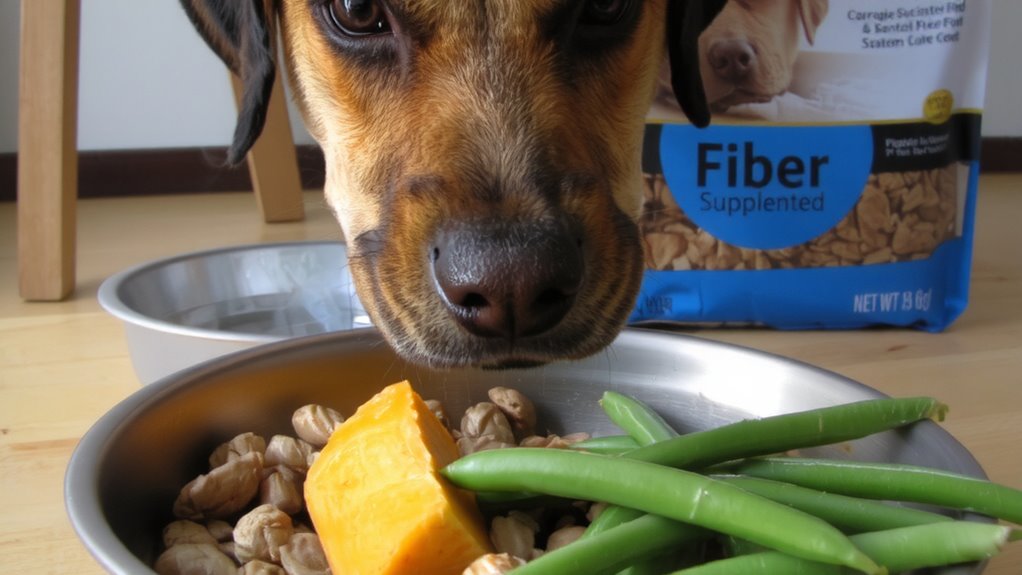
While fiber doesn’t directly lower blood sugar, it plays a critical role in managing glucose levels in diabetic dogs by slowing carbohydrate digestion. You’ll notice more stable energy levels because fiber absorption delays the release of sugars into the bloodstream. This process supports consistent glucose modulation, reducing spikes and crashes. Soluble fiber forms a gel in the gut, slowing gastric emptying-typically from 4 to 8 hours, extending nutrient absorption. This controlled pace means insulin works more effectively, even in dogs with impaired production. Insoluble fiber adds bulk, supporting gut motility without affecting glucose directly. Together, they enhance metabolic predictability. You should aim for a diet with 2.5% to 4% crude fiber on a dry matter basis. Too little has minimal impact; too much can hinder nutrient uptake. Proper fiber balance is essential-not a fix, but a key tool in daily glucose modulation.
Best High-Fiber Foods for Diabetic Dogs

What should you feed your diabetic dog to support ideal glucose control? Incorporate high-fiber foods that slow glucose absorption and stabilize insulin response. Pumpkin benefits include its rich soluble fiber content, which improves satiety and regulates bowel function. Use plain, canned pumpkin (not pie filling), starting with 1–2 tablespoons per 10 pounds of body weight daily. It’s low in calories and supports hydration due to high water content. Psyllium husk is another effective supplement, containing approximately 70% soluble fiber. Administer 1/2 teaspoon per 10 pounds of body weight twice daily, mixed with food. Psyllium absorbs water to form a gel matrix in the gut, moderating carbohydrate digestion. Both options promote consistent post-meal glucose levels. Always introduce fiber gradually and monitor blood sugar trends. Consult your veterinarian before making dietary changes.
Soluble vs Insoluble Fiber: Which Is Right for Your Dog?
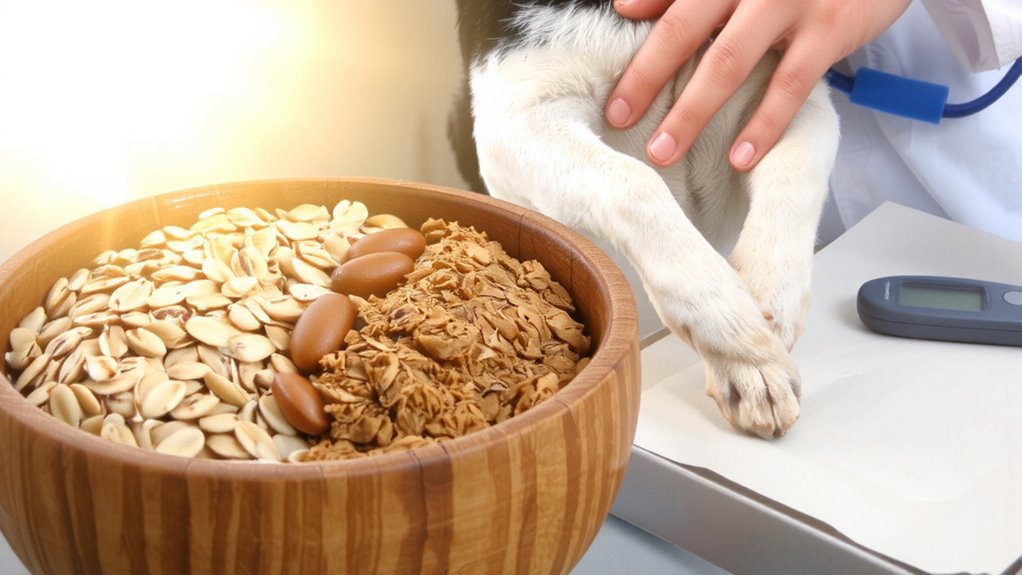
Why does fiber type matter when managing your diabetic dog’s diet? The two main fiber types-soluble and insoluble-affect blood sugar and digestion speed differently. Soluble fiber dissolves in water, forming a gel that slows digestion speed, delaying glucose absorption. This helps smooth insulin spikes, critical for diabetic control. Found in oats, psyllium, and legumes, it improves satiety and stool consistency. Insoluble fiber does not dissolve. It adds bulk and accelerates intestinal transit, aiding bowel regularity. Sources include wheat bran and cellulose. While it doesn’t directly regulate blood sugar, it supports colon health. Diabetic dogs benefit most from moderate to high soluble fiber diets, typically 10–15% dry matter. Too much insoluble fiber may reduce nutrient absorption. Balance both fiber types based on your dog’s glucose response and GI tolerance.
How to Add Fiber Safely to a Diabetic Dog’s Diet
If you’re adjusting your diabetic dog’s diet to include more fiber, start gradually to avoid digestive upset. Introduce fiber sources such as canned pumpkin, psyllium husk, or cooked sweet potatoes at 1–2% of total daily calories initially. Slowly increase over three to four weeks to allow gut microbiota to adapt. Soluble fiber should make up 60–70% of total added fiber for ideal glucose modulation. Maintain strict portion control-excess fiber can impair nutrient absorption and reduce insulin sensitivity. Use measured scoops or a kitchen scale to guarantee consistency. Commercial high-fiber diabetic diets typically contain 8–12% crude fiber on a dry matter basis; verify labels before switching. Monitor stool quality daily as an indicator of tolerance. Always consult your veterinarian before making dietary changes, especially if your dog is on insulin. Consistent fiber intake supports stable postprandial glucose levels and colonic health.
Tracking Glucose and Digestion on a High-Fiber Plan
A well-managed high-fiber diet for your diabetic dog requires consistent monitoring of both blood glucose and digestive function. Glucose monitoring helps you assess how fiber affects insulin sensitivity and post-meal glucose spikes. Test blood sugar levels twice daily using a calibrated glucometer, recording results at consistent times-preferably before meals and insulin administration. Target glucose levels should range between 100–250 mg/dL, with minimal variation. Digestive tracking complements this data by revealing stool quality, frequency, and bowel regularity. Use a fecal scoring chart (1–7 scale) to log changes; ideal stool scores are 2–4. Increased fiber can cause bloating or loose stools initially, but these typically resolve in 7–10 days. Monitor water intake, as high-fiber diets increase hydration needs. Combine glucose monitoring and digestive tracking weekly to adjust fiber dosage accurately and maintain metabolic and gastrointestinal balance.
On a final note
You must monitor your diabetic dog’s fiber intake closely to maintain glycemic control. Soluble fiber slows glucose absorption, reducing post-meal spikes. Aim for 1.5–2.5% dry matter intake in soluble fiber. Insoluble fiber supports bowel regularity but doesn’t impact blood sugar directly. Gradually increase total dietary fiber to 8–10% dry matter to avoid GI upset. Always pair dietary changes with glucose curve monitoring.