Climate-Based Grooming Adjustments for Arctic-Origin Breeds Living in Tropical Zones
You should never shave your husky or Malamute-they rely on their double coat for insulation and sun protection. The dense undercoat and guard hairs create a 1–2 inch thermal buffer, reflecting solar radiation and enabling airflow for cooling. Instead, brush 3–4 times weekly with a slicker brush and metal comb, using a deshedding tool with 0.5–1.2 mm teeth to remove up to 90% of loose hair. For hot climates, trim only the belly or legs with a #10 blade, never to the skin. Apply lick-safe SPF 30 sunscreen and use UPF 50+ moisture-wicking sun shirts over the back and flanks. Cooling happens through natural shedding, not shorter fur-proper maintenance keeps the coat functional in heat. There’s more to optimizing care in tropical environments than coat length alone.
Notable Insights
- Maintain the double coat’s integrity by brushing 3–4 times weekly to enhance airflow and natural cooling in tropical heat.
- Never shave Arctic breeds, as their coat provides essential insulation and protection against intense solar radiation.
- Use deshedding tools with 0.5–1.2 mm spacing to remove loose undercoat without damaging guard hairs or impairing thermoregulation.
- Apply dog-safe, lick-resistant sunscreen to exposed areas and dress dogs in UPF 50+ breathable sun shirts during peak sun hours.
- Limit trimming to non-sensitive areas with #10 or #7 blades, and always groom during cooler times of day to prevent overheating.
How Husky and Malamute Coats Handle Heat
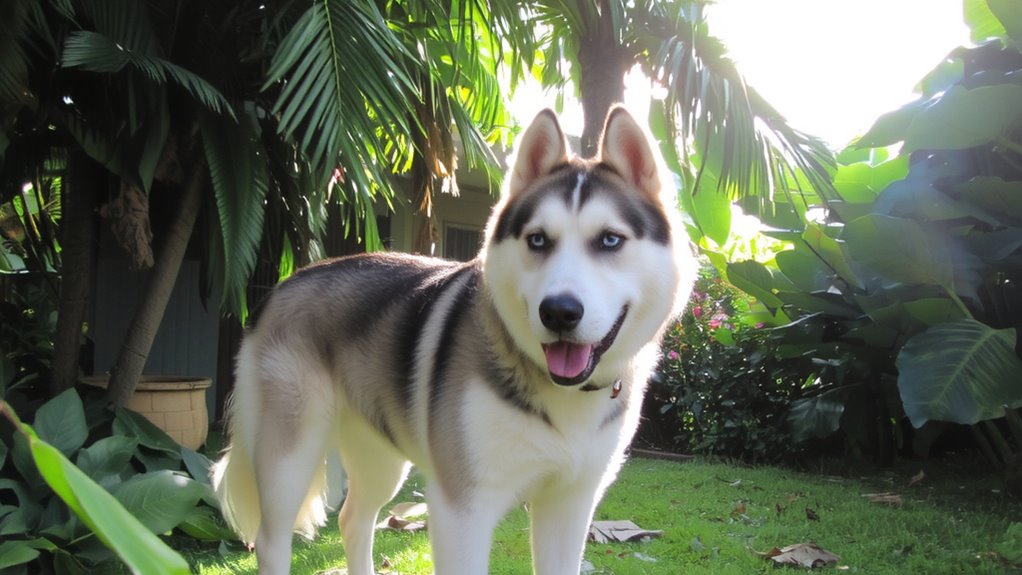
A thick double coat isn’t just for show-it’s a biologically engineered system designed for extreme cold. Your husky or malamute has a coat structure consisting of a dense undercoat and longer guard hairs, providing insulation by trapping air close to the skin. This same structure helps regulate temperature in warmth by reflecting solar radiation and allowing airflow. Though bred for subzero climates, the coat reduces heat stress by shielding the skin from direct sun exposure. Air moves through the undercoat, facilitating convective cooling. The undercoat’s loft-typically 1 to 2 inches-creates a buffer zone, minimizing thermal transfer. You’ll observe natural seasonal shedding, which aids thermoregulation. Never assume the coat traps only heat; its design is dynamic. In tropical climates, this structure still functions as intended, mitigating heat stress when combined with shade and hydration. Proper grooming maintains coat integrity without compromising its thermal benefits.
Why You Shouldn’t Shave Your Arctic Breed
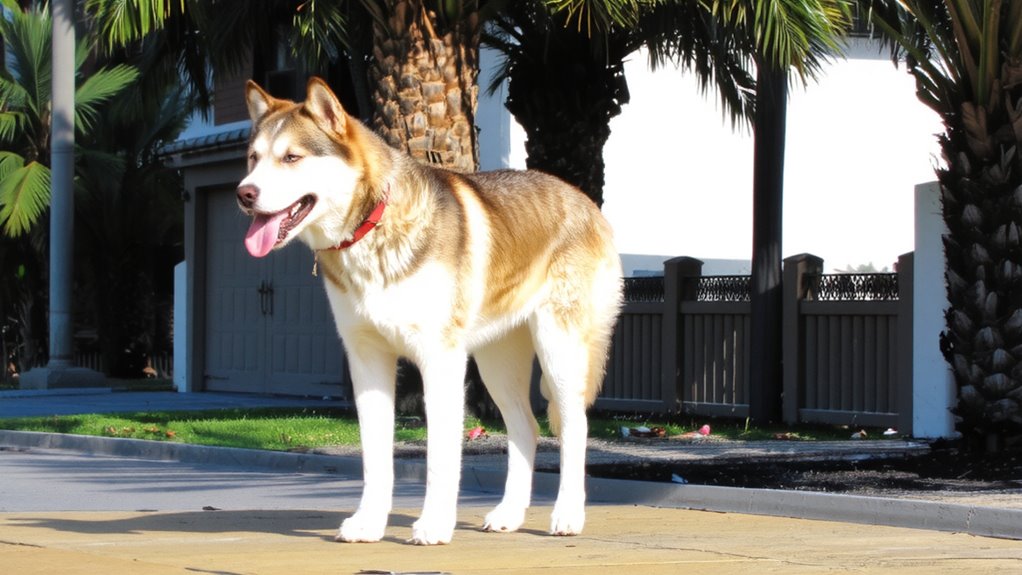
Shaving your husky or malamute might seem like a quick fix for beating the heat, but it actually undermines the dog’s natural cooling system. Their double coat provides critical insulation against both cold and heat. The outer guard hairs shield the skin from solar radiation, reducing surface temperature by up to 30%. The dense undercoat acts as thermal buffer, maintaining stable microclimate conditions next to the skin. This coat insulation supports ideal temperature regulation by limiting heat absorption and enabling efficient air circulation. Shaving disrupts this balance, increasing skin temperature and risk of sunburn or heat stress. Unlike single-coated breeds, arctic dogs rely on seasonal shedding, not hair length, for thermal adaptation. Cutting the coat alters its re-growth structure, potentially causing permanent damage. Proper coat function depends on intact layering, not reduced coverage. Preserve coat integrity to guarantee effective thermoregulatory performance in tropical climates.
Best Brushing Methods for Hot Climates
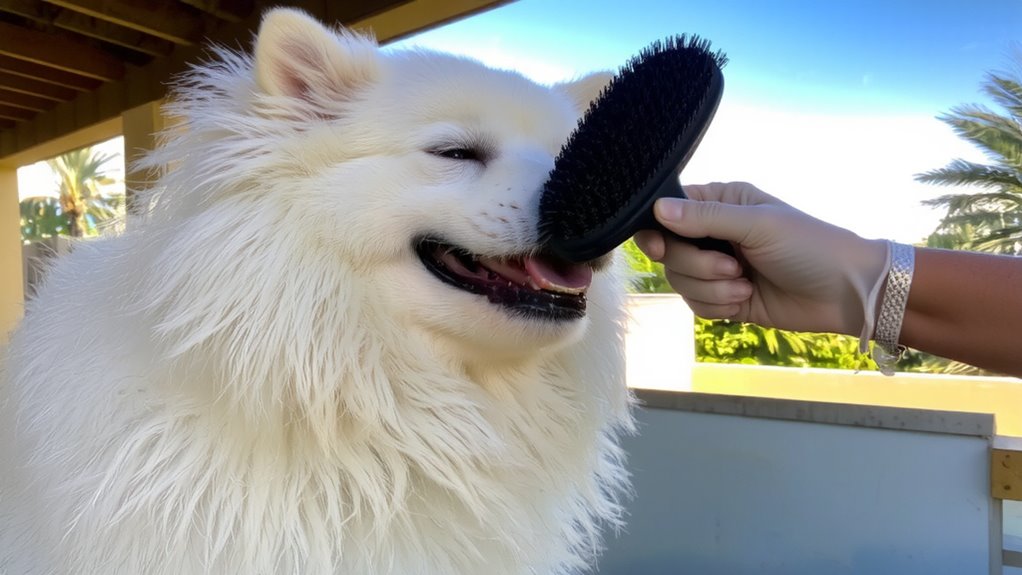
While your Arctic breed’s double coat is designed to handle extreme temperatures, maintaining it in a tropical climate demands precise grooming techniques. Brushing frequency should increase to three or four times weekly to prevent matting and support airflow. Daily brushing is ideal during peak shedding seasons. Use a slicker brush first to loosen dead undercoat, followed by a metal comb to remove tangles near the skin. Incorporate deshedding tools like the FURminator or Sleek Easy, which penetrate the undercoat without damaging guard hairs. These tools typically feature stainless steel edges spaced 0.5–1.2 mm apart, optimized for double-coated breeds. Avoid excessive pressure to prevent skin irritation. Consistent use reduces hair volume by up to 90%, according to manufacturer testing. Proper technique preserves coat insulation while minimizing heat retention, supporting thermoregulation in hot, humid environments. For long-haired breeds, using the best brushes for long-haired cats can significantly improve coat management in challenging climates.
How to Safely Trim a Husky or Malamute
If you’re considering altering your Husky or Malamute’s coat for tropical living, know this: trimming must be done with extreme caution to preserve natural insulation and avoid harming their thermoregulatory systems. Never shave down to the skin. Instead, use selective trimming techniques that remove only loose undercoat and minor tangles. Employ a #10 or #7 blade on clippers, limiting cuts to 1/2 inch in targeted areas like the belly or legs. Always use sharp, low-heat clippers to prevent skin irritation. Observe strict safety precautions: work in shaded, cool areas, and stop every 10 minutes to check blade temperature. Trim during cooler hours-early morning or late evening. Use blunt-tipped scissors near sensitive zones. Your dog’s double coat relies on guard hairs to reflect heat; improper trimming disrupts this shield. Prioritize brushing over trimming. When done correctly, limited trimming supports comfort without compromising thermal protection. For effective undercoat removal without cutting live fur, consider using an undercoat rake specifically designed for thick double coats, such as those recommended in reviews of the best undercoat rakes for huskies.
Sun Protection for Dogs Without Shaving
How do you shield your Arctic dog from intense tropical sun without compromising its protective coat? Use sun-safe practices that prioritize coat integrity. Ultraviolet radiation in tropical zones exceeds 10 UV index units daily, risking dermal damage. Apply dog-specific sunscreen on sparsely furred areas-bridge of nose, ears, belly. Veterinarian-formulated products like Epi-Pet Sun Protector offer SPF 30, non-toxic, lick-safe formulas effective for 80 minutes per application. Reapply every 2–3 hours during exposure. Pair sunscreen application with UPF-rated protective clothing. Lightweight, breathable dog sun shirts provide UPF 50+ protection, blocking over 98% of UV rays. Guarantee garments cover the dorsal line and flanks. Avoid occlusive materials-choose polyester-spandex blends with moisture-wicking properties. Combine shade scheduling (avoid peak sun 10 a.m.–4 p.m.) with physical barriers. Never rely solely on topical solutions. For extended outdoor travel, consider pet-specific sunscreen options designed for durability and safety.
On a final note
You preserve your Husky or Malamute’s natural insulation by avoiding shaving. Their double coat reflects heat and blocks UV rays, with a dense undercoat (2–5 cm thick) and guard hairs (5–15 cm long) that wick moisture. Regular brushing removes loose undercoat, reducing heat retention. Use a de-shedding rake weekly, reaching the undercoat without damaging guard hairs. Trimming is limited to sanitary areas-paws, rear-with blunt-tip scissors. UV-protective dog shirts (UPF 30–50) offer supplemental sun defense.