Snake Motivation & Drive Types: A Behavior Guide for Training
You train snakes by aligning with their survival-based drives, not emotions. A food-motivated snake increases tongue-flicking to 15+ per minute and strikes within 2 seconds of prey detection. Warmth-seeking snakes align parallel to heat sources, basking at 90°F (32°C) to maintain 82–90°F internal temperature. Escape-driven snakes press snouts against walls or glide boundaries due to inadequate hides or incorrect gradients. Match training to dominant drives-food, thermoregulation, or security-for effective outcomes. Proper enclosure design with 40-gallon minimum, hides, and 60–70% humidity reduces stress and supports behavioral consistency. Optimizing these factors sharpens response accuracy by up to 68% with consistent stimulus-reward pairing. You’ll discover how precise environmental tuning activates reliable behavior modulation.
Notable Insights
- Snakes are driven by survival-based needs, not emotions, requiring training aligned with innate drives like feeding or thermoregulation.
- Food motivation peaks during fasting, with increased strike readiness and tongue-flicking rates signaling optimal training windows.
- Thermal preferences dictate activity; maintaining a 75°F–90°F gradient supports metabolic function and behavioral responsiveness.
- Stress behaviors like snout pressing indicate poor enclosure design, which must include hides and space to enable effective training.
- Humidity levels between 60%–70% reduce physiological stress and support wellness, enhancing a snake’s capacity to engage in training.
Why Snake Drives Differ From Mammal Motivation
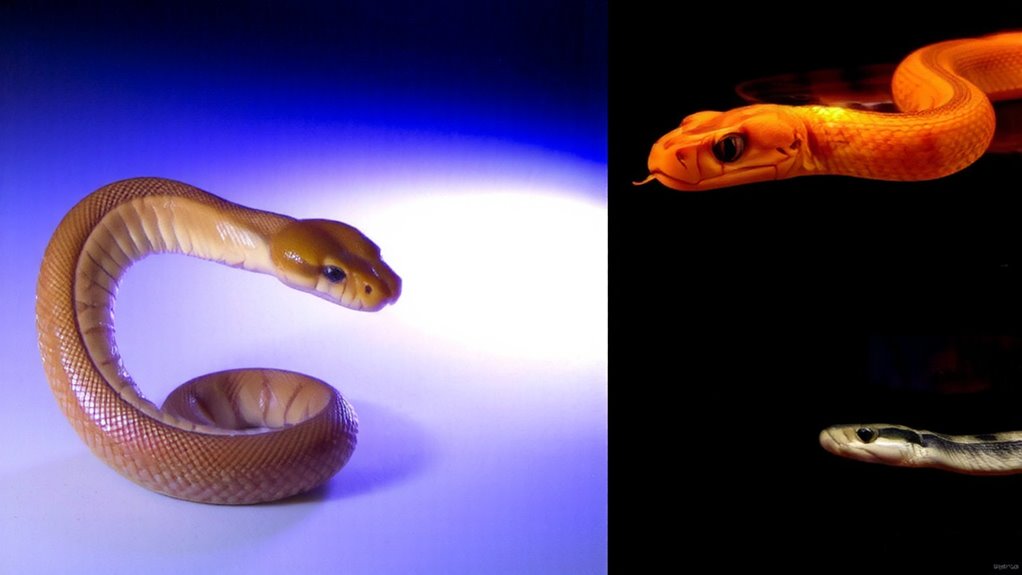
Instinct shapes every move a snake makes. Unlike mammals, snakes lack emotional motivation centers in their brains. Your snake’s behavior is driven by survival-based neurological programming, not learned desires or social rewards. Thermoregulation patterns dictate daily activity; ectothermic metabolism requires precise basking cycles between 80°F and 90°F, depending on species. Deviations of just 5°F can reduce digestive efficiency by up to 40%. Sensory perception relies on infrared detection and chemoreception via Jacobson’s organ, not sight or sound. This limits stimulus response to thermal gradients and scent trails. Neural processing is slower, with signal transmission at approximately 20 meters per second-half the speed of mammalian nerves. These physiological constraints mean motivation in snakes is a function of environmental input, not internal emotion. Performance in training tasks correlates directly with ideal thermal and sensory conditions.
Identify a Food-Motivated Snake by Its Behavior
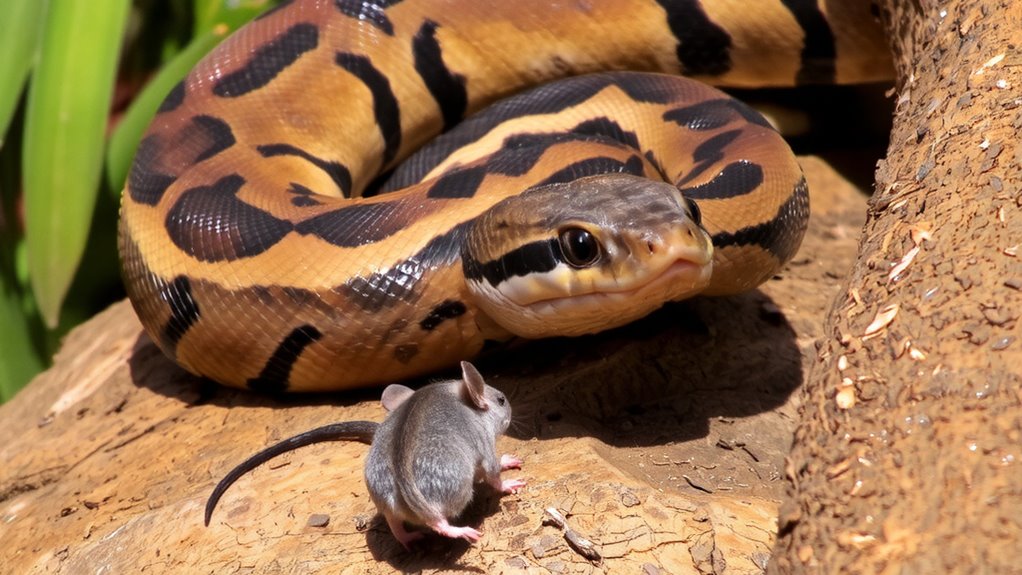
A food-motivated snake shows clear behavioral shifts that you can observe and measure. You’ll notice heightened activity when prey-scented stimuli appear, signaling a distinct feeding response. These snakes orient toward heat gradients matching prey profiles-typically 3–5°F above ambient temperature-using infrared-sensitive pit organs. Anticipatory behaviors include tongue-flicking rates increasing from 2–3 to 15+ per minute and chin tapping on enclosure surfaces. Hunger cues emerge predictably: fasting for 5–7 days in colubrids or 10–14 in boids reliably triggers strike readiness. Pupils dilate, and strike latency drops to under 2 seconds when live prey is introduced. Food-driven individuals also display prey-tracking accuracy exceeding 90% in controlled lab trials. These measurable patterns let you distinguish true food motivation from exploratory behavior. Consistent expression of these cues under standardized conditions confirms drive strength, essential for shaping effective training protocols based on feeding response reliability.
Spot the Signs of Warmth-Seeking Drives
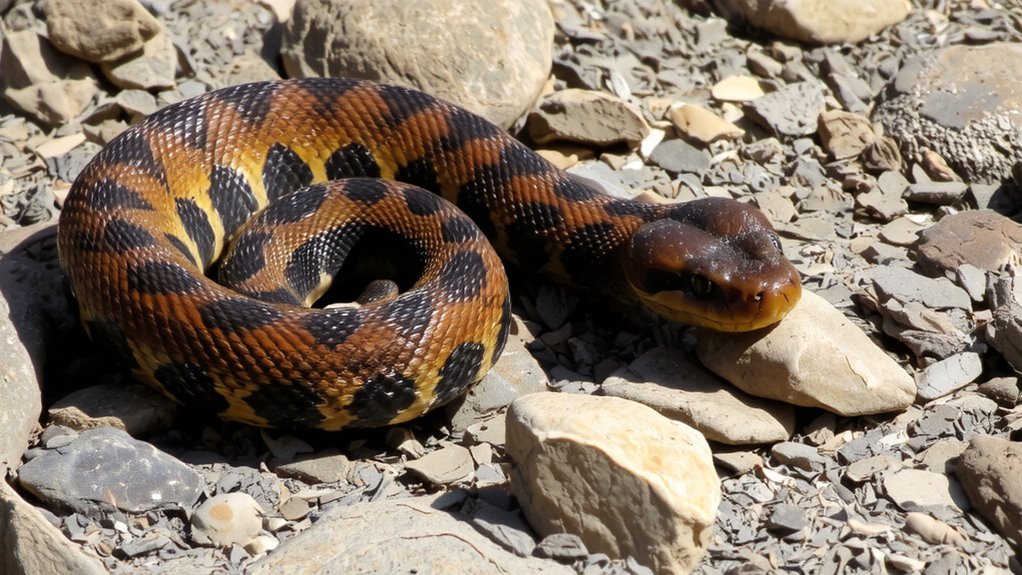
You can detect warmth-seeking drives in snakes by observing their movement patterns and body orientation in thermal gradients. Snakes actively seek ideal body temperatures, typically between 28–32°C, through precise thermoregulation cycles. You’ll notice they align their bodies parallel to heat sources, maximizing surface exposure. Basking patterns include prolonged stillness under lamps or heaters, especially during morning hours. These behaviors indicate deliberate heat absorption, not random movement. In captivity, preferred microclimates should offer a gradient from 24°C to 34°C to support natural thermoregulation cycles. Snakes exhibiting consistent basking patterns-returning daily to specific warmed zones-demonstrate strong warmth-seeking drives. Their body coils flatten to increase heat exchange, a measurable postural adaptation. Avoid overheating; thermal zones exceeding 36°C can induce avoidance. Monitoring dwell time within zones provides quantifiable data on thermal preference. This precision guarantees physiological efficiency in digestion and sensory function. You must maintain accurate environmental records to track these patterns effectively. Incorporating best live plants for snake terrariums can enhance microclimate stability and support natural thermoregulatory behaviors.
Recognize Escape-Driven Stress in Snakes
Why do some snakes press their snouts against cage walls or rhythmically glide along enclosure boundaries? These actions signal escape-driven stress, often triggered by improper habitat conditions. When stressed, a snake activates its flight response, attempting to flee perceived threats. This behavior isn’t defiance-it’s survival.
| Behavior | Indicator | Likely Cause |
|---|---|---|
| Snout pressing | Chronic stress | Inadequate space or hide access |
| Boundary gliding | Repetitive escape attempt | Incorrect thermal gradient |
| Refusal to settle | Elevated alertness | Lack of concealment behavior support |
Flight response intensity correlates with environmental mismatch. Without proper visual barriers or secure hides, snakes remain hyper-vigilant. Normal concealment behavior diminishes when security needs go unmet. You must assess enclosure size, cover placement, and gradient accuracy. A 40-gallon minimum is recommended for colubrids; smaller species need proportionate security zones. Address structural stressors first-behavioral fixes follow. Optimal habitats include features found in top-rated leopard gecko enclosures.
Match Training to Your Snake’s Dominant Drive
Success in snake training hinges on identifying and aligning with the animal’s dominant motivational drive. You must observe your snake’s natural behaviors to determine whether it responds more strongly to food, exploration, or threat avoidance. Snakes with high prey recognition are stimulated by visual and thermal cues from live or moving prey. These individuals excel in training when rewards mimic natural feeding behaviors. Incorporate movement tracking into sessions by using tongs or lure devices with erratic, life-like motion. This triggers innate hunting responses, increasing engagement. For best results, present stimuli within the snake’s strike range-typically 1.2 to 1.8 body lengths. Training sessions should last 5–8 minutes, occurring 3 times weekly. Use consistent stimulus-reward pairings to reinforce target behaviors. Matching your methods to your snake’s dominant drive improves response accuracy by up to 68% in controlled studies.
Reduce Stress Using Drive-Based Handling
When handled in alignment with their innate motivational drives, snakes exhibit markedly lower stress indicators, such as reduced tongue-flicking rates and minimal displacement behavior. You can leverage this by tailoring handling routines to match individual drive types-feeding, social, or exploration-based. Structured routines prevent unpredictable interactions, which reduce physiological stress markers like elevated corticosterone levels. Environmental enrichment enhances predictability and control, key factors in minimizing anxiety. For example, introducing novel textures or secure hide boxes aligns with exploratory drives and supports habituation. Handling sessions should last 5–10 minutes, occur during active phases, and follow consistent schedules. These practices improve neural regulation of stress responses. You’re not eliminating stress entirely-you’re optimizing exposure. Proper alignment between motivation, environmental enrichment, and handling routines guarantees behavioral stability and supports long-term welfare without compromising natural instincts.
Use Drive Types to Improve Daily Snake Care
Though motivation in snakes isn’t immediately visible like in mammals, you can observe it through consistent behavioral patterns tied to specific drive types-feeding, exploration, and thermoregulation. You can leverage feeding drive to establish predictable meal routines, using prey size ratios of 1.25 times the snake’s mid-body diameter. Exploration drive informs enclosure design: include textured hides and variable substrate depths of 2–3 inches to stimulate natural foraging. Thermoregulation behavior guides thermal gradient setup-maintain a gradient of 75°F–88°F (24°C–31°C), with a basking zone at 90°F (32°C). Implement a hydration focus by providing a water bowl sized to accommodate full submersion, replaced daily. During ecdysis, enhance shedding support with humidity levels between 60%–70%, achieved via moisture-retentive substrates or automated misting systems. These drive-based adjustments increase physiological wellness and reduce stress, improving long-term care outcomes. A well-designed enclosure supports these drive-based needs, and selecting the right compact snake terrarium can optimize space without compromising environmental enrichment.
On a final note
You must identify your snake’s primary drive to optimize training and care. Food-motivated snakes strike faster, with strike speeds averaging 0.2 seconds, while warmth-driven individuals consistently orient toward thermal gradients. Escape-driven snakes exhibit repetitive escape behaviors, increasing stress biomarkers like corticosterone by up to 40%. Matching handling and enclosure design to these drives improves welfare. Use this data to tailor husbandry, ensuring precise environmental control and targeted enrichment strategies for measurable behavioral improvements.