Best Leopard Gecko Enclosures That Keep Your Pet Happy
Choose a 20-gallon minimum enclosure, like the REPTI ZOO 35-gallon glass terrarium (36” x 18” x 12”), for proper thermal gradients and long-term health. Tempered glass guarantees durability and clarity, while front-opening doors and secure buckles reduce escape risks. A screened top allows UVB penetration and heat lamp use. Maintain a 75–90°F gradient with a digital thermometer and hygrometer. The design supports easy wiring and cleaning. You’ll find more insights on optimizing your gecko’s habitat just ahead.
We are supported by our audience. When you purchase through links on our site, we may earn an affiliate commission, at no extra cost for you. Learn more. Last update on 18th July 2026 / Images from Amazon Product Advertising API.
Notable Insights
- Choose a 20-gallon or larger enclosure to provide adequate space for thermoregulation and activity.
- Opt for front-opening doors with secure locks to prevent escapes and reduce stress during handling.
- Select models with full tempered glass or sealed wood to ensure durability, insulation, and moisture resistance.
- Ensure fine mesh ventilation for proper airflow while maintaining humidity between 30–40% and enabling UVB transmission.
- Use enclosures with easy-access feeding ports, removable parts, and smooth surfaces for stress-free maintenance and cleaning.
Reptile Terrarium Tank 37 Gallon (Black Gray)

If you’re a leopard gecko owner who values both function and form, the Reptile Terrarium Tank 37 Gallon (Black Gray) from Nalwort is built for you. It measures 32″ L x 16″ W x 16″ H, offering ample floor space for thermoregulation. The acrylic and wood construction mimics a natural habitat with a realistic wood grain finish. Transparent acrylic walls provide unobstructed visibility. An openable metal mesh roof allows proper airflow and direct heating lamp placement. It includes a hygrometer to monitor humidity and temperature. Dual child safety locks and a bronze lock prevent escapes. The waterproof base enables easy cleaning. Weighing 19.46 pounds, it assembles tool-free and suits other reptiles like bearded dragons or snakes.
Best For: Leopard gecko owners who want a secure, stylish, and easy-to-maintain terrarium that supports healthy habitat conditions.
Pros:
- Spacious 37-gallon design with ample floor space for reptile movement and thermoregulation
- Tool-free assembly and waterproof base make setup and cleaning quick and convenient
- Dual safety locks and metal mesh roof enhance security and allow proper ventilation and heat lamp use
Cons:
- Not suitable for aquatic or high-humidity reptiles due to acrylic construction and ventilation design
- Weight of 19.46 pounds may make relocation difficult after setup
- Hygrometer is included but no additional heating or lighting accessories are provided
REPTI ZOO 35-Gallon Glass Reptile Tank
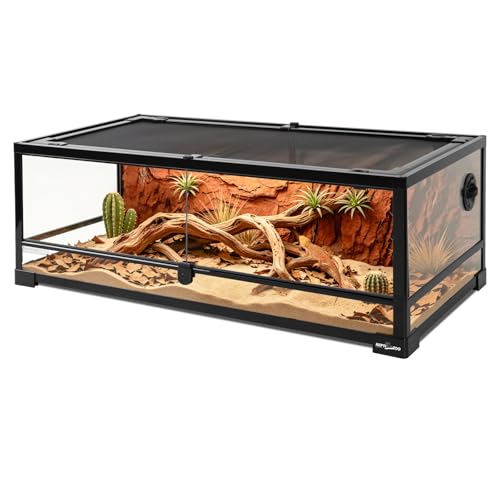
This 35-gallon glass terrarium suits one adult leopard gecko or a pair when monitored, making it ideal for keepers prioritizing space and environmental control. It measures 36 x 18 x 12 inches and uses full tempered glass for durability. The front-opening hinged doors have security buckles to prevent escapes. A locking anti-escape lid and waterproof base support varied habitats, including desert and rainforest setups. Thin wire mesh on top allows UVB penetration and proper airflow. Six pre-drilled holes organize up to four cables cleanly. I can assemble it tool-free in five minutes. It weighs 30 pounds and ships in protective foam.
Best For: Reptile enthusiasts seeking a durable, secure, and versatile 35-gallon terrarium for housing species like leopard geckos, lizards, or frogs with excellent environmental control.
Pros:
- Full tempered glass construction ensures durability and safety
- Front-opening hinged doors with security buckles prevent escapes
- Tool-free assembly and six pre-drilled cable holes for easy setup and organization
Cons:
- No background décor included, requiring additional purchases
- Mesh top may need reinforcement for strong climbers or diggers
- Limited height at 12 inches, not ideal for arboreal species
VEVOR Wooden Tortoise Enclosure with Light Stand

The VEVOR Wooden Tortoise Enclosure with Light Stand stands out for reptile owners who prioritize durability and functional design, especially those housing leopard geckos in a stable, low-humidity environment. I use it indoors and out, thanks to its 38 x 24 x 13-inch cedar frame, which resists warping. The tight-grain wood is coated in waterproof, non-toxic paint. High-transparency ABS panels and a wire mesh window guarantee ventilation and clear viewing. Two chambers-a private sleeping zone and open activity area-support natural behavior. I appreciate the top-access design, plastic base tray for easy cleaning, and the built-in light stand for heat control. It holds small to medium reptiles securely.
Best For: Reptile owners seeking a durable, well-ventilated wooden enclosure for housing small to medium species like tortoises, geckos, and lizards in both indoor and outdoor settings.
Pros:
- Sturdy 100% cedar wood construction with waterproof, non-toxic paint resists warping and extends lifespan
- Dual-chamber design with a private sleeping zone and ventilated activity area supports natural behaviors
- Easy-to-clean plastic base tray and top-access panels simplify maintenance and daily interaction
Cons:
- No warranty provided, which may raise concerns about long-term support or defects
- Assembly required, despite pre-drilled holes and instructions, which may be tedious for some users
- Not ideal for high-humidity reptile species due to wood-based construction and ventilation design
Reptile Thermometer & Humidity Gauge (2-Pack)

A precision-built reptile thermometer and humidity gauge isn’t just an accessory-it’s a necessity for keepers who demand accurate environmental control. I rely on this 2-pack’s built-in high-precision chip for readings accurate to ±0.9°F. It monitors critical microclimates, ensuring my leopard gecko’s health. Each digital hygrometer tracks both temperature and humidity simultaneously across separate zones or enclosures. The LED display is clear day and night, with easy toggling between ℉ and ℃. No wires. I mount them instantly using the included adhesive. Replaceable batteries reduce waste. These gauges deliver long-term, clutter-free reliability.
Best For: Reptile owners seeking reliable, wire-free temperature and humidity monitoring across multiple enclosures or zones.
Pros:
- High-precision ±0.9°F accuracy ensures optimal environmental conditions for sensitive reptiles
- Dual-sensor 2-pack allows simultaneous monitoring of multiple tanks or terrarium zones
- Clean, cordless design with easy adhesive mounting and clear LED display for day/night readability
Cons:
- Requires separate batteries for each unit, not included
- Adhesive may lose grip over time in high-humidity environments
- Limited to basic temperature and humidity readings without advanced data logging
Stainless Steel Reptile Feeding Tongs (2PCS)

Precision feeding matters most when managing live prey around delicate reptiles, and these Stainless Steel Reptile Feeding Tongs (2PCS) deliver control where it counts. I rely on the set’s dual design: one straight and one curved tong, both 10.6 inches long. The curved model reaches deep corners; the straight one offers direct precision. Each has protective rubber tips that prevent mouth injuries and improve grip on crickets or mealworms. They’re built from corrosion-resistant stainless steel-durable, easy to clean, and rustproof. The ergonomic shape reduces hand fatigue. Together, they handle feeding, debris removal, and terrarium adjustments with surgical accuracy.
Best For: Reptile owners who need precise, safe feeding tools for live prey and routine terrarium maintenance.
Pros:
- Dual design with straight and curved tongs offers versatility for feeding and enclosure upkeep
- Protective rubber tips prevent injury to reptiles while improving grip on slippery food items
- Durable stainless steel resists corrosion and ensures long-term hygiene in moist environments
Cons:
- Rubber tips may wear over time with heavy use and could require replacement
- 10.6-inch length may be too long for very small enclosures or containers
- Not dishwasher-safe, requiring manual cleaning for proper maintenance
PROLEE Bearded Dragon Tank (27 Gallon, Black)

Looking for a durable, well-ventilated home that suits both beginners and experienced reptile keepers? I recommend the PROLEE Bearded Dragon Tank (27 Gallon, Black). It’s built from premium wood and acrylic with a 4-sided transparent design for clear visibility and long-term sturdiness. The waterproof acrylic base resists leaks and simplifies cleaning. A steel mesh top guarantees strong airflow and supports heat lamps or UVA/B lighting-vital for thermoregulation. Double sliding front doors open smoothly and lock securely to prevent escapes. Measuring 24 inches long, it offers ample space for leopard geckos, bearded dragons, and similar reptiles. It assembles quickly with included parts and instructions.
Best For: Reptile owners seeking a durable, easy-to-maintain enclosure with excellent ventilation and lighting compatibility for bearded dragons, geckos, and similar species.
Pros:
- Sturdy construction with premium wood and acrylic materials ensures long-term durability
- Four-sided transparent design and mesh top provide optimal visibility and airflow
- Waterproof base and easy assembly make cleaning and setup simple and convenient
Cons:
- Not suitable for aquatic or semi-aquatic reptiles due to design limitations
- Lighting and heating fixtures are not included and must be purchased separately
- Limited to 24 inches in length, which may become restrictive as some reptiles grow
Reptile Terrarium 10 Gallon Tank

This Reptile Terrarium 10 Gallon Tank works best for keepers needing a compact, durable enclosure for juvenile leopard geckos or small terrestrial species. I use it confidently because its thick crystal polycarbonate base resists impacts and yellowing, maintaining 98% clarity. It withstands temperatures from -20°C to 120°C, ideal for desert setups. The metal screen top guarantees proper ventilation and supports UVB and heat lamps. A magnetic feeding port allows quick access with secure, hands-free closure. No assembly is required, and 360-degree visibility aids monitoring. Multiple sizes are available.
Best For: Keepers seeking a compact, durable, and ready-to-use enclosure for juvenile leopard geckos or small terrestrial reptiles.
Pros:
- Durable explosion-proof polycarbonate construction resists impacts, yellowing, and extreme temperatures (-20°C to 120°C)
- Metal screen top ensures proper ventilation and supports UVB, infrared, and dome lighting for reptile health
- Magnetic feeding port allows quick, hands-free access with secure automatic closure to prevent escapes
Cons:
- Limited to 10 gallons, which may restrict long-term use for growing reptiles
- Screen top does not provide escape-proof security for highly agile climbers
- Plastic base, while durable, may scratch over time with abrasive substrates
Reptile Terrarium Tank for Insects & Pets

The Reptile Terrarium Tank for Insects & Pets stands out as a top-tier choice for keepers who prioritize durability, safety, and ease of use in housing small reptiles like leopard geckos. It holds 6.6 gallons and measures 20″ x 10″ x 8″, with a watertight, explosion-proof polycarbonate base. The material resists impact, stays clear over time, and handles temperatures from -20 °C to 120 °C. A metal screen top guarantees proper ventilation and supports heat lamps or UVB lighting. The 360-degree view offers full visibility. A magnetic feeding port allows safe, hands-free feeding. It comes with tweezers, a feeding bowl, and a spray bottle-ready to use, no assembly needed.
Best For: Reptile and invertebrate enthusiasts seeking a durable, ready-to-use, small-capacity habitat ideal for desert-dwelling species like leopard geckos and jumping spiders.
Pros:
- Constructed with explosion-proof polycarbonate that resists shattering, maintains clarity, and withstands extreme temperatures from -20 °C to 120 °C
- Features a secure magnetic feeding port and comes fully assembled with essential accessories like tweezers, feeding bowl, and spray bottle
- Top-mounted metal screen allows optimal ventilation, heat lamp support, and UVB/infrared light penetration for reptile health
Cons:
- Limited 6.6-gallon capacity may not suit larger or growing reptiles like adult bearded dragons or iguanas long-term
- Ventilation may be insufficient for high-humidity species due to partial screen coverage
- No built-in heating or lighting included, requiring separate purchases for full habitat setup
REPTI ZOO Glass Terrarium 20 Gallon

A top-tier glass enclosure with precision engineering, the REPTI ZOO Glass Terrarium 20 Gallon delivers unmatched durability and functionality for keepers prioritizing safety and accessibility. I use tempered glass-30″ x 12″ x 12″-rated for strength and impact resistance. Full 360° visibility lets me monitor behavior without obstruction. The top screen lid features fine wire mesh, allowing UVB and infrared transmission while ensuring airflow. A raised bottom frame fits my substrate heater; the waterproof base works for arid or humid setups. Front dual doors open independently, making feeding easy. Security buckles and a lock prevent escapes. Six pre-drilled holes simplify wiring. I assemble it tool-free in 5 minutes.
Best For: Reptile enthusiasts seeking a durable, secure, and versatile 20-gallon terrarium with easy access, excellent ventilation, and compatibility with both arid and humid environments.
Pros:
- Tempered glass construction offers superior strength and safety with full 360° visibility
- Front-opening dual doors with security buckles and lock prevent escapes and allow easy access
- Six pre-drilled holes and raised waterproof base support efficient setup for heating, lighting, and humidity systems
Cons:
- Limited to 20 gallons, which may be too small for larger or fast-growing reptile species
- Screen lid may require additional mesh reinforcement for strong or escape-prone animals
- Tool-free assembly, while quick, may result in occasional misalignment if not carefully followed
REPTI ZOO 34 Gallon Glass Terrarium
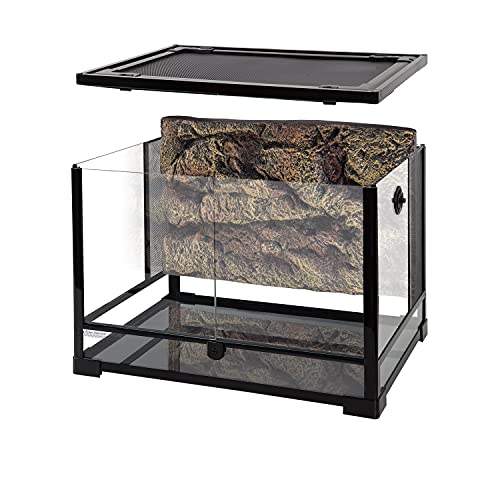
Choosing the right enclosure matters most when you’re serious about replicating a natural habitat, and the REPTI ZOO 34 Gallon Glass Terrarium delivers precision for keepers who prioritize function and realism. It measures 24″ x 18″ x 18″, offering ample space for a leopard gecko’s active routines. The glass build guarantees clarity and stability, while the knock-down design simplifies transport and setup. Front double-hinged doors open separately-ideal for feeding without escape risks. Screen top ventilation and side windows maintain airflow, and UVB/infrared light passes efficiently through the patent-designed screen. Closable top and right-side inlets let you route wires safely. A waterproof base and raised bottom frame support under-tank heaters. High-density foam backgrounds mimic natural rock, enriching the terrain. Assembly takes about five minutes, with clear installation notes included.
Best For: Reptile keepers seeking a spacious, durable, and realistic habitat with easy access and efficient ventilation for species like leopard geckos.
Pros:
- Double-hinged front doors allow separate access, reducing escape risks during feeding
- Patent-designed screen top enables optimal UVB and infrared light transmission
- Simple 5-minute assembly with knock-down design and included installation notes
Cons:
- Limited height at 18 inches may restrict climbing species
- Side and top ventilation may reduce heat retention in cooler environments
- Foam background is not removable or customizable for different aesthetic preferences
Factors to Consider When Choosing a Leopard Gecko Enclosure
You need enough space to support your leopard gecko’s health and natural behaviors. A minimum 20-gallon long tank is recommended, but larger enclosures improve thermal gradient stability and humidity control. Glass, plastic, or hybrid materials each offer different benefits in durability, insulation, and airflow-so choose based on your setup’s ventilation needs and maintenance routine.
Size And Space Requirements
At minimum, one adult leopard gecko needs 20 gallons of enclosed space-roughly 24 inches long, 12 inches high, and 18 inches deep-to support healthy movement and thermoregulation. You’ll want at least 1.5 square feet of floor area, as geckos are ground-dwellers and prioritize horizontal space over vertical. A secure, front-opening design prevents escapes while guaranteeing proper airflow and heat distribution. Length matters-it allows you to establish a reliable thermal gradient, with temperatures ranging from 75–90°F (24–32°C) between cool and warm zones. This gradient is essential for digestion and metabolic health. The enclosure must also maintain ambient humidity between 30–40%, with room for a humid hide that doesn’t disrupt overall climate stability. Adequate volume guarantees consistent conditions without hotspots or stagnant air.
Material And Build Quality
Durability and thermal performance hinge on the enclosure’s construction material. Glass enclosures resist scratching and maintain clarity, offering long-term structural integrity ideal for reptile housing. You’ll appreciate their non-porous surface, which prevents moisture absorption and simplifies cleaning. Wooden builds provide superior insulation, retaining heat efficiently due to dense material composition-this means fewer temperature fluctuations. However, they require sealed interiors to prevent mold in humid spots. Acrylic models are lightweight and impact-resistant but scratch more easily than glass; use only non-abrasive cleaners to preserve visibility. For extreme durability, explosion-proof polycarbonate withstands temperatures from -20°C to 120°C, maintains over 98% optical clarity, and resists yellowing over time. High-quality units feature welded seams and reinforced corners, preventing leaks and enhancing stability, especially under heat stress. These details guarantee lasting function and safety in your gecko’s environment.
Ventilation And Airflow Design
When selecting a leopard gecko enclosure, ventilation plays a crucial role in maintaining a healthy environment. You need mesh screens on the top or sides to guarantee proper airflow while keeping your gecko secure. These openings allow consistent air exchange, helping maintain humidity between 30% and 40%. Stagnant air from poor ventilation can lead to mold and respiratory issues. But too much airflow dries out the enclosure, stressing your pet. Look for intake and exhaust vents placed on opposite sides-this setup creates cross-ventilation without chilling drafts. Make sure the mesh is fine enough to prevent escape but open enough to let UVB and infrared light pass through when using overhead lighting. Solid enclosures with limited airflow trap moisture, increasing health risks. A well-ventilated design balances air movement and climate stability, keeping your leopard gecko healthy and comfortable long term.
Temperature And Humidity Control
You need to maintain precise temperature and humidity levels in your leopard gecko’s enclosure to support its health and natural behaviors. Create a gradient with the cool side at 75–85°F (24–29°C) and the warm side at 88–92°F (31–33°C) for effective thermoregulation and digestion. Use an under-tank heater or heat mat covering no more than one-third of the floor to avoid overheating. Maintain ambient humidity between 30% and 40% to prevent respiratory issues. During shedding, temporarily raise humidity to 60%–70% inside a dedicated moist hide. Install a digital thermometer and hygrometer with remote sensors to monitor conditions accurately at multiple points. Avoid heat lamps or devices that dry the air excessively. Position misting systems or humidifiers to target localized areas without increasing overall enclosure humidity. Consistent, measured control guarantees metabolic function and shedding success.
Ease Of Cleaning And Maintenance
A clean habitat supports the same level of health as proper temperature and humidity, making maintenance efficiency a key factor in enclosure selection. Choose enclosures with a waterproof base made of non-porous acrylic or polycarbonate-they resist moisture absorption and tolerate frequent wiping with disinfectants. Smooth interior surfaces without seams or grooves prevent bacterial buildup and allow quick, effective cleaning. Avoid textured walls or heavy detailing; flat, seamless walls reduce debris adhesion and simplify sanitation. Opt for models with removable or tool-free components like sliding doors and vent panels-these give full access to corners for thorough cleaning. The best designs support daily spot-cleaning and monthly deep-cleaning without disassembling structural parts. Efficient maintenance isn’t optional-it’s essential for long-term hygiene. Prioritize function over form: enclosures built for easy access and durability reduce downtime and improve sanitation outcomes.
Security And Escape Prevention
Though small, leopard geckos are agile and resourceful, making enclosure security a non-negotiable priority. You need front-opening doors with locking mechanisms to prevent escapes during handling or cleaning. A tightly fitted, escape-proof lid-either solid or mesh with a secure latch-is essential for blocking overhead exits. Ventilation openings must use durable mesh with gaps no larger than 1/8 inch to stop escapes while ensuring airflow. Choose enclosures with dual lock systems on sliding or hinged doors to resist accidental openings from internal pushing or climbing. Seal all gaps around seams, doors, and access ports to close potential escape routes. Even minor openings can allow escape, so precision in construction matters. A well-secured enclosure keeps your gecko contained, reduces stress, and maintains a controlled habitat. Prioritize engineering over aesthetics-your pet’s safety depends on tight tolerances and reliable closures.
Lighting And Habitat Suitability
Proper lighting and habitat design go hand in hand when selecting an enclosure for your leopard gecko. You need a mesh or screen top to let UVB and infrared light pass through while ensuring proper airflow. Transparent glass or acrylic walls give you clear 360-degree viewing and help light spread evenly. The enclosure must have enough height-typically at least 12 inches-so you can position basking lights at the manufacturer’s recommended distance, usually 6–8 inches, to create an effective thermal gradient. Pre-drilled holes in the lid let you route cords neatly for heat lamps and thermostats, improving safety and setup efficiency. A waterproof base is essential if you use humid substrates or mist regularly, preventing water damage and maintaining structural integrity over time. These features work together to support ideal lighting performance and long-term habitat stability.
Access And Handling Convenience
When designing a leopard gecko enclosure, prioritizing access and handling convenience guarantees daily care remains efficient and stress-free for both you and your pet. Front-opening doors with secure latches provide unobstructed access, reducing escape risks during feeding or cleaning. Smooth-sliding or hinged mechanisms allow one-handed operation, minimizing disruption to your gecko’s environment. Dual-access enclosures feature front panels and removable top ventilation, enabling flexible maintenance and health monitoring. Strategically placed feeding ports with automatic closures let you offer meals without opening the enclosure, decreasing stress from direct contact. Tool-free designs, such as snap-open panels or removable mesh tops, simplify substrate changes and decor adjustments. These features collectively reduce handling time and improve interaction safety. Choose enclosures with sealed latches, rounded edges, and stable construction to guarantee long-term usability and consistent performance. Proper access design enhances husbandry efficiency without compromising security.
Frequently Asked Questions
How Often Should I Clean My Leopard Gecko’s Enclosure?
You should spot-clean your leopard gecko’s enclosure daily. Remove feces, uneaten food, and contaminated substrate immediately to prevent bacterial growth. Perform a full enclosure clean every 4–6 weeks. During deep cleaning, remove all decor and substrate. Scrub surfaces with a 10% bleach solution or reptile-safe disinfectant. Rinse thoroughly. Allow everything to dry completely before reassembling. Maintain humidity below 40% to inhibit mold. Use paper towels or reptile carpet for easier sanitation.
Can Leopard Geckos Live Together in the Same Tank?
No, leopard geckos shouldn’t live together in the same tank. You risk aggression, stress, and injury-especially between males. Males are territorial and will fight, often causing severe wounds. Even females may clash over resources. Overcrowding increases disease risk and disrupts thermoregulation. A 20-gallon long tank is ideal for one adult, providing proper thermal gradients: 88–90°F on the warm side, 70–75°F on the cool side. Cohabitation compromises health and safety.
Do Leopard Geckos Need UVB Lighting to Stay Healthy?
Yes, you need UVB lighting for your leopard gecko to maintain peak health. While they’re nocturnal, recent studies show UVB exposure supports vitamin D3 synthesis. Use a 2% to 5% UVB bulb, like a 14-watt ReptiSun 5.0, placed 6–8 inches above the basking zone. Provide 10–12 hours daily. Without it, calcium metabolism drops, raising hypocalcemia risks. Pair with proper supplementation.
What Temperature Should a Leopard Gecko’s Enclosure Be at Night?
Your leopard gecko’s enclosure should stay between 70°F and 75°F at night. This range supports healthy digestion and metabolism while preventing thermal stress. If ambient room temperatures drop below this, use a low-wattage heat mat or ceramic heat emitter. Avoid bright lights at night-they disrupt circadian rhythms. A reliable digital thermometer with a probe guarantees accurate monitoring. Stable nighttime temps reduce illness risk and support long-term wellness.
How Do I Know if My Leopard Gecko Is Stressed?
You see stress in your leopard gecko through behaviors like refusing food, excessive hiding, or tail wagging. Chronic stress shows as weight loss, dull skin, or frequent illness. You’ll notice increased vocalization or erratic movements when disturbed. Normal activity includes slow exploration and regular eating. Stress often stems from improper thermal gradients-keep the warm side at 88–90°F (31–32°C) and the cool side at 75–80°F (24–27°C).