How to Identify Early Signs of Separation Anxiety in Dogs During Work-from-Home Transitions
You may notice your dog whining within minutes of your departure, producing high-pitched, repetitive vocalizations lasting 30–90 seconds every 2–5 minutes. Pacing follows fixed routes along walls or between rooms, covering 10–20 feet per circuit at 2–3 mph. These behaviors, starting shortly after separation, signal early separation anxiety. Unlike brief excitement, true anxiety persists 20–45 minutes with non-goal-directed movement. Monitor with a 1080p smart camera set to a 140° view to capture and analyze patterns. A consistent routine and neutral goodbye cues can reduce stress. Changes in toilet access or diet may also contribute-tracking these factors reveals hidden triggers.
Notable Insights
- Whining within minutes of your departure may signal early separation anxiety during work-from-home transitions.
- Repetitive, high-pitched vocalizations lasting 30–90 seconds are common signs of distress in anxious dogs.
- Pacing in fixed loops along walls or between rooms indicates non-goal-directed, anxiety-driven behavior.
- Changes in bathroom routines or diet can trigger anxiety due to disruptions in gut-brain axis communication.
- Symptom tracking with smart cameras helps detect early anxiety patterns during transitions to remote work.
Spot the Early Signs of Separation Anxiety

A dog’s behavior when left alone can reveal early signs of separation anxiety, often before severe symptoms develop. You may notice whining behavior within minutes of your departure. This vocalization typically occurs in high-pitched, repetitive sequences lasting 30–90 seconds, spaced 2–5 minutes apart. It’s a communication signal indicating distress. Pacing patterns are another measurable indicator. Affected dogs often follow fixed routes along walls or between rooms, covering 10–20 feet per circuit at 2–3 mph. These paths form consistent loops, especially near exits. Episodes usually begin within 10 minutes of alone time and persist for 20–45 minutes. Pacing lacks purposeful exploration and differs from normal activity. Whining and pacing are not random; they reflect autonomic arousal and failed self-soothing. Monitoring duration, frequency, and path consistency helps distinguish anxiety from boredom. Early detection improves intervention success.
Find What Triggers Your Dog’s Anxiety
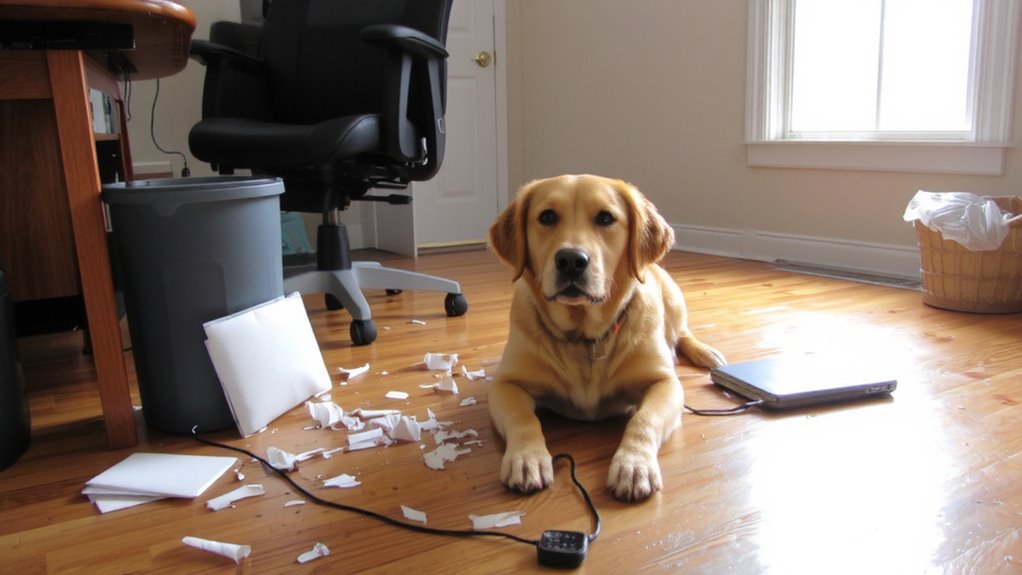
What sets off your dog’s anxiety? Identifying triggers requires close observation during routine changes. Toilet training disruptions, such as altered bathroom schedules or restricted outdoor access, can heighten distress. Dogs thrive on consistency; even minor deviations signal instability. Monitor behavior when introducing diet changes-switching proteins or kibble sizes affects gut health, which correlates with anxiety via the gut-brain axis. Eliminate variables methodically: record symptoms before and after each dietary shift. Note pacing, whining, or destructive chewing within 30 minutes of your departure. Use a smart camera with motion tracking (1080p resolution, 140° field of view) to review episodes. Test one variable at a time: first stabilize toilet training, then adjust food gradually over 7–10 days. Avoid concurrent changes. Correlate timeline data with behavioral logs to isolate triggers. Accurate detection improves intervention accuracy. For dogs exhibiting persistent anxiety-related behaviors, a Top Dog Training E-Collar can be a useful tool when used responsibly as part of a broader training strategy.
Tell Excitement From Real Separation Anxiety
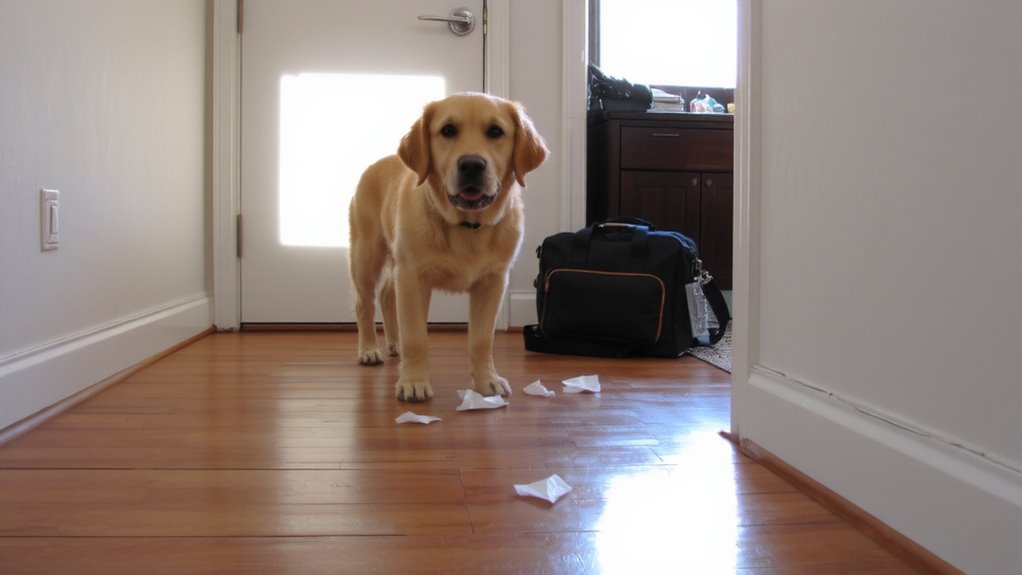
How can you tell if your dog’s behavior signals true separation anxiety or just overexcitement? True separation anxiety presents with persistent distress behaviors occurring within minutes of your departure. Signs include panting pacing, trembling whining-behaviors that continue for 20–45 minutes after you leave. Observe via video recording: if your dog remains agitated beyond a brief excitement period, it’s likely anxiety. Excitement-driven actions last under 10 minutes and lack trembling whining. Panting pacing during anxiety is repetitive, non-goal-directed, and often precedes destructive escape attempts. Heart rate increases by 20–50%, and cortisol levels rise markedly. Excitement causes transient panting but no prolonged pacing or physiological distress. The presence of self-injurious behavior or vocalization lasting over 30 minutes confirms clinical separation anxiety. Accurate differentiation requires timing and behavior logging over 3–5 departures. Effective management may include best solutions for pet separation anxiety.
Build a Calm Goodbye Routine
Why do so many owners unknowingly fuel their dog’s anxiety during departures? Because they create emotional farewells packed with excitement or stress. You need calm cues and consistent signals to prevent reinforcing anxious behaviors. Start by keeping goodbyes under 30 seconds-no prolonged petting or dramatic language. Use a neutral phrase like “I’ll be back” each time, delivered in a steady tone. Pair it with a consistent action, like placing keys on the counter or touching your shoes. This becomes a predictable pre-departure cue. Perform these steps in the same order daily so your dog learns what to expect. Calm cues condition emotional regulation; consistent signals reduce uncertainty. Over time, the routine dampens hyperarousal by signaling temporary absence, not threat. You’re not ignoring your dog-your’e teaching resilience through structured predictability. That’s how neural pathways shift from panic to patience. Consider incorporating dog training pheromones to further support your dog’s emotional well-being during transitions.
Know When to Call a Dog Behavior Expert
When does normal distress cross the line into clinical separation anxiety? If your dog destroys doors, injures themselves trying to escape, or vocalizes excessively within minutes of your departure, it’s likely clinical. These aren’t just bad habits-they’re signs of panic. Standard dog training won’t fix this. You’ll need a certified dog behavior expert who specializes in behavior modification. They’ll assess your dog’s triggers, duration of symptoms, and response to isolation. A professional uses evidence-based protocols like systematic desensitization and counter-conditioning, not generic advice. They track latency to first vocalization, frequency of chewing incidents, and changes in heart rate during trials. Without targeted intervention, symptoms often worsen. If your dog’s distress persists more than 20 minutes after you leave or causes property damage, don’t wait. Early expert involvement improves prognosis. Behavior modification works best when started before the pattern solidifies.
On a final note
You can manage separation anxiety with early detection and structured routines. Dogs showing restlessness, vocalization, or destructive behavior within 20 minutes of your departure may have anxiety. Monitor episodes using a 1080p pet camera with motion alerts and two-way audio for real-time observation. Use gradual desensitization: start with 5-minute absences, increasing by 3-minute intervals daily. Consult a certified animal behaviorist if symptoms persist beyond two weeks despite intervention.