How to Prevent Fear of Rain and Wet Conditions in Puppies
You can prevent rain fear by starting with recorded rain sounds at 40–50 dB played six feet away, gradually increasing volume over 5–7 sessions up to 60 dB while pairing with treats or play. Shift outdoors on damp grass for 3–5 minute sessions, extending by 2 minutes daily. Use a waterproof coat rated at 5,000mm hydrostatic head and reinforce calm behavior with high-value rewards like freeze-dried liver. There’s a precise sequence that maximizes long-term confidence.
Notable Insights
- Introduce rain sounds indoors at low volume and pair with treats or play to build positive associations.
- Gradually increase exposure to outdoor damp environments after successful indoor sound acclimation.
- Use high-value treats and waterproof toys during wet-weather outings to reinforce positive behavior.
- Dress puppies in properly fitted, waterproof coats to reduce discomfort from moisture and cold.
- Conduct short, consistent training sessions during light rain to prevent fear from developing.
Why Puppies Fear Rain and How to Help
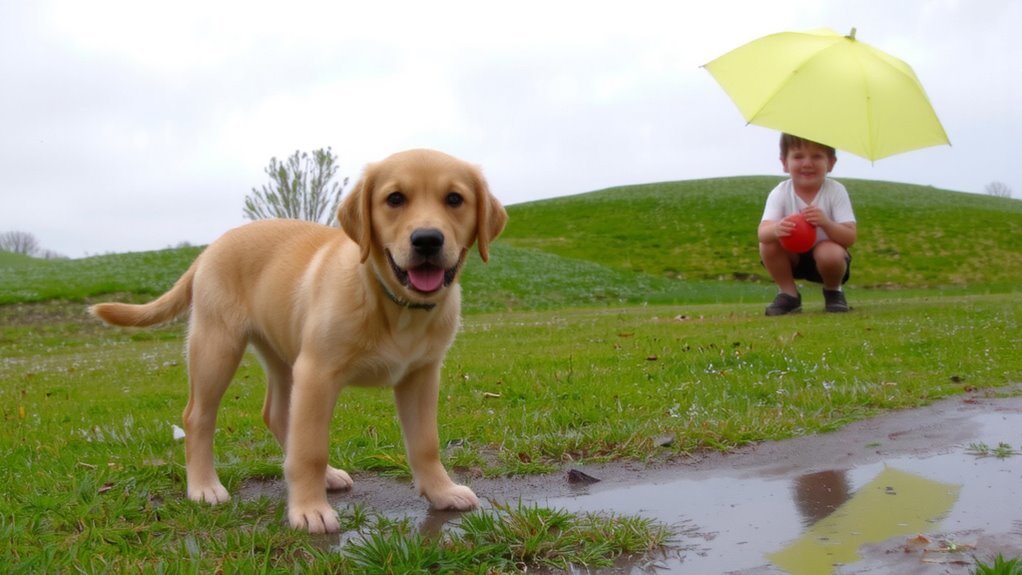
Although some puppies adapt to rain quickly, others develop fear due to unfamiliar sensory input, such as the sound of raindrops hitting surfaces, which can reach 60–70 decibels-comparable to indoor conversation but perceived as louder through a puppy’s more sensitive hearing. You must consider genetic predisposition; certain breeds, like herding dogs, show heightened sound sensitivity linked to working-line ancestry. This biological trait amplifies startle responses. Past trauma also plays a critical role-puppies exposed to sudden storms without shelter may associate rain with distress. You should observe behavioral markers: trembling, withdrawal, or attempts to escape. These reactions are not disobedience but neurological responses to perceived threat. Auditory thresholds in puppies range from 5–50 kHz, exceeding human capacity. Early intervention during the primary socialization window (3–14 weeks) improves outcomes. Genetic and environmental factors interact, meaning both must be addressed in behavior plans. You need accurate assessment before implementing desensitization protocols. Incorporating anxiety comfort items can help soothe puppies during thunderstorms or rainy weather by providing a sense of security.
Play Rain Sounds Indoors to Build Confidence
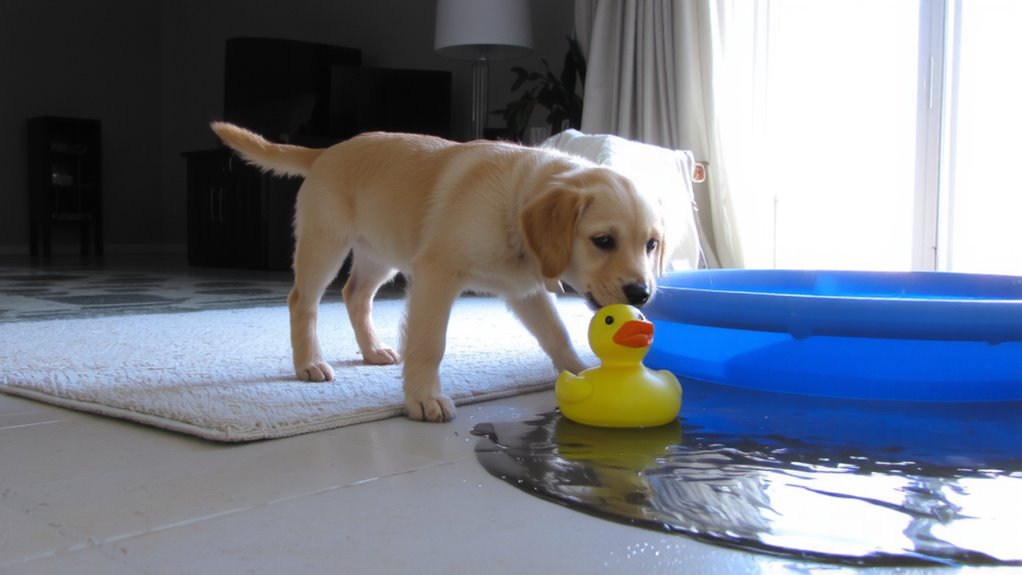
You can begin building your puppy’s confidence in controlled environments by introducing recorded rain sounds at safe volume levels. Start with sound exposure at 40–50 decibels, comparable to a quiet room, using a high-fidelity speaker placed at least six feet away. Gradually increase volume over 5–7 sessions, not exceeding 60 dB, to prevent overstimulation. Pair the audio with positive indoor play activities-toss soft toys, practice commands, or offer treats-to create positive associations. Use consistent 10–15 minute sessions daily, monitoring your puppy’s body language for signs of stress. Choose realistic rain soundtracks with steady tempo and minimal thunder variation to maintain predictability. Repeat sessions for two to three weeks or until the puppy shows no avoidance behaviors. This gradual desensitization mimics veterinary-recommended behavioral protocols, ensuring neurological adaptation through repeated, low-stress auditory exposure in a secure setting.
Start Outside on Damp Ground: Go Slow
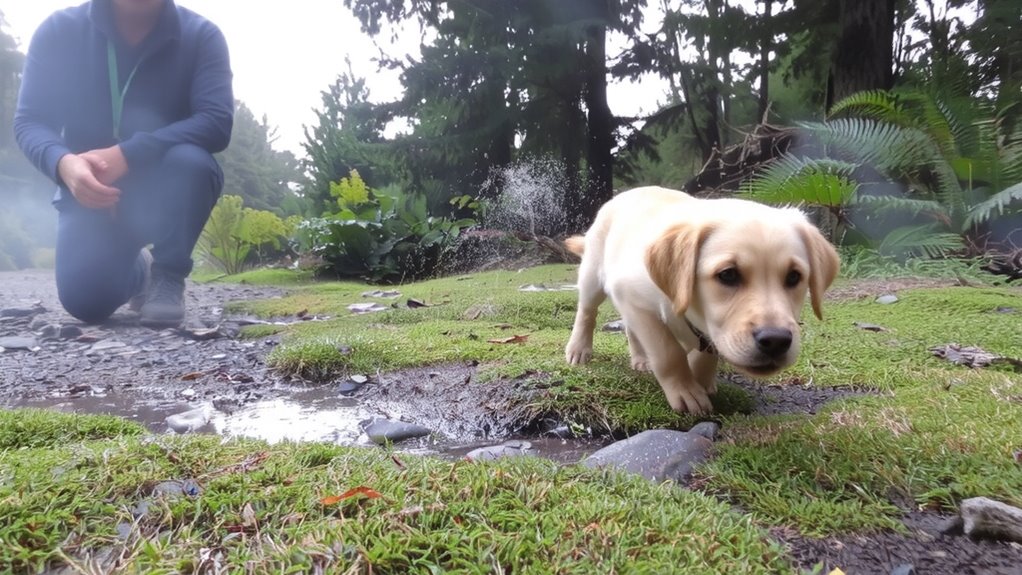
Once your puppy shows no signs of stress during indoor rain sound sessions, shift to outdoor exposure on damp ground during or after light rainfall. Begin with brief, controlled sessions of 3–5 minutes to minimize overload. Puppies often exhibit heightened paw sensitivity, making surface texture a critical factor in their comfort. Start on grass or soil with even moisture distribution, avoiding puddles or slick surfaces that increase sensory input. Gradually introduce varied textures like wet pavement or gravel, monitoring for hesitation or paw lifting. Use a leash to maintain proximity without restraint, allowing natural exploration. Limit initial outings to 10 minutes total, increasing by 2-minute increments daily. Maintain a consistent ambient noise level-60–70 decibels-similar to light rain. This structured acclimation reduces avoidance behaviors and builds neurological resilience to wet conditions through repeated, low-stress contact.
Use Treats and Toys to Make Rain Fun
Pairing positive reinforcement with environmental exposure shapes your puppy’s emotional response to rain. Use treats and toys during light drizzle to create positive associations. Offer high-value treats-such as freeze-dried liver or soft training morsels-immediately when rain begins. Deliver treats at a rate of 3–5 per minute to maintain engagement. Introduce waterproof toys like buoyant rubber fetch balls (diameter: 2.5–3 inches) or floating tug ropes (length: 18 inches; material: polyester blend) during outdoor sessions. These items enhance sensory exposure through texture, movement, and scent dispersion in wet conditions. Limit initial sessions to 5–7 minutes, gradually increasing duration by 1–2 minutes daily. Conduct interactions on damp grass or paved surfaces to combine tactile feedback with positive reinforcement. Consistency in timing and reward delivery strengthens conditioned responses. This methodical approach guarantees your puppy perceives rain as a predictor of enjoyable activity, not threat.
Dress Your Puppy for Wet Weather Success
A well-fitted raincoat can make all the difference in keeping your puppy dry and comfortable during wet-weather outings. Choose waterproof rain gear with sealed seams and a Durable Water Repellent (DWR) coating to prevent moisture absorption. Guarantee full coverage from neck to tail, with adjustable straps at the chest and belly for a secure, chafe-free fit. Most quality coats have a 5,000mm hydrostatic head rating, sufficient for moderate rain. Reflective stitching enhances visibility in low-light conditions. Avoid bulky designs-excess material restricts movement and causes overheating. Lightweight polyurethane-laminated fabrics offer maximum breathability and durability. A built-in leash attachment slot allows for secure harness access without compromising waterproof integrity. Proper rain gear encourages safe puddle play by minimizing soaked fur and chilling risks. Always dry the coat thoroughly after use to preserve fabric performance. Dressing your puppy appropriately ensures longer, more enjoyable outdoor exposure.
Stay Calm and Confident on Rainy Walks
You set the tone for how your puppy experiences rainy walks-your confidence directly influences their behavior. Stay calm, stand tall, and maintain steady leash control. Puppies mirror emotional cues; anxiety in your stance or voice increases their stress. Use a consistent routine each time you step out in the rain-follow the same route, duration (10–15 minutes), and pacing (approx. 2 mph). Apply positive reinforcement immediately when your puppy remains relaxed or moves forward willingly. Offer small, soft treats (≤½ inch cubes) every 30 seconds initially, fading frequency as confidence grows. Wear reflective, waterproof gear (≥5,000 mm hydrostatic head rating) to project control and comfort. Your predictable actions and composed demeanor during wet walks condition your puppy to associate rain with safety, not threat.
On a final note
You can effectively reduce your puppy’s fear of rain through systematic desensitization. Play recorded rain sounds at 60–65 dB for 10–15 minutes daily. Begin outdoor exposure on damp grass with temperatures above 50°F. Use high-value treats containing at least 30% protein to reinforce positive associations. Invest in waterproof coats with 5,000 mm hydrostatic head rating. Maintain consistent leash tension at 1–2 lbs of pressure to signal calm confidence.