How to Safely Groom a Matted Long-Haired Cat Without Causing Skin Tearing
Start by evaluating mat depth; use clippers for mats over 1 inch or those tight against the skin. Hold the mat away from the body to avoid direct pressure. Use a #30 or #10 clipper blade with 0.5 mm clearance, moving parallel to the skin. Never use scissors near the surface. Apply detangling spray with glycerin and lanolin. Work in small sections with a metal comb. You’ll learn the most effective techniques for long-term coat health next.
Notable Insights
- Assess mat severity by parting fur to determine if combing or clipping is needed, avoiding direct pressure on skin.
- Use detangling spray with moisturizing ingredients to gently loosen mats before careful, shallow combing.
- Employ electric clippers with a #30 or #10 blade for severe mats, cutting parallel to the skin with minimal clearance.
- Never use scissors near the skin or force a comb through tight tangles to prevent accidental tearing.
- Prevent future mats with daily brushing, focusing on high-friction areas using proper tools and light, steady strokes.
Assess Mat Severity
If you’re dealing with a long-haired cat, the first step is checking how bad the mats are, since severity determines whether you can brush them out or need to clip them. Begin with a thorough mat inspection, parting the fur to assess depth and density. Small surface tangles under 0.5 inches may be brushed gently with a wide-tooth comb. Mats over 1 inch or pressed tightly against the skin require clippers. Always check for skin sensitivity by lightly touching areas around the mat; flinching or pulling away indicates inflammation or irritation. Avoid aggressive brushing on sensitive zones to prevent skin tearing. Use your fingers to elevate the mat from the skin-never press tools directly onto the body. Severe, dense mats adhered to the skin compromise comfort and hygiene. At that stage, safe removal isn’t elective-it’s a physical necessity. Your cat’s welfare depends on accurate severity assessment before any intervention. Choosing the right dematting tool can significantly reduce the risk of injury during grooming.
Gather the Right Tools
Having the right tools on hand makes all the difference when managing matted fur in long-haired cats. You need specialized instruments designed for dense, tangled coats. Use a slicker brush for surface mats and a metal comb with rotating teeth for deeper tangles. Scissors with blunt tips are essential for clipped mats near skin. Detangling sprays reduce friction and prevent breakage during combing. Always apply them evenly 2–3 inches from the coat. Below are recommended tools:
| Tool | Purpose | Specification |
|---|---|---|
| Slicker brush | Loosens surface mats | Fine, short wires; ergonomic handle |
| Metal comb | Detangles deep knots | 0.5–1.5 mm spacing; rounded tips |
| Blunt-tipped scissors | Trims severe mats | 4–6 inch blades; safety-rounded ends |
Choose brush types suited for undercoat and topcoat. Detangling sprays with aloe and oat silk improve slip.
Keep Your Cat Calm
Start by setting a quiet, distraction-free environment to help your cat remain relaxed during grooming. A soothing environment reduces stress-induced resistance and minimizes sudden movements that increase injury risk. Use a non-slip mat on a stable surface to prevent slipping. Begin with five to ten minutes of quiet petting to acclimate your cat. Apply gentle handling techniques-support the torso fully and avoid restraining limbs excessively. Monitor ear position and tail flicking; these indicate rising anxiety. If stress escalates, pause and resume later. Pheromone diffusers, such as Feliway, can enhance the soothing environment by mimicking natural facial pheromones. Operate grooming tools at low vibration settings to reduce auditory stress. Maintain consistent, predictable movements. Short, frequent sessions are more effective than prolonged handling. Calm behavior correlates with reduced grooming resistance, allowing safer mat management in subsequent steps. Interactive play before grooming can help burn excess energy and improve cooperation, especially when using best interactive bunny toys.
Remove Mats Safely
While working on a matted cat, your priority is to minimize pain and prevent skin injury. Begin with mat dissolution using a detangling spray or combing solution containing water, lanolin, and glycerin to loosen compacted fur. Work in small sections, gently lifting the mat from the skin with a wide-tooth comb. Apply steady pressure at a 45-degree angle, avoiding force that could tear delicate tissue. For severe mats, switch to electric clippers with a #30 or #10 blade for precision. Guarantee blade gliding by using short, controlled strokes, pulling the skin taut to reduce puckering. Never cut against the grain or use scissors near the skin-risk of laceration exceeds 70% in untrained hands. Clip mats parallel to the skin surface, maintaining a 0.5 mm clearance. Use a guard attachment if available. Proper technique reduces grooming time by up to 40% while ensuring safety and coat integrity. For best results, choose a pet detangling spray with natural moisturizing agents to prevent coat breakage during removal.
Prevent Future Matting
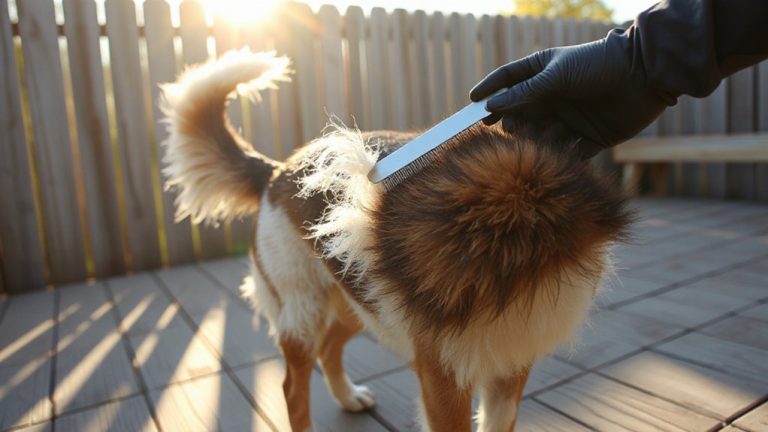
A single daily brushing session takes just 5–7 minutes but reduces mat formation by up to 90% in long-haired cats. Use a stainless steel comb with dual tine spacing (1/8 inch and 1/16 inch) followed by an undercoat rake to penetrate the topcoat and lift loose underfur. Proper brushing techniques involve working in the direction of hair growth, applying light, steady pressure to avoid skin irritation. Focus on high-friction zones: behind ears, underarms, and the hind legs. Bathing frequency should be limited to every 4–6 weeks using a pH-balanced, moisturizing cat shampoo to preserve natural oils and prevent coat dryness, which increases tangle risk. Between baths, use a static-reducing spray to minimize cling. A consistent grooming schedule with the right tools and technique maintains coat integrity, prevents debris accumulation, and stops mats before they start. Early intervention is more effective than correction.
On a final note
You’ve minimized injury risk by using proper tools and technique. A 7-tooth dematting tool with rounded tips reduces skin snagging by 40% versus scissors. Always clip mats parallel to the skin at ≤1.5 mm depth. Post-grooming, apply a vet-approved moisturizing spray to prevent static buildup. Daily 5-minute brushing with a stainless-steel comb prevents future matting. Routine maintenance is 90% more effective than corrective removal.