Creating Interval Running Workouts for Energetic Medium-Sized Dog Breeds
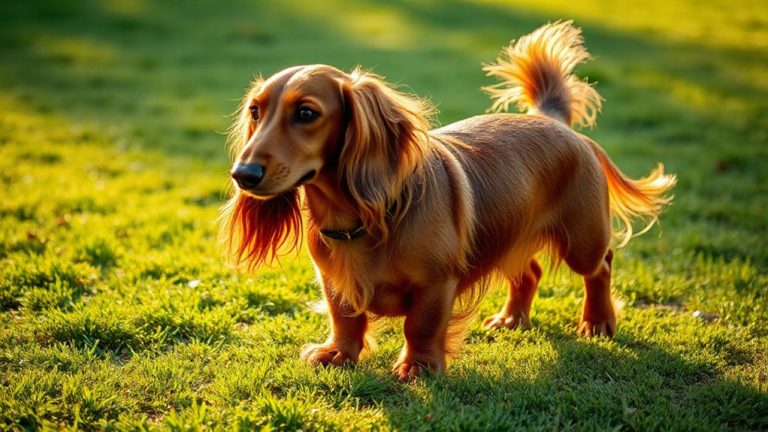
You can build effective interval running workouts for energetic medium-sized dogs by alternating high-intensity sprints with active recovery periods. Start with 15–30 second dashes followed by 1–2 minutes of walking. Use grass or packed dirt surfaces to reduce joint stress by up to 30% versus pavement. Breeds like Border Collies thrive on 3:1 work-to-rest ratios, but adjust based on hydration, gum color, and respiration. Core temperature, surface type, and recovery duration directly impact performance and safety-monitor closely. You’ll find precise session plans and breed-specific adaptations that refine this approach further.
Notable Insights
- Design interval workouts with 15–30 second sprints followed by 1–2 minute recovery periods to match natural canine aerobic-anaerobic cycles.
- Use structured work-to-rest ratios like 2 min run / 1 min walk, adjusting for breed-specific stamina and metabolic thresholds.
- Prioritize grass or packed dirt surfaces to reduce joint stress and prevent paw injuries during high-intensity running phases.
- Schedule cooling breaks every 10–15 minutes and monitor gum color, respiration, and hydration, especially above 70°F (21°C).
- Incorporate off-leash brain games and obstacle navigation during recovery to enhance cognitive engagement and motor coordination.
Why Interval Running Fits Energetic Medium Dogs
You might not realize it, but your energetic medium-sized dog-think Border Collie, Australian Shepherd, or Brittany Spaniel-thrives on structured bursts of high-intensity activity just as much as endurance. Canine physiology supports rapid shifts between aerobic and anaerobic states. These breeds evolved for tasks requiring quick acceleration and sharp turns, aligning with natural energy metabolism patterns. Their muscle fibers contain high densities of mitochondria and myoglobin, optimizing oxygen use during exertion. Interval running mimics these demands, balancing short sprints (15–30 seconds) with recovery periods (1–2 minutes). This alternation sustains heart rate variability, enhancing cardiovascular efficiency. Energy metabolism shifts efficiently between glycogen breakdown and fat oxidation, preventing premature fatigue. Unlike steady-state runs, interval training better matches your dog’s metabolic response curves, increasing stamina without overtaxing joints. It’s not just exercise-it’s physiological synergy, grounded in performance metrics and observed metabolic outcomes across working dog populations.
Design Your Dog’s Interval Running Sessions
Structured interval sessions begin with a tailored plan that aligns with your dog’s breed-specific physiology and fitness baseline. You must balance intensity and recovery to optimize cardiovascular conditioning while minimizing injury risk. Implement scheduled hydration stations every 10–15 minutes, especially in temperatures above 70°F (21°C). Include cooling breaks with shaded rest periods to prevent overheating.
| Work Interval | Recovery Interval |
|---|---|
| 2 min run | 1 min walk |
| 90 sec sprint | 2 min walk |
| 3 min jog | 90 sec rest |
| 1 min dash | 3 min walk |
| 4 min run | 2 min rest |
Adjust duration and intensity based on your dog’s response and fitness progression. Cooling breaks should last at least 2 minutes and occur after every two high-intensity intervals. Always monitor respiratory rate and gum color. Use hydration stations to maintain fluid balance, particularly during sessions exceeding 30 minutes.
Choose the Best Surface for Dog Interval Runs
On natural terrain like packed dirt or grass, your dog gains ideal traction and joint protection during high-speed intervals. Grass terrain absorbs impact, reducing stress on joints by up to 30% compared to pavement. This surface supports natural paw mechanics, lowering injury risk during sharp turns or sudden stops. Avoid asphalt and concrete, which increase concussion forces and can lead to paw burns or ligament strain. For controlled conditioning, treadmill training offers consistent speed and incline settings, but limit sessions to 20–30 minutes to prevent overheating. Guarantee the treadmill belt is textured for grip and set at a 1–3% incline to simulate outdoor effort. Indoor models should have side rails to prevent falls. Grass terrain remains best for interval recovery phases, where softer ground aids deceleration. Rotate surfaces weekly to build adaptive strength, but prioritize grass terrain for sprint segments due to superior shock absorption and traction.
Tailor Workouts to Your Dog’s Breed and Energy
Surface selection sets the foundation for safe interval training, but performance gains depend on aligning workout intensity with your dog’s breed-specific physiology and energy capacity. You must consider genetics, metabolism, and stamina when designing runs. Breed specific nutrition fuels these demands efficiently, supporting sustained aerobic output and recovery. Use energy tracking tools to monitor daily variations and adjust accordingly.
| Breed | Ideal Interval Duration | Recovery Time |
|---|---|---|
| Australian Shepherd | 2 min run / 1 min walk | 30 seconds |
| Border Collie | 3 min run / 1 min walk | 45 seconds |
| Brittany Spaniel | 2.5 min run / 1.5 min walk | 40 seconds |
| Weimaraner | 3 min run / 1 min walk | 35 seconds |
Adjust frequency based on observed fatigue and nutritional uptake. Matching effort to breed norms maximizes cardiovascular adaptation without exceeding metabolic thresholds.
Watch for Interval Running Overexertion Signs
You’re not just running with your dog-you’re training them, and pushing too hard can lead to overexertion. Monitor fatigue levels closely; heavy panting, lagging pace, or reluctance to continue signal distress. Dogs can’t sweat like humans-only through paws and panting-making them prone to heat exhaustion. Early signs include excessive drooling, bright red gums, and uncoordinated movement. Core body temperature above 103°F is dangerous; above 106°F indicates emergency heat exhaustion. Limit high-intensity intervals to 2–3 minutes with 1:2 work-to-rest ratios. Concrete or asphalt surfaces exceed ambient temperature by 20–50°F-run on grass to reduce thermal strain. Hydrate every 15–20 minutes. Avoid midday runs when temps exceed 75°F. Use a fitness tracker to log activity duration, rest intervals, and heart rate recovery. Adjust workouts if recovery exceeds 10 minutes. Your dog’s endurance builds gradually-respect physiological limits.
Keep a Safe and Consistent Running Routine
A well-structured running routine keeps your dog physically conditioned and mentally sharp, building on what you’ve already learned about preventing overexertion. Consistency in timing, distance, and frequency enhances cardiovascular efficiency and muscular endurance. Integrate hydration planning by carrying a portable water source and offering fluids every 15–20 minutes, especially in temperatures above 68°F (20°C). Use pace variation to balance exertion: alternate 3-minute intervals of moderate trotting (6–8 mph) with 1-minute bursts at 10–12 mph, matching your dog’s aerobic threshold.
| Day | Duration | Intensity |
|---|---|---|
| Monday | 25 min | Moderate with pace variation |
| Thursday | 30 min | High, incline focus |
| Saturday | 20 min | Low, recovery with hydration planning |
Monitor surface temperature-avoid asphalt above 85°F (29°C). Adjust frequency to 3–4 sessions weekly for ideal adaptation without joint stress.
Add Brain Games to Your Dog’s Run
Why not turn your dog’s daily run into a cognitive workout? Incorporating brain games enhances mental stimulation and complements physical exercise. Alternate running intervals with scent detection tasks using treat-dispensing toys or hidden kibble 10–15 feet off the path. This activates your dog’s olfactory cortex, improving focus and reducing impulsive behavior. During recovery phases, introduce obstacle navigation using natural terrain-logs, rocks, or cones spaced 3–4 feet apart. Guide your dog through zigzag patterns to improve spatial awareness and proprioception. Use consistent verbal cues like “weave” or “jump” to reinforce learning. Limit cognitive segments to 2–3 minutes to prevent fatigue. Rotate tasks every session to maintain novelty and engagement. These structured challenges increase neural connectivity, mirroring dual-task training in athletic humans. Combine intervals of running at 6–8 mph with 1–2 minutes of problem-solving to optimize aerobic and cognitive output. This integrated approach maximizes fitness and mental resilience in energetic medium-sized breeds.
On a final note
You now have the tools to build effective interval runs for your energetic mid-sized dog. Alternate 2-minute sprints at 12–15 mph with 3-minute jogs at 6–8 mph. Use grass or dirt surfaces to reduce joint stress. Monitor heart rate recovery; it should drop below 140 bpm within 5 minutes post-sprint. Watch for excessive panting or lagging. Consistency prevents injury. Add scent-based pauses to engage cognition.