How to Gradually Decrease Portion Sizes Without Causing Stress in Food-Obsessed Pets
You can safely reduce your pet’s portions by 10% every 7–10 days without triggering stress. Start with a vet-approved plan based on their weight, age, and activity level to guarantee nutritional adequacy. Use slow feeders-rubber bowls with 1.5-inch baffles can cut eating speed by up to 70%. Add ½ to 1 tablespoon of pure pumpkin per 10 lbs or ¼ cup sodium-free broth per ½ cup food to increase volume and satiety. Feed at consistent times daily, using two measured meals. Replace treats with interactive play. Further refinements in feeding strategy follow.
Notable Insights
- Transition to high-protein diets meeting 18% (dogs) or 22% (cats) minimum to reduce hunger-driven anxiety.
- Use slow feeders with adjustable barriers to extend mealtime and enhance satiety with smaller portions.
- Add low-calorie fillers like pure pumpkin or sodium-free broth to increase meal volume without extra calories.
- Reduce portions gradually by 10% every 7–10 days while maintaining consistent feeding times twice daily.
- Replace food rewards with interactive play sessions to reinforce bonds without reinforcing food obsession.
Why Is My Pet so Obsessed With Food?
Why does your pet act like every meal might be their last? Your pet’s food obsession often stems from food anxiety, a behavioral response linked to unpredictable feeding schedules or past food scarcity. This anxiety triggers rapid eating, begging, or aggression around meals. A diet imbalance can worsen the issue-insufficient protein, fiber, or essential nutrients leaves your pet physiologically unsatisfied, increasing hunger signals. Studies show diets below 18% protein for dogs or 22% for cats fail to meet metabolic demands, promoting hyperphagia. Meal frequency also matters: once-daily feeding in dogs increases cortisol levels by up to 30% compared to twice-daily schedules. These physiological and behavioral factors simulate survival-mode eating. Addressing nutrient profile accuracy and caloric distribution reduces obsessive behaviors. Correcting underlying dietary shortcomings stabilizes energy and satiety, laying the foundation for portion control without distress.
Get a Vet-Approved Feeding Plan First
A feeding plan tailored to your pet’s specific needs starts with a veterinary consultation. During this vet consultation, your pet’s age, breed, weight, activity level, and health status are assessed to determine caloric requirements. Accurate portion control is essential to prevent underfeeding or overfeeding, both of which can lead to health complications. The vet provides a target daily caloric intake, often measured in kilocalories (kcal), based on metabolic rate and ideal body condition. For example, a 20 lb (9.1 kg) indoor cat typically needs 200–250 kcal/day. Portion control strategies are customized, including meal frequency and food type. Using manufacturer feeding guidelines without vet input risks inaccuracies. A vet-approved feeding plan guarantees nutritional balance and safe weight management. This foundational step supports long-term success in adjusting food intake without guesswork or stress to your pet.
Use Slow Feeders to Make Meals Last
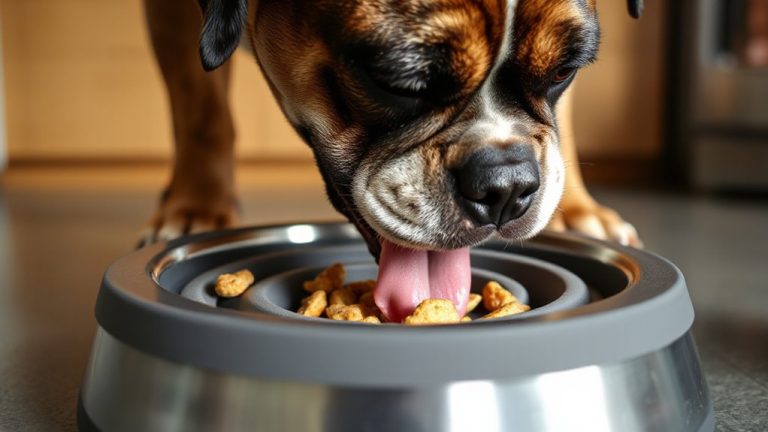
While your pet eats, a slow feeder works by prolonging mealtime through controlled access to food. Slow feeding reduces consumption speed, which supports better digestion and decreases begging behaviors. These feeders typically feature raised baffles, mazes, or compartments that require deliberate movement to uncover kibble. Models vary in complexity-some have adjustable barriers, allowing you to regulate difficulty. For dogs, rubber-based interactive bowls with 1.5-inch barriers slow intake by up to 70%. Cats benefit from ceramic plate feeders with 0.75-inch ridges spaced 2 inches apart, designed for precise paw manipulation. Slow feeding enhances portion control by creating mealtime engagement without increasing food volume. Studies show pets using these devices feel satiated longer, even with reduced calories. Choose a model suited to your pet’s size and eating habits. Always supervise initial use to guarantee appropriate interaction. Replace worn units every 12 months for peak performance.
Add Low-Calorie Fillers to Stretch Meals
You’ve already extended meal duration with slow feed游戏副本, but now you can further manage intake by adjusting the meal’s composition. Add low-calorie fill capitalists like pure pumpkin purée-½ to 1 tablespoon per 10 lbs of body weight-to increase volume without excess calories. The pumpkin benefits include enhanced fiber content, promoting satiety and supporting digestive regulation. Verify the product is 100% canned pumpkin, not pie filling. Broth blending with sodium-free chicken or beef broth adds moisture and palatability. Use ¼ cup broth per ½ cup food to improve texture and hydration, mimicking richer meals. This dilution strategy reduces caloric density by up to 20% while maintaining meal satisfaction. Introduce fillers gradually over 7–10 days to avoid GI upset. Monitor weight weekly. These adjustments require no special equipment and integrate seamlessly into existing feeding routines, offering a practical, evidence-based method to reduce energy intake without increasing begging or stress.
Feed on a Consistent Schedule
When pets eat at irregular times, their metabolism and hunger cues become disrupted, making weight management more difficult. You should establish fixed feeding times to regulate digestive rhythms and energy expenditure. Consistent meal frequency-typically two measured meals per day for adult dogs and cats-supports predictable insulin release and reduces begging. Irregular feeding times can trigger hyperphagia, where pets overeat when food is available. Fixed schedules align with circadian biology, improving nutrient partitioning. For weight loss, maintain this routine while gradually reducing portion size by 10% every 7–10 days. Use a kitchen scale to measure food within 5-gram accuracy. Electronic timers can standardize feeding times daily. Avoid free-feeding, which increases meal frequency unpredictably and correlates with a 15–25% higher caloric intake. Consistency reduces stress-related behaviors and enhances compliance with long-term dietary plans.
Reward With Play, Not Treats
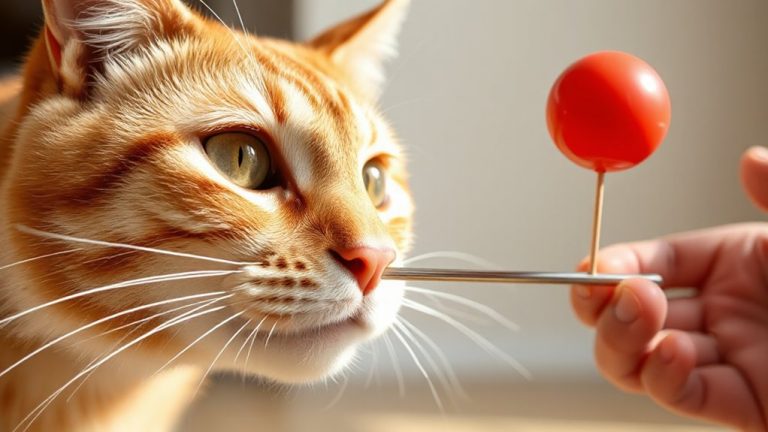
Why reward your pet with food when play can provide equal satisfaction without the extra calories? Replace treats with interactive play to support healthy portion reduction. Dedicated daily play sessions lasting 15–20 minutes fulfill your pet’s need for attention and reinforcement. Toys like puzzle feeders and laser pointers deliver essential mental stimulation, activating natural hunting behaviors and reducing food-focused anxiety. These activities slow cognitive decline and improve behavioral regulation. Use timed intervals-3-minute bursts of fetch or tug-with 30-second breaks to maintain intensity without overexertion. This structured play enhances bonding time, reinforcing trust and communication through consistent interaction. Unlike caloric rewards, play contributes zero additional energy intake, aligning with portion-controlled diets. Monitor heart rate: target 120–160 bpm in dogs, 220–240 bpm in cats during peak activity. Replace 2–3 treat-based rewards daily with play to reduce intake by up to 100 kcal weekly, supporting long-term weight management.
On a final note
You can reduce your pet’s portion sizes without stress. Start with a vet-approved plan to guarantee nutritional needs are met. Use slow feeders-stainless steel or food-grade plastic models with maze-like baffles-to extend mealtime by 60–70%. Add low-calorie fillers like canned pumpkin (1–2 tbsp daily for cats, 2–4 tbsp for dogs). Maintain a fixed feeding schedule. Replace treat rewards with interactive play using measured-duration sessions (10–15 minutes).