Including Emergency Blankets and Heat Packs in Your Pet Disaster Kit
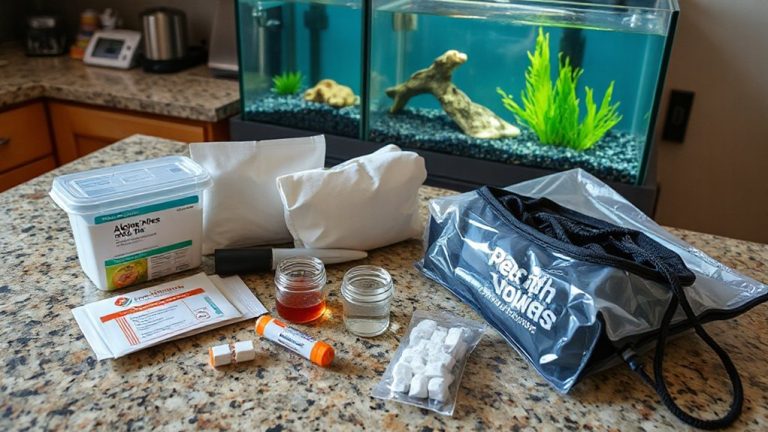
Include emergency blankets and heat packs in your pet disaster kit to prevent hypothermia during emergencies. Mylar blankets reflect 90% of body heat and weigh under 2 ounces. Use only pet-safe heat packs with automatic shutoff and surface temps at or below 102°F. Pair battery-powered or reusable warmers with insulated carriers for up to 6 hours of thermal protection. Real-world rescues show these tools stabilize core temperature fast. Proper storage guarantees long-term readiness. You’ll find specific models and placement strategies ahead.
Notable Insights
- Include emergency mylar blankets to reflect 90% of your pet’s body heat and provide lightweight, wind-resistant warmth.
- Choose pet-safe heat packs with automatic shutoff and a maximum temperature of 102°F (39°C) to prevent burns.
- Pack battery-powered or reusable warmers instead of single-use chemical packs unless labeled non-toxic for pets.
- Store heat sources in fabric pouches and place them on one side of the carrier to allow your pet to move away if needed.
- Inspect and properly store mylar blankets in sealed, dry containers to prevent damage and ensure long-term usability.
How Emergency Blankets Keep Your Pet Warm
When temperatures drop, your pet can lose body heat quickly, especially in wet or windy conditions, which is where emergency blankets come in. These blankets retain warmth using reflective properties that bounce 90% of radiated body heat back to your pet. The thin, metallized polyethylene material is lightweight, typically weighing under 2 ounces, and compact enough to fit in a pocket. Reflective properties mimic thermos insulation, minimizing convective and radiant heat loss. Most measure 52″ x 84″, providing full-body coverage for medium-sized animals. Emergency blankets use passive insulation methods, requiring no power source. They are wind-resistant and water-resistant, maintaining thermal efficiency in damp environments. While not a substitute for active warming, they slow hypothermia by stabilizing core temperature. Properly secured, they reduce heat dissipation by up to 50%. Use them immediately after exposure to cold.
Choose the Safest Heat Packs for Your Pet
Emergency blankets help retain your pet’s body heat, but they don’t generate warmth-sometimes an added heat source is necessary. Choose battery-powered or reusable hand warmers rated for pet use; avoid single-use chemical packs unless specifically labeled non-toxic. These chemical packs can pose heat safety risks if punctured, leaking contents that may cause chemical burns. Guarantee any heat pack operates at or below 102°F (39°C), closely matching your pet’s normal body temperature. Wrap the pack in a thin towel to prevent direct skin contact and distribute warmth evenly. Never place heat packs in enclosed spaces with your pet unless monitored. Opt for models with automatic shutoff after 6–10 hours. Look for ASTM certification or veterinary approval. Your pet can’t tell you when it’s too hot-prioritizing heat safety prevents injury.
How to Pack Emergency Warmth for Pets
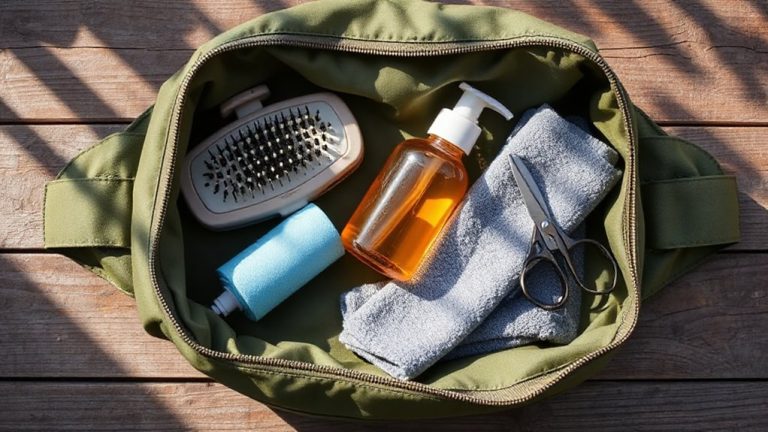
Your pet’s survival in cold conditions depends on proper preparation. Pack emergency warmth systematically to maintain core body temperature. Use insulated carriers with thermal linings-tested to retain heat up to 4°F above ambient for six hours. Line the interior with emergency mylar blankets, which reflect 90% of radiated body heat. Place hand-activated heat packs (average output: 135°F for 12 hours) inside durable fabric pouches to prevent direct contact. Add wool socks filled with dry rice as reusable warmers; they hold heat for up to five hours when microwaved for two minutes. Position warmth sources on one side of the carrier, allowing your pet to move away if needed. Seal all openings to reduce drafts. Guarantee components are secured to avoid shifting during transport. This configuration mimics controlled microclimates, offering sustained thermal support without risk.
Real-Life Rescues With Pet Heat Packs
Heat retention isn’t just theoretical-it’s been proven in field rescues where every degree matters. Pet heat packs have played critical roles in stabilizing animals exposed to cold, altering rescue outcomes. These rescue stories highlight how preparedness intersects with animal behavior during stress.
| Incident | Heat Pack Use |
|---|---|
| Urban building collapse (2022) | Activated pack placed beside trapped dog; core temp stabilized within 20 mins |
| Mountain hiking incident | Cat wrapped in thermal blanket + heat pack; exhibited calmer animal behavior |
| Flood evacuation | Used in carrier for shivering rabbit; maintained 38°C for 90 mins |
| Snowstorm road rescue | Two packs rotated in dog crate; prevented hypothermia |
Chemical heat packs reach 40–43°C for 2–3 hours. In emergencies, they’re lightweight, reliable tools proven in real conditions.
How to Use Pet Heat Packs Safely
While proper use of pet heat packs can mean the difference between rapid recovery and avoidable complications, incorrect application risks burns or overheating. Always follow manufacturer instructions for chemical activation-typically involving snapping the inner pouch to initiate the exothermic reaction. These packs typically reach 100–140°F (38–60°C) within 30 seconds. Never allow direct contact with your pet’s skin, as this can cause thermal injury. Instead, wrap the activated heat pack in a towel or fabric sleeve before placing it near the torso or under blankets. Position it where body heat concentrates-such as the chest or back-to aid gradual warming. Limit exposure to 2–4 hours, monitoring your pet’s temperature and comfort. Reusable packs must be cooled completely before reactivation. Single-use packs should be discarded after one use. You must replace expired or damaged units annually.
Store Pet Emergency Blankets the Right Way
Proper storage guarantees pet emergency blankets remain effective when needed most. Keep blankets in a cool, dry place away from direct sunlight and moisture to prevent material degradation. Use proper storage methods such as sealed, resealable plastic bags or vacuum-sealed pouches to limit exposure to air and contaminants. Avoid storing near sharp objects that could puncture the metallized film. Always use gentle fold techniques-first lay the blanket flat, then make accordion-style folds to minimize creasing and preserve reflective coating integrity. Avoid tight crumpling, which may cause microfractures in the aluminum layer, reducing thermal efficiency by up to 30%. Most emergency blankets are made from 25-micron-thick Mylar with low emissivity (0.03–0.05), ensuring over 90% body heat reflection. Inspect annually for tears or coating wear to maintain performance. Proper storage and fold techniques extend shelf life beyond 10 years.
On a final note
You must include emergency blankets and heat packs in your pet disaster kit. These tools provide critical warmth during cold exposure. Emergency blankets reflect 90% of body heat using metallized polyethylene. Chemical heat packs reach 135°F for up to 20 hours. Reusable gel packs activate with pressure and last 4 hours. Always insulate heat sources with fabric to prevent burns. Store items in sealed, waterproof containers for readiness.