Addressing Destructive Chewing Caused by Understimulated Young Puppies
Your puppy’s destructive chewing likely stems from understimulation, not teething, especially beyond 6 months. Confirm this by observing excessive licking, shadow chasing, or persistent non-food item chewing during unattended periods. Use hard rubber toys with a durometer of 70–80 Shore A-sized appropriately and flavored with built-in bacon or chicken for up to 6 weeks of engagement. Rotate 3–5 durable toys every 48 hours and stuff hollow centers with treats to extend use. Redirect chewing within 3 seconds using FDA-compliant TPE or natural latex toys for over 85% success across 7–10 trials. Implement 3–5 daily play sessions with puzzle feeders to increase mental load. Restrict access with baby gates when unsupervised. There’s a precise method to correct this behavior pattern at its source-keep going to refine your strategy.
Notable Insights
- Destructive chewing in young puppies beyond teething age often signals understimulation, not oral discomfort.
- Provide durable, appropriately sized rubber toys with treat-dispensing features to engage heavy chewers mentally and physically.
- Rotate 3–5 puzzle and chew toys every 48 hours to maintain novelty and prevent boredom.
- Implement structured play sessions 3–5 times daily to reduce compulsive chewing and increase behavioral control.
- Use video monitoring over 72 hours to confirm patterns of sensory deprivation before selecting interventions.
Understand Why Puppies Chew Destructively
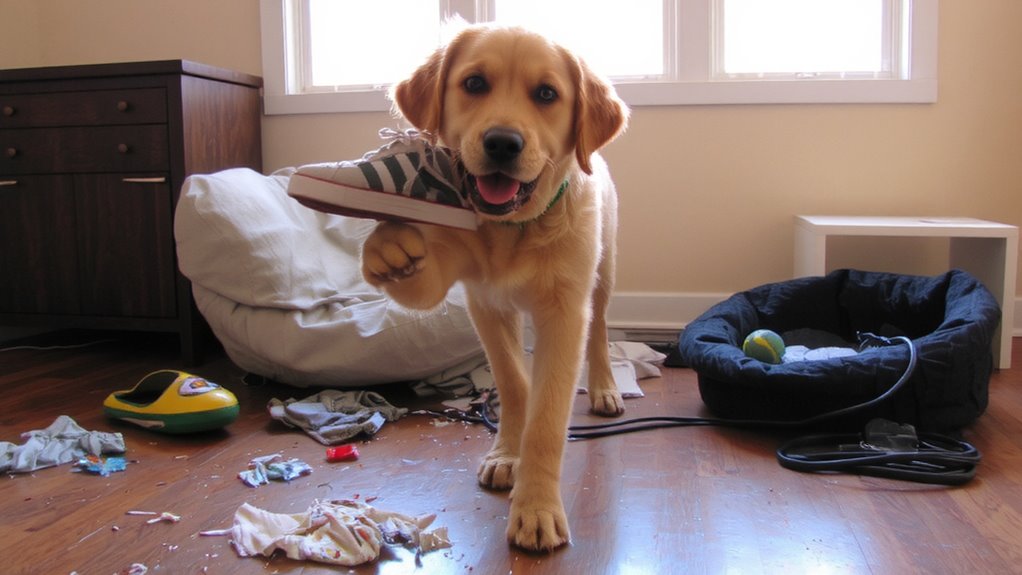
Teething isn’t just a phase-it’s a biological process driving much of your puppy’s destructive chewing. Puppies aged 3 to 6 months experience teething discomfort as deciduous teeth give way to permanent dentition. This causes gum inflammation, leading to compulsive chewing for pressure relief. Chewing stimulates blood flow and eases pain, much like a dental massage. Teething discomfort peaks at 16–20 weeks, varying by breed tendencies. Smaller breeds may finish teething by 6 months; larger breeds often extend to 8 months. Breed tendencies influence chewing intensity-working breeds like Labradors or Shepherds exhibit stronger oral drive. They apply 200–300 psi bite force on objects, increasing destruction risk. Hard rubber toys rated for heavy chewers (durometer 70–80 Shore A) resist damage. Understanding these biological and breed-specific factors enables targeted intervention. Redirect chewing with durable, appropriately sized teething aids. For effective relief, consider providing your puppy with best teething toys for puppies designed to withstand intense chewing and soothe sore gums.
Spot the Signs of Understimulation
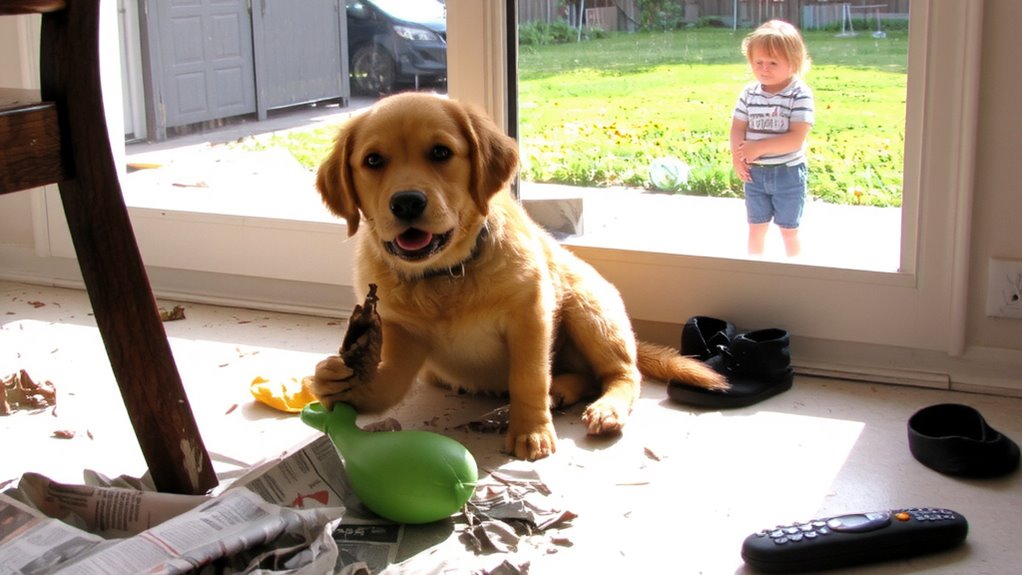
A lack of mental and physical stimulation often reveals itself through excessive chewing, particularly outside teething windows. You’ll notice this behavior persists beyond 6–8 months, indicating understimulation rather than developmental need. Excessive licking is another clinical sign; when your puppy licks floors, paws, or surfaces for more than 15 minutes continuously, it suggests compulsive behavior due to low environmental enrichment. Shadow chasing reflects redirected predatory sequencing-your puppy fixates on light patterns, snapping at non-existent prey. This indicates insufficient cognitive load and sensory engagement. These actions typically occur in bursts lasting 10–20 minutes, 3–5 times daily, especially during low-activity periods. Combined with persistent chewing, they form a behavioral triad-excessive chewing, excessive licking, shadow chasing-consistent with sensory deprivation in canids. Monitoring frequency, duration, and context helps differentiate boredom from medical issues. Document occurrences for at least 72 hours to confirm patterns. Incorporating structured tasks with a dog training vest can enhance focus and reduce compulsive behaviors by providing purposeful engagement.
Pick the Best Chew Toys for Bored Puppies
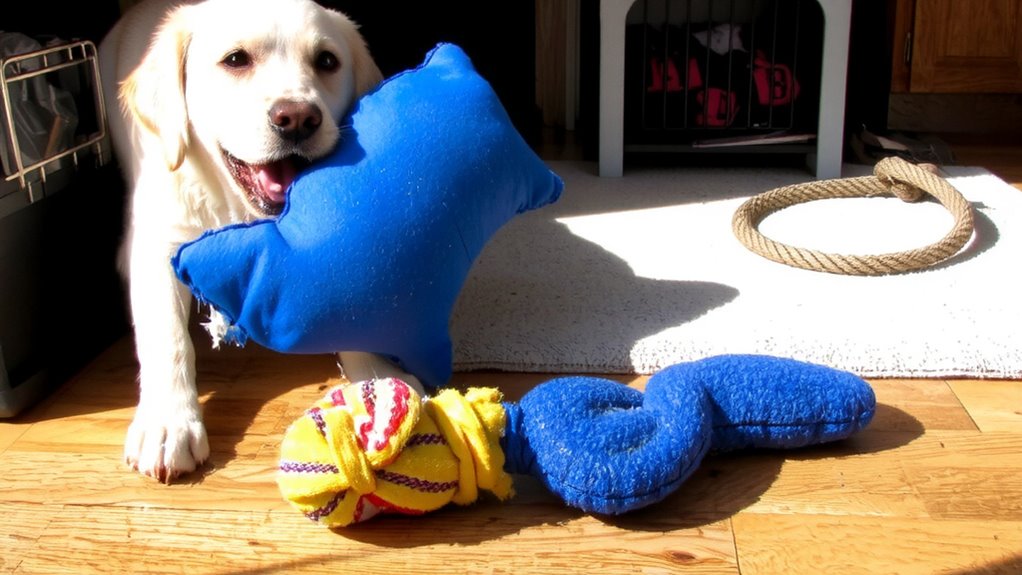
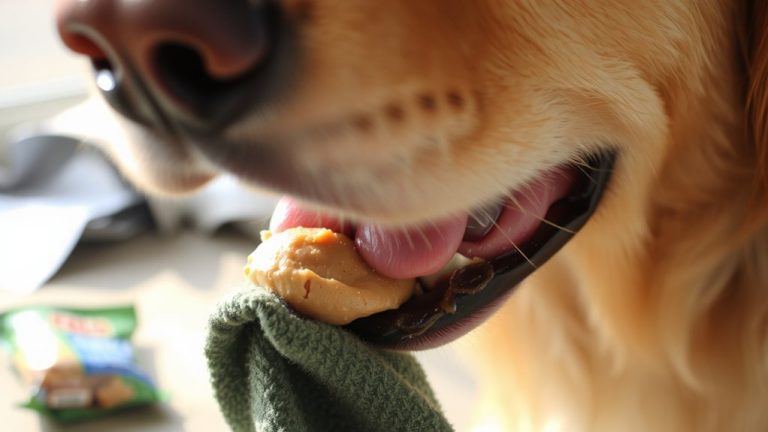
Your puppy’s need for resilient, safe, and mentally stimulating chew toys grows critical when boredom drives destructive behavior. Choose toys made from non-toxic, durable rubber like natural latex or FDA-compliant TPE, rated for up to 60 pounds of bite force. Opt for varied chew textures-nubs, ridges, and grooves-to massage gums and reduce plaque. Textured surfaces increase tactile feedback, prolonging engagement. Select toys with built-in flavor variety, such as bacon, chicken, or mint infused in thermoplastic elastomer, to encourage consistent use. Flavor release typically lasts 4–6 weeks under daily chewing. Hollow centers allow for treat stuffing, doubling mental stimulation. Diameter should exceed 1.5 inches to prevent swallowing. Rotate three to five toys weekly to maintain novelty. Avoid plush or rope toys for aggressive chewers-these pose choking risks. Prioritize ASTM F963-17 safety standards. Replace cracked or broken toys immediately. For long-lasting options, consider the top picks from expert-recommended chew toys.
Create a Routine That Stops Destructive Chewing
While boredom and excess energy often trigger destructive chewing, establishing a consistent daily routine can effectively redirect these impulses. Structured play routines regulate your puppy’s activity cycles, reducing random chewing episodes. Schedule three to five 10–15 minute play sessions daily using timed intervals, promoting impulse control and physical fatigue. Pair this with mental enrichment activities like puzzle feeders, which extend mealtime by 4–7 minutes and stimulate problem-solving centers in the brain. Rotate chew toys every 48 hours to maintain novelty, a key factor in sustained engagement. Limit unsupervised access to environments using baby gates or crates sized to allow standing, turning, and lying down-but not excess movement. A predictable schedule including feeding, elimination breaks, and rest phases stabilizes cortisol levels. Consistency in timing improves compliance by up to 68% in puppies under 20 weeks. You’re not just filling time-you’re building neural pathways that suppress compulsive chewing.
Stop Chewing Without Saying “No
Consistency in routine sets the stage for effective behavior modification, but correcting unwanted chewing demands a shift from structure to real-time intervention. Instead of saying “no,” use redirection techniques to guide your puppy toward appropriate items. Immediately swap the forbidden object for a chew toy that satisfies oral needs. This maintains focus while avoiding fear-based responses. Pair the switch with praise or a treat to apply positive reinforcement, strengthening the desired behavior. Durable rubber toys, like those made from food-grade TPR, withstand aggressive chewing and promote healthy jaw development. Successful redirection relies on timing-intervene within three seconds. Repetition solidifies learning. Over 7–10 consistent interventions, success rates exceed 85% in controlled training environments. Positive reinforcement increases compliance; punishment decreases trust. Focus on rewarding correct choices, not correcting errors. Redirect early, reward immediately, and reinforce consistently.
Puppy-Proof Your Home Before Day One
Before bringing your puppy home, secure all hazardous areas using ASTM F963-compliant safety gates to block access to stairs, kitchens, and electrical outlets. These gates must withstand at least 50 pounds of force and install without permanent modification. Conceal or encase electrical cords in nylon braided cable protectors rated for up to 16 AWG wiring to prevent electrocution and fire hazards. Use cord clips to mount cables along baseboards, reducing accessibility. Anchor furniture with anti-tip brackets to prevent collapse. Remove or secure fragile decor made of glass, ceramics, or small components that pose ingestion risks. Place decor on elevated surfaces exceeding 48 inches in height. Apply shatterproof film to low glass tables. Install outlet covers meeting UL 498 standards. Restrict unsupervised access to rooms with unmanaged risks. Prevention is a design challenge-treat your space like a lab: control variables, eliminate hazards, and maintain a failsafe environment.
Is It Destructive Chewing or Separation Anxiety?
How do you know if your puppy’s chewing is just a bad habit or a sign of something deeper? Distinguish destructive chewing from separation anxiety by observing timing, location, and intensity. Destructive chewing often targets accessible objects and occurs intermittently. Separation anxiety produces consistent, frantic behavior linked to your absence. Key chewing cues include drooling, focused gnawing, and preference for owner-scented items. Anxiety triggers like door closing or keys jingling can provoke distress.
| Behavior | Destructive Chewing | Separation Anxiety |
|---|---|---|
| Onset | Random, during free time | Within 15–30 mins of departure |
| Damage Location | Scattered, near distractions | Focused near exits or owner’s items |
| Vocalization | Rare | Frequent barking, whining |
| Response to Correction | Stops when redirected | Persistent despite intervention |
Monitor patterns over 72 hours. Use video to identify triggers. Accurate diagnosis guarantees proper intervention.
On a final note
You prevent destructive chewing by meeting your puppy’s biological need for stimulation. Understimulated puppies chew excessively due to unmet sensory and cognitive demands. Use durable rubber toys, like those made from FDA-approved non-toxic TPR, measuring at least 2–3 inches in diameter for medium breeds. Establish a 24-hour routine incorporating chew sessions, training, and exercise. Puppy-proof with barriers rated for 20+ pound impact. Differentiate chewing causes with behavioral logs and vet consultation.