Cognitive Decline in Senior Exotic Pets: Symptoms to Watch For
You might notice your senior exotic pet showing memory lapses, like forgetting feeding times or rechecking nesting spots. Birds may misjudge distances or vocalize inappropriately. Rabbits can circle or freeze for up to two minutes. Reptiles hesitate at familiar climbs. Reaction times slow by up to 40%. Exploratory behavior drops. These changes reflect neural decline. Monitoring weight, routine, and environment helps detect issues early-there’s more to contemplate in managing long-term brain health.
Notable Insights
- Memory lapses in senior exotic pets may include repeating actions, forgetting feeding times, or not recognizing familiar people or cues.
- Behavioral changes like reduced interaction, inappropriate vocalization, and nighttime activity can signal cognitive decline.
- Birds may show navigational errors, while rabbits may circle or freeze, and reptiles may hesitate near familiar shelters.
- Slowed reaction times, decreased exploration, and delayed responses to stimuli indicate declining sensory and motor-cognitive coordination.
- Disrupted sleep-wake cycles, appetite fluctuations, and reduced grooming reflect circadian or cognitive dysfunction in aging exotic pets.
What Cognitive Decline Looks Like in Senior Exotic Pets
While you may notice subtle changes first, cognitive decline in senior exotic pets often becomes apparent through disruptions in normal behaviors and routines. Memory lapses manifest as repeated actions, like forgetting food was just offered or rechecking nesting spots. These lapses correlate with hippocampal degeneration common in aging animals. Behavioral shifts include reduced interaction, nighttime activity, or inappropriate vocalization. Such changes often follow circadian dysregulation. For instance, ferrets may sleep 18 hours instead of 14, while older reptiles show delayed response to stimuli-reaction times increase by up to 40%. These signs occur even with ideal diet and temperature gradients. Unlike acute illness, decline progresses gradually over months. Diagnostic exclusion of metabolic causes-renal, hepatic-is essential via bloodwork and imaging. Early documentation using a daily behavior log improves accuracy. You’ll need to track duration, frequency, and context. Cognitive decline isn’t reversible, but its impact can be mitigated through environmental enrichment and routine consistency. Supportive nutrition, including best cognitive supplements, can also play a key role in managing symptoms.
Signs Your Older Bird Is Losing Mental Sharpness
Your older bird may show early signs of cognitive decline through noticeable lapses in routine behaviors and learned responses. Memory lapses are common, such as forgetting trained commands or failing to recognize familiar people. These gaps indicate reduced neural processing in the hippocampus, similar to patterns seen in aging mammals. Navigational errors occur when your bird misjudges distances, crashes into objects, or struggles to locate the food dish in a familiar cage layout. These errors reflect deteriorating spatial cognition and diminished depth perception. Vocalizations may become repetitive or contextually inappropriate, signaling disrupted neural pathways. Sleep cycles often shift due to changes in circadian regulation. Appetite fluctuations and reduced grooming point to declining self-awareness. While not curable, early detection allows management through environmental enrichment, consistent routines, and veterinary evaluation. Monitoring these signs helps differentiate normal aging from pathological decline, ensuring timely interventions that support cognitive health and overall well-being. Choosing the right pet bird species can influence the ease of monitoring and managing age-related changes.
Is Your Rabbit Confused? Brain Changes to Watch For
Could something be affecting your rabbit’s mental clarity as it ages? Senior rabbits often experience memory lapses, forgetting familiar feeding times or litter box locations. These cognitive deficits may signal underlying neural deterioration. Disorientation episodes are another red flag-your rabbit might circle aimlessly, tilt its head, or freeze in place unexpectedly. Such behaviors typically last 30 seconds to 2 minutes and occur sporadically, increasing in frequency over months. Neurological changes, including reduced hippocampal volume and cerebral blood flow, mirror early-stage dementia in mammals. Environmental enrichment and consistent routines help compensate. Monitor behavior daily; note episode duration, triggers, and recovery. Blood work and imaging can rule out infections or tumors. While no approved pharmaceuticals exist specifically for lagomorph cognitive decline, veterinarians may recommend antioxidants like vitamin E (200 IU/kg diet) to support neural health. Early detection improves management outcomes.
Reptile Red Flags: Early Signs of Cognitive Decline
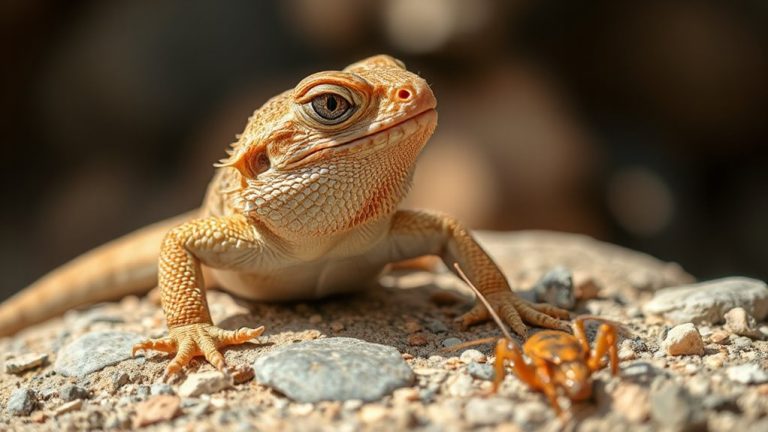
How do you know when a reptile’s behavior signals something deeper is amiss? Subtle changes like memory lapses and navigation errors often indicate early cognitive decline. You might notice your reptile failing to recognize feeding times or habitual cues it once responded to reliably. These memory lapses disrupt routine behaviors. Navigation errors become evident when your pet hesitates near familiar shelters or misjudges climbing paths, increasing fall risk. Normal exploratory patterns diminish by up to 40% in affected individuals, per observational studies. Such inconsistencies aren’t typical aging-they’re neurological red flags. Thermoregulatory behaviors may also degrade; your reptile could remain in suboptimal thermal zones despite correct enclosure gradients. Sensory processing slows, delaying responses to stimuli. Early recognition allows timely intervention. Monitor daily routines closely. Document deviations in activity cycles, food consumption, or spatial orientation. Persistent anomalies demand veterinary evaluation.
How Vets Diagnose Cognitive Issues in Senior Exotics
A thorough veterinary assessment begins the diagnostic journey for cognitive decline in senior exotic pets. Your vet starts with a detailed history, focusing on changes in daily routines and social interactions. Behavioral observation is critical-vets document disorientation, altered sleep cycles, or reduced responsiveness. These signs help differentiate cognitive issues from other illnesses. Neurological testing follows, evaluating reflexes, coordination, and cranial nerve function. Abnormal gait patterns or delayed righting reflexes may indicate central nervous system involvement. Blood panels rule out metabolic causes like liver or kidney disease. Advanced imaging, such as MRI, is used when available, though less common in exotics. Species-specific baselines are essential, as normal behavior varies widely. Diagnosis relies on exclusion, combining clinical signs with test results. You’ll need patience and detailed notes to support accurate evaluation. Regular checkups improve early detection and management.
Habitat Tips for Confused Senior Pets
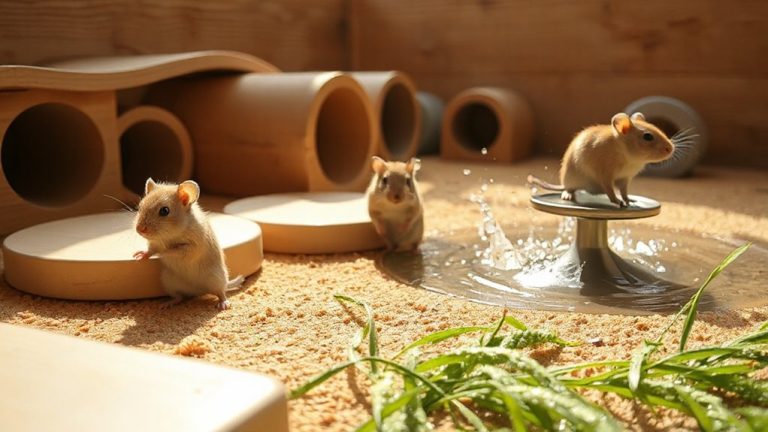
Why do familiar surroundings suddenly confuse an aging exotic pet? Cognitive decline disrupts neural processing, making once-routine environments seem foreign. You must simplify the habitat to reduce disorientation. Maintain consistent sensory cues-use identical bedding textures, stable lighting cycles (12 hours light, 12 dark), and unwavering cage layouts. Avoid rearranging perches, food bowls, or hides. Introduce tactile markers near key areas; for instance, a rough fabric strip beside the nest box aids recognition. Enrichment routines should be predictable, not novel. Conduct short, daily sessions at the same time using familiar objects-rotate no more than three items weekly. Use auditory cues like a soft chime before interaction to signal activity. Guarantee noise levels remain below 60 decibels. These controlled conditions support spatial memory, reduce anxiety, and reinforce environmental cohesion without overstimulation. Stability enhances cognitive function.
Diet and Daily Care to Support Aging Exotic Brains
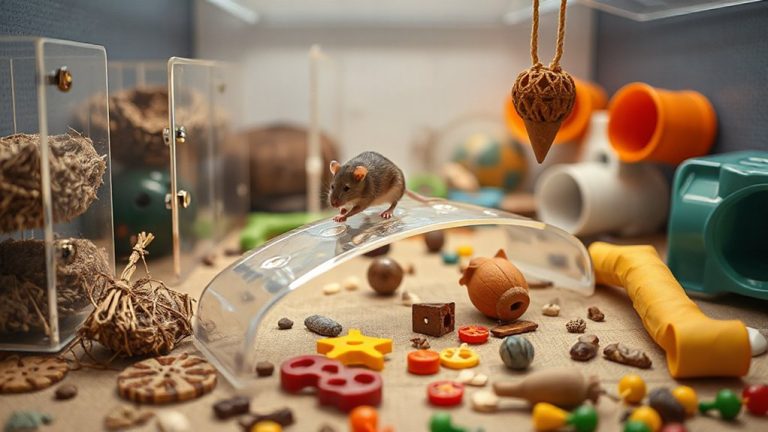
Stable routines and simplified habitats lay the foundation for managing cognitive decline, but nutritional and daily care strategies directly influence brain health in aging exotic pets. Nutrition optimization is critical: provide diets rich in antioxidants, omega-3 fatty acids, and bioavailable vitamins. For example, senior birds benefit from pellets containing 8–10% fat and supplemented with vitamin E (150 IU/kg) and selenium (0.2 mg/kg). Reduce sugar intake in reptiles to prevent metabolic stress. Daily mental stimulation slows neurodegeneration. Offer foraging toys, rotated weekly to maintain novelty. For aging ferrets, introduce simple puzzle feeders requiring motor-cognitive coordination. Maintain consistent feeding times and lighting cycles (12-hour photoperiods) to support circadian regulation. Hydration must be monitored; use shallow, tip-resistant bowls filled with fresh water twice daily. Weigh your pet weekly-any loss exceeding 10% warrants veterinary assessment. These targeted interventions support neural function and improve longevity.
On a final note
You must monitor aging exotic pets closely for cognitive changes. Subtle shifts in behavior signal underlying neurological decline. Birds display altered vocalizations or sleep cycles. Rabbits show disorientation or reduced litter box accuracy. Reptiles exhibit poor response to stimuli or irregular basking patterns. Diagnosis requires veterinary assessment, including physical exams and rule-outs for infections or tumors. Environmental stability, consistent routines, optimized nutrition with antioxidants, and easy-access habitats support brain health. Early intervention improves quality of life.