Neonatal Care Essentials for Newborn Birds: Key Facts Every Bird Owner Should Know
Keep newborn birds warm at 95–97°F (35–36°C) with 50–60% humidity for the first week. Use an under-tank heating pad on low, covering one-third of the enclosure floor. Altricial chicks need feeding every 15–20 minutes from dawn to dusk. Formula must be 104–106°F to avoid crop damage. Stimulate the cloaca with a warm, moist swab after each feeding to aid defecation. Weigh daily; a drop over 5% in 24 hours signals danger. Healthy growth means gaining 10–15% of body weight per day. Watch for open-mouth breathing or tail bobbing-these suggest respiratory distress. Crop temperature should stay between 102–105°F. Slow crop emptying may indicate illness. There’s more to learn about proper care shifts as chicks grow.
Notable Insights
- Maintain enclosure temperature at 95–97°F and humidity at 40–50% to prevent hypothermia and dehydration in newborn birds.
- Feed altricial chicks every 15–20 minutes from dawn to dusk during the first week using formula at 104–106°F.
- Stimulate the cloaca with a warm, moist cloth after each feeding to help nestlings defecate until they gain independence.
- Use soft, non-slip bedding like microfleece and under-tank heating to mimic parental brooding and ensure warmth.
- Weigh chicks daily with a gram scale; a weight loss greater than 5% in 24 hours requires immediate intervention.
Keep Baby Birds Warm and Safe
While maintaining proper temperature is critical for neonatal bird survival, you must also guarantee their environment remains stable and secure. Nest placement directly influences thermal consistency and protection from drafts. Position nests in enclosed, draft-free enclosures, ideally within incubators or brooders regulated to 95–97°F (35–36°C) for unhatched or newly hatched hatchlings. Feather insulation develops gradually; chicks lack sufficient down for thermoregulation during the first 5–7 days post-hatching. Without it, they lose heat rapidly, increasing hypothermia risk. Use soft, non-slip lining materials like microfleece to mimic natural nest texture and retain warmth. Monitor ambient humidity between 40–50% to prevent dehydration without encouraging mold. Avoid overhead heat sources that create uneven gradients. Instead, employ under-tank heating pads set on low, covering only one-third of the enclosure floor to allow thermoregulatory movement. Secure nest structure to prevent collapse.
What to Feed Newborn Birds (And How Often)
You’ve stabilized the environment and guaranteed consistent warmth for the hatchlings, but temperature control alone won’t sustain them-proper nutrition is just as demanding. Feeding frequency and diet types depend on species, age, and developmental stage. Altricial birds require feeding every 15–20 minutes from dawn to dusk during the first week. As they grow, adjust feeding frequency to every 30–45 minutes.
| Age (Days) | Diet Type & Feeding Frequency |
|---|---|
| 1–3 | Crop milk substitute, 15–20 min |
| 4–7 | Soft insectivore mix, 20–30 min |
| 8–14 | Blended pellet formula, 30–45 min |
| 15–21 | Mashed solids, 45–60 min |
| 22+ | Solid food introduction, 2–3 hr |
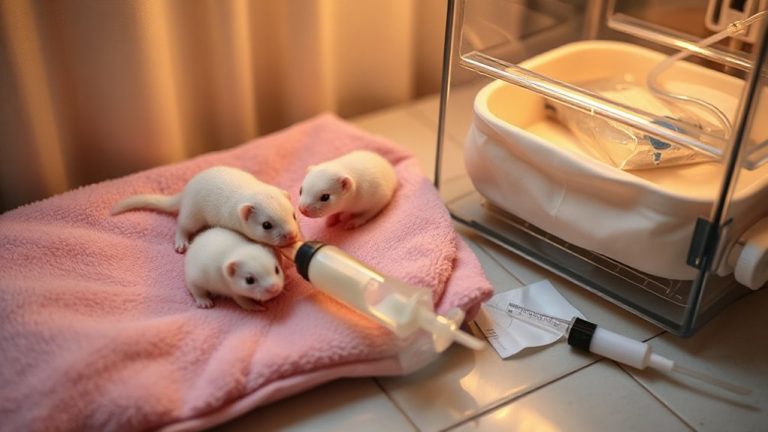
Use pre-sterilized feeding tools and weigh chicks daily. Always make certain formula temperature stays at 104–106°F to prevent crop damage.
Helping Baby Birds Poop After Feeding
Why do baby birds need help to poop? They can’t defecate independently after feeding. In the wild, parental nudging prompts waste expulsion. You must mimic this with cloacal stimulation. Use a warm, moistened cotton swab or soft cloth. Gently rub the chick’s lower abdomen near the cloaca in a circular motion. This simulates the pressure parents apply. Stimulate for 5–10 seconds post-feeding. Most chicks defecate within moments. Waste appears as a firm, mucus-coated urate pellet with fecal matter. Failure to respond may indicate digestive issues. Repeat only as needed-overstimulation risks tissue damage. Proper hygiene is critical; clean tools after each use. Cloacal stimulation guarantees healthy digestion and prevents bloating. Without it, undigested formula backs up. Perform this step after every feeding for nestlings under one week. Technique improves with practice, but precision matters. Consistent stimulation supports proper gastrointestinal function.
Why Newborn Birds Need Extra Care
Because newborn birds are altricial, they hatch in a highly underdeveloped state and rely entirely on external support for survival. You must provide consistent warmth, since they can’t regulate body temperature. Their thermoregulatory systems aren’t functional until about 7–10 days post-hatch, depending on species. Without controlled incubation conditions, environmental stressors like temperature swings or drafts can rapidly lead to hypothermia or dehydration. These stressors also suppress immune function, increasing vulnerability to infection. Genetic abnormalities, such as syndactyly or congenital organ defects, are more likely to manifest in early development and require monitoring. You should maintain humidity between 50–60% and temperatures from 95–97°F (35–36°C) during the first week. Each day, slight adjustments reflect their maturing physiology. Proper care reduces mortality risks markedly. You aren’t just feeding them-you’re replicating the precise microenvironment a brooding parent would provide.
Signs of Trouble in Baby Birds
A newborn bird’s condition can deteriorate rapidly if warning signs go unnoticed. You must monitor daily weight using a precision gram scale-any weight loss exceeding 5% in 24 hours is cause for concern. A healthy chick should gain 10–15% of its body weight daily, depending on species and age. Respiratory distress appears as open-mouth breathing, tail bobbing, or wheezing; these indicate possible infection or environmental imbalance. Normal respiration rates range from 30–60 breaths per minute at rest. Cold or discolored skin, lack of crop emptying, or persistent lethargy also signal trouble. Chicks should be fed every 1–2 hours depending on age; missed feedings contribute to metabolic slowdown. Crop temperature must remain between 102–105°F to guarantee proper digestion. Any deviation in behavior, intake, or output demands immediate evaluation. Early intervention improves survival rates markedly.
On a final note
You must keep newborn birds warm; their body temperature should stay between 95°F and 100°F for the first week, dropping gradually by 5°F weekly. Use a reliable brooder or heating pad with a thermostat. Feed every 15–30 minutes from dawn to dusk. Crop temperature should reach 104°F–106°F before feeding formulas. Watch for delayed crop emptying-over 90 minutes signals trouble. Hydrate with electrolyte solutions if needed. Handle minimally to reduce stress.