Tailoring Grooming Practices Based on Coat Growth Cycles for Optimal Results
You should tailor grooming to your pet’s coat growth phases for ideal results. Brush every other day during shedding with a 0.5 mm deshedding tool to remove loose undercoat. Bathe in the active growth phase using 98°F–102°F water and pH-balanced shampoo for better porosity and lipid balance. Trim every 4–6 weeks with 3–10 mm guards when hair grows 0.5–1.5 mm daily for clean, strong regrowth. Further adjustments depend on breed, season, and climate.
Notable Insights
- Align brushing frequency with shedding phases: daily during active shedding, weekly in resting phases to support coat health.
- Use deshedding tools with 0.5 mm blades during seasonal shedding to remove loose undercoat without damaging the topcoat.
- Bathe pets during the active growth phase when coat porosity is high for better moisture absorption and residue-free results.
- Trim coats every 4–6 weeks during peak growth to promote healthy regrowth and minimize split ends.
- Adjust grooming practices seasonally and by breed, using undercoat rakes for double-coated breeds in spring and fall.
Understand Your Pet’s Coat Growth Phases
While every pet sheds to some degree, understanding the biology behind coat growth phases helps you anticipate grooming needs. Your pet’s coat grows in cycles: anagen (growth), catagen (transition), and telogen (resting). Coat genetics determine cycle length and shedding intensity. Breeds with double coats often have prolonged anagen phases, leading to dense undercoats. Follicle health directly impacts phase duration and hair strength. Poor nutrition or stress can shorten anagen, weakening the coat. Hair emerges from follicles in synchronized waves; disruption causes uneven growth. Monitoring phase patterns allows precise grooming timing. Dogs with wiry coats regenerate faster due to robust follicle activity. Genetic testing can reveal predispositions to cyclic alopecia. You can support follicle health with omega-3 supplements and balanced proteins. Consistent observation helps detect abnormalities early. Each phase affects shedding volume and texture. Knowing these patterns improves grooming efficiency and coat condition.
Brush More During Shedding, Less in Resting Phases
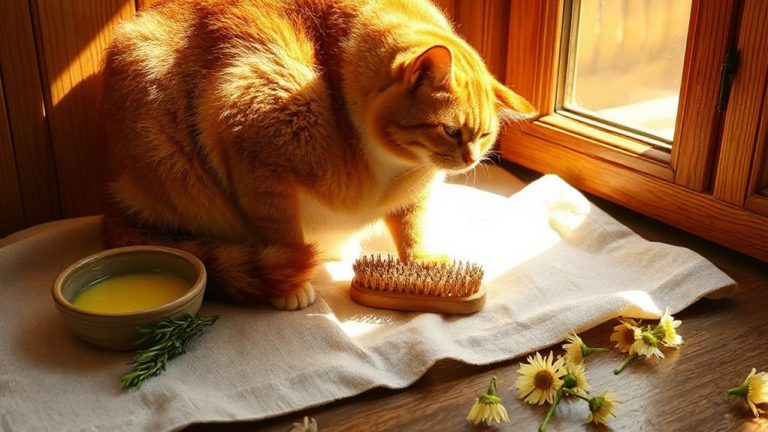
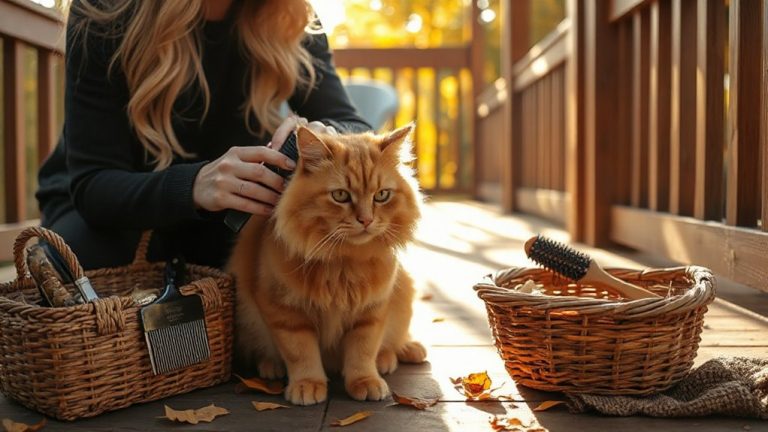
When your pet enters the shedding phase, you’ll want to brush more frequently to manage loose hair and prevent matting. Increasing brush frequency to every other day or even daily helps remove dead undercoat efficiently. This aligns with natural shedding patterns, especially in double-coated breeds like Huskies or Golden Retrievers, which shed heavily during seasonal shifts. During these phases, deshedding tools with fine, curved blades-set approximately 0.5 mm apart-can extract undercoat hair without damaging the topcoat. In contrast, during the resting phase, when shedding patterns stabilize and minimal hair loss occurs, reduce brush frequency to once weekly. This prevents unnecessary irritation to the skin and maintains coat integrity. Monitoring these cycles guarantees timely adjustments. Consistent tracking of shedding patterns allows for proactive grooming, reducing hair buildup in your home and supporting a healthier coat turnover process. A high-quality deshedding tool can make a significant difference in managing loose fur effectively.
Bathe at the Right Growth Stage for Healthier Skin
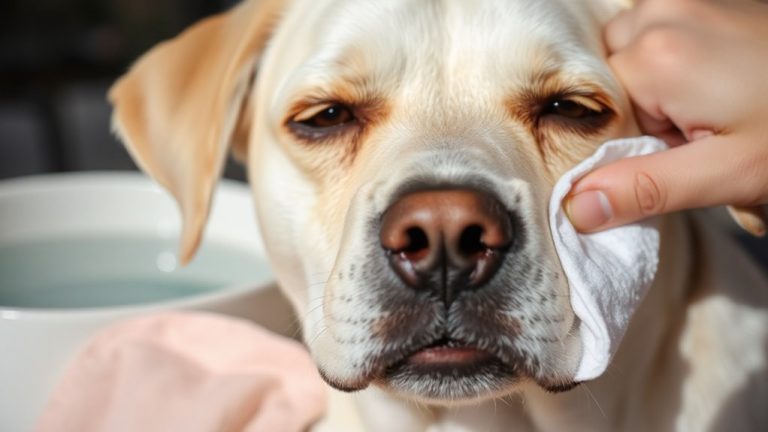
Since your pet’s coat undergoes distinct physiological changes throughout its growth cycle, timing baths to align with these phases supports ideal skin health and coat condition. During active growth, increased coat porosity allows easier penetration of shampoos and water. Bathing now removes debris without stripping natural oils. Use lukewarm water-ideally between 98°F and 102°F-as extreme temperatures disrupt sebaceous gland activity. High porosity in this stage means hair absorbs moisture rapidly, so thorough rinsing is essential to prevent residue buildup. In the resting phase, coat porosity drops markedly, making the hair shaft less permeable. Bathing during this phase risks water retention, leading to irritation or fungal growth. Limit washing when shedding slows. Always match water temperature to the animal’s core body heat. Properly timed baths enhance skin barrier function, maintain lipid balance, and prevent dryness or dermatitis. A balanced diet including the right supplements supports skin and coat health from the inside out, and adding best dog vitamins to homemade meals can help fill nutritional gaps.
Trim When Hair Is Growing Fastest
Trimming your pet’s coat during the active growth phase yields cleaner cuts and supports healthier regrowth. This is when hair follicles are most metabolically active, allowing for smoother shearing and reduced split ends. You should align your grooming schedule with natural growth peaks, typically every 4–6 weeks, depending on breed and individual coat timing. During this phase, hair grows approximately 0.5 to 1.5 mm per day, making it more uniform and easier to shape. Use sharp, precision-blade clippers with guard attachments (lengths from 3–10 mm) to maintain consistency. Fast-growing hair has greater tensile strength, so blades stay effective longer. Proper coat timing guarantees minimal stress on the follicle and promotes even texture. Trimming at growth peaks also reduces matting risk and enhances airflow to the skin. This targeted approach maximizes coat integrity and improves long-term grooming outcomes without overcutting.
Adjust Grooming by Season and Breed
Because coat growth varies with environmental shifts and genetic traits, adjusting your grooming routine by season and breed guarantees peak coat health and function. You must consider your pet’s coat type-double-coated, single-coated, wiry, or hairless-when scheduling grooming tasks. During seasonal shedding, typically spring and fall, double-coated breeds like Huskies require undercoat rakes with teeth spaced 3–5 mm apart to remove dense undercoats efficiently. In contrast, short-haired breeds such as Boxers need only weekly brushing with a rubber curry to manage loose hair. Climate impact influences skin hydration and oil production; pets in humid regions develop greasier coats, necessitating monthly baths with pH-balanced shampoos (pH 6.2–7.4). In dry climates, grooming frequency should decrease to preserve natural sebum. Trimming around paws and sanitary areas every 4–6 weeks prevents matting, especially in long-coated breeds like Maltese.
On a final note
You optimize grooming by aligning it with your pet’s natural coat cycle. During anagen (active growth), trim every 4–6 weeks for even regrowth. In catagen (transition), reduce brushing to avoid follicle stress. At telogen (resting), minimal intervention prevents shedding disruption. Bathe only in early anagen using pH 6.0–7.5 shampoos to preserve skin lipids. Seasonal adjustments, especially for double-coated breeds, improve thermoregulation and coat density.