The Importance of pH Balance in Pet Skincare Products
Your pet’s skin has a pH between 6.2 and 7.5, higher than human skin’s 5.5. Using mismatched products disrupts the acid mantle, increasing water loss by up to 50%. A compromised barrier leads to dryness, itching, and microbial overgrowth. pH-balanced shampoos maintain lipid integrity and reduce dermatological issues by up to 40%. Choose formulas with nonionic surfactants, colloidal oatmeal, or aloe vera. Stick to species-specific pH levels-this protects the thinner stratum corneum. You’ll soon discover which ingredients and practices make the biggest difference.
Notable Insights
- Pet skin has a higher pH (6.2–7.5) than human skin, making pH-matched products essential for barrier health.
- Using human shampoos can disrupt the pet’s acid mantle, leading to dryness, irritation, and microbial imbalances.
- A balanced pH around 6.8 supports the skin’s natural defense, reducing water loss and dermatological issues by up to 40%.
- Look for pet shampoos labeled with a species-specific pH and avoid those with strong fragrances or excessive lather.
- Ingredients like colloidal oatmeal (pH ~6.0) and coconut oil (effective at pH 5.5–6.2) support hydration and skin integrity.
Why Your Pet’s Skin Needs the Right pH
Have you ever considered how pH affects your pet’s skin health? Proper pH balance is critical for maintaining your pet’s skin barrier function. Most pets have a skin pH between 6.2 and 7.5, which helps preserve ideal hydration levels. When pH shifts too high or too low, the skin’s natural lipid barrier weakens, increasing water loss by up to 50%. This leads to dry, flaky skin and reduced resilience. Environmental exposure-like pollen, pollutants, and UV radiation-further stresses unbalanced skin. A well-formulated skincare product with a pH near 6.8 supports acid mantle integrity. It limits pathogenic microbial growth while promoting ceramide synthesis. These formulations improve transepidermal water retention and reduce irritant penetration. Maintaining appropriate pH doesn’t just prevent discomfort-it guarantees long-term dermal stability. Consistent use of pH-matched products can decrease dermatological issues by as much as 40% in clinically observed cases.
Pet Vs. Human Skin: Why pH Balance Differs
Pet skin operates on a fundamentally different pH scale than human skin, and using products designed for people can disrupt your pet’s natural defenses. A dog’s skin pH averages between 6.2 and 7.4, while human skin sits around 5.5. This variation stems from anatomical differences in epidermal structure and sebum composition. Cats maintain a similar pH range to dogs, reflecting a shared evolutionary adaptation to outdoor environments and fur-dependent thermoregulation. The stratum corneum in pets is thinner than in humans, making it more vulnerable to irritation when exposed to inappropriate pH levels. These differences aren’t minor-they directly affect barrier integrity and microbial balance. You’re not just adjusting for sensitivity; you’re aligning with biological necessity. Using human-formulated products creates a chemical mismatch, weakening the acid mantle. Always choose pet-specific formulations calibrated to match your animal’s natural pH.
Signs Your Pet’s Skin Barrier Is Off-Balance
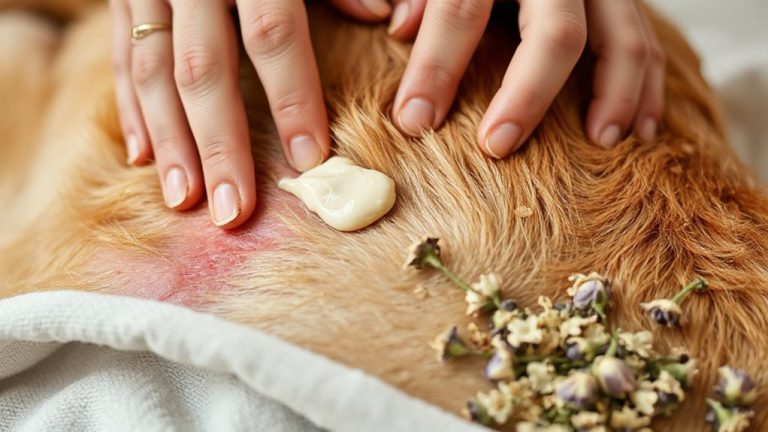
What does it look like when your pet’s skin barrier is compromised? Dry patches appear as flaky, rough areas where the epidermis has lost moisture and lipid integrity. These often develop on elbows, ears, or the back. Itchy skin is another key indicator, caused by increased transdermal water loss and heightened sensitivity to irritants. Your pet may scratch, lick, or chew excessively, worsening the barrier damage. A compromised barrier elevates skin pH, disrupting acid mantle function and enabling pathogen colonization. You might notice redness, scaling, or a dull coat. In dogs, normal skin pH ranges from 5.5 to 7.5; deviations impair ceramide production. Without proper lipid balance, the stratum corneum weakens. Persistent dry patches and itchy skin signal disrupted homeostasis. Early recognition helps prevent secondary infections.
How to Choose a pH-Safe Pet Shampoo
Maintaining your pet’s skin barrier starts with selecting a shampoo formulated to match their natural pH. Most canine skin surfaces measure between pH 5.5 and 7.5; feline skin is slightly more acidic, averaging pH 6.0. Choose a product labeled with specific pH values within this range. Avoid human shampoos, which typically fall around pH 5.5 and may disrupt your pet’s dermal balance. Look for formulas that list natural extracts like aloe vera or chamomile, which support skin health without altering pH. Steer clear of strong fragrances, as pets often have fragrance sensitivity that can trigger irritation or allergic reactions. Opt for hypoallergenic, unscented, or lightly scented variants tested for dermatological safety. Check the label for dermatological testing results or veterinary endorsements. A pH-safe shampoo won’t lather excessively-rich lather often indicates harsh surfactants. Instead, expect a mild foam that rinses cleanly, preserving the skin’s natural lipid layer and preventing moisture loss. For itchy skin, consider shampoos with soothing ingredients like oatmeal or hydrocortisone, which are key in many of the best dog shampoos for itchy skin.
Best Ingredients for a Healthy Pet Skin pH
While balancing your pet’s skin pH is essential, choosing the right ingredients plays a decisive role in sustaining that balance. Coconut oil benefits include lauric acid, which supports skin barrier function at a pH of 5.5–6.2, matching most pets’ natural range. Its antimicrobial properties reduce surface pathogens without disrupting acidity. Oatmeal extracts advantages involve beta-glucans and avenanthramides, which buffer moisture loss and maintain dermal integrity at a slightly acidic pH. Colloidal oatmeal has a pH around 6.0, making it ideal for soothing without alkaline disruption. Look for ingredients with nonionic surfactants, which preserve acid mantle stability. Glycerin aids hydration at concentrations of 2–5%, supporting pH resilience. Avoid high-alkaline additives like sodium hydroxide. These components work synergistically: coconut oil provides lipid reinforcement, while oatmeal extracts deliver antioxidant protection. Together, they stabilize skin pH within ideal physiological limits.
Mistakes That Disrupt Your Pet’s Skin pH
Why do some pet owners struggle to maintain healthy skin despite regular grooming? Overbathing pets disrupts their natural acid mantle. Dogs have a skin pH of around 7.5, higher than humans, making their skin more neutral. When you bathe your pet too often, you strip essential oils and raise pH, weakening protection against pathogens. Harsh soaps worsen this effect. These products often have a high alkaline pH (9–10), further disturbing your pet’s skin balance. The result? Dryness, irritation, and increased infection risk. Use a species-specific, pH-balanced shampoo (pH 6.5–7.5 for dogs). Limit baths to once every 4–6 weeks. This preserves the lipid barrier and maintains microbiome health. Avoid human shampoos-formulated for pH 5.5. Consistent use of appropriate products prevents pH fluctuations and supports long-term dermal resilience.
On a final note
Your pet’s skin thrives at a pH of 6.2 to 7.5, unlike human skin, which averages 5.5. Using improperly balanced products disrupts this range, weakening the acid mantle and increasing susceptibility to infections. pH-safe shampoos preserve essential lipids and maintain microbial defense. Choose products labeled with precise pH values and non-irritating ingredients like ceramides or oat derivatives. Avoid alkaline soaps, which exceed pH 8 and strip natural oils. Consistent use of correct formulations supports long-term dermatological health.