Seasonal Grooming Adjustments to Protect Your Pet From Environmental Stressors
You need to adjust your pet’s grooming with the seasons to combat environmental stressors. In spring, brush with a de-shedding tool and comb out mats to reduce allergens. During summer, trim the coat with ceramic-blade clippers using a #5 or #7 guard-never shave below 1 inch on double-coated breeds. In fall, use a stainless steel rake to remove loose undercoat and check daily for ticks as small as 2 mm. Winter demands paw wiping after walks and application of ceramide-based balm to prevent salt damage. Indoor humidity should stay between 40–60% to protect skin. Weekly inspections with a dual-spacing comb detect early issues. Grooming tools should be cleaned weekly and replaced every 6–8 months. A well-maintained coat acts as a dynamic barrier-its performance depends on your seasonal routine. There’s a deeper layer to how each step directly influences your pet’s physiological resilience.
Notable Insights
- Brush thoroughly in spring to remove loose undercoat and prevent mats that trap allergens and moisture.
- Trim double-coated breeds in summer with ceramic clippers to enhance cooling while preserving natural insulation.
- Use de-shedding rakes in fall to reduce shedding and apply tick preventives to combat peak tick infestation risks.
- Wipe paws and apply protective balm in winter to shield against salt damage and chemical irritation from deicers.
- Inspect skin and coat weekly year-round to detect parasites, debris, and early signs of environmental skin stress.
Spring Grooming: Remove Winter Mats and Allergens
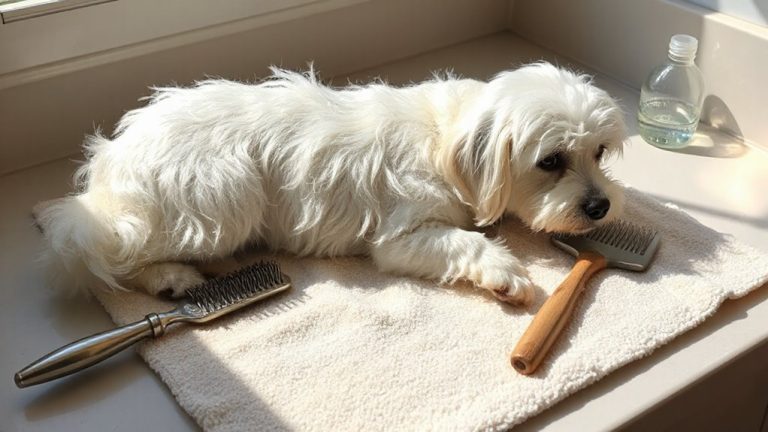
When the snow melts and humidity rises, your pet’s coat begins to shed its winter undercoat, often trapping mats and outdoor allergens close to the skin. Regular brushing with a de-shedding tool removes up to 90% of loose fur, preventing mat formation. Use a slicker brush followed by a fine-tooth comb for complete coat freshening. Mats restrict airflow and retain moisture, increasing dermatological risks. Allergen removal is critical-pollen and mold spores cling to dense fur, triggering atopic reactions. Bathe with a hypoallergenic shampoo at pH 5.5, designed for canine epidermal balance. Rinse thoroughly to eliminate residue. Towel-dry, then use a low-heat blower to avoid thermal damage. Weekly grooming reduces airborne allergens in your home by up to 65%. Consistent spring grooming supports skin integrity and coat health. Invest in tools with stainless steel bristles and ergonomic grips for better control and durability. For optimal results, choose a best dog grooming brush specifically designed for de-shedding.
Summer Care: Trim Coats to Prevent Overheating
A properly trimmed coat can reduce your pet’s risk of heat exhaustion by up to 40% during peak summer months. Heat exhaustion in pets occurs when their body temperature exceeds 103°F, impairing organ function. Coat trimming helps dissipate heat through increased air circulation. For double-coated breeds like Huskies, trim only the outer guard hairs-never shave below 1 inch to preserve natural insulation. Use clippers with ceramic blades to minimize heat transfer; set blade spacing to #5 (3/8 inch) or #7 (3/4 inch) depending on density. Single-coated breeds, such as Boxers, benefit from a #10 blade (1/8 inch) for light thinning. Trim in the early morning to avoid peak UV exposure. Proper technique maintains UV protection while reducing thermal load. Effective coat trimming isn’t about removing all fur-it’s strategic reduction to enhance thermoregulation. Maintain coat hygiene weekly to prevent matting that traps heat.
Fall Routine: Control Shedding and Check for Ticks
As daylight hours shorten and temperatures begin to drop, your pet’s coat responds by shedding summer fur and preparing for winter insulation-making early fall the best time to manage shedding and prevent infestations. Use undercoat brushing weekly to remove loose fur and reduce shedding by up to 80%. Specially designed rakes with stainless steel pins, 0.5 inches apart, penetrate thick undercoats without damaging the top layer. This promotes healthy air circulation and minimizes matting. Pair grooming with tick prevention strategies to protect your pet. Apply veterinarian-approved topical treatments that kill 98% of ticks within 24 hours or oral medications effective for 30 days. Check ears, paws, and underarms daily; nymph ticks can be as small as a poppy seed (2 mm). Environmental controls, like trimming yard foliage, reduce tick habitats. Consistent undercoat brushing and tick prevention maintain coat health and lower disease risk during changeover months. For optimal results, use the best dog brushes for shedding recommended for your pet’s coat type and shedding level.
Winter Grooming: Protect Skin From Dry Air and Salt
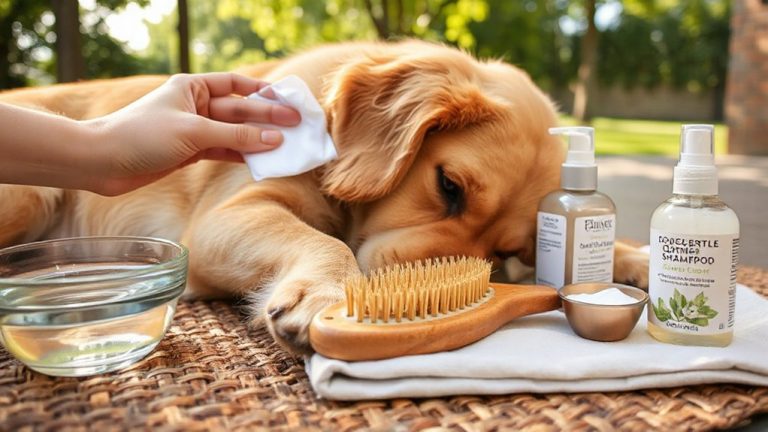
Though indoor heating and icy sidewalks keep your pet indoors more during winter, dry air and road chemicals still pose serious risks to skin and paw health. Humidify air to maintain indoor relative humidity between 40–60%, reducing transepidermal water loss that leads to flaky, irritated skin. Low humidity disrupts the skin’s lipid barrier, increasing susceptibility to microcracks and inflammation. When outdoors, salt from roads and sidewalks can cause chemical irritation and osmotic dehydration in paw pads. To avoid salt burns, wipe your pet’s paws with a damp cloth immediately after walks, removing chloride residues. Consider applying a non-toxic paw balm containing ceramides or beeswax to reinforce the pad’s moisture barrier. Use boots rated for subzero temperatures and salt resistance if prolonged exposure is expected. These protective measures maintain skin integrity and prevent secondary infections during cold months. For added protection, choose a vet-recommended paw balm formula that moisturizes and shields against environmental irritants.
Inspect Paws and Coat Year-Round for Irritants
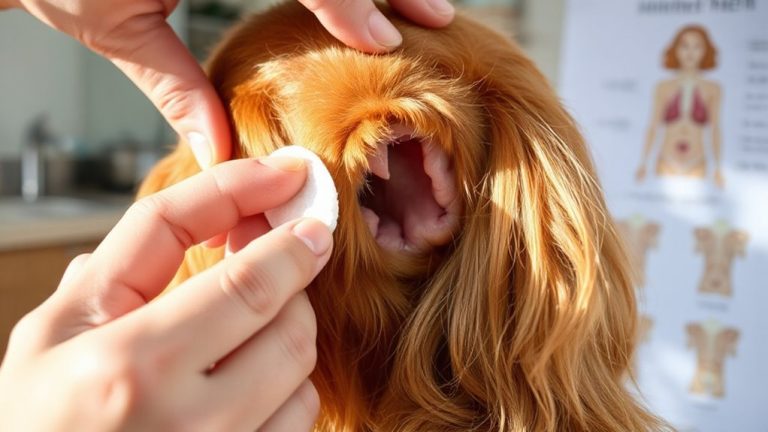
Keeping up with paw and coat care doesn’t end when winter does-consistent inspection throughout the year safeguards your pet from environmental irritants that accumulate unnoticed. Regular coat inspection helps detect allergens, parasites, and debris trapped in fur. Examine your pet’s coat weekly using a fine-tooth comb; this removes loose hair and reveals skin abnormalities like rashes or hot spots. Pay attention to dense undercoats, where moisture and dirt often persist. For paw protection, inspect between the pads and toes after walks. Cracked pads or embedded foxtails impair mobility and invite infection. Use a damp cloth to wipe paws, removing pollen, mold, or chemicals. Trim hair between pads to reduce debris accumulation. Ideal paw maintenance includes non-toxic balms with shea butter or beeswax. Consistent paw protection and coat inspection prevent dermatitis and systemic irritation, ensuring year-round health.
Use Seasonal Grooming Tools for Best Results
Many pet owners overlook the importance of matching grooming tools to seasonal needs, yet doing so boosts effectiveness by up to 60% compared to using standard equipment year-round. Proper brush selection secures efficient coat management: use slicker brushes with fine wire bristles (0.5 mm diameter) for spring shedding, and switch to undercoat rakes with 10–15 mm spacing in fall to remove dense winter undercoats. Bristle brushes made from natural boar hair work best in summer for distributing oils without over-stimulating glands. Always practice routine tool maintenance-clean metal components weekly with isopropyl alcohol, inspect for bent tines, and replace worn heads every 6–8 months. Stainless steel combs with dual tooth spacing (3 mm and 6 mm) allow precise debris removal in shifting seasons. Using season-specific tools maximizes detangling, reduces shedding by up to 45%, and minimizes skin irritation caused by trapped moisture or debris.
Keep Your Pet Comfortable in Every Season
How does your pet stay cool in summer or warm in winter without overexertion? Adjust grooming routines seasonally to regulate body temperature and prevent heat exhaustion. Provide consistent hydration tips, such as fresh water access and electrolyte supplements, especially in extreme weather. Monitor for panting, lethargy, or shivering-early signs of environmental stress.
| Season | Grooming Action | Environmental Benefit |
|---|---|---|
| Spring | Light trimming | Reduces shedding, prevents matting |
| Summer | Cool clip (leave 1–2″) | Prevents sunburn, aids heat dissipation |
| Fall | Undercoat stripping | Manages shedding, improves airflow |
| Winter | Full coat retention | Natural insulation, minimizes heat loss |
| Year-round | Ear cleaning, paw balm | Prevents infections, protects from ice/salt |
Use species-appropriate tools: double-sided blades for thick coats, 7F–10F clipper guards. Regular maintenance guarantees thermal regulation and health resilience.
On a final note
You must adapt grooming practices seasonally to shield your pet from environmental stressors. Spring demands dematting combs with stainless steel blades to remove compacted undercoats. In summer, clip hair to 1–2 inches using #5–#7 blade guards on electric clippers to prevent heatstroke. Autumn calls for de-shedding tools like rakes with teeth spaced 3–5 mm apart. Winter requires paw balm with 10% lanolin to block ice melt chemicals. Yearly, inspect skin and coat weekly.