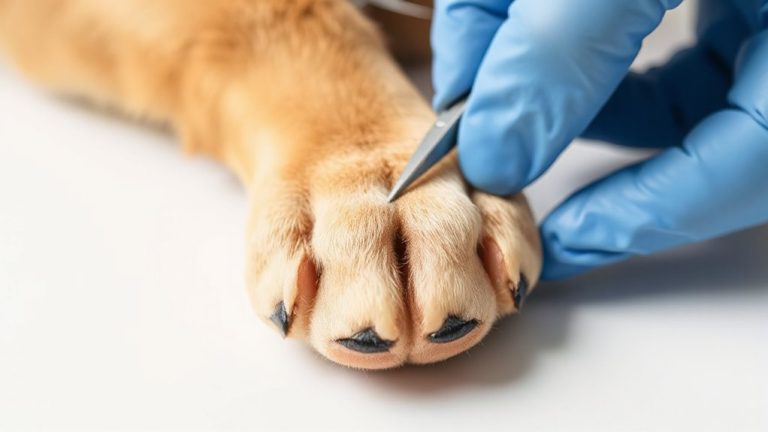
Managing Skin Allergies in Dogs: An Overview of Common Causes and Treatments
Your dog’s skin allergies often stem from pollen, dust mites, or food sensitivities like beef and dairy. Look for redness, hair loss, or persistent scratching. Vets diagnose with blood tests, skin testing, or elimination diets. Treat itching with oclacitinib (0.4–0.6 mg/kg daily) or prednisone, plus medicated shampoos containing chlorhexidine 2–4%. Prevent flare-ups using hypoallergenic shampoos, weekly HEPA vacuuming, and omega-3 supplements at 50 mg EPA/DHA per pound. More details on long-term management follow.
Notable Insights
- Skin allergies in dogs often manifest as excessive scratching, red patches, and hair loss, especially on sparsely furred areas.
- Common triggers include pollen, dust mites, mold spores, and certain foods like beef or dairy.
- Diagnosis involves veterinary evaluation, symptom tracking, and tests such as blood panels, skin testing, or elimination diets.
- Treatments range from antihistamines and glucocorticoids to newer options like oclacitinib for rapid itch relief.
- Prevention includes regular cleaning, hypoallergenic shampoos, humidity control, and omega-3 supplements to support skin health.
Signs Your Dog Has Skin Allergies
Have you noticed your dog scratching more than usual? Excessive scratching is one of the earliest and most common signs of skin allergies in dogs. You may also observe red patches on the skin, particularly in areas with less fur, such as the belly, ears, or paws. These inflamed regions result from immune system overreactions to allergens. Hair loss often follows persistent licking, chewing, or scratching. The loss typically starts in localized zones but can spread if untreated. Red patches and hair loss are clinically referred to as erythema and alopecia, respectively. Secondary infections-bacterial or yeast-can develop due to broken skin barriers. Chronic cases may lead to lichenification, a thickening of the skin resembling elephant hide. Monitoring these symptoms closely allows for earlier intervention. Accurate identification of these clinical signs improves diagnostic precision and supports effective treatment planning. Early action can prevent complications.
Common Triggers of Dog Skin Allergies
Allergens are the root cause of most canine skin allergies, and identifying them is critical for effective treatment. You’ll need to distinguish between environmental allergens and food sensitivities, as both provoke immune responses leading to pruritus and dermatitis. Environmental allergens like pollen, mold, and dust mites are inhaled or接触 through skin, causing year-round or seasonal flare-ups. Food sensitivities often stem from proteins such as beef, chicken, or dairy, with symptoms appearing within weeks of exposure. Switching to a high-quality best dog food for pitbulls can significantly reduce allergic reactions in sensitive dogs.
| Trigger Type | Common Sources | Onset Pattern |
|---|---|---|
| Pollen | Trees, grasses, weeds | Seasonal |
| Dust Mites | Household dust, bedding | Year-round |
| Mold Spores | Damp areas, soil, decaying matter | Seasonal or constant |
| Food Sensitivities | Beef, dairy, wheat, chicken | Within 6–8 weeks |
Pinpointing the trigger improves long-term management outcomes.
How Vets Diagnose Skin Allergies in Dogs
Your vet starts with a thorough evaluation to determine whether your dog’s itching and skin issues stem from allergies or another underlying condition. They’ll review medical history and perform a physical exam, checking for signs of parasites, infections, or endocrine disorders. Symptom tracking is critical-you’ll record when itching occurs, its intensity, and potential triggers like diet changes or environmental exposure. This helps identify patterns linked to seasonal or contact allergens. Blood tests and intradermal skin testing assess reactions to common allergens such as pollen, dust mites, or molds. In some cases, vets use patch testing, applying small allergen amounts to the skin under occlusion for 48 hours to detect delayed hypersensitivity. These diagnostic tools, combined with elimination diets, rule out non-allergic causes. Accurate diagnosis relies on consistent data and controlled testing protocols to pinpoint specific sensitivities.
Treatments That Relieve Itching and Inflammation
While identifying the cause of your dog’s skin allergy is essential, controlling the resulting itch and inflammation comes first in providing relief. Medicated shampoos containing chlorhexidine (2–4%) or ketoconazole (1–2%) reduce microbial load and soothe irritated skin with each bath, typically applied every 5–7 days. These formulations support the skin barrier and decrease secondary infections. Antihistamine therapy may reduce histamine-mediated itching in some dogs, though efficacy varies-diphenhydramine (2–4 mg/kg every 8 hours) and cetirizine (0.5 mg/kg once daily) are common. Response rates average 30–40%, so they’re often combined with other treatments. Glucocorticoids like prednisone (0.5–1 mg/kg daily initially) offer rapid anti-inflammatory effects but require careful tapering. Targeted therapies such as oclacitinib (0.4–0.6 mg/kg once daily) inhibit cytokine signaling, providing faster, more consistent relief with fewer side effects. Treatment choice depends on severity, duration, and individual response. Best dog shampoos for itchy skin can further support symptom management by targeting underlying irritation and improving coat health.
Top Hypoallergenic Dog Foods Recommended by Vets
What makes a dog food truly hypoallergenic? It contains minimal allergens and uses novel or hydrolyzed proteins. Vets often recommend limited ingredient diets (LID) because they reduce exposure to common triggers. These formulas include one animal protein and one carbohydrate source, making it easier to identify sensitivities. Many are grain free, eliminating wheat, corn, and soy-frequent culprits in allergic reactions. Look for options like duck and potato or salmon and sweet potato with at least 22% crude protein. Hydrolyzed protein diets break down peptides to prevent immune responses. Brands like Purina Pro Plan HA and Royal Canin Hypoallergenic use precise formulations tested in clinical trials. They’re available by prescription and guarantee complete nutrition. Always shift gradually over 7–10 days. Consistency matters-stick with the same limited ingredient formula to maintain skin health and reduce flare risks. Top picks include formulas featuring limited ingredient dog food for optimal allergy management.
How to Prevent Skin Allergy Flare-Ups
A consistent routine is key to minimizing skin allergy flare-ups in dogs. Implementing strict environmental control reduces allergen exposure. Use HEPA-filter vacuums weekly and wash your dog’s bedding every 5–7 days in hot water (130°F minimum). Maintain indoor humidity between 40–50% to inhibit dust mites. Establish a grooming routine using hypoallergenic shampoos with a pH of 6.5–7.5. Bathe your dog every 1–2 weeks to remove surface allergens without stripping natural oils. Brush daily with a stainless steel comb to distribute sebum and remove debris. Use omega-3 supplements (EPA/DHA dosage: 50 mg combined per pound of body weight daily) to strengthen the skin barrier. Avoid peak pollen times-walk your dog before 10 a.m. or after 6 p.m. Rotate flea preventatives every 6 months to reduce resistance risk.
On a final note
You can effectively manage your dog’s skin allergies with proper diagnosis and targeted treatment. Identifying allergens through intradermal or blood testing allows for precise intervention. Use vet-recommended hypoallergenic diets with hydrolyzed proteins or novel ingredients like duck and potato. Administer treatments such as oclacitinib (0.4–0.6 mg/kg daily) to block itch signals. Consistent use of flea preventives and omega-3 supplements reduces flare-ups.