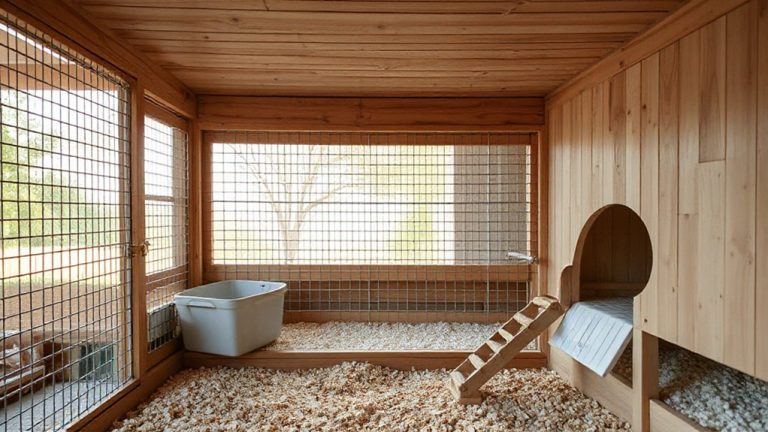
Ventilation Needs for Exotic Pets: An Essential Guide for Safe Living Spaces
Poor ventilation traps ammonia, CO₂, and moisture, risking respiratory harm in exotic pets. You need at least two diagonally placed vents for cross-ventilation. Enclosures under 4 ft³ require 10–20 air changes per hour to prevent toxic buildup. Use 5–8 mm mesh or perforated panels to balance airflow with humidity retention. Position intake vents low, exhaust high. For tropical species, maintain 60–80% RH with partial venting. Continue exploring to refine your setup for long-term health.
Notable Insights
- Proper ventilation prevents harmful buildup of ammonia, carbon dioxide, and moisture in enclosures under 4 ft³.
- Cross-ventilation with intake and exhaust vents on opposite sides ensures effective air exchange and reduces pathogens.
- Mesh lids with 5–8 mm apertures balance airflow, humidity retention, and heat management for most exotic pets.
- Ventilation needs vary by species-birds require 6–8 air changes per hour, while tropical frogs need limited airflow.
- Test airflow direction and efficiency using smoke or ribbons to eliminate stagnant zones and drafts.
How Bad Ventilation Harms Exotic Pets
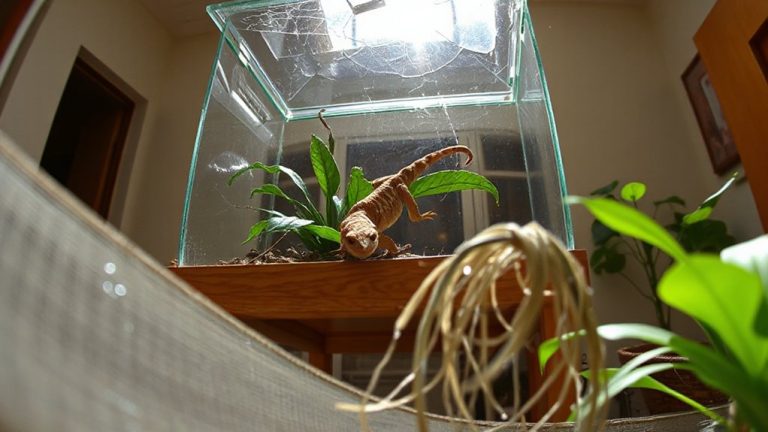
Poor ventilation can quickly become a silent threat to your exotic pet’s health. Without adequate airflow, moisture and waste gases accumulate, creating conditions ripe for respiratory distress. You’re likely unaware, but stagnant air promotes toxic buildup of ammonia, carbon dioxide, and mold spores-especially in enclosures smaller than 4 ft³. These contaminants irritate delicate respiratory tissues, particularly in reptiles and small mammals with high metabolic rates. For instance, ammonia concentrations above 25 ppm can impair lung function in crested geckos within hours. Enclosures should have at least two ventilation openings, positioned diagonally to encourage cross-ventilation. Mesh lids or side panels with 5–8 mm apertures allow efficient exchange while retaining heat and humidity. Failure to implement proper airflow results in chronic stress and suppressed immunity. You must balance ventilation with thermal regulation-using fans or passive vents-to prevent microclimates that foster pathogens.
Common Signs of Inadequate Airflow
How can you tell if your exotic pet’s enclosure lacks proper airflow? Poor odor control is a clear indicator. If ammonia or fecal smells persist despite cleaning, stagnant air is likely trapping gases. Ventilation rates below 4 air changes per hour (ACH) often fail to remove these contaminants. You’ll also notice excessive condensation on walls or glass. When relative humidity exceeds 70% consistently, water droplets form and linger, promoting mold. This is especially common in enclosures with inadequate intake and exhaust vent placement. Condensation blocks visibility and raises disease risk through microbial growth. Uneven temperature zones and stuffy microclimates further confirm poor circulation. In reptile enclosures, surface moisture that doesn’t evaporate within 2 hours signals insufficient airflow. Monitor with hygrometers and visual inspection daily. These signs mean your enclosure’s ventilation design needs immediate adjustment.
Optimal Ventilation by Pet Type
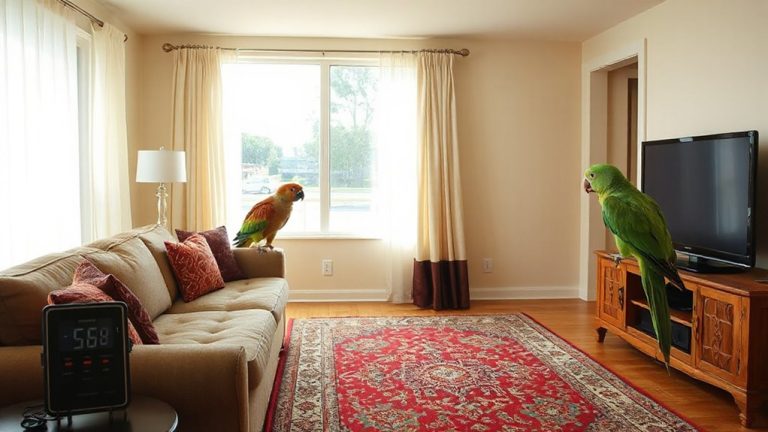
Ventilation needs vary considerably depending on the species you keep, and getting it right means aligning airflow with your pet’s natural habitat. For reptiles like bearded dragons, you need moderate airflow with mesh tops providing 20–30% ventilation to support temperature regulation and prevent stagnation. Tropical frogs, however, require high humidity control-60–80% RH-so enclosures use limited airflow with misting systems and partial vents to retain moisture. Birds need strong, consistent air exchange; aim for 6–8 room air changes per hour to reduce airborne pathogens. Small mammals such as hedgehogs benefit from low to moderate ventilation that balances fresh air without creating drafts. Always pair ventilation with precise temperature regulation: diurnal gradients of 10–15°F (5–8°C) mimic natural cycles. Use digital hygrometers and thermometers to monitor conditions. Proper airflow prevents respiratory issues while maintaining microclimate stability specific to each species’ physiology.
How Enclosure Type Impacts Ventilation Needs
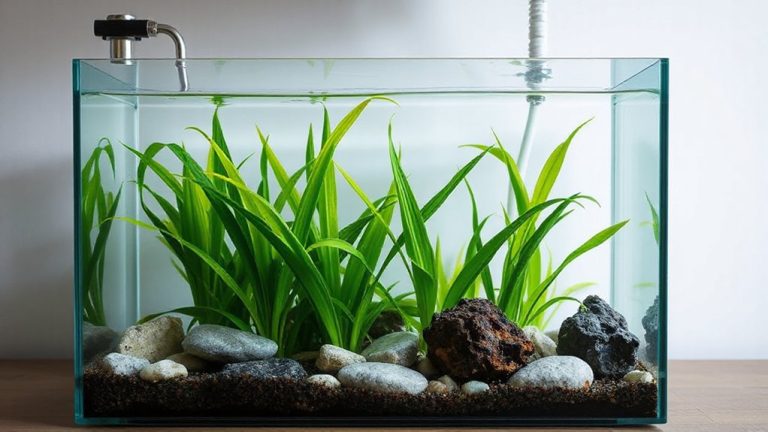
While enclosure design shapes microclimate stability, your pet’s health hinges on matching airflow to the structure’s inherent ventilation capacity. Glass terrariums retain humidity but limit air exchange, making ventilation placement critical near the top for hot air escape. Plastic tub enclosures offer durability and insulation, yet their solid walls require drilled ventilation ports-place them on opposite sides for cross-ventilation. Screen tops on traditional enclosures enhance airflow but can reduce humidity too quickly in arid-sensitive species. Enclosure material directly affects thermal retention and moisture control: polycarbonate panels provide insulation while enabling partial airflow when slotted. Mesh panels integrated into acrylic enclosures allow up to 60% more air turnover than solid walls. Position intake vents low and exhaust high to encourage convection-driven circulation. Proper ventilation placement prevents stagnant zones where pathogens thrive.
Fix These Common Ventilation Errors
When airflow is restricted or poorly directed, even well-maintained enclosures can become breeding grounds for mold and respiratory infections. You must prioritize proper ventilation placement to guarantee consistent air exchange. Position intake vents low and exhaust points high to leverage natural convection. Stagnant zones often form when vents are incorrectly aligned or blocked by substrate. Airflow materials matter-use perforated stainless steel or powder-coated mesh with 3–5 mm openings for maximum throughput and durability. These materials resist corrosion and prevent pests from entering. Avoid foam or solid panels, which restrict circulation. Guarantee at least 10 air changes per hour for tropical species, measured using an anemometer at vent outlets. Poor ventilation placement undermines temperature and humidity control. Cross-ventilation design mimics natural wind patterns, reducing pathogen load. Always test airflow direction with smoke or ribbon indicators after assembly. Fixed errors mean healthier, less stressed pets.
On a final note
You must prioritize ventilation to maintain your exotic pet’s health. Poor airflow causes CO₂ buildup, raising mortality risk by up to 60% in reptiles. Screen-sided enclosures offer 70–80% airflow but reduce humidity retention. Glass tanks require top ventilation: a 12-inch enclosure needs at least two 2-inch exhaust vents. Use hygrometers to monitor humidity, keeping levels within species-specific ranges (30–70%). Active ventilation with 50–100 CFM fans prevents stagnation.