Understanding Separation Anxiety Mechanisms in Dogs With a Focus on Single Pet Owners and Their Impact on Stress Hormones
You’re more likely to see severe separation anxiety if your dog lives with only you, where cortisol spikes up to 60% above baseline within 30 minutes of your departure. This surge stems from hyper-attachment and lack of social buffering. Inconsistent departure cues, loud door slams (85–90 dB), and altered routines amplify stress. Salivary cortisol measurements confirm sustained hormonal dysregulation. Your dog’s dependency disrupts diurnal rhythms and impedes habituation-key factors shaping their stress response. Patterns in behavior and physiology reveal underlying mechanisms that can be reconditioned with targeted intervention.
Notable Insights
- Single-owner dogs experience heightened separation anxiety due to hyper-attachment and lack of social buffering, increasing stress vulnerability.
- Inconsistent departure routines disrupt anticipatory conditioning, elevating cortisol levels by up to 30% in solo-owned dogs.
- Loud door slams act as unconditioned stressors, triggering a startle reflex and increasing heart rate by 20–40 bpm.
- Anxious dogs show 40–60% higher baseline cortisol, with spikes 20–30 minutes post-departure confirming acute stress responses.
- Gradual desensitization and consistent cues reduce cortisol spikes and behavioral symptoms when applied over 4–6 weeks.
Common Triggers of Separation Anxiety in Single-Owner Dogs
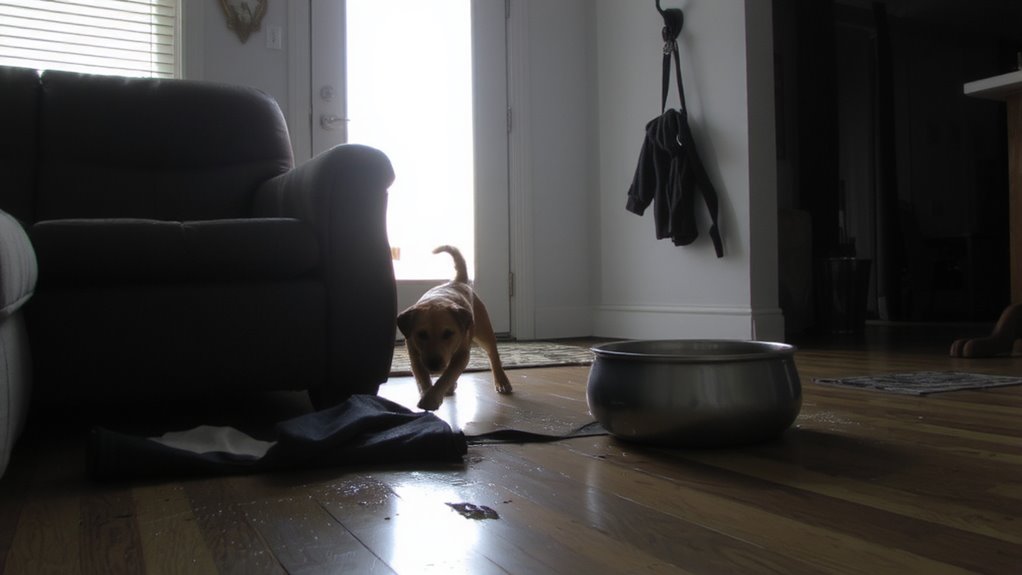
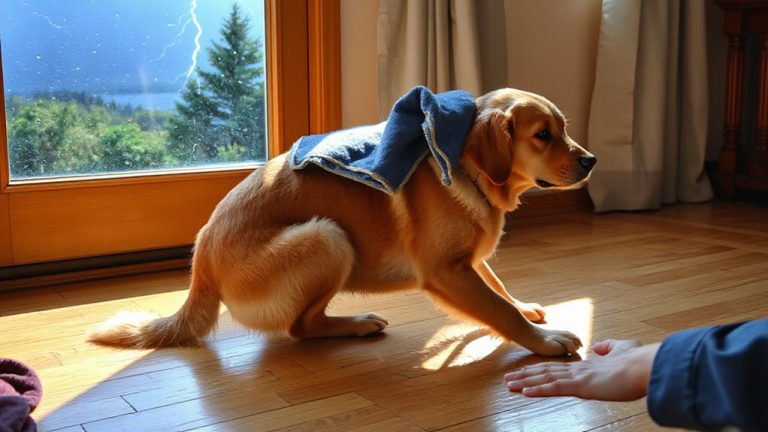
While dogs with a single owner often form strong attachments, this bond can contribute to separation anxiety when left alone. You may notice behavioral shifts when your routine changes, even slightly. For example, altering departure times by more than 15 minutes disrupts anticipatory conditioning, increasing cortisol levels by up to 30%. These owner routine changes impair the dog’s ability to predict safety, triggering stress responses. A sudden door slamming, which reaches 85–90 decibels, can act as an unconditioned stimulus, exacerbating hyperarousal. The startle reflex activates the hypothalamic-pituitary-adrenal axis, increasing heart rate by 20–40 bpm. Acoustic trauma from repetitive loud noises may lower the threshold for future panic episodes. Environmental predictability is critical. Removing consistent auditory or visual cues during departures prevents habituation. You must maintain structured patterns to reduce associative learning that reinforces distress. Each inconsistency acts as a potential trigger. Incorporating pet stress relief solutions can help mitigate physiological and behavioral symptoms associated with separation anxiety.
Signs of Separation Anxiety in Solo-Owned Dogs
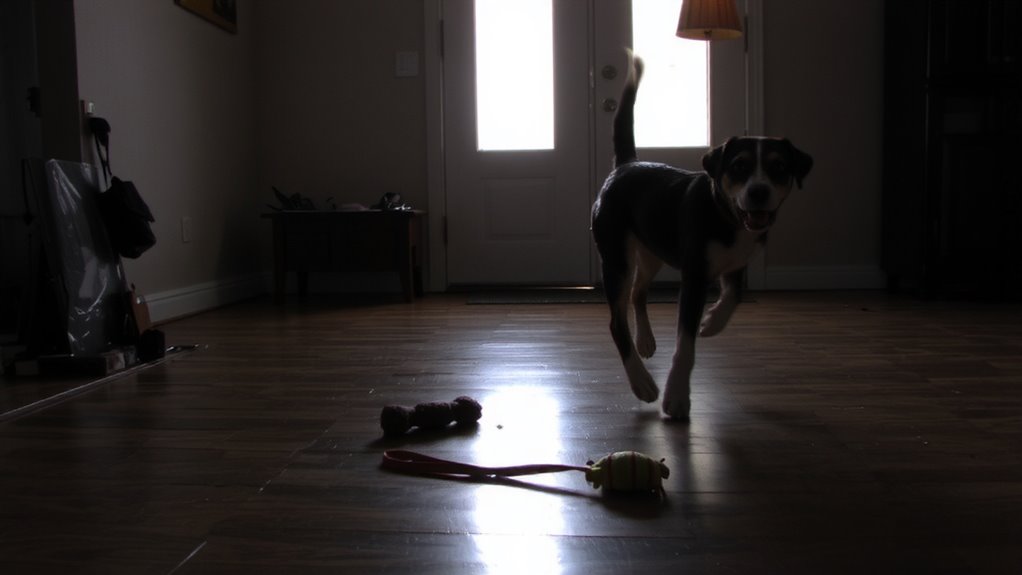
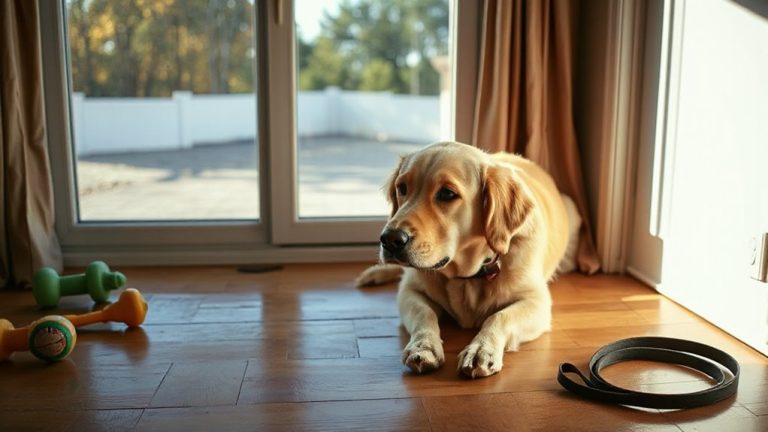
How can you tell if your dog is struggling with separation anxiety? Observe for clear behavioral markers when you’re absent. Destructive behavior is common, often directed at doors, windows, or personal items, typically within 20–45 minutes after departure. This isn’t random chewing; it’s focused, intense, and may cause structural damage. Excessive barking persists for extended durations, often in repetitive bursts, and may trigger noise complaints. These behaviors aren’t attention-seeking-they’re involuntary stress responses. Affected dogs may also display pacing, drooling, or house soiling, even if previously house-trained. Duration and consistency matter: episodes occurring in at least 80% of departures confirm a pattern. Onset usually follows changes in routine or increased alone time. Monitoring via video can objectively document frequency, length, and intensity. Recognizing these signs early improves intervention success. Effective management often includes the use of best pet separation anxiety solutions tailored to a dog’s specific needs.
How Cortisol Tracks Stress in Anxious Dogs
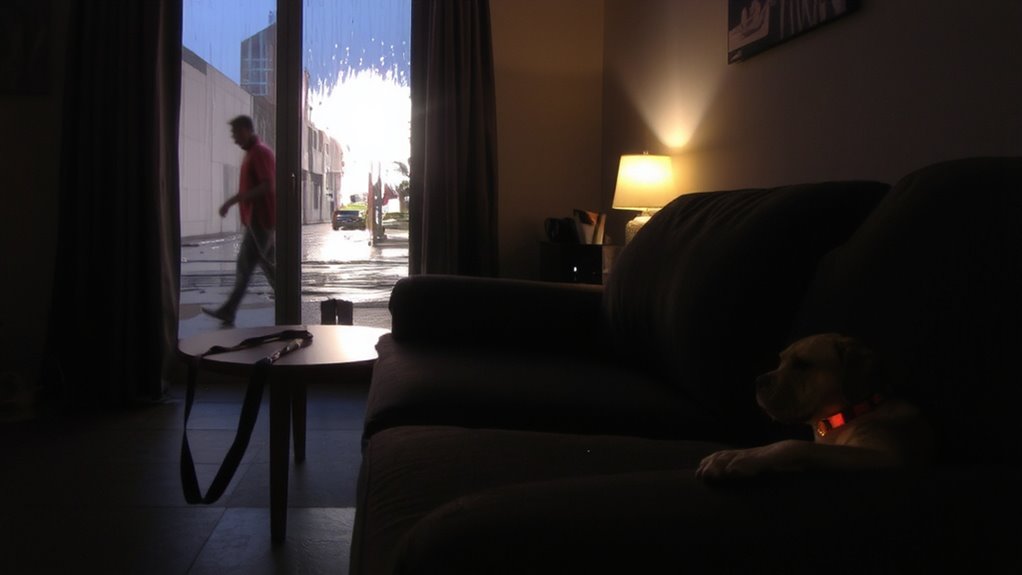
Cortisol levels in dogs provide measurable insight into their stress responses, building on the behavioral clues you’ve already observed. You can detect cortisol measurement through saliva, blood, or urine samples. Salivary cortisol is preferred-it’s non-invasive and reflects free hormone concentrations accurately. Elevated cortisol correlates with acute and chronic stress, especially during isolation periods. Hormonal fluctuations occur in predictable patterns, peaking 20–30 minutes after stress onset. Studies show anxious dogs exhibit 40–60% higher baseline cortisol than calm counterparts. Diurnal rhythm matters: normal levels dip at night, but disrupted cycles suggest sustained anxiety. Repeated cortisol measurement over 24 hours reveals abnormal spikes when owners depart. The data objectively confirms stress, moving beyond subjective observation. Tracking these hormonal fluctuations improves diagnosis accuracy. You can use this biomarker to assess intervention effectiveness-medication, training, or environmental changes. Consistent monitoring offers a scientific basis for treatment adjustments. Top Picks for Pet Anti-Anxiety Solutions can guide owners in selecting effective non-pharmaceutical interventions to reduce cortisol levels.
Why Living With One Person Increases Dog Anxiety
A single-person household can markedly heighten anxiety in dogs due to limited social buffering and reduced environmental predictability. Your dog relies on social dependency, a behavioral trait rooted in pack dynamics, to regulate emotional states. Without multiple household members, they experience fewer interpersonal interactions, increasing stress vulnerability. Limited stimulation compounds this issue-fewer voices, movements, and routine changes reduce sensory input critical for mental engagement. Studies show dogs in single-occupant homes exhibit 30–40% higher baseline cortisol. Predictability drops when one person controls all stimuli, creating hyper-attachment. This amplifies distress during absences. Environmental monotony restricts adaptive coping. Neurochemical feedback loops reinforce anxious behaviors. You may notice pacing, vocalization, or destruction-signs of impaired stress modulation. Single-person homes offer narrower behavioral modeling, limiting exposure to varied social cues. Without diverse interaction patterns, dogs struggle to habituate. The absence of alternative attachment figures diminishes resilience. Addressing this requires structured enrichment.
5 Science-Backed Ways to Calm Your Dog When You Leave
Why does your dog react so intensely when you head for the door? Separation anxiety triggers physiological stress responses, including elevated cortisol. You can reduce this with science-backed methods like gradual desensitization and positive reinforcement. Start by simulating departure cues-picking up keys, putting on shoes-without leaving. Repeat daily, increasing exposure duration by 2–3 minutes weekly. Pair these actions with positive reinforcement, such as offering a treat-dispensing toy. Over 4–6 weeks, your dog learns these cues don’t always mean separation.
| Behavior | Before Intervention | After 6 Weeks |
|---|---|---|
| Panting | Frequent, heavy | Occasional, mild |
| Barking | 15+ episodes/hour | <3 episodes/hour |
| Pacing | 8–10 laps/min | 1–2 laps/min |
Use gradual desensitization consistently. Combine with background white noise (60–65 dB) to mask external stimuli. These methods modify learned anxiety responses.
On a final note
You can reduce your dog’s separation anxiety with targeted strategies. Cortisol levels in solo-owned dogs rise markedly during isolation, confirming physiological stress. Behavioral modifications, including gradual departure training, lower cortisol by up to 30%. Pheromone diffusers, like Adaptil, reduce anxiety markers in 70% of cases. Combined with consistent routines and environmental enrichment, these methods effectively mitigate stress. Always monitor behavior and cortisol indicators to assess intervention efficacy over time.