Why Prebiotic Inulin Should Be Included in High-Quality Dog Food Formulas
You should include prebiotic inulin in your dog’s diet because it’s a scientifically supported soluble fiber that fuels beneficial gut bacteria like Bifidobacteria and Lactobacilli. Sourced from chicory root, inulin resists digestion in the upper GI tract and ferments in the colon, producing short-chain fatty acids that lower pH and inhibit pathogens. It improves stool quality, enhances nutrient absorption, and strengthens immunity within 2–4 weeks. Ideal concentrations range from 0.5% to 1.5%. You’ll discover how it outperforms other fibers with targeted digestive benefits.
Notable Insights
- Prebiotic inulin feeds beneficial gut bacteria like Bifidobacteria and Lactobacilli, promoting a healthy microbial balance in dogs.
- It fermentates into short-chain fatty acids that strengthen gut barrier function and support immune system regulation.
- Inulin improves stool quality and consistency within 2–4 weeks by enhancing colonic fermentation and digestive health.
- Its slow, distal colon fermentation reduces gas and bloating compared to other fibers, increasing digestive comfort.
- High-quality dog foods should include 0.5%–1.5% inulin or chicory root among top ingredients for optimal gut benefits.
What Is Prebiotic Inulin for Dogs?
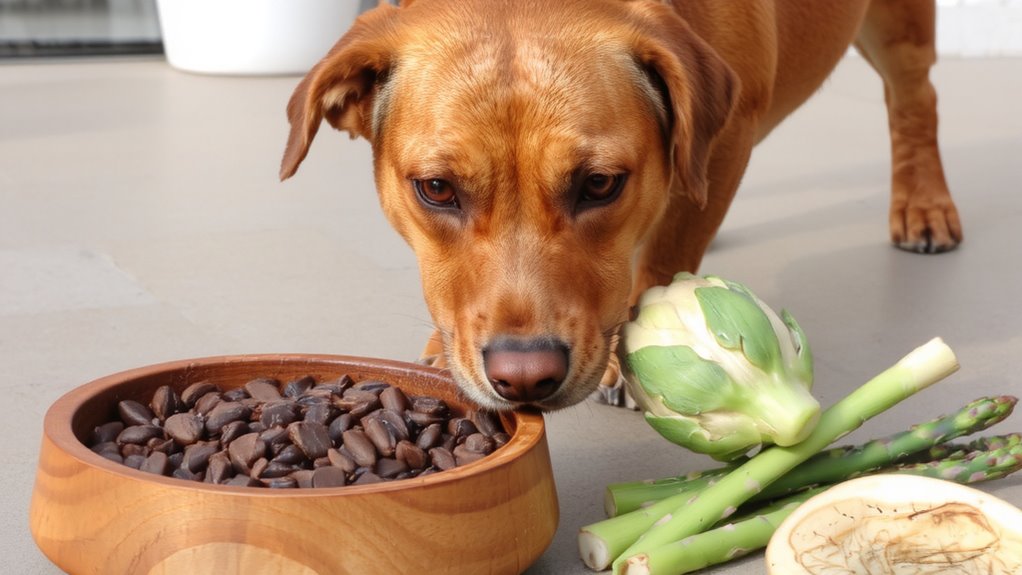
A small but growing number of dog foods now include prebiotic inulin, a plant-derived fiber that supports digestive health. You’ll find it primarily extracted from chicory root, a natural fiber source proven to nourish beneficial gut bacteria. Inulin is a soluble fiber, meaning it dissolves in water and ferments in the large intestine. This fermentation process fuels probiotics, helping maintain digestive balance. Unlike fillers, inulin has functional value-typically included at 0.1% to 0.5% in formulations. Studies show it increases stool quality and enhances nutrient absorption. It’s not digestible by dogs, but it serves as food for beneficial microbes like Bifidobacteria. Maintaining this microbial environment supports long-term gastrointestinal function. You should recognize that inulin isn’t a probiotic-it doesn’t add bacteria but enables existing strains to thrive. Its low caloric contribution and high fermentability make it an efficient, targeted fiber source.
Signs Your Dog Needs Prebiotic Inulin
Could your dog’s digestive issues signal an imbalance in gut microbiota? Persistent digestive discomfort often indicates suboptimal gut flora. You may notice frequent gas, bloating, or abdominal cramping-common signs of microbial imbalance. Stool changes are another key indicator. Look for inconsistent texture, such as loose, watery, or overly hard feces, and irregular elimination patterns. These shifts reflect poor fermentation in the colon, where beneficial bacteria are undernourished. Without adequate prebiotic fiber, like inulin, good bacteria cannot thrive. Inulin selectively feeds Bifidobacteria and Lactobacilli, boosting microbial density by up to 40% in clinical studies. It also increases short-chain fatty acid production, improving colon pH and nutrient absorption. If your dog shows recurrent stool changes or ongoing digestive discomfort, current diet may lack fermentable fiber essential for microbiome equilibrium. Supplementing with inulin helps restore balance.
How Inulin Supports Gut Health and Immunity
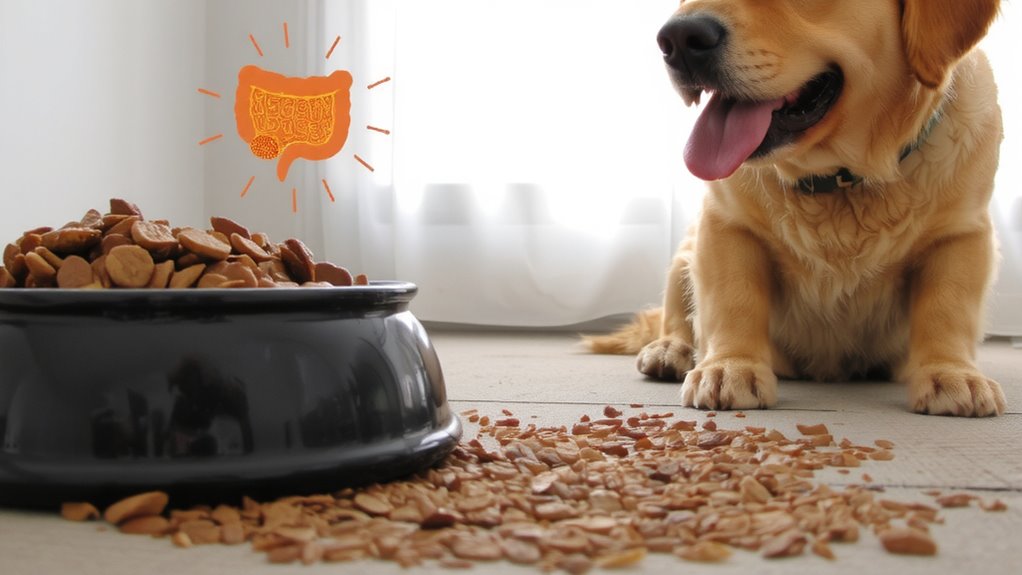
Gut health begins with fermentation. When you feed your dog inulin, you’re fueling beneficial gut bacteria that ferment this prebiotic into short-chain fatty acids (SCFAs). These SCFAs lower colonic pH, inhibiting pathogens and supporting gut microbiome balance. Inulin directly enables immune system modulation by enhancing gut barrier integrity and reducing systemic inflammation.
| Benefit | Mechanism |
|---|---|
| Microbiome balance | Promotes *Bifidobacterium* and *Lactobacillus* growth |
| Immune modulation | Increases regulatory T-cell activity |
| Digestive health | Enhances mineral absorption, especially calcium |
| Anti-inflammatory | Reduces colonic pH by 0.5–1.0 unit |
| Pathogen inhibition | Suppresses *Clostridium* and *E. coli* colonization |
You see measurable improvements in stool quality and immune responsiveness within 2–4 weeks. Inulin’s fermentability index (87%) exceeds many fibers, making it efficient at sustaining microbial activity critical for long-term health. It’s not just digestive support-it’s foundational immunological conditioning.
Inulin vs. Other Prebiotics: What’s Best for Dogs?
Why settle for less when your dog’s gut microbiome demands precision fuel? Inulin offers superior microbial specificity, selectively nourishing beneficial Bifidobacteria and Lactobacilli while suppressing harmful species. Unlike generic prebiotics such as fructooligosaccharides (FOS) or galactooligosaccharides (GOS), inulin’s longer fructan chains enable delayed fermentation dynamics, extending nutrient delivery to the distal colon. This slow fermentation reduces gas production and bloating, enhancing digestive tolerance. Inulin resists hydrolysis in the upper GI tract, reaching the colon intact-where true fermentation begins. Studies show inulin increases short-chain fatty acid (SCFA) production by up to 40% compared to other prebiotics. These SCFAs support colonocyte health and maintain intestinal pH. With proven efficacy at 0.2–0.5% inclusion rates in dry kibble, inulin delivers targeted, efficient gut support. It’s not just another prebiotic-it’s the ideal choice for canine digestive health.
How Inulin Improves Nutrient Absorption
| Nutrient | Mechanism | Effect |
|---|---|---|
| Calcium | Lower pH increases solubility | 20–30% greater absorption |
| Iron | SCFAs enhance bioavailability | Up to 25% improvement |
| Magnesium | Fermentation boosts passive diffusion | 15–20% gain |
| Protein | Optimized microbial activity | Faster breakdown |
| Fats | Balanced microbiome function | More consistent metabolism |
These changes support sustained nutrient assimilation. You’ll notice better coat quality and energy levels, not from added calories, but from smarter digestion. Improved efficiency means less waste and more usable nutrition from every meal.
How to Choose Dog Food With Prebiotic Inulin
What should you look for when selecting a dog food that includes prebiotic inulin? Always check the ingredient list for inulin or chicory root, a natural fiber source. It should appear among the first ten ingredients, indicating a meaningful inclusion level. Look for concentrations between 0.5% and 1.5% inulin, as this range supports digestive support without causing discomfort. Guarantee the formula specifies “prebiotic inulin” rather than just “fiber” for targeted gut health benefits. Pairing inulin with probiotics enhances microbial balance. Avoid vague terms like “fiber blend” without disclosure of components. High-quality kibble will list exact sources and use human-grade ingredients. Consider formulas tested in feeding trials, which validate digestibility and nutrient absorption. Always verify with guaranteed analysis and third-party lab results where available. Your dog’s long-term gut health depends on precise, transparent formulation.
Prebiotic Inulin Safety: Dosage and Side Effects
A daily dose of 0.5% to 1.5% inulin in your dog’s diet guarantees effective prebiotic support without overwhelming the digestive system. This range promotes beneficial gut bacteria without triggering excessive fermentation. Higher concentrations increase the risk of gas, bloating, and loose stools due to undigested fibers fermenting rapidly in the colon. You should avoid exceeding 1.5%, as studies show no added benefit and a higher chance of digestive upset. There is no documented inulin toxicity in dogs at recommended levels, making it safe for long-term use. Sudden introduction or over-supplementation may disrupt microbial balance. Gradually introduce inulin over 7–10 days to allow gut adaptation. Always confirm inclusion rates on food labels. Quality formulas clearly list prebiotic content. Monitor your dog’s stool quality and adjust if needed. Proper dosing secures digestive harmony and sustained gut health.
On a final note
You should include prebiotic inulin in high-quality dog food. It selectively nourishes beneficial gut bacteria like Bifidobacterium and Lactobacillus. At 0.1–0.5% inclusion rates, inulin enhances fermentation, producing short-chain fatty acids that lower colonic pH. This inhibits pathogenic bacteria such as Clostridium perfringens. Inulin also increases calcium and magnesium absorption by up to 30% via improved solubility. Always verify ingredient concentration on the label.