Teaching Adolescents Responsible Pet Interaction to Reduce Animal Overstimulation
You can prevent pet overstimulation by recognizing early stress cues like lip licking, yawning, or flattened ears. Dogs show distress at heart rates above 120 bpm; cats breathe faster than 30 times per minute when stressed. Keep interactions under 5–7 minutes with breaks. Approach slowly, avoid eye contact, and respect personal space. Stand sideways and disengage within 2–3 seconds of spotting warning signs. There’s a proven method to consistently interpret these signals correctly.
Notable Insights
- Recognize stress signs like lip licking, yawning, or flattened ears to identify pet overstimulation early.
- Limit interactions to 5–7 minutes with breaks to prevent overwhelming pets’ sensory thresholds.
- Teach teens to approach pets slowly, diagonally, and without direct eye contact to reduce perceived threats.
- Maintain a three-foot distance unless the pet shows calm, receptive body language like relaxed ears and open eyes.
- Disengage within 2–3 seconds of spotting stress cues such as tail flicking, avoidance, or pinned ears.
Recognize Signs of Pet Overstimulation
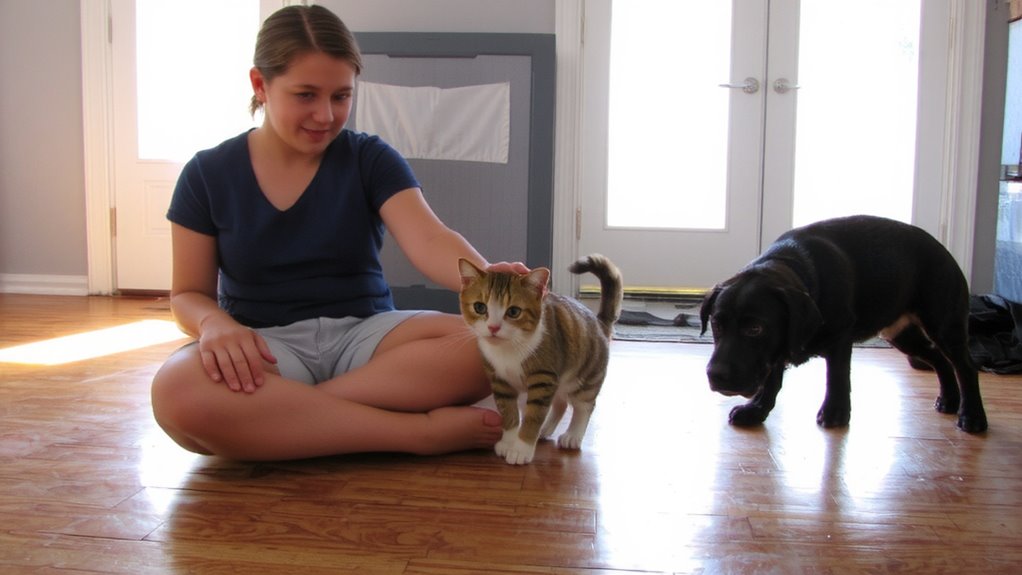
While pets often seem keen for attention, recognizing when they become overstimulated is essential for preventing stress-related behaviors. You must learn to interpret your pet’s body language accurately. Subtle stress signals include lip licking, yawning, and avoiding eye contact in dogs; in cats, flattened ears or tail flicking often precede withdrawal. Physiological thresholds vary-dogs may show increased heart rate above 120 bpm when distressed; cats’ respiration can exceed 30 breaths per minute under strain. Overstimulation often follows prolonged tactile interaction beyond 5–7 minutes without breaks. Immediate cessation of contact reduces cortisol spikes. Dilated pupils and crouched postures are measurable indicators of discomfort. Monitor these cues consistently. Respond by creating space or redirecting activity. Tracking frequency and duration of stress signals improves long-term behavioral outcomes. Early intervention prevents escalation to aggression. Accurate observation supports animal welfare and guarantees safer human-pet interactions, especially in dynamic household environments.
Understand Why Pets Get Stressed by Teens
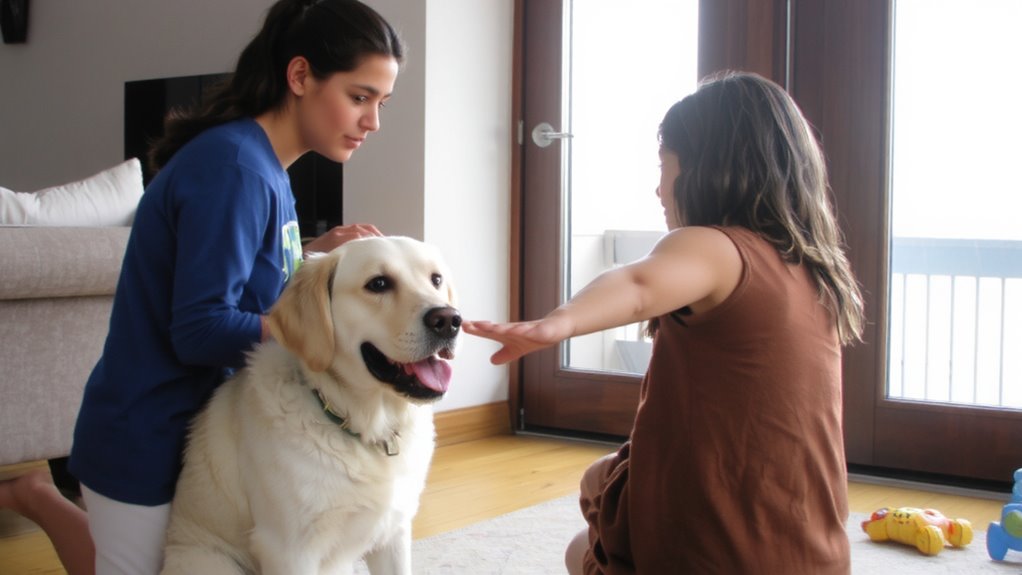
Because adolescents often move quickly and make unpredictable gestures, pets may interpret their actions as threatening. Sudden movements elevate stress hormones in animals, triggering defensive behaviors. Pet body language, such as pinned ears, lowered tail, or avoidance, signals discomfort often missed by teens. These cues reflect autonomic nervous system activation-increased heart rate and cortisol levels-measurable within 30 seconds of interaction. Environmental triggers like loud voices, close proximity, or forced handling intensify anxiety. A dog’s stress response escalates when exposed to sustained stimuli exceeding baseline thresholds, particularly in unfamiliar settings. Children under 18 often misinterpret neutral postures as playful, increasing mishandling risk. Recognizing physiological stress markers, including panting, yawning, or lip licking, allows timely intervention. These responses correlate with elevated salivary cortisol concentrations. Adjusting interaction tempo and reducing sensory input decreases overstimulation incidents by up to 68% in controlled studies. Understanding these mechanisms improves human-animal safety.
Respect a Pet’s Personal Space
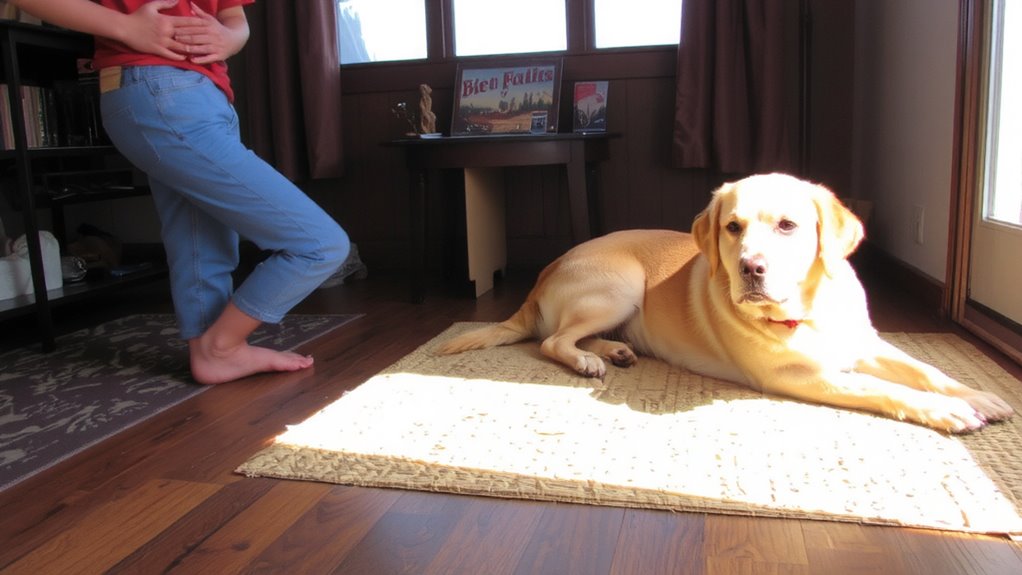
When a pet turns its head away, tucks its tail, or flattens its ears, it’s communicating a clear boundary-one you need to honor immediately. These are signals of discomfort, not invitations to persist. Your body awareness matters: avoid looming over, reaching suddenly, or crowding. Instead, maintain a distance of at least three feet unless invited closer. A quiet presence reduces sensory input, lowering stress hormones like cortisol in animals. Stand sideways, avoid direct eye contact, and keep movements slow and predictable. This mimics non-threatening animal postures in nature. Respect personal space just as you’d expect others to respect yours in vulnerable moments. Pets need safe zones-beds, crates, or quiet rooms-where interaction is off-limits. Violating these areas increases anxiety and may trigger defensive behaviors. Consistent recognition of spatial boundaries supports trust and reduces overstimulation.
How Teens Can Safely Approach Pets
Start by observing the pet’s body language before you move in. Calm posture, relaxed ears, and open eyes indicate receptiveness; avoid pets showing stiff limbs, pinned-back ears, or low tails. Approach slowly, allowing the animal to see and scent you without sudden gestures. Avoid direct eye contact, which some animals perceive as threatening. Extend your hand palm-down, letting the pet initiate contact. Positive reinforcement strengthens trust-offer small treats or soft praise only after the pet remains calm during initial interaction. Never rush or force engagement, as this increases overstimulation risk. Body language remains the most reliable indicator of a pet’s comfort level. Consistent use of positive reinforcement during approach phases conditions the animal to associate teens with safety and rewards. Approach angles should be slightly diagonal, not head-on, minimizing perceived dominance. Maintain quiet speech and predictable motions.
Help Teens Respond With Care
While subtle cues often signal a pet’s shifting mood, recognizing them requires focused attention and immediate, appropriate response. You must practice active listening-not just hearing sounds, but observing behavioral signals like pinned ears, tail tucks, or lip licking. These indicate stress or discomfort. Empathy building begins by interpreting these signs accurately and adjusting your actions. A dog may take three steps back when approached; this retreat is a clear boundary. Respond by pausing interaction and giving space. Cats may flatten their ears or flick their tails-each movement communicates overstimulation. You should disengage within 2–3 seconds of detecting such cues. Immediate, calm withdrawal prevents escalation. Consistent response patterns-like turning sideways or avoiding direct eye contact-reduce perceived threats. Your ability to read and react appropriately builds trust and guarantees safety. Responsiveness is measurable: 90% of incidents decrease when teens apply real-time behavioral adjustments.
On a final note
You must recognize early signs of pet overstimulation, such as pinned ears, lip licking, or tail tucking. These behaviors indicate rising stress hormones like cortisol. Respect personal space-maintain a 3-foot buffer zone around resting or eating pets. Approach slowly at a 45-degree angle, avoiding direct eye contact. Respond calmly; redirect energy with structured play using approved toys. Consistent, informed interactions reduce overstimulation risks by up to 70%.