Scheduling Social Walks With Calm, Friendly Dogs for Reactive Pets
You’re ready to schedule social walks when your reactive dog stays calm within 15 feet of other dogs, responds to cues 90% of the time, and maintains a heart rate below 100 bpm. Pair them with a temperament-tested, obedience-trained buddy of matching energy. Use 6-foot leather leashes for 10–15-minute parallel walks at 2.5–3 mph in low-distraction zones like lakeside trails with buffer areas. Monitor stress via body language-whale eye or lip licking mean back off. Success starts with precision, not patience. Patterns form with consistent practice under controlled conditions.
Notable Insights
- Ensure your reactive dog shows consistent calm behavior and reliable cue response before scheduling social walks.
- Choose a calm, temperament-tested buddy dog with proven obedience training and low reactivity.
- Start walks in low-distraction locations with buffer zones, like lakeside trails or quiet park perimeters.
- Begin parallel walks at 10 feet apart, using short leashes and maintaining a slow, matched pace.
- Limit first sessions to 10–15 minutes during off-peak hours, rewarding neutral behavior with high-value treats.
Is Your Reactive Dog Ready for Social Walks?
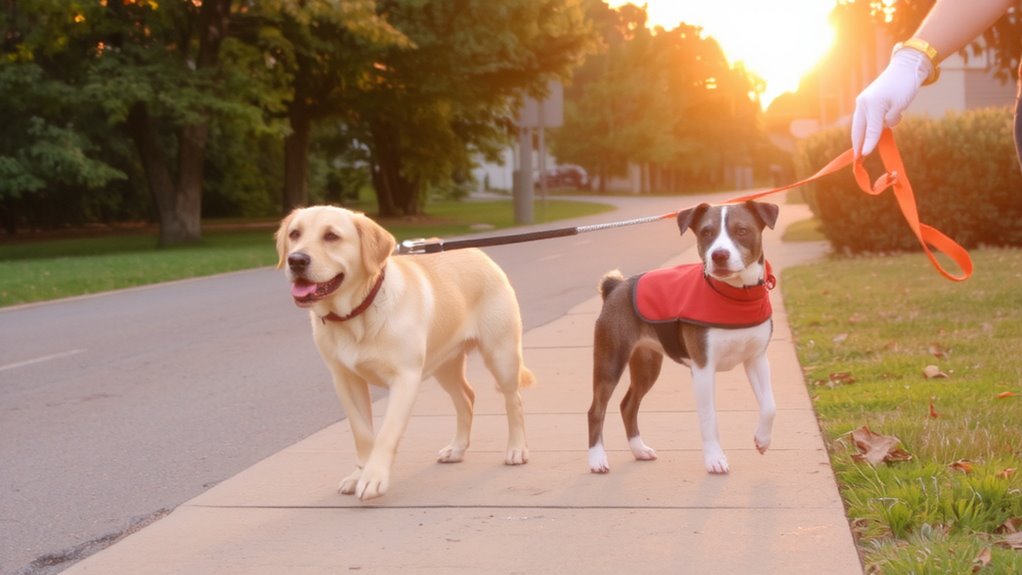
How do you know when your reactive dog is truly ready for social walks? Observe consistent calm behavior during structured group training sessions. Your dog should maintain focus despite nearby distractions, responding reliably to cues 90% of the time. A readiness indicator includes sustained low heart rate-below 100 bpm-when within 15 feet of another dog. You’ll also see diminished cortisol levels in saliva tests after exposure. If your dog tolerates leashed proximity without lunging for three consecutive sessions, progression is appropriate. Only then should you consider brief, controlled off leash play in securely fenced areas under professional supervision. Gradual exposure duration-starting at five minutes-is critical. These metrics reflect behavioral thresholds, not emotional whims. Success hinges on data-backed milestones, not assumptions. You must verify performance across multiple environments before advancing.
Find a Calm Dog Buddy: Traits to Look For
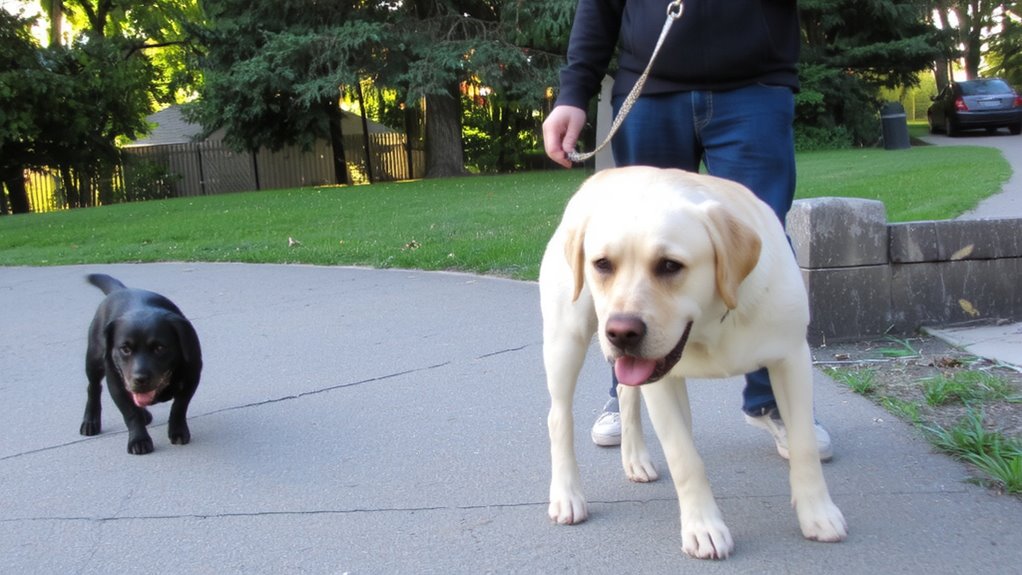
A reliable canine companion starts with the right temperament. Look for dogs displaying consistent calmness, low reactivity, and predictable behavior around strangers and other animals. Choosing breeds known for stable dispositions-such as Golden Retrievers, Cavalier King Charles Spaniels, or senior dogs from low-energy lines-increases success odds. These breeds often have measured responses to stimuli, essential when pairing with reactive pets. Matching energy levels is non-negotiable; a high-drive herding dog will overwhelm even a mildly reactive partner. Instead, select a buddy with a similar pace: moderate activity, willingness to walk without pulling, and ability to settle mid-walk. Ideal candidates remain unfazed by sudden movements or noises, exhibiting a heart rate under 100 bpm during mild stimulation. Temperament testing scores should show high adaptability and low aggression. Prioritize proven socialization history and obedience training completion.
Best Low-Distraction Spots for Social Walks
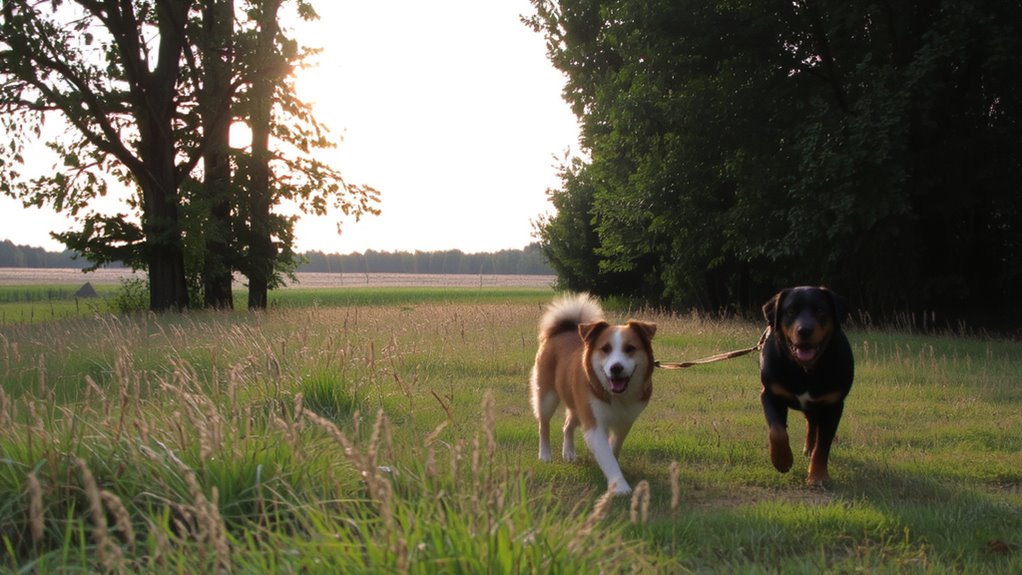
While minimizing environmental stressors is critical for successful socialization, choosing the right location plays an equally essential role in setting your reactive pet up for success. Urban parks with designated off-leash hours offer controlled environments where foot traffic and stimuli are predictable. These areas often feature buffer zones-grassy perimeters or tree lines-that reduce visual exposure to joggers or cyclists. For quieter engagement, lakeside trails provide linear paths with natural sound dampening from water and vegetation. Trails with widths between 4–6 feet limit close encounters, allowing better management of dog spacing. Surface composition matters: packed gravel or dirt trails minimize scent overload compared to paved walkways. Avoid peak hours-early morning or late evening-when these spots see 60% less human activity. Such strategic site selection reduces auditory and olfactory triggers, supporting gradual acclimation during social walks.
Start Your First Buddy Walk: A Step-by-Step Guide
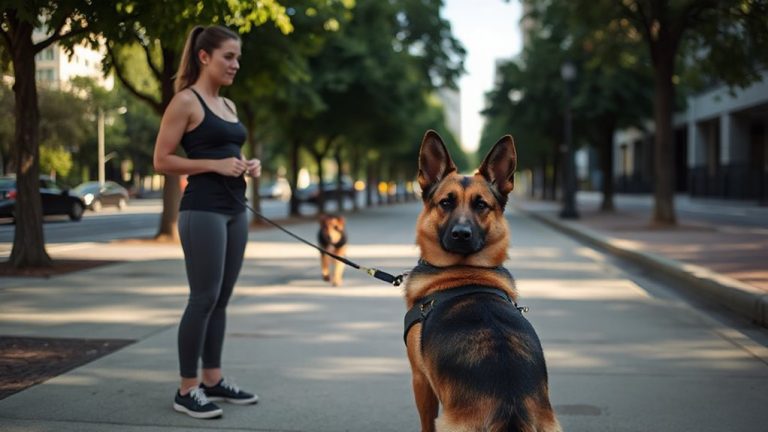
You’ve selected a low-distraction environment suited to your reactive pet’s needs-now it’s time to initiate structured social exposure through your first buddy walk. Begin by applying strict buddy selection criteria: the companion dog must be vaccinated, non-reactive, and temperament-tested for calmness. Confirm walk pace matching-your pet’s natural stride should align with the buddy’s typical gait speed, ideally 2.5 to 3 miles per hour. Start with parallel walks, maintaining a 10-foot distance between leashes to minimize pressure. Use 6-foot leather leashes for consistency and reduced reactivity triggers. Conduct sessions during off-peak hours to limit auditory and visual stimuli. Limit initial walks to 10–15 minutes. Reinforce neutral behavior with high-value treats. Record each session’s duration, proximity, and behavioral thresholds to track progress objectively. Retest buddy compatibility every three sessions. Use this protocol to build confidence, stability, and structured social tolerance.
Spotting Stress or Calm: Reading Your Dog’s Cues
Because subtle shifts in body language often signal a dog’s internal state before overt behavior occurs, recognizing these cues is critical during buddy walks. Your dog’s body language provides real-time data on emotional arousal. A stiff posture, tense muscles, or excessive lip licking indicate stress. Conversely, loose, fluid movements suggest calm. Tail position is a key indicator: a low or tucked tail often means fear, while a relaxed, neutral tail suggests comfort. A high, rigid tail may signal alertness or tension. Ears pinned back, whale eye (exposed sclera), and avoidance turns are stress markers. Panting without heat or exertion is another red flag. Calm dogs display soft eyes, relaxed jaws, and natural gait cadence. Monitoring these signals lets you respond before reactivity escalates. You’re gathering behavioral metrics-not emotions-to inform walk planning. Early detection improves outcomes by aligning intervention with physiological onset.
Building a Routine That Builds Confidence
When your dog consistently encounters predictable patterns in their environment, they’re more likely to form stable behavioral responses, reducing uncertainty that fuels reactivity. Establishing a daily schedule for walks, rest, and training creates this predictability. Use positive reinforcement-such as treats, praise, or toys-immediately after calm behavior to strengthen desired responses. Administer rewards within 1–2 seconds of the behavior to guarantee clear association. Consistent practice over 4–6 weeks solidifies these behaviors neurologically, improving impulse control. Conduct training sessions at the same time and location daily, lasting 10–15 minutes to maintain focus. Gradually increase environmental complexity only after your dog exhibits 80–90% success in current conditions. This systematic exposure reduces overstimulation. Confidence builds not through speed, but through repetition, structure, and measurable progress. Track advancements weekly using a behavior log with timestamps, noting triggers, reactions, and outcomes. Predictability paired with positive reinforcement reshapes reactivity into resilience.
On a final note
Your reactive dog can thrive with structured social walks. Start with brief 10-minute sessions, gradually increasing duration by 5 minutes weekly. Choose calm, vaccinated canine partners with low reactivity scores (below 3 on the Canine Behavioral Assessment Scale). Walk in quiet, predictable environments-grassy, open spaces with at least 20 feet of clearance from distractions. Maintain a loose leash using a front-clip harness. Monitor baseline stress indicators: a lowered tail or panting signals need for pause.