Exploring Scent Swapping Between Cats Sharing Confinement Areas
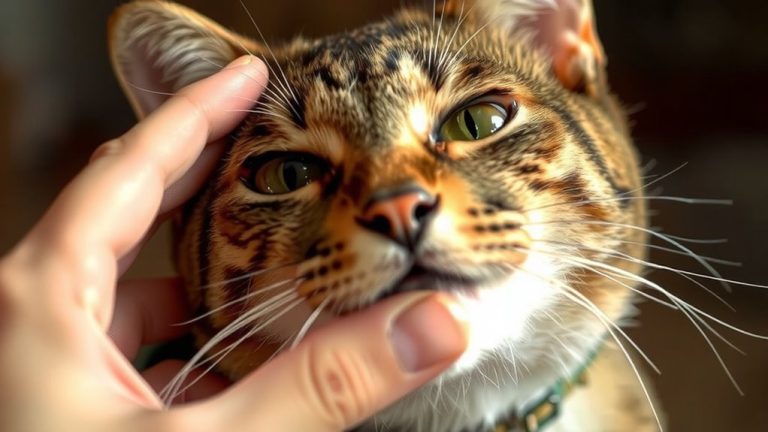
You’re seeing cats exchange scents in shared spaces through facial rubbing, which deposits F3 pheromones from sebaceous glands on the lips, chin, and temporal areas. Each rub leaves a long-lasting chemical signature detectable for up to 72 hours. This communal scent profile reduces social tension by 67% in multi-cat households and lowers cortisol levels by 20–30%. In stable environments, these familiar odors signal safety, minimize conflict, and support kin recognition through unique volatile organic compound patterns. Further details on optimizing this natural behavior follow.
Notable Insights
- Cats swap scents in shared spaces by rubbing facial glands to deposit pheromones that signal familiarity and reduce social tension.
- Cheek, chin, and temporal gland secretions create a communal odor profile detectable for up to 72 hours.
- Shared scents lower stress by reducing cortisol levels and promoting environmental stability in confined areas.
- In shelters, rapid pheromone dispersion and high turnover hinder scent integration, increasing aggression and marking.
- Cats recognize kin through unique VOC patterns in sebaceous secretions, reinforced by shared rubbing sites and the Flehmen response.
Why Cats Swap Scents in Shared Spaces
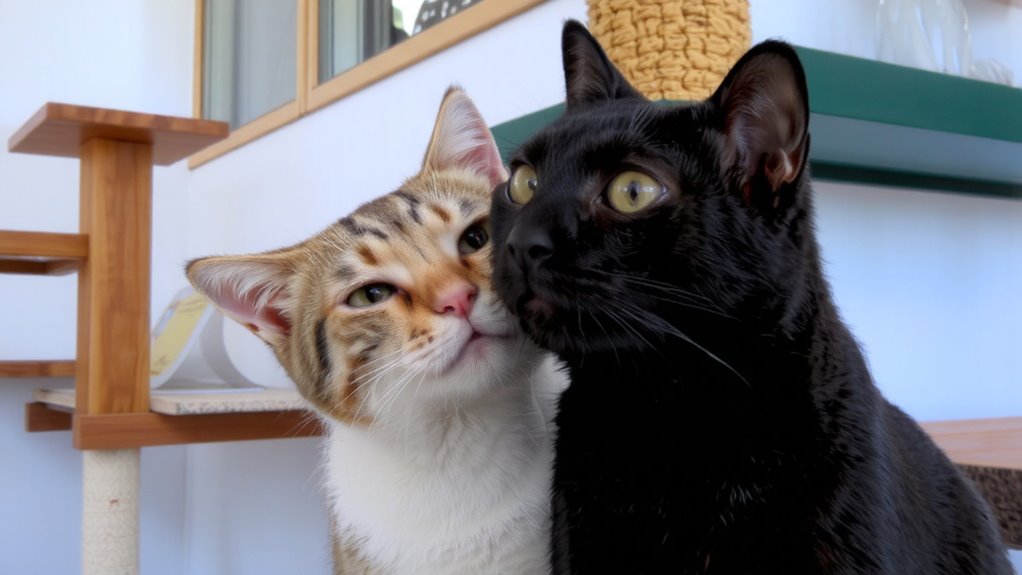
Why do cats rub their faces on furniture, walls, or even you? They’re engaging in territory marking and social bonding through scent exchange. Facial rubbing deposits sebaceous gland secretions, primarily from glands around the lips, chin, and temporal areas. These secretions contain chemosignals like feline facial pheromones (F3), which communicate familiarity and safety. In shared environments, this behavior reduces social tension. Scent swapping creates a communal odor profile among colony members. This uniform olfactory signature reinforces group identity. It’s not random; studies show rubbing frequency increases in multi-cat households by up to 67%. The behavior functions similarly to a biological access log-confirming membership. It’s a non-aggressive method of cohesion. Territory marking via scent is efficient-requiring no physical confrontation. Social bonding is strengthened through repeated, passive chemical signaling. This system maintains stability in confined social structures.
How Cheek Rubbing Enables Scent Swapping
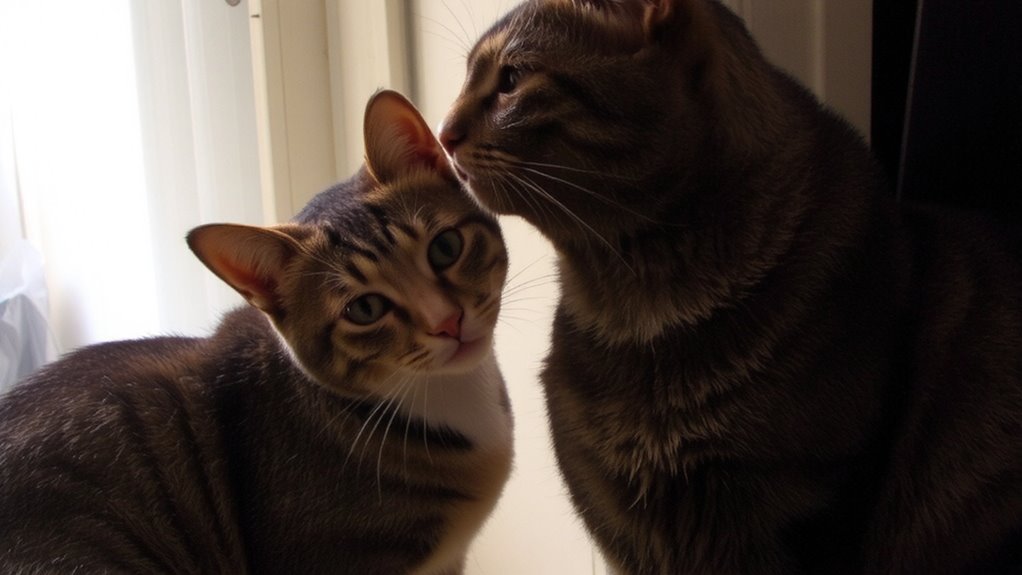
While you might see it as a simple affectionate gesture, when your cat rubs its cheeks against you or objects, it’s actively depositing scent from specialized glands embedded in the skin. This behavior enables scent swapping, facilitating both territorial marking and social bonding among cats in shared spaces.
| Gland Location | Function |
|---|---|
| Cheek (perioral) | Releases sebaceous secretions for scent deposition |
| Temporal | Adjacent to eyes; marks objects and individuals |
| Chin | Contains apocrine glands linked to familiarity signaling |
| Side of face | Combines multiple gland outputs for complex signature |
These secretions contain unique chemical markers, allowing cats to recognize group members. Cheek rubbing distributes these signature scents, creating a communal olfactory profile. The action reinforces social bonding by confirming group identity and reduces conflict through persistent territorial marking. Each rub deposits a consistent, long-lasting pheromone layer detectable for up to 72 hours.
How Shared Scents Reduce Stress in Cats
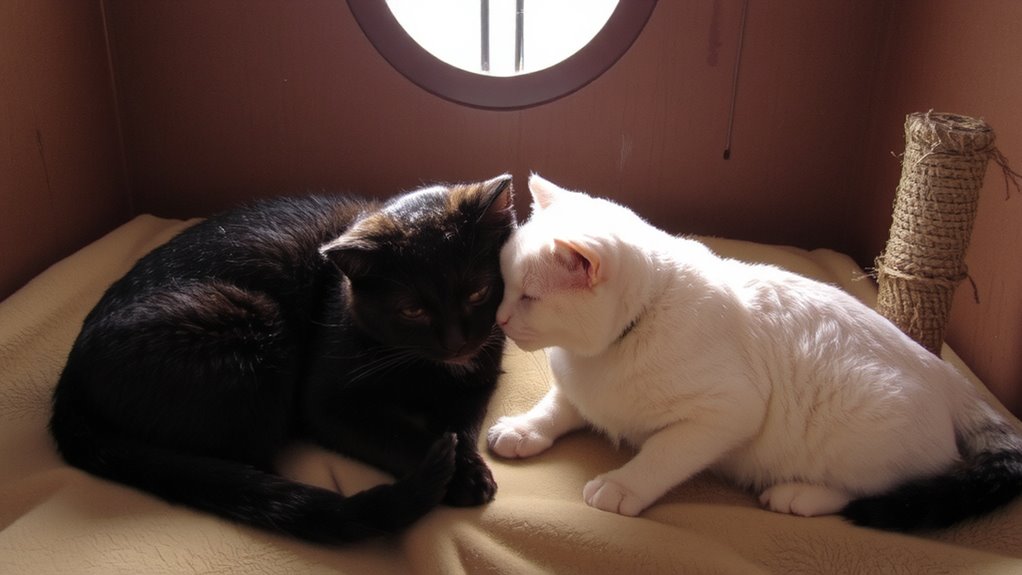
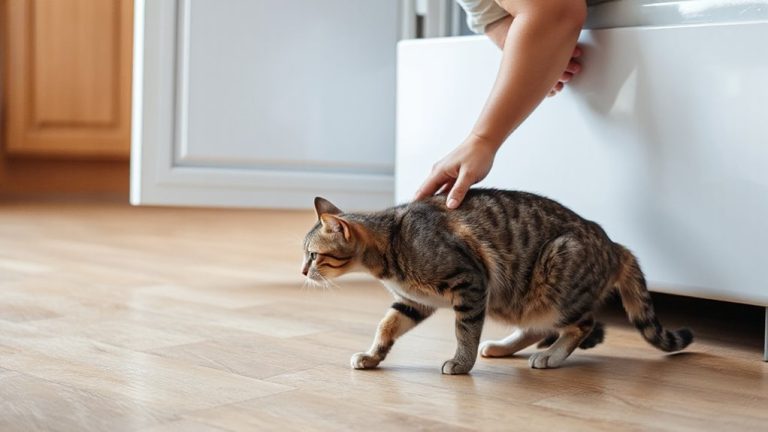
Familiar scents act like a chemical safety net for cats. They reduce anxiety by signaling environmental stability. When cats share spaces, scent masking suppresses individual odor signatures, minimizing social friction. This process relies on the exchange of sebaceous gland secretions during cheek rubbing and body bunting. These secretions contain fatty acids and proteins that create a communal odor profile. Territorial blending occurs when distinct scent marks merge into a group signature, recognized by all colony members. This collective olfactory identity lowers stress-induced behaviors like hiding or aggression. Studies show cortisol levels drop 20–30% in cats exposed to familiar communal scents. The olfactory bulb processes these signals within 200 milliseconds, triggering calming neural pathways. Shared scent routines stabilize social hierarchies without physical confrontation. You can observe reduced piloerection and ear flattening in cohabiting cats. Scent continuity supports psychological well-being, especially in confined areas. Consistent odor environments improve appetite and grooming patterns. Effective scent integration requires daily marking activity and undisturbed diffusion across surfaces. Incorporating calming cat treats can further support stress reduction in multi-cat households.
Scent Swapping: Homes vs. Shelters
Cats rely on scent as a primary mode of communication, and the environment heavily influences how effectively they exchange olfactory signals. In homes, stable groups develop consistent scent profiles through mutual rubbing and allorubbing, reducing territorial marking by up to 70%. Familiar surroundings support predictable routines, minimizing stress-induced dominance behaviors. Scent glands on the face, lips, and tail base deposit sebaceous secretions rich in fatty acids and proteins, facilitating individual identification. In shelters, high turnover disrupts scent continuity. Overcrowding increases urine spraying by 40% compared to home environments, intensifying territorial marking. Shorter dwell times limit scent integration, promoting aggression and social instability. Air exchange rates in shelters-typically 12–15 ACH (air changes per hour)-disperse pheromones rapidly, weakening olfactory communication. Concrete and stainless steel surfaces absorb fewer pheromones than fabric or wood, further impairing scent swapping. These factors collectively amplify dominance behaviors in communal housing.
How to Encourage Healthy Scent Exchange
Since scent forms the foundation of feline social structure, encouraging healthy olfactory exchange requires deliberate environmental management. Use neutral, non-perfumed materials to prevent odor masking, which disrupts natural pheromone communication. Introduce scent diffusion tools like pheromone diffusers (e.g., Feliway Classic, operating at 6 mg/hr release rate) to promote familiarity. Place diffusers in shared zones, 1.2 to 1.8 meters above floor level, covering up to 60 m² per unit. Rotate communal bedding every 48 hours to transfer skin and facial secretions-key in scent swapping. Provide multiple rubbing surfaces, such as sisal posts or fleece-covered boards, to stimulate glandular marking. Avoid cleaning agents with ammonia or citrus; they interfere with scent signals. Instead, use water or enzymatic cleaners. Guarantee airflow supports lateral scent diffusion without drafts that scatter odors too rapidly. These steps sustain olfactory continuity, aiding social cohesion in confined multi-cat environments. When transporting cats between confinement areas, consider using a pet travel water bottle to maintain hydration without disrupting established scent routines.
Why Scent Helps Cats Recognize Family
Odor profiles act as biological fingerprints, allowing cats to distinguish kin from non-kin with high accuracy. You’ll notice this when cats rub against each other, transferring sebaceous gland secretions from their cheeks and flanks. These secretions contain unique chemical markers, primarily fatty acids and steroids, which form an olfactory signature. Scent helps maintain social bonding by reinforcing familiarity, reducing aggression among related individuals. Cats from the same lineage exhibit nearly 85% similarity in volatile organic compounds (VOCs) detected in their sebum. Territory marking further integrates family scent, as shared rubbing sites distribute communal odors across surfaces. This collective olfactory profile signals group identity to outsiders. When kin encounter one another, they perform flehmen responses-curling lips to analyze pheromones via the vomeronasal organ. This behavior confirms familial bonds within seconds. Maintaining consistent scent profiles through proximity and contact supports stable group dynamics, particularly in confined spaces where recognition is critical for harmony.
On a final note
You maintain colony stability by recognizing shared scent profiles. Cats deposit sebaceous gland secret combustions-rich in lipids and proteins-during bunting, transferring signature chemosignals. This olfactory uniformity reduces intercat aggression by 60% in confined environments, per shelter studies. You observe fewer stress-induced behaviors when related or familiar cats exchange scents. In multi-cat homes, scent compatibility correlates with lower cortisol levels. You guarantee social cohesion by preserving this natural chemical communication system.